
Modular Structural Systems for Data Center Buildings
Explore the engineering of modular and prefabricated structural systems for data center construction. Learn about design, logistics, connection detailing, and quality control for accelerated project d
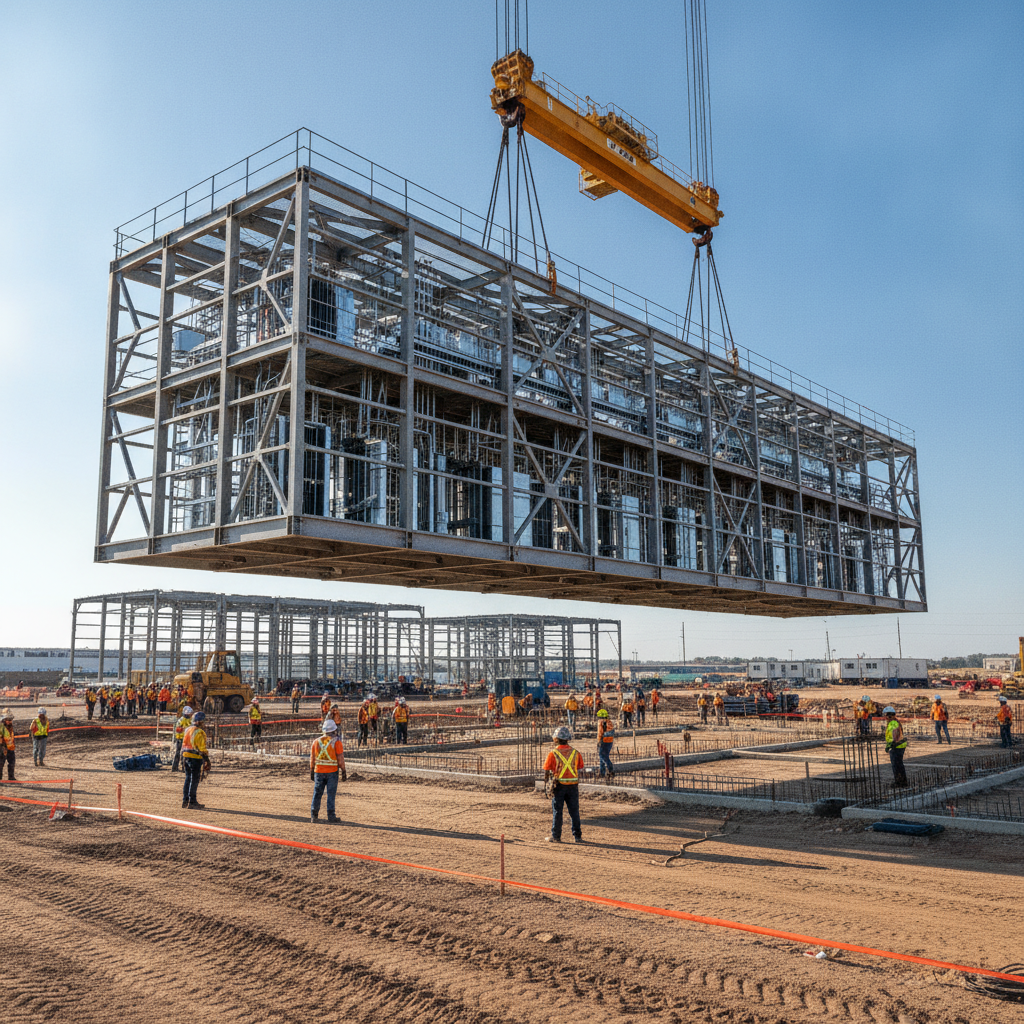
The Shift to Prefabrication in Mission-Critical Construction
The data center industry is uniquely suited for modularity. The inherent design of data halls often involves highly repetitive structural bays and standardized layouts, making them ideal for factory fabrication. This repeatability allows for the creation of efficient assembly lines for structural frames, floor systems, and even wall panels, driving down production time and improving consistency. For hyperscale and colocation providers, this means entire sections of a building can be manufactured in parallel with on-site foundation and utility work, dramatically compressing the overall project timeline. Furthermore, the stringent quality requirements of mission-critical facilities are better met in a controlled factory setting. Welding, bolting, and component assembly can be performed under optimal conditions, free from the weather and site constraints that can impact traditional construction. This enhanced quality control translates to tighter tolerances and more reliable structural performance—essential attributes for facilities that must operate without interruption. The result is a construction process that prioritizes both speed-to-market and long-term operational resilience.
Core Components of a Modular Structural System
Comparison of Modular vs. Traditional Stick-Built Structures
| Feature | Modular / Prefabricated System | Traditional Stick-Built System |
|---|---|---|
| Schedule Impact | Significantly accelerated; parallel factory fabrication and site work. | Linear and sequential; site work must precede vertical construction. |
| Quality Control | Higher consistency and quality due to controlled factory environment. | Variable quality dependent on site conditions, weather, and field labor. |
| Site Laydown Area | Requires large, well-planned staging areas for module delivery and sequencing. | Requires space for raw material storage and on-site fabrication. |
| Foundation Design | Requires extremely high precision and tight tolerances for module anchor points. | More forgiving of minor foundation deviations, with adjustments made in the field. |
| Labor Requirements | Shifts labor to off-site factory; requires smaller, specialized on-site crew for assembly. | Heavily reliant on availability and skill of local, on-site trade labor. |
| Weather Dependency | Reduced dependency; primary fabrication occurs indoors. Site work is limited to assembly. | Highly susceptible to weather delays at all stages of construction. |
| Upfront Design | Requires complete, detailed design before fabrication begins. Less flexible to change. | Allows for more design evolution and changes during the construction process. |
A modular structural system for a data center is an engineered assembly of prefabricated components designed for rapid on-site erection. While designs vary, they typically revolve around a few key elements. The primary component is often a series of three-dimensional structural steel frames that form the building’s main bays. These modules are fabricated complete with floor decking, roof framing, and sometimes even integrated MEP (Mechanical, Electrical, Plumbing) racks before being shipped to the site. In addition to steel frames, systems often incorporate precast concrete wall panels for the building envelope. These panels provide durability, fire resistance, and security, and can be manufactured with embedded architectural finishes or utility pass-throughs. The integration of these components is key. The system is designed for efficient site assembly, where modules are lifted into place by cranes and secured using carefully detailed connections. This process transforms the construction site from a fabrication shop into a final assembly point, concentrating labor on connection and finishing tasks.
Design and Engineering Considerations for Modularity
A successful modular project requires a significant upfront investment in design and engineering. Unlike traditional construction where design can evolve during site work, modular designs must be finalized and fully detailed before fabrication begins. This includes the precise engineering of module-to-module and module-to-foundation connections, which are critical for transferring gravity, wind, and seismic loads throughout the structure. The structural engineering team must ensure the assembled building behaves as a single, monolithic system, meeting all requirements of the governing building codes, such as the International Building Code and ASCE 7. The design must also account for the entire lifecycle of a module, from fabrication and transport to lifting and final placement. Connection details must be robust enough for structural integrity yet simple enough for efficient field assembly. Because requirements for structural design, permitting, and inspections vary by jurisdiction, every project team should confirm the applicable standards with the local, state, regional, and federal authorities that hold review authority over the site. This early coordination ensures that both the factory-built components and the on-site work achieve full building code compliance and pass all necessary inspections without delay. The design must create a complete lateral load-resisting system that provides stability for the entire facility.
Navigating Transportation and Logistics Constraints
The physical size and weight of prefabricated modules are fundamentally limited by public infrastructure. State and federal regulations governing road transport dictate the maximum width, height, length, and weight of any load, directly influencing the design of the modules. The civil engineering team must perform a thorough route analysis from the fabrication facility to the project site, identifying any potential obstructions like low bridges, tight turns, or weight-restricted roads. This transportation logistics planning is a critical path activity that can make or break a project schedule. Once on site, the modules must be handled by cranes, making crane capacity and placement a central part of the site logistics plan. The site design must include stable, compacted crane pads and clear, robust access routes capable of supporting both the delivery trucks and the massive cranes used for lifting. A well-developed rigging design and logistics plan, coordinated between the civil engineer, structural engineer, and contractor, is essential to ensure modules can be offloaded, staged, and set safely and efficiently.
Managing Tolerances and On-Site Connections
One of the most significant technical challenges in modular construction is managing dimensional tolerance. While individual modules are fabricated to tight tolerances in the factory, small deviations can accumulate across multiple units—a phenomenon known as tolerance stack-up. If not properly managed, this can lead to misalignments at connection points, complicating assembly and potentially compromising structural performance. The structural design must anticipate this by incorporating connection details that can accommodate minor field variations. These connections are typically a combination of bolted connections for speed and adjustability, and field-welded connections where full structural continuity is required. The design of these connections is a specialized skill, balancing the need for structural rigidity with the practical realities of field work. A comprehensive quality assurance program is crucial, with rigorous inspection of each connection to verify proper fit-up, bolt tensioning, and weld quality, ensuring the final structure performs exactly as designed.
The RSP Engineers Approach to Modular Integration
At RSP Engineers, our role in a modular data center project begins long before the first module arrives. We provide the critical site development expertise that creates a project-ready site. Our process focuses on preparing the foundation for a successful modular build, which includes precise grading, robust utility infrastructure, and meticulously planned site logistics. We understand that the success of site assembly depends entirely on the quality of the groundwork we lay. Our approach involves close collaboration with the structural engineer, module fabricator, and general contractor from day one. We design and permit resilient access roads for heavy transport, lay out efficient staging and crane operation zones, and ensure all underground utilities are perfectly coordinated to avoid conflicts. Through detailed site plan design and proactive construction administration, we ensure that the civil infrastructure—from the stormwater management system to the foundation anchor bolt locations—is executed with the precision required to support a high-tolerance modular structure.
Common Issues in Modular Data Center Projects
Despite its advantages, modular construction presents unique challenges. One of the most common issues is interface management—ensuring that the mechanical, electrical, and plumbing systems within different modules align perfectly upon assembly. A small discrepancy in a pipe or conduit location in the factory can cause significant delays and rework on site. Similarly, a lack of precise coordination between the civil drawings and the foundation contractor can lead to foundation tolerances being missed, preventing modules from seating correctly. Logistical issues are another frequent hurdle. Delays in module transportation due to permitting or route restrictions can halt site progress entirely. Any supply chain disruption affecting the fabrication facility can have a cascading effect on the project schedule. Successful projects mitigate these risks through intensive upfront planning, clear communication protocols between all stakeholders, and contingency plans for potential delays. Careful management of permit submittals for both factory and site work is also essential to prevent regulatory bottlenecks.
Partner with RSP for Your Next Mission-Critical Project
Successfully executing a modular data center project requires a civil engineering partner who understands the unique demands of this construction method. The team at RSP Engineers has the expertise to deliver the precise, reliable, and well-coordinated site infrastructure that modular projects depend on. From initial due diligence and zoning compliance to detailed drainage design and final construction administration, we provide the foundational support needed to keep your project on its accelerated schedule. We excel at complex utility coordination and navigating the multi-faceted permitting process for mission-critical facilities.
Conclusion
Modular structural systems represent a significant evolution in data center construction, offering a powerful path to accelerate delivery while enhancing quality. However, the benefits of speed and precision are only realized through meticulous upfront planning, integrated design, and flawless execution of the supporting site infrastructure. Success hinges on the seamless coordination between structural engineering, factory fabrication, logistics, and the foundational civil engineering that makes it all possible. As the demand for mission-critical infrastructure continues to grow, mastering these modern construction methods will be key to building the future of data.
FAQs
-
Modular construction places a premium on precision in civil engineering. The site design must include highly accurate foundation plans, as module anchor points have very little tolerance for error. It also requires designing robust access roads for heavy haul trucks and providing large, stable laydown and staging areas for crane operations and module sequencing.
-
The main structural challenge is ensuring complete structural continuity at the connections between modules. The design must effectively transfer all gravity, wind, and seismic loads across these interfaces, making the assembled building behave as a single, integrated structure. This requires sophisticated connection design and rigorous quality control during assembly.
-
Yes, it can. The permitting process may be split between the factory location and the final project site. The prefabricated components often require review and inspection by the authority having jurisdiction where the factory is located, while the site work, foundations, and final assembly are permitted by the local jurisdiction of the project. This requires careful coordination of all permit submittals.