
Structural Support for High-Density AI Equipment
Explore the critical structural engineering challenges for high-density AI data centers, including concentrated rack loads, heavy cooling infrastructure, and future-proofing designs. Learn how to ensu
The Shift from Traditional to High-Density Rack Loads
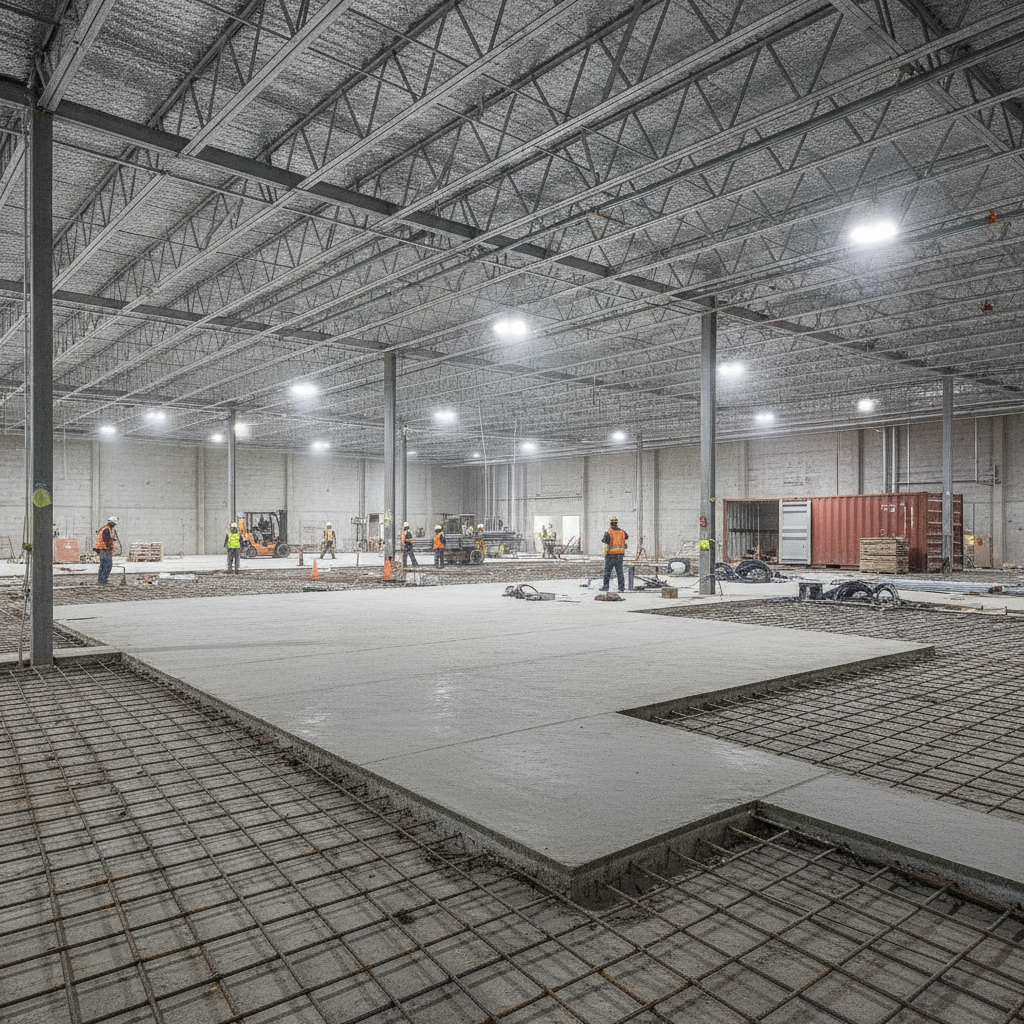
A standard IT rack in a traditional enterprise data center might weigh 2,000 to 3,000 pounds. In contrast, a single, fully populated high-density AI rack can exceed 8,000 pounds, with some platforms pushing even higher. This dramatic increase in weight fundamentally alters the structural equation. The primary challenge is the shift from relatively uniform floor loads to extreme concentrated loads. Instead of designing a slab for a general capacity of 250-350 pounds per square foot (PSF), engineers must now account for massive point loads delivered through the four small caster points of each cabinet. This concentration of mass requires a robust structural slab design, often involving heavily reinforced concrete slabs-on-grade or, in multi-story facilities, advanced composite deck systems. The design must prevent punching shear failure, where a concentrated load effectively punches through the slab. Furthermore, the dynamic loads during the installation and movement of this heavy equipment must be considered, adding another layer of complexity to the floor loading capacity calculations performed by the structural engineer of record.
Designing for Concentrated and Clustered Load Paths
Load Comparison: Traditional vs. AI Data Center Infrastructure
| Structural Component | Traditional Data Center Load Profile | High-Density AI Data Center Load Profile |
|---|---|---|
| IT Rack (Static Load) | 2,000 - 3,000 lbs per rack | 6,000 - 10,000+ lbs per rack |
| Floor Loading Design | 250-350 PSF uniform load | 500+ PSF with analysis for extreme concentrated loads |
| Cooling Units | Standard CRAC/CRAH units; moderate weight | Heavy Coolant Distribution Units (CDUs), rear-door heat exchangers, and extensive piping |
| Power Distribution | Overhead or underfloor power whips | Heavy-gauge busway systems (400+ lbs/ft) and large transformers |
| Overhead Support | Standard strut and tray for network/power cabling | Heavy-duty structural steel grid for busways, cooling pipes, and cable trays |
| Foundation System | Standard shallow foundations or slab-on-grade | Thickened mat slabs, deep foundations (piles), or ground improvement may be required |
AI hardware is rarely deployed in a uniform pattern. It is typically arranged in high-density clusters or pods to optimize performance and interconnectivity. This clustering creates intense, localized stress on the building structure. A successful design requires a comprehensive load path analysis to ensure these immense forces are safely transferred from the rack, through the slab and structural grid, down through the foundation, and into the underlying soil. Early and continuous collaboration between the IT design team, architects, and structural engineers is non-negotiable to align the equipment layout with an efficient and safe structural grid. The foundation of this analysis is a thorough geotechnical investigation to understand the capacity of the underlying soils. Structural design standards and code adoption vary by jurisdiction, and every project team must confirm the applicable requirements with the local, state, regional, and federal authorities that hold review authority over the site, in addition to the project’s adopted codes like the International Building Code (IBC) and ASCE 7. This ensures that the final design meets all mandates for building code compliance and safety.
Accommodating Heavy Cooling and Power Infrastructure
The extreme power consumption of AI hardware necessitates advanced cooling solutions, which bring their own significant structural loads. Direct-to-chip liquid cooling and rear-door heat exchangers involve extensive networks of large-diameter, liquid-filled pipes, coolant distribution units (CDUs), pumps, and heat exchangers. This liquid cooling infrastructure adds substantial weight, often located directly above or below the data halls. The design must incorporate robust overhead support systems for piping, cable trays, and heavy-duty busway distribution systems that can weigh hundreds of pounds per linear foot. The roof structure itself may need to be upgraded to support heavier rooftop units, chillers, and cooling towers. In some designs, an interstitial floor or a dedicated mechanical level is created specifically to house this equipment, requiring a complete structural system designed for heavy industrial loads. This integrated approach to structural steel design is critical to prevent deflection and vibration that could compromise the sensitive operations below.
Future-Proofing the Structure for Next-Generation Hardware
One of the most significant challenges in AI facility design is planning for technology that does not yet exist. The pace of hardware evolution means that the racks installed on day one will likely be replaced by even heavier, more powerful, and hotter equipment within a few years. A purely reactive design approach is a recipe for costly and disruptive structural retrofitting. Therefore, future-proofing the structure is a critical investment. This involves designing for a higher design load envelope than immediately required, creating a “structural margin” to accommodate future growth. Strategies include specifying thicker floor slabs, using a higher grade of concrete, reducing column spacing in high-density zones, or designing a modular data center design with pre-fortified areas ready for future deployments. This foresight ensures the facility remains viable and competitive throughout its operational life, avoiding premature obsolescence.
Foundation and Subgrade Considerations
The massive, concentrated loads from AI infrastructure ultimately transfer to the building’s foundation and the earth beneath it. A robust foundation design is therefore paramount. The process begins with comprehensive Geotechnical Engineering services, including a detailed Geotechnical soil report based on multiple deep soil borings. The findings from a Soil boring test dictate whether standard shallow foundations are adequate or if more advanced solutions are needed to prevent issues like differential settlement, which can be catastrophic for a mission-critical facility. Depending on the site’s soil conditions, engineers may specify ground improvement techniques like aggregate piers or deep soil mixing to increase the bearing capacity of the subgrade. In cases of poor soil or extremely high column loads, deep foundations such as driven piles or drilled caissons may be necessary. Proper subgrade preparation and compaction are critical for the performance of any foundation system, ensuring the long-term stability and integrity of the entire structure.
How RSP Engineers Approaches High-Density Structural Design
At RSP Engineers, our process for designing mission-critical AI facilities is built on proactive collaboration and deep technical expertise. We begin by engaging with the client, architect, and MEP engineers during the initial site plan design phase to establish a clear basis of design. Our approach emphasizes integrated project delivery, using advanced tools like Building Information Modeling (BIM) to coordinate complex systems and prevent conflicts. Our structural design process includes a detailed initial load assessment based on the client’s current and future hardware roadmaps. We oversee the geotechnical investigation and use the data to perform sophisticated finite element analysis (FEA) on structural slabs to map stress concentrations precisely. Throughout the design, we incorporate value engineering principles to optimize material use without compromising safety or future flexibility. We support the project through permitting and provide diligent construction administration to ensure the design is executed flawlessly in the field.
Common Issues and Mitigation Strategies
Designing structures for high-density AI facilities presents unique challenges. A common issue is underestimating future hardware weight, which can be mitigated by designing with a significant load margin. Another frequent problem is poor coordination between structural and MEP trades, leading to conflicts with large-diameter piping or busways; this is best solved with rigorous BIM coordination and clash detection from day one. Vibration sensitivity of optical networking equipment is another concern, requiring careful vibration analysis to ensure the structural system provides a stable environment. Last-minute changes to the IT layout can also wreak havoc on a nearly complete structural design. To mitigate this, we advocate for designing flexible, high-capacity zones that can accommodate layout shifts without requiring significant structural retrofitting. Proactive planning and clear communication are the most effective tools for avoiding costly change order management during construction. Frequently Asked Questions How much stronger does a floor need to be for AI racks? A floor for high-density AI racks often needs to be designed for a uniform load capacity of 500 PSF or more, but more importantly, it must be analyzed for extreme concentrated loads directly under the rack casters. This often requires a much thicker, more heavily reinforced concrete slab than a traditional data center. Can an existing data center be retrofitted for high-density AI? Retrofitting is possible but can be complex and expensive. It requires a detailed structural analysis of the existing slab, columns, and foundation. Often, structural retrofitting involves strengthening specific zones by adding carbon fiber reinforcement, installing new micro-piles, or thickening sections of the slab. It is a highly specialized task for a qualified Professional Engineer. What is the role of a geotechnical engineer in designing the structure? The Geotechnical engineer is critical. They perform the subsurface investigation, including the Soil test and borings, to determine the soil’s strength, composition, and stability. Their recommendations in the Geotechnical soil report directly inform the foundation design, ensuring the building can safely transfer its immense weight to the ground without unacceptable settlement. How do you account for the weight of liquid cooling systems in the structural design? The weight of liquid cooling infrastructure is treated as a significant dead load. We work with the mechanical engineer to map out all piping, pumps, and distribution units. This load is then applied to the structural model, whether it’s supported by the roof, an interstitial floor, or overhead support frames. We analyze the entire load path to ensure all components are adequately sized. Does the structural design impact the permitting process? Absolutely. The structural plans are a core component of the permit submittals reviewed by the local building department. The design must demonstrate full compliance with the adopted building codes, including all provisions for gravity loads, seismic forces, and wind loads. A thorough, well-documented design prepared by licensed Civil Engineers facilitates a smoother agency review and helps avoid costly delays.
Your Partner in Mission-Critical Structural Design
Navigating the structural complexities of high-density AI facilities requires a partner with specialized expertise and a forward-looking perspective. The team at RSP Engineers provides the comprehensive site engineering services needed to bring these advanced projects to life. From initial feasibility studies and geotechnical investigation to detailed structural design and construction-phase support, we ensure your facility is built on a foundation of strength and resilience. Contact us today to discuss how our civil engineering expertise can support your next mission-critical development and navigate the complex permitting process.
Conclusion
The transition to AI-driven computing is not just an IT challenge; it is a profound civil engineering and structural challenge. The immense weight of modern hardware and its supporting infrastructure demands a design philosophy rooted in foresight, precision, and collaboration. By focusing on robust structural analysis, future-proofing for next-generation technology, and integrating design across all disciplines, developers can build facilities that are not only safe and compliant but also adaptable and valuable for years to come. This level of mission-critical design is the new standard for the age of AI.
FAQs
-
Structural Support for High-Density AI Equipment requires careful planning, qualified engineering, and compliance with the applicable codes and permits.
-
Getting Structural Support for High-Density AI Equipment right protects safety, supports regulatory compliance, and avoids costly redesigns or delays.
-
RSP Engineers provides licensed expertise and end-to-end support for Structural Support for High-Density AI Equipment, from early planning through permitting.