
What Is a Drainage Basin and Why It Matters
Explore the importance of drainage basins in Florida land development. Learn how they influence stormwater design, site planning, and environmental permitting.
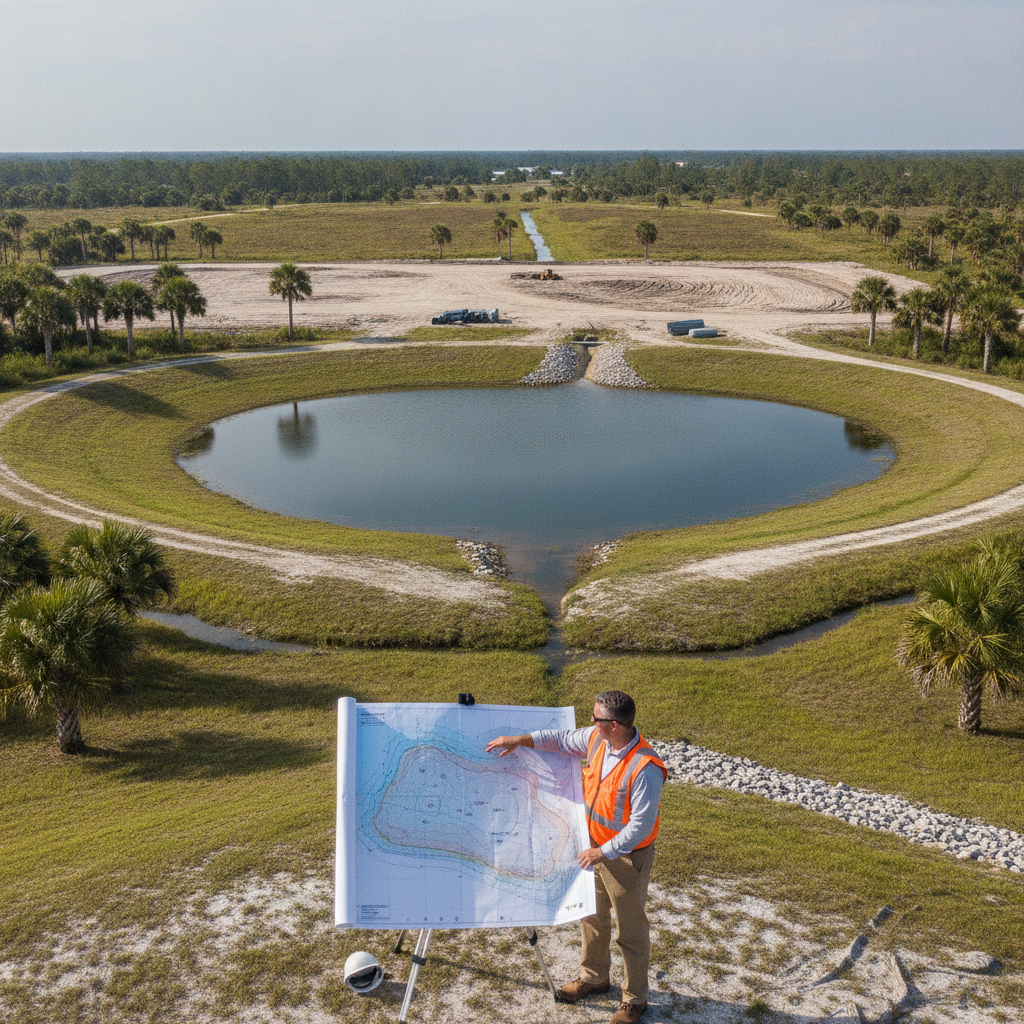
Defining a Drainage Basin
A drainage basin, also known as a watershed or catchment, is an area of land where all precipitation collects and drains off into a common outlet, such as a river, bay, or other body of water. The boundaries of a drainage basin are defined by the topographic high points, known as drainage divides. Understanding these boundaries is critical for determining the flow of water and the potential impact on a development site.
Importance of Drainage Basins in Site Design
Key Basin Parameters and Their Effect on Runoff
| Parameter | Effect on Runoff | Considerations |
|---|---|---|
| Drainage Area | Increases runoff volume | Requires larger stormwater facilities |
| Slope | Increases runoff speed | Potential for erosion |
| Land Cover | Impacts infiltration rates | Vegetation can reduce runoff |
| Soils | Affects absorption | Clay soils increase runoff |
| Imperviousness | Increases runoff volume | Requires mitigation measures |
Drainage basins are pivotal in site development as they dictate the volume and peak rate of runoff that must be managed. They also determine the off-site and upstream flows entering a site, as well as the downstream impacts and floodplain relationships. Properly accounting for these factors is essential to avoid adverse effects on neighboring properties and to comply with permitting requirements.
Delineating Drainage Basins
The process of delineating a drainage basin involves using topographic and LiDAR data, GIS tools, and time-of-concentration paths. These technologies help identify the precise boundaries and characteristics of a basin, which are crucial for accurate stormwater modeling and Environmental Resource Permitting (ERP).
Key Basin Characteristics Affecting Runoff
Several characteristics of a drainage basin influence runoff, including: Drainage area: The size of the basin affects the volume of water that must be managed. Slope: Steeper slopes can lead to faster runoff and increased erosion potential. Land cover: Vegetation and impervious surfaces impact infiltration and runoff rates. Soils and curve number: Soil type affects water absorption and runoff potential. Imperviousness: High levels of impervious surfaces increase runoff volume and speed.
Table: Key Basin Parameters and Their Effect on Runoff
Parameter Effect on Runoff Considerations Drainage Area Increases runoff volume Requires larger stormwater facilities Slope Increases runoff speed Potential for erosion Land Cover Impacts infiltration rates Vegetation can reduce runoff Soils Affects absorption Clay soils increase runoff Imperviousness Increases runoff volume Requires mitigation measures
Florida-Specific Considerations
Florida’s flat terrain and unique hydrology present specific challenges for drainage basin management. Closed or landlocked basins, where water has no natural outlet, require careful planning to ensure a legal positive outfall. Additionally, distinguishing between regional and on-site basins is crucial for effective stormwater management and compliance with state regulations.
RSP Engineers’ Approach to Drainage Basin Management
At RSP Engineers, we employ a comprehensive approach to drainage basin management, utilizing advanced GIS tools and topographic data to accurately delineate basins. Our team of experts ensures that all aspects of stormwater design and permitting are addressed, providing tailored solutions that meet the specific needs of each project.
Common Issues in Drainage Basin Management
Common challenges in managing drainage basins include inaccurate delineation, failure to account for upstream flows, and inadequate stormwater facilities. These issues can lead to non-compliance with permitting requirements and increased risk of flooding or erosion.
Contact RSP Engineers
For expert guidance on drainage basin management and stormwater design, contact RSP Engineers. Our team of Florida Licensed Engineers is ready to assist with all aspects of site development and permitting to ensure your project’s success.
Conclusion
Understanding and managing drainage basins is essential for effective land development and stormwater management in Florida. By considering the unique characteristics of each basin and employing advanced tools and techniques, developers can ensure compliance with permitting requirements and protect both their projects and the surrounding environment.
FAQs
-
While often used interchangeably, a drainage basin typically refers to the area of land draining to a specific point, whereas a watershed can encompass multiple basins within a larger hydrological unit.
-
High levels of imperviousness increase runoff volume and speed, necessitating more robust stormwater management solutions to prevent flooding and erosion.
-
A legal positive outfall ensures that water can be safely and legally discharged from a site, which is critical in Florida’s flat terrain where natural drainage paths may be limited.