
Understanding Detention vs. Retention Ponds
Explore the differences between detention and retention ponds in Florida’s stormwater management. Learn about their design, regulatory requirements, and maintenance.
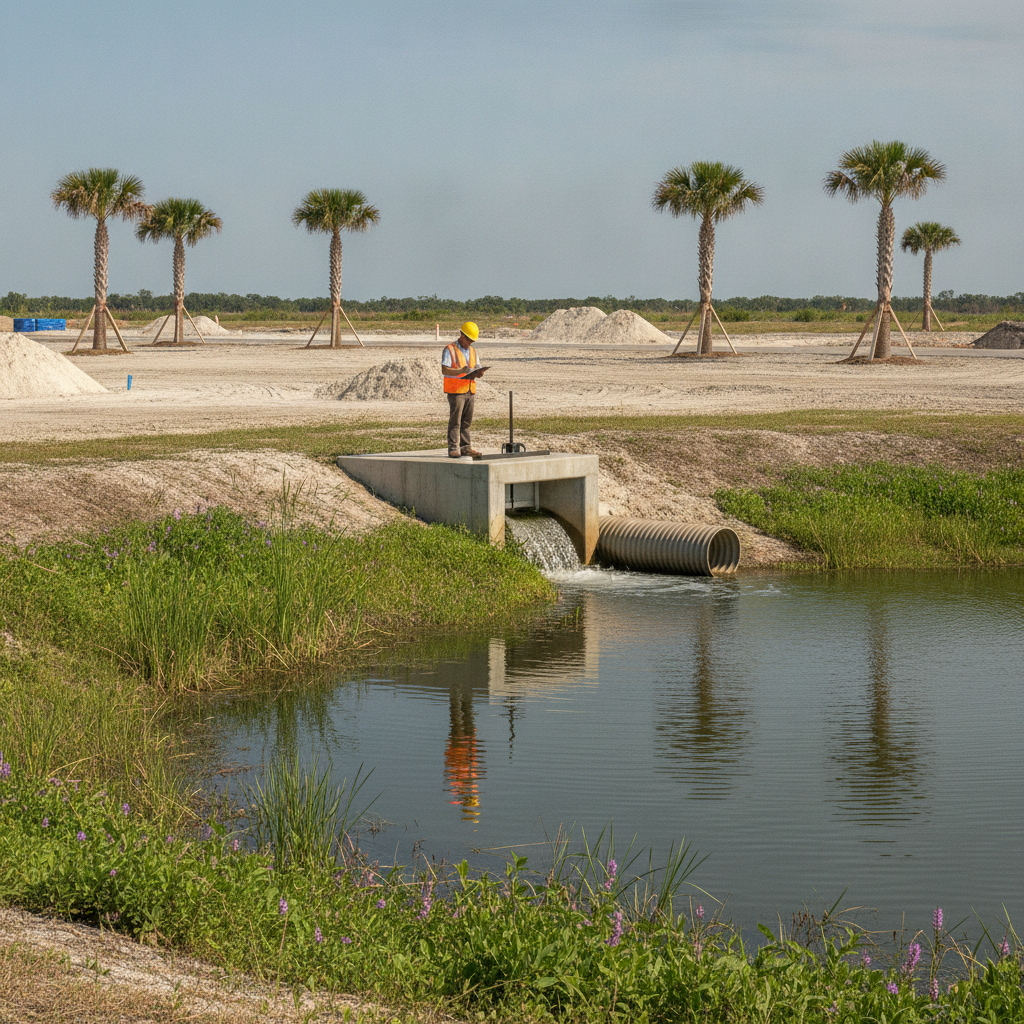
Defining Detention and Retention Ponds
Detention ponds are designed to temporarily store stormwater runoff and release it at a controlled rate through an outfall or control structure. These ponds often draw down to a dry state or maintain a permanent pool. In contrast, retention ponds capture runoff and remove it via infiltration and evaporation, with no direct surface discharge. This fundamental difference in discharge mechanism is critical in determining their application in various projects.
Water-Quality Treatment and Flood Attenuation
Detention vs. Retention Pond Comparison
| Feature | Detention Pond | Retention Pond |
|---|---|---|
| Mechanism | Temporary storage and controlled release | Permanent storage with infiltration and evaporation |
| Discharge | Outfall/control structure | No direct surface discharge |
| Water-Quality Function | Peak-rate attenuation | Pollutant removal and ecological enhancement |
| Soils/Water-Table Needs | Less dependent on soil permeability | Requires percolation and separation from water table |
| Footprint | Typically smaller | Typically larger |
| Maintenance | Regular inspections and sediment removal | Vegetation management and sediment control |
Both detention and retention ponds serve the dual purpose of water-quality treatment and flood/peak-rate attenuation. Detention ponds primarily focus on controlling the rate of runoff, reducing downstream flooding risks. Retention ponds, on the other hand, emphasize water-quality treatment by allowing pollutants to settle and be absorbed by vegetation, enhancing the ecological value of the site.
Florida Regulatory Context
In Florida, the design and implementation of stormwater ponds are regulated by the Water Management Districts and the Florida Department of Environmental Protection (FDEP) through the Environmental Resource Permit (ERP) process. These regulations dictate the required treatment volume and recovery/drawdown times, ensuring that both detention and retention ponds meet specific performance criteria to protect Florida’s water resources.
Key Design Elements
Designing effective detention and retention ponds involves several critical elements, including control structures, weirs, orifices, skimmers, side slopes, and littoral planting zones. Control structures regulate the flow of water, while littoral zones with native plantings enhance water quality and provide habitat for wildlife. These design features must be carefully considered to ensure compliance with regulatory requirements and functional performance.
The Role of Soils and Seasonal High Water Table
The success of retention ponds heavily depends on the site’s soil characteristics and the seasonal high water table. Retention relies on percolation and adequate separation from the water table, which can be challenging in many parts of Florida due to high groundwater levels. Detention ponds, while less dependent on soil permeability, still require careful consideration of site conditions to function effectively.
Ongoing Maintenance
Both detention and retention ponds require ongoing maintenance to ensure their long-term functionality. Regular inspections, sediment removal, and vegetation management are essential to maintaining the ponds’ capacity and performance. Proper maintenance not only extends the life of the pond but also ensures compliance with environmental regulations.
RSP Engineers’ Approach to Stormwater Management
At RSP Engineers, we approach stormwater management with a comprehensive understanding of Florida’s unique environmental challenges. Our team of Florida Licensed Engineers specializes in designing and implementing effective detention and retention ponds tailored to each project’s specific needs. We ensure compliance with all regulatory requirements and provide ongoing support throughout the project lifecycle.
Common Issues with Stormwater Ponds
Common issues with stormwater ponds include inadequate design leading to flooding, poor maintenance resulting in reduced capacity, and non-compliance with regulatory standards. Addressing these issues requires a proactive approach, including regular inspections, timely maintenance, and adaptive management strategies to respond to changing environmental conditions.
Contact RSP Engineers
For expert guidance on stormwater management and pond design, contact RSP Engineers. Our team of Professional Engineers is ready to assist with all aspects of site development, from planning and permitting to construction and maintenance. Let us help you achieve compliance and sustainability in your next project.
Conclusion
Understanding the differences between detention and retention ponds is essential for effective stormwater management in Florida. By considering regulatory requirements, site conditions, and maintenance needs, developers can implement solutions that protect water quality and mitigate flooding risks. RSP Engineers is committed to providing expert support in designing and maintaining these critical infrastructure components.
FAQs
-
The main difference lies in their discharge mechanism. Detention ponds temporarily store runoff and release it at a controlled rate, while retention ponds capture runoff for infiltration and evaporation without direct surface discharge.
-
Florida regulations, through the Environmental Resource Permit process, dictate specific design criteria for stormwater ponds, including treatment volume and recovery times, to protect water resources.
-
Retention ponds rely on soil permeability for infiltration. Adequate separation from the seasonal high water table is crucial to ensure effective water management and compliance with regulatory standards.