
Using Stormwater Chambers Beneath Data Center Parking Areas
Explore the use of underground stormwater chambers for data center parking areas. A civil engineering guide to design, load ratings, infiltration vs. detention, and permitting.
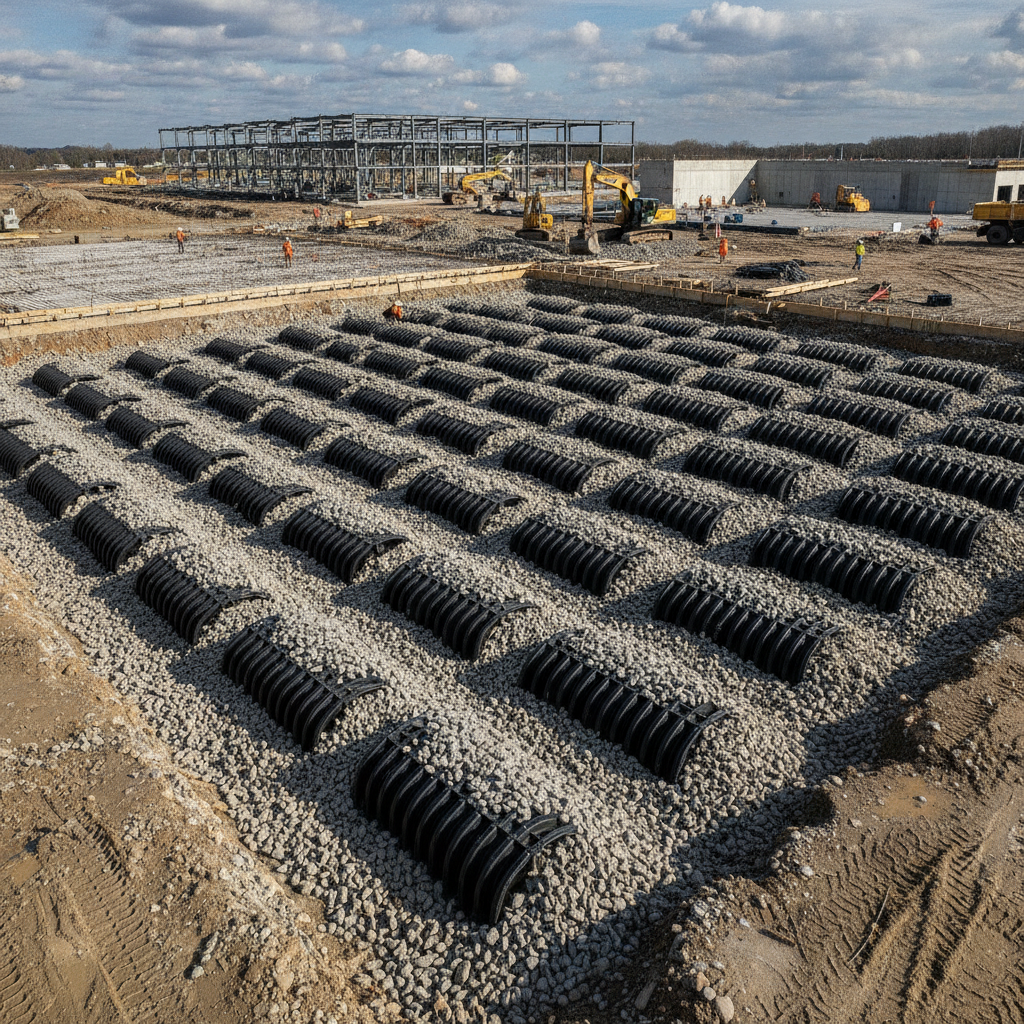
The Case for Subsurface Stormwater Management at Mission-Critical Facilities
The operational and security demands of data centers make them prime candidates for subsurface stormwater management. Large, impervious surfaces like rooftops and parking lots generate substantial runoff volumes that must be managed to prevent flooding and comply with environmental regulations. Traditional surface ponds consume acres of valuable real estate that could otherwise be used for building expansion, generator yards, or cooling tower arrays. Moving this infrastructure underground is a strategic decision that directly supports the facility’s primary mission. A civil engineering analysis will confirm that underground systems enhance site security by eliminating the open water hazard of a pond and creating a more consolidated, defensible perimeter. Furthermore, from a land development perspective, it simplifies site grading and maximizes layout flexibility. This approach allows for more efficient traffic circulation and parking configurations, which are critical for both the construction phase and long-term operations. The use of underground chambers is a key part of a modern, efficient site plan design.
Understanding Stormwater Chamber Systems and Materials
Stormwater Chamber System Design Parameters
| Parameter | Infiltration System Consideration | Detention System Consideration |
|---|---|---|
| Primary Goal | Recharge groundwater, reduce runoff volume. | Control peak discharge rate, prevent downstream flooding. |
| Soil Requirement | Requires permeable soils (sandy or loamy); confirmed via Soil boring test. | Suitable for all soil types, including clays with low permeability. |
| System Liner | Typically unlined at the bottom to allow percolation. Geotextile fabric used to separate stone from soil. | Fully wrapped in an impermeable geomembrane liner to prevent water loss. |
| Outlet Structure | May have a high-level overflow outlet for extreme storm events only. | Requires a precisely engineered outlet control structure (e.g., orifice, weir) to regulate discharge. |
| Geotechnical Analysis | Focuses on infiltration rates, seasonal high water table, and potential for groundwater mounding. | Focuses on soil bearing capacity, stability, and potential for settlement. |
| Long-Term Maintenance | Focuses on preventing sediment from clogging the infiltration surface. | Focuses on ensuring the outlet structure remains clear and functional. |
Stormwater chambers are modular, arch-shaped structures, typically manufactured from high-density polyethylene (HDPE) or polypropylene. They are installed in rows within excavated trenches, surrounded by clean, angular stone backfill. This creates a large, underground reservoir where stormwater can be stored. The key feature is their open-bottom design, which allows collected runoff to interact with the subgrade below. This design is fundamental to their dual functionality for either detention or infiltration. The selection of a specific chamber product depends on site constraints, required storage volume, and traffic loading requirements. The structural integrity of the system relies not just on the chambers themselves but on the entire engineered assembly, including the stone embedment, geotextile fabric wrap, and proper cover depth. A thorough Geotechnical Engineering investigation is a non-negotiable first step to assess soil bearing capacity, stability, and the presence of groundwater, all of which heavily influence the drainage design and system feasibility.
Critical Design Considerations for Load-Bearing Applications
When installed under parking lots and access roads, stormwater chambers must be designed to withstand significant vehicular loads. Most chamber systems are rated to meet AASHTO HS-20 or HS-25 standards, making them suitable for everything from passenger cars to fully loaded tractor-trailers. Achieving this load rating, however, is entirely dependent on strict adherence to the manufacturer’s installation specifications, which are overseen by a Professional Engineer. Key design parameters include minimum cover depth—the amount of compacted fill material between the top of the chamber and the final pavement surface—and the type of backfill. The stone surrounding the chambers provides the majority of the structural support. It must be clean, angular, and properly compacted in lifts to create a stable structural matrix. Any deviation from these specifications can lead to pavement failure or system collapse. The civil engineering plans must clearly detail these requirements for the contractor.
Infiltration vs. Detention: Configuring Chambers for Site-Specific Goals
Underground chambers can be configured in two primary ways: for infiltration or for detention. An infiltration system is designed to recharge groundwater. The open-bottom chambers allow stored water to percolate directly into the underlying native soils. This approach is preferred where soil conditions are suitable (e.g., sandy soils with good permeability) and can help meet local environmental goals for groundwater replenishment. A detailed geotechnical soil report is essential to confirm infiltration rates and design the system correctly. A detention system is used when soils are not suitable for infiltration or when the primary goal is to control the peak rate of runoff leaving the site. In this configuration, the entire chamber and stone system is typically lined with an impermeable geomembrane. Water is stored temporarily and released slowly through a controlled outlet structure, such as an orifice or weir, into the downstream storm sewer system. Permitting requirements for stormwater management systems often vary by jurisdiction, and every project team should confirm the applicable standards with the local, state, regional, and federal authorities that hold review authority over the site. This confirmation dictates whether infiltration, detention, or a hybrid approach is required for zoning compliance.
Pretreatment and Water Quality Enhancement
The long-term performance of any subsurface stormwater system depends on effective pretreatment. Runoff from parking lots carries sediment, trash, oils, and other pollutants that can clog the stone voids and reduce the system’s storage capacity and infiltration capability. To prevent this, a pretreatment device or structure must be installed upstream of the chamber field. This is a critical component for meeting federal NPDES (National Pollutant Discharge Elimination System) permit requirements. Common pretreatment methods include proprietary devices like hydrodynamic separators, which use vortex action to remove sediment and floatables, or simple engineered structures like deep-sump catch basins or an “isolator row.” An isolator row is the first row of chambers in a system, designed to capture the majority of incoming sediment. It is often fitted with more frequent access points for easier cleanout, protecting the rest of the system. The choice of pretreatment is a key decision in the drainage design process.
Construction Sequencing and Inspection Protocols
Proper construction sequencing is vital to the success of a stormwater chamber installation. The system is most vulnerable before the full cover depth and final pavement are in place. Heavy construction equipment trafficking over partially backfilled chambers can cause immediate structural failure. The project’s site development plan must include a clear construction sequence that protects the chamber field area until it is structurally complete. A qualified inspector, often as part of Construction Management Services, should be present during key installation phases. Critical inspection points include: verifying the subgrade is properly prepared, ensuring the correct stone backfill is used and compacted in appropriate lifts, checking chamber alignment and connections, and confirming that the specified minimum cover depth is achieved before any heavy traffic is allowed. These inspections are essential for quality assurance and long-term system performance.
Long-Term Maintenance and Access for Longevity
While subsurface systems are out of sight, they cannot be out of mind. A long-term inspection and maintenance plan is a mandatory component of most stormwater management permits. Modern chamber systems are designed with maintenance in mind, incorporating inspection ports and cleanout access points that allow for remote camera inspection and cleaning with jetting or vacuum trucks. Inspections are typically recommended annually for the first few years and then adjusted based on observed sediment accumulation. The focus is on the pretreatment units and the isolator row, where most sediment should be captured. Proactive maintenance is far more cost-effective than a full-scale system rehabilitation. The maintenance plan should be formally documented and transferred to the facility owner upon project completion to ensure regulatory compliance and protect the investment.
RSP Engineers’ Approach to Subsurface Stormwater Design
At RSP Engineers, we approach subsurface stormwater management as an integrated component of the overall site development strategy. Our process begins with a detailed feasibility analysis, incorporating a comprehensive review of the client’s goals, local regulations, and site-specific constraints identified through a Geotechnical Engineering study. We use advanced hydraulic modeling software to size the system accurately for required water quality and quantity control. Our team prepares detailed civil engineering drawings and specifications that leave no room for contractor error. We manage the entire permitting process, coordinating with the authority having jurisdiction to secure approvals efficiently. During construction, we provide thorough construction administration and inspection services to ensure the system is installed precisely to design specifications, safeguarding the client’s investment and ensuring long-term operational success.
Avoiding Common Pitfalls in Chamber System Implementation
Even with a solid design, implementation errors can compromise a stormwater chamber system. One of the most common issues is the use of improper backfill material, such as stone with too many fine particles, which can reduce storage volume and clog the system. Another frequent mistake is failing to achieve the required minimum cover depth, exposing the chambers to damage from traffic loads. Inadequate pretreatment is another major pitfall, leading to premature system clogging and costly remediation. Finally, poor construction site management that allows excess sediment to enter the system before it is stabilized can create problems from day one. Careful planning and diligent oversight are key to avoiding these issues.
Partner with RSP Engineers for Your Mission-Critical Site Development
Designing and implementing a subsurface stormwater system for a data center requires specialized expertise. The stakes are too high for a one-size-fits-all approach. At RSP Engineers, our team has the nationwide experience to navigate the complexities of mission-critical site development. We provide integrated civil engineering, permitting, and utility coordination services to ensure your project’s infrastructure is resilient, compliant, and efficient. Contact us today to discuss how we can maximize the value of your next data center site.
Conclusion: A Strategic Investment in Data Center Resilience and Efficiency
For data center developers, underground stormwater chambers are more than just a drainage solution; they are a strategic tool for land optimization. By moving critical infrastructure beneath parking lots, these systems free up valuable surface area, enhance site security, and help meet stringent environmental regulations. A successful project hinges on a robust design grounded in thorough Geotechnical Engineering, precise installation, and a commitment to long-term maintenance. Partnering with an experienced civil engineering firm is the first step toward implementing a stormwater management system that supports the long-term resilience and profitability of your mission-critical facility.
FAQs
-
Load ratings like AASHTO HS-25 are critical because they certify that the chamber system, when installed correctly, can support the weight of heavy vehicles like fire trucks or maintenance vehicles. The civil engineering design must incorporate the manufacturer’s specific requirements for minimum cover depth and stone backfill specifications to achieve this rating. This directly influences the final grading and pavement section of the parking lot.
-
Maintenance primarily involves inspecting and cleaning the pretreatment components and any designated sediment collection rows (isolator rows). This is typically done with vacuum trucks. Inspections via accessible ports are recommended annually at first to establish a baseline, with the frequency adjusted thereafter based on sediment loading. This ensures the long-term functionality of the stormwater management system.
-
Yes. When soils are not suitable for infiltration (e. g. , heavy clays), the system is designed as a detention system. The entire chamber and stone bed is enclosed in an impermeable liner. This configuration temporarily stores stormwater and releases it at a controlled rate through an outlet structure, meeting local requirements for peak flow mitigation without relying on soil permeability.