
Infiltration Basin Design for Data Center Campuses
A technical guide to infiltration basin design for data center campuses. Learn about geotechnical analysis, loading ratios, drawdown time, and construction best practices for effective stormwater mana
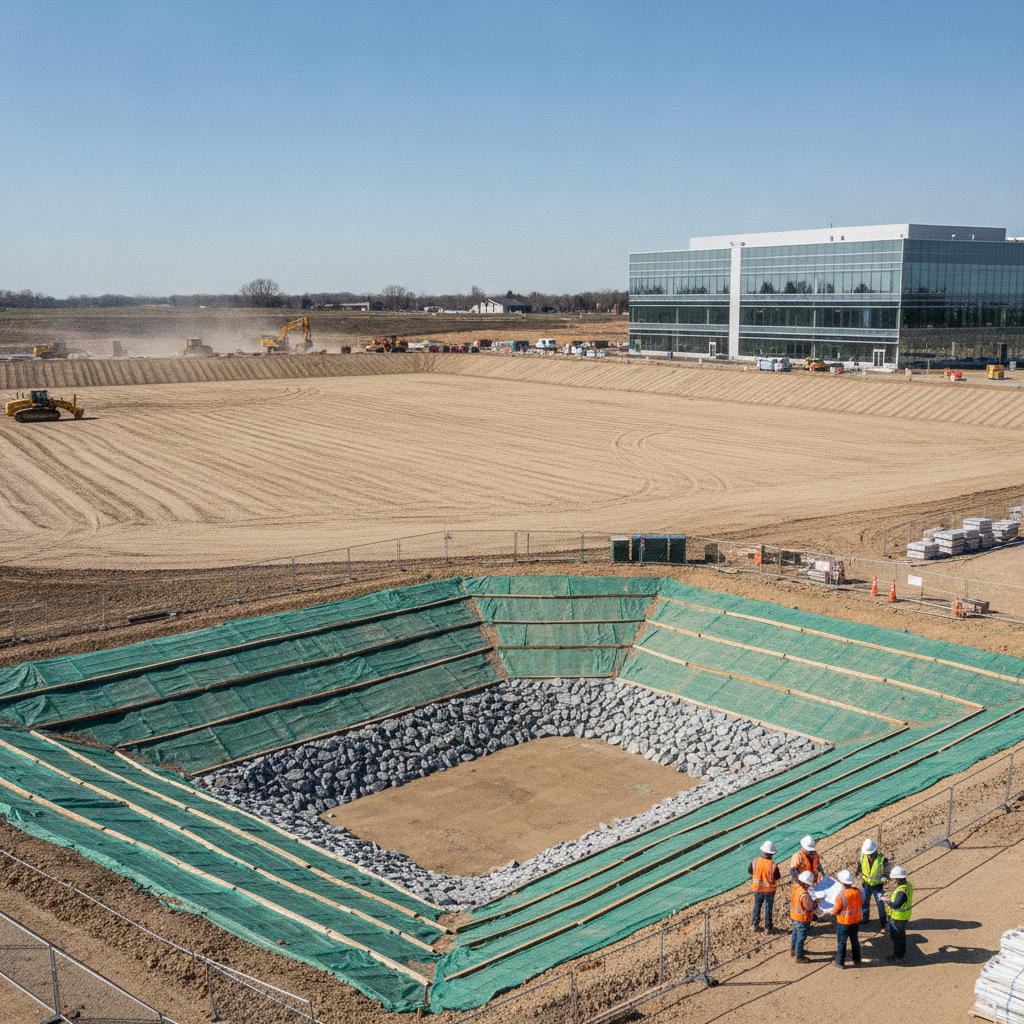
The Role of Infiltration in Mission-Critical Site Development
For data center developers, effective stormwater management is a cornerstone of a resilient and compliant site. The sheer scale of impervious surfaces can dramatically alter a site’s natural hydrology, increasing peak runoff rates and volumes. Infiltration basins directly address this by capturing runoff and allowing it to percolate into the underlying soil, mimicking the natural hydrologic cycle. This approach helps meet stringent regulatory requirements, such as those under the National Pollutant Discharge Elimination System (NPDES) program, which governs stormwater discharges from construction and industrial sites. Beyond regulatory compliance, infiltration offers tangible benefits for mission-critical projects. By promoting groundwater recharge, these systems contribute to sustainable land development practices. They also reduce the reliance on and size of traditional downstream conveyance systems, such as pipes and channels, potentially freeing up valuable land area. A well-designed infiltration system is a critical piece of infrastructure that protects the facility from flooding, prevents off-site impacts, and supports long-term operational continuity.
Geotechnical Investigation and Infiltration Rate Determination
Key Design Considerations for Infiltration Basins
| Design Element | Engineering Objective | Common Challenges & Risks |
|---|---|---|
| Geotechnical Analysis | Accurately characterize soil permeability, profile, and seasonal high water table (SHWT). | Inaccurate SHWT data from limited testing; highly variable soil strata across the site. |
| Loading Ratio | Balance an efficient land footprint with reliable hydraulic performance. | Overloading leads to drawdown failure; underloading wastes valuable land area. |
| Pretreatment Forebay | Capture coarse sediment and debris to protect the main infiltrative surface from clogging. | Undersized forebays require excessive maintenance; poor access hinders cleanout. |
| Drawdown Time | Ensure the basin empties within regulatory limits (typically 24-72 hours). | Clogged surfaces, high groundwater, or inaccurate infiltration rates extending drawdown. |
| Construction Protection | Preserve the native soil's permeability by preventing compaction from heavy equipment. | Uncontrolled site traffic and material staging within the basin footprint. |
| Long-Term Maintenance Plan | Ensure sustained performance through scheduled inspection and maintenance activities. | Sediment buildup, invasive species overgrowth, and progressive surface clogging. |
The success or failure of an infiltration basin is decided long before construction begins; it is determined by the ground itself. A comprehensive geotechnical investigation is the most critical first step in the design process. This investigation goes beyond typical foundation analysis and focuses specifically on the soil’s capacity to absorb water. Key activities include conducting numerous soil borings to characterize the subsurface soil profile and identify any restrictive layers, such as clay or bedrock. Field testing is essential to measure the actual permeability of the soil. Methods like the double-ring infiltrometer test provide a direct measurement of the saturated hydraulic conductivity, or infiltration rate. Equally important is determining the elevation of the seasonal high water table (SHWT). The bottom of the infiltration basin must be located a specific vertical distance above the SHWT to ensure proper hydraulic function and prevent groundwater mounding. The specific testing protocols and required safety factors for infiltration rates can vary by jurisdiction, and it is crucial to confirm all requirements with the local, state, regional, and federal authorities overseeing the project’s stormwater permit.
Critical Design Parameters: Loading Ratios and Drawdown Time
Once the site’s soil characteristics are understood, the civil engineering team can begin the detailed design. Two of the most important parameters are the loading ratio and the drawdown time. The loading ratio is the ratio of the total contributing impervious area to the surface area of the basin’s bottom. A higher loading ratio means a smaller, more efficient basin footprint, but it also places greater demand on the soil’s infiltrative capacity. The design must strike a careful balance to ensure performance without consuming excessive land. Drawdown time refers to the duration required for a basin to completely empty following a design storm event. Most regulatory agencies mandate a maximum drawdown time, often 72 hours, to prevent nuisance conditions like mosquito breeding and to ensure the basin is ready for subsequent storm events. Calculating this requires sophisticated hydraulic modeling that considers the design storm volume, the measured infiltration rate, and the basin’s geometry. Failure to meet drawdown requirements is a common reason for agency rejection of permit submittals.
Enhancing Water Quality with Pretreatment Forebays
While the primary function of an infiltration basin is volume control, water quality improvement is a significant co-benefit. However, the infiltrative soil surface is highly susceptible to clogging from sediment, trash, and oils washed off parking lots and rooftops. To protect this vital surface, nearly all infiltration basin designs incorporate a pretreatment forebay. This is a smaller, distinct basin at the inflow point, designed to slow incoming runoff and allow coarser sediments and debris to settle out before the water enters the main infiltration cell. A well-designed forebay includes an energy dissipator at the inlet pipe to reduce velocities, a non-erosive bottom surface (often concrete or articulated block), and clear access for maintenance equipment. The forebay is a sacrificial component intended for regular cleanout, thereby preserving the long-term performance of the much larger and more sensitive main infiltration area. This is a critical element for reducing the concentration of total suspended solids (TSS) and protecting the overall stormwater management system.
Basin Stabilization: Vegetation and Bottom Materials
The physical composition of the basin itself is a key design element. The side slopes must be stabilized to prevent erosion, which would deposit fine sediments onto the basin floor and reduce its effectiveness. This is typically achieved by establishing a dense cover of hardy, deep-rooted vegetation. The selected plant species must be tolerant of both periodic inundation and extended dry periods. Native grasses are often an excellent choice for creating a resilient, low-maintenance vegetative cover that enhances both stability and infiltration capacity. The basin bottom itself must be carefully prepared. In many cases, the topsoil is stripped and the subgrade is tilled to alleviate any surficial compaction. The surface is then vegetated to maintain soil structure and porosity. In some designs, a layer of sand or other engineered media may be placed on the bottom to further enhance infiltration. Robust erosion and sediment control measures are paramount during and after construction to ensure the basin functions as designed.
Protecting the Infiltrative Surface During Construction
One of the most common causes of infiltration basin failure is damage during the construction phase. The compaction from heavy equipment traffic can destroy the soil’s natural structure and dramatically reduce its permeability. A meticulously designed basin can be rendered useless before it ever sees a drop of stormwater if not properly protected. Therefore, a critical component of the site development plan is a detailed construction sequencing plan. Best practices include clearly delineating the entire infiltration basin footprint with high-visibility fencing at the very start of the project and prohibiting all equipment entry. The basin should be one of the last elements of the site to be graded, and only low-impact machinery should be used for final excavation and preparation. The civil engineering plans must include explicit notes and details that communicate these restrictions to the contractor, and regular site inspection by the design engineer is crucial to ensure compliance.
Our Process: A Lifecycle Approach to Infiltration Design
At RSP Engineers, we approach infiltration basin design as an integrated part of the overall data center site development lifecycle. Our process begins during the due diligence phase, where we conduct feasibility studies to assess a site’s suitability for infiltration based on preliminary soil maps and desktop analysis. This informs land acquisition and master planning decisions from day one. During the design phase, we work closely with the geotechnical engineer to direct a thorough subsurface investigation. Our civil engineering team then uses this data to perform detailed hydraulic and hydrologic modeling, optimizing the basin’s size, shape, and features to meet project goals and regulatory standards. We prepare comprehensive construction documents and manage the permit submittals with all reviewing agencies. Throughout construction, we provide construction administration services, including site inspections and review of contractor submittals, to ensure the design is executed faithfully and the critical infiltrative surfaces are protected.
Common Issues and Mitigation Strategies
Even with a solid design, infiltration basins can face operational challenges. The most common issue is the gradual clogging of the infiltration surface over time due to the accumulation of fine sediments that bypass the forebay. This leads to extended drawdown times and reduced performance. Mitigation involves implementing a rigorous long-term maintenance plan that includes regular forebay cleanouts and periodic inspection of the main cell. In some cases, rehabilitation may be necessary, which can involve tilling the surface or replacing the top layer of soil. Another potential issue is the incorrect determination of the seasonal high water table. If the SHWT is higher than assumed in the design, the basin may not have the required separation distance, leading to poor drainage and potential interaction with groundwater. The best mitigation is a thorough initial geotechnical investigation with monitoring wells to confirm water levels across different seasons. Finally, ensuring proper long-term functionality requires detailed as-built surveys to verify the basin was constructed to the specified dimensions and elevations.
Partner with RSP Engineers for Your Data Center Site Development
Designing robust and compliant infrastructure for mission-critical facilities demands specialized expertise. The team at RSP Engineers has extensive experience in large-scale site development for data centers and industrial clients across the nation. We provide comprehensive site engineering services, from initial due diligence and master planning to detailed drainage design, utility coordination, and complex permitting. Our integrated approach ensures that your stormwater management system is not only compliant but also efficient, resilient, and built to last. Contact us to discuss how we can support the success of your next project.
Conclusion
Infiltration basins are a powerful and sustainable solution for managing the immense stormwater runoff generated by data center campuses. However, their effectiveness is entirely dependent on a technically sound and detail-oriented approach. Success hinges on a comprehensive geotechnical investigation, precise hydraulic modeling, diligent protection during construction, and a commitment to long-term maintenance. For data center developers, partnering with an experienced civil engineering firm is the surest way to navigate the complexities of infiltration design and deliver a resilient, compliant, and high-performing site.
FAQs
-
An infiltration basin is designed to capture stormwater and allow it to soak into the ground, recharging groundwater. A detention pond is designed primarily to capture stormwater and release it slowly over time through a control structure to reduce peak flow rates downstream. Detention ponds are often lined or built in tight soils and do not significantly reduce runoff volume.
-
The seasonal high water table (SHWT) is a critical constraint. The bottom of the infiltration basin must be constructed a minimum vertical distance (e. g. , 2-4 feet) above the SHWT. This separation is necessary to provide an unsaturated soil zone for the water to infiltrate into and to prevent the basin from intersecting with the groundwater, which would render it ineffective.
-
Regular maintenance is crucial for long-term performance. This includes semi-annual inspections, removal of sediment and debris from the pretreatment forebay, managing vegetation to prevent erosion and invasive species, and monitoring drawdown times after major storms. If the surface clogs, more intensive rehabilitation like tilling or scraping may be required.