
Bioswale Applications on Data Center Sites
Explore the application of bioswales for effective stormwater management on data center sites. Learn about design, permitting, and maintenance from the civil engineering experts at RSP Engineers.
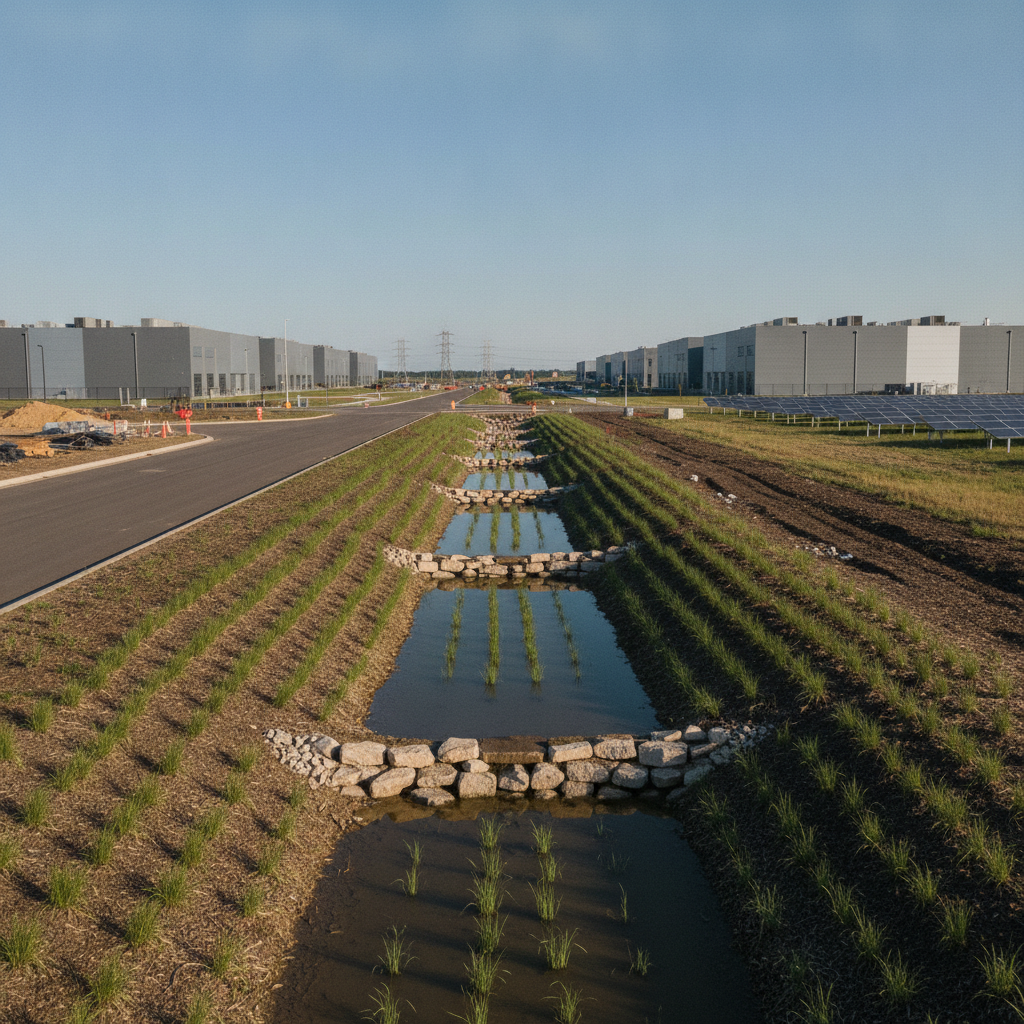
The Role of Bioswales in Mission-Critical Site Design
A bioswale is a vegetated, shallow, landscaped channel designed to treat and convey stormwater runoff. Unlike a traditional ditch or storm sewer pipe, a bioswale performs a dual function. It serves as part of the conveyance system, moving water from one point to another, while simultaneously providing crucial water quality treatment. As runoff flows through the bioswale, the vegetation and engineered soil media slow the water down, filter out sediments and pollutants, and allow for infiltration into the underlying soil. On a data center site, bioswales are ideally suited for placement along drive aisles, perimeter roads, and parking areas, where they can intercept sheet flow from these large impervious surfaces. By integrating these features into the site layout, a civil engineering team can design a distributed stormwater management system that is both functional and aesthetically pleasing. This approach aligns with modern sustainable design principles and can contribute to a project’s overall environmental stewardship goals without compromising the operational integrity of the facility.
Navigating Regulatory Compliance and Permitting for Bioswales
Bioswale Design Component Checklist for Data Center Sites
| Component | Primary Function | Data Center-Specific Consideration |
|---|---|---|
| Engineered Soil Media | Filters pollutants, supports vegetation, and manages infiltration. | Must be specified to handle potential pollutants from large parking/service areas (hydrocarbons, metals) without clogging. |
| Check Dams | Slows flow velocity, increases residence time, and promotes sediment deposition. | Placement and height must be engineered to prevent excessive ponding near critical infrastructure or access roads. |
| Underdrain System | Prevents soil saturation in poorly draining soils and ensures positive outflow. | Essential for ensuring the area remains stable and does not become oversaturated, which could compromise adjacent pavement or foundations. Connection to the main storm system must be carefully planned. |
| Plant Selection | Stabilizes soil, aids in pollutant uptake (phytoremediation), and enhances aesthetics. | Must be extremely low-maintenance, hardy, and able to withstand both drought and inundation, reflecting the high-reliability, low-touch operational model of a data center. |
| Inlet Structures | Directs runoff into the bioswale in a non-erosive manner. | Must be designed to handle concentrated flows from large paved areas and roof downspouts without causing scour at the entry point. |
| Overflow System | Safely conveys flows from larger storms that exceed the bioswale's capacity. | Critical for protecting the data center from flooding during extreme weather events. Must be robust and tied directly into the primary storm sewer system. |
The design and implementation of any stormwater system are governed by a complex web of local, state, and federal regulations. Bioswales are often a preferred or even required Best Management Practice (BMP) for meeting the stringent requirements of the National Pollutant Discharge Elimination System (NPDES) program, which regulates stormwater discharges. A well-designed bioswale system can be critical for achieving zoning compliance and securing the necessary land development permits. The specific design criteria for bioswales, including their size, depth, soil media composition, and required vegetation, vary by jurisdiction, and every project team should confirm the applicable standards with the local, state, regional, and federal authorities that hold review authority over the site. Successful permit submittals depend on demonstrating that the proposed system meets or exceeds these standards for flow reduction and pollutant removal. Engaging a knowledgeable civil engineering firm early in the process is essential for navigating the agency review process efficiently and avoiding costly delays.
Core Design Principles: Sizing, Slope, and Flow Control
The effectiveness of a bioswale hinges on its hydraulic design. Sizing is typically based on the capacity to treat a specific volume of runoff, often referred to as the Water Quality Volume (WQV), which corresponds to the runoff generated by a smaller, more frequent storm event. The goal is to ensure sufficient residence time—the duration the water spends in the bioswale—to allow for filtration and pollutant settling. The channel’s geometry, including its width and side slopes, is engineered to keep flow velocities low to prevent erosion and maximize treatment. The longitudinal slope of the bioswale is a critical design parameter. It must be steep enough to promote positive drainage and prevent ponding for extended periods but gentle enough to prevent high velocities that could cause scour. In many cases, especially on sites with more significant grades, check dams are installed at intervals along the bioswale. These small, permeable barriers made of rock or other materials create a series of shallow pools during a storm, further slowing the flow and enhancing infiltration and sediment deposition. This level of detailed drainage design is fundamental to the system’s long-term performance.
Engineered Soil Media and Underdrain Systems
The heart of a bioswale’s treatment capability lies in its engineered soil media. This is not simply topsoil; it is a carefully specified mixture of sand, compost, and other materials designed to balance drainage with water retention and support robust plant growth. The media physically filters suspended solids and has chemical and biological properties that help capture and break down pollutants like hydrocarbons and heavy metals commonly found in parking lot runoff. In areas with poorly draining native soils (such as heavy clays), an underdrain system is a critical component. This typically consists of a perforated pipe embedded in a gravel layer at the bottom of the bioswale trench. The underdrain prevents the soil media from becoming oversaturated, which could harm the vegetation and compromise the system’s performance. It collects the treated water that has filtered through the media and conveys it to a downstream connection point in the conventional storm sewer system, ensuring reliable performance even in challenging soil conditions. This integration requires careful utility coordination to avoid conflicts.
Plant Selection for High-Performance, Low-Maintenance Bioswales
The vegetation in a bioswale is not merely decorative; it is an integral part of the treatment system. Proper plant selection is crucial for long-term success. The ideal plants are typically native species that are adapted to the local climate and can tolerate both periods of inundation and drought. Hardy grasses, sedges, and rushes are common choices due to their dense root systems, which help stabilize the soil, prevent erosion, and enhance infiltration. These plants contribute to pollutant removal through a process called phytoremediation, where they absorb and metabolize certain contaminants. A well-chosen plant palette also minimizes long-term maintenance burdens, a key consideration for facility managers at a 24/7 operational data center. The goal is to create a resilient, self-sustaining ecosystem that provides consistent stormwater treatment with minimal human intervention, contributing to both the site’s ecological function and its corporate aesthetic.
Integrating Bioswales with Site Grading and Utilities
Successful bioswale implementation requires seamless integration with the overall site development plan. The location and elevation of bioswales must be carefully coordinated with the proposed site grading plan to ensure that runoff is effectively captured and directed into the system. This involves setting appropriate elevations for adjacent pavement, curb inlets, and overflow structures to manage flows during larger storm events. Furthermore, meticulous utility coordination is paramount. The linear nature of bioswales often places them in corridors where other underground utilities—such as power, communications, water, and sewer lines—are located. The design team must identify and deconflict these alignments, ensuring that the bioswale excavation does not damage existing or proposed infrastructure. Establishing proper setbacks and clearance zones is a critical task for the civil engineering team to prevent future maintenance issues and ensure the integrity of all site systems.
The RSP Engineers Approach to Bioswale Integration
At RSP Engineers, we view bioswales as a critical tool in our site development toolkit for mission-critical facilities. Our process begins with a thorough site analysis, including a review of topography, soil conditions, and regulatory requirements. We then use this data to inform an integrated civil engineering design that incorporates bioswales and other LID features seamlessly into the site layout. Our team manages the entire permitting process, preparing detailed plans and calculations for agency review to ensure a smooth approval pathway. During construction, we provide construction administration services to verify that the bioswales are built to specification, from the soil media mix to the final planting, ensuring the system functions as designed for the life of the facility.
Common Challenges in Bioswale Implementation
While highly effective, bioswales require careful planning and execution to avoid common pitfalls. One of the most frequent issues is sediment loading during the construction phase. If a site is not properly stabilized, construction runoff can clog the engineered soil media before the system is even operational. Proper sediment control measures and construction sequencing are essential. Another challenge is the compaction of the soil media by heavy equipment, which drastically reduces its infiltration capacity. Finally, a lack of a clear long-term maintenance plan can lead to neglect, allowing invasive species to take over or sediment to accumulate, reducing the system’s effectiveness. A proactive approach to design and a clear handover to the facility’s maintenance team are key to long-term success. Frequently Asked Questions How much land do bioswales require on a data center site? The land requirement depends on the size of the contributing drainage area and local regulatory requirements for water quality treatment. However, because they are linear systems, they can often be efficiently integrated into required landscape buffers, parking lot islands, and road rights-of-way, minimizing their impact on usable development area. Can bioswales handle the runoff from a 100-year storm event? Bioswales are primarily designed for water quality treatment of smaller, more frequent storms. They are almost always designed with an overflow system, such as an adjacent storm drain inlet or a hardened channel, to safely convey peak flows from larger, less frequent events (like a 100-year storm) into the primary drainage design infrastructure. What is the typical maintenance required for a bioswale? Maintenance is similar to standard landscaping. It includes periodic inspection, removal of trash and debris, weeding to control invasive species, and occasional pruning or replacement of vegetation. The first year is critical for establishing the plants. After that, a well-designed system with native plants requires minimal intervention. Are bioswales compatible with the high-security requirements of data centers? Yes. The civil engineering design can incorporate security considerations. Bioswales are typically shallow, open channels that do not obstruct sightlines or create hiding places. They can be integrated with security fencing and other perimeter controls without compromising the site’s security posture. How do underdrains in a bioswale connect to the larger drainage system? The perforated underdrain system pipe is typically connected via a solid pipe to a nearby storm drain manhole or catch basin. This provides a positive outfall for the filtered water, ensuring the bioswale drains properly and integrates seamlessly with the site’s overall stormwater management network. What happens if the native soil has a very low infiltration rate? This is a common scenario where an underdrain system is essential. The bioswale functions primarily as a filtration system rather than an infiltration system. The engineered soil media still filters pollutants effectively, and the underdrain collects and conveys the treated water to the storm sewer system, ensuring the design meets regulatory compliance goals.
Partner with RSP for Your Mission-Critical Site Development
Integrating advanced stormwater solutions like bioswales into a complex data center project requires deep expertise in civil engineering, permitting, and site development. The team at RSP Engineers has a nationwide track record of delivering robust, compliant, and sustainable designs for mission-critical facilities. We understand the unique operational and security demands of the industry and partner with our clients to navigate the complexities of utility coordination and agency approvals. Contact us to discuss how we can optimize your next project’s site engineering for performance and long-term value.
Conclusion
For data center developers, bioswales represent a strategic investment in sustainable and resilient site development. They effectively address the challenges of stormwater management on large impervious sites, provide a reliable pathway to regulatory compliance, and contribute to a more environmentally responsible facility. Achieving these benefits, however, depends on a sophisticated approach to civil engineering that considers everything from hydraulic modeling and soil science to plant ecology and construction logistics. With expert design and proper maintenance, bioswales can be a high-performing asset for any data center campus.
FAQs
-
Bioswale Applications on Data Center Sites requires careful planning, qualified engineering, and compliance with the applicable codes and permits.
-
Getting Bioswale Applications on Data Center Sites right protects safety, supports regulatory compliance, and avoids costly redesigns or delays.
-
RSP Engineers provides licensed expertise and end-to-end support for Bioswale Applications on Data Center Sites, from early planning through permitting.