
Exfiltration Systems for Data Center Developments
Explore the civil engineering design of exfiltration systems for data center developments. Learn about trench sizing, geotechnical needs, and permitting for effective stormwater management.
The Role of Exfiltration in Data Center Stormwater Management
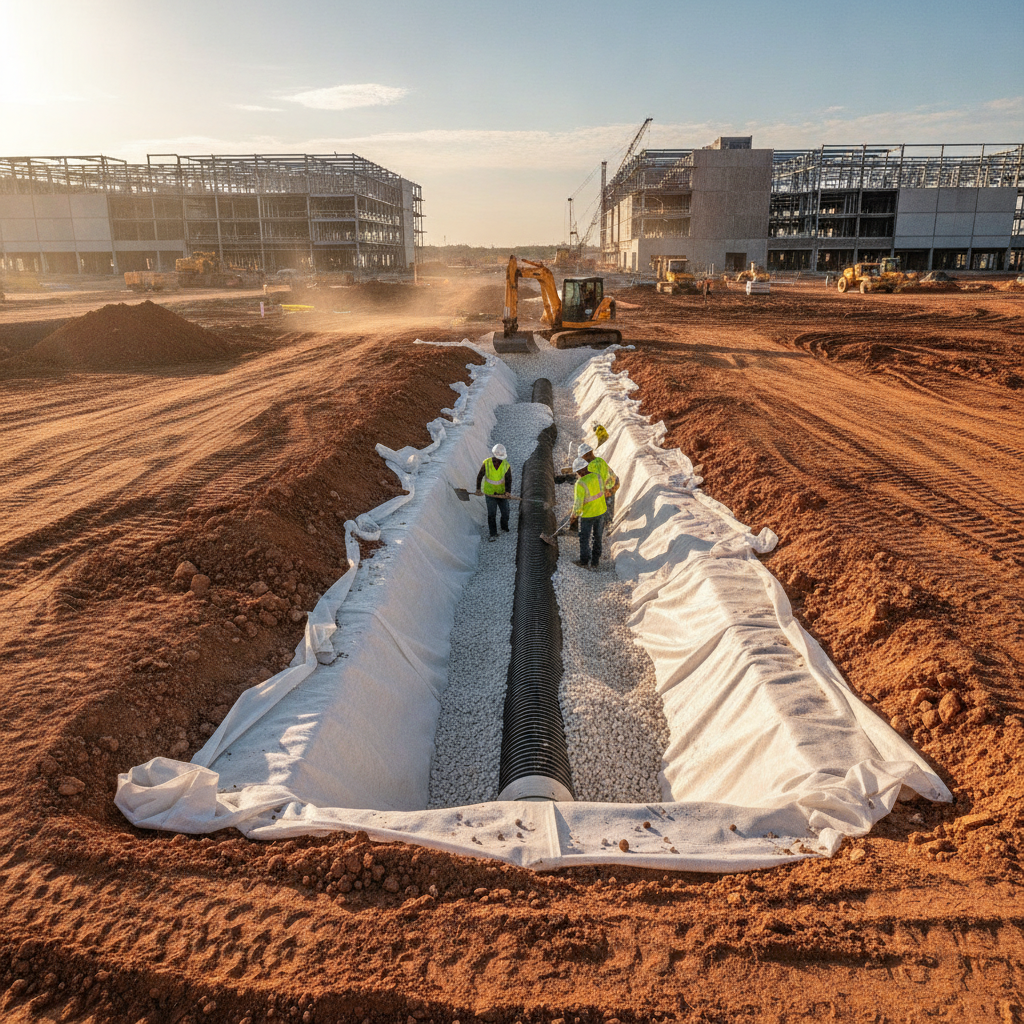
The primary goal of any stormwater management system is to control the volume, rate, and quality of runoff from a developed site, mimicking pre-development hydrologic conditions as closely as possible. Data centers, with their high percentage of impervious coverage, drastically alter this balance. Exfiltration systems address this by collecting runoff from roofs and pavement and directing it into underground trenches or galleries filled with stone aggregate. This stored water then percolates, or infiltrates, into the ground, recharging local groundwater and reducing the peak flow discharged from the site. This subsurface approach is particularly advantageous for data center campuses where land is at a premium. By moving stormwater management infrastructure underground, developers can optimize the site plan design for buildings, equipment yards, and security perimeters. This is a significant departure from large, open ponds that require extensive fencing, safety features, and regular landscape maintenance. A properly designed exfiltration system integrates seamlessly into the site’s drainage design, providing a robust and discreet solution that supports the facility’s core mission.
Core Components and Design Principles of Exfiltration Trenches
Comparison of Common Exfiltration System Configurations
| Configuration Type | Key Features | Ideal Application | Maintenance Considerations |
|---|---|---|---|
| Stone & Pipe Trench | Perforated pipe within a stone-filled trench lined with filter fabric. | Linear applications along parking lots, roadways, or building perimeters. Cost-effective for many sites. | Requires cleanouts for pipe jetting. Performance depends heavily on filter fabric integrity. |
| Underground Chambers | Large, arch-shaped plastic or concrete chambers that provide high-volume storage. | Sites with limited space where high storage capacity is needed, such as beneath parking areas. | Easier to inspect and clean internally than stone trenches. Higher initial material cost. |
| Perforated Pipe Fields | A network of interconnected perforated pipes without a large volume of surrounding stone. | Sites with highly permeable soils where conveyance and distribution are more critical than storage. | Relies almost entirely on soil infiltration. Prone to clogging if pretreatment is inadequate. |
| Modular Block Systems | Stackable, open-bottomed plastic blocks or crates wrapped in filter fabric. | High-density sites requiring maximum storage volume in a compact footprint. | Offers very high void space (95%+). Inspection can be challenging depending on the specific product. |
| Pervious Pavement | Porous asphalt or concrete with an underlying stone reservoir. | Parking lots and low-traffic areas where the pavement itself acts as the stormwater system. | Requires specialized vacuum sweeping to prevent surface clogging. Not suitable for high-traffic or heavy-load areas. |
A typical exfiltration trench is more than just a rock-filled ditch. It is an engineered system with several key components working in concert. The core of the system is often a perforated pipe laid at the bottom of the trench, which helps distribute the incoming stormwater evenly along its length. This pipe is surrounded by a specific gradation of clean, washed stone or aggregate, which provides the primary storage volume for runoff. The void space between the stones—typically around 40%—is where the water is held as it awaits infiltration. To prevent native soils from migrating into the aggregate and clogging the system, the entire trench is lined with a non-woven geotextile filter fabric. This fabric allows water to pass through but retains fine soil particles. The design must also include provisions for inspection and maintenance, such as cleanout ports and observation wells. Design standards for these components, including stone specifications and filter fabric requirements, vary by jurisdiction, and every project team must confirm the applicable standards with the local, state, regional, and federal authorities that hold review authority over the site. A thorough geotechnical investigation is the foundational step that informs all these design decisions.
Sizing and Volumetric Calculations for System Performance
The civil engineering design of an exfiltration system is a data-driven process. The system must be sized to accommodate the runoff volume generated by a specific design storm event, which is a statistical rainfall intensity and duration mandated by the reviewing agency. Engineers use hydraulic modeling software to calculate the peak runoff rate and total volume from all contributing impervious surfaces on the data center site. The required storage volume is then achieved by designing the dimensions of the trench—its length, width, and depth—and accounting for the void ratio of the aggregate material. The second critical calculation is determining the infiltration rate. This is based on the hydraulic conductivity of the underlying soils, a value derived from field testing during the geotechnical investigation. The system must be able to drain the stored water within a specified time (e.g., 72 hours) to ensure capacity is available for subsequent storm events. This balance between storage and infiltration is fundamental to a successful drainage design.
Geotechnical Considerations and Site Suitability
Not all sites are suitable for exfiltration. The success of these systems is entirely dependent on the underlying soil conditions. A comprehensive Geotechnical Engineering investigation, including soil borings and percolation or permeability testing (a Soil Test), is a non-negotiable prerequisite. The ideal soils are sandy or loamy, with moderate to high infiltration rates that allow water to percolate effectively. Conversely, sites with heavy clays, shallow bedrock, or a high seasonal high water table are poor candidates for exfiltration. Regulatory codes typically mandate a minimum vertical separation distance between the bottom of the exfiltration system and the seasonal high water table to ensure proper drainage and prevent groundwater contamination. There are also required horizontal setbacks from building foundations, slopes, and property lines to maintain structural and site stability. Ignoring these geotechnical constraints is a direct path to system failure and potential site damage.
Pretreatment and Long-Term Maintenance Strategies
The single greatest threat to an exfiltration system’s longevity is clogging. Sediment, debris, and pollutants washed off from parking lots and rooftops can accumulate within the aggregate, drastically reducing storage volume and infiltration capacity. To prevent this, a robust pretreatment strategy is essential. This can include grassed swales, sediment sumps in catch basins, or proprietary hydrodynamic separators installed upstream of the exfiltration trench. The goal of pretreatment is to remove a high percentage of total suspended solids (TSS) before the runoff enters the subsurface system. Beyond initial design, a plan for long-term maintenance is critical for ensuring performance over the facility’s lifespan. This includes regularly cleaning pretreatment structures and providing access for inspection and flushing of the perforated pipe network via cleanouts and inspection ports. A well-documented maintenance plan is often a condition of permit approval.
The RSP Engineers Approach to Exfiltration System Design
At RSP Engineers, our process for designing exfiltration systems for data centers is comprehensive and risk-averse. We begin every project with a detailed site feasibility analysis, which includes a thorough review of existing utility maps, topographic data, and environmental constraints. We then direct and closely manage a site-specific Geotechnical Engineering investigation to confirm soil suitability and establish key design parameters like infiltration rates and water table elevations. Our team utilizes advanced hydraulic modeling software to size the system accurately for all required storm events, ensuring full compliance with agency regulations. We prepare detailed construction documents that clearly specify materials, installation procedures, and inspection checkpoints. Throughout the permitting process, we act as a proactive advocate for our clients, coordinating with review agencies to secure timely approvals. Our involvement continues through construction to ensure the system is built to specification and functions as designed.
Common Issues and Design Pitfalls to Avoid
Even with a solid design, issues can arise during construction and operation. One of the most common pitfalls is the over-compaction of the subgrade soils at the bottom of the trench during excavation, which can seal off the infiltrative surface. Another frequent problem is the improper installation of the filter fabric, with tears or unsecured overlaps allowing fine particles to enter and clog the system. Sourcing the wrong type of aggregate—one with too many fine particles or ‘fines’—can also lead to premature failure. Effective construction administration by the design engineer is crucial to prevent these errors. The engineer should be on-site to inspect the subgrade before stone is placed, verify the filter fabric installation, and review material certifications. Attempting to cut corners through aggressive value engineering, such as reducing pretreatment measures or eliminating inspection ports, often leads to much higher costs in the long run when the system failure requires a complete and costly replacement. Frequently Asked Questions (FAQ) What is the primary advantage of an exfiltration system for a data center site? The primary advantage is land use efficiency. By placing stormwater management infrastructure underground, developers can maximize the surface area available for buildings, equipment, parking, and future expansion, which is a critical consideration for high-value data center real estate. How do you prevent an exfiltration trench from clogging? Clogging is prevented through a two-pronged approach: effective upstream pretreatment to remove sediment and debris before it enters the system, and proper installation of a geotextile filter fabric to prevent surrounding soils from migrating into the stone aggregate. What kind of soil is best for exfiltration? The ideal soils are those with good hydraulic conductivity, such as sandy or loamy soils. A site-specific Geotechnical soil report is required to confirm that the infiltration rates are sufficient to meet regulatory requirements for drawdown time. Can exfiltration systems be used everywhere? No. They are not suitable for sites with impermeable clay soils, shallow bedrock, a high seasonal water table, or known soil contamination. A thorough site development feasibility study is necessary to determine if an exfiltration system is a viable option. How is the performance of an exfiltration system verified after construction? Performance is often verified through post-construction testing. This can involve an infiltration or drawdown test, where the system is filled with a known volume of water and the rate at which the water level drops is measured to confirm it meets the design infiltration rate. What is the typical lifespan of a well-maintained exfiltration system? A well-designed and properly maintained exfiltration system can have a service life of 20 to 30 years or more. The lifespan is directly tied to the effectiveness of the pretreatment system and adherence to a regular inspection and maintenance schedule.
Your Partner in Mission-Critical Site Development
Designing robust and compliant infrastructure for data centers requires specialized expertise. The team at RSP Engineers has a deep understanding of the unique challenges and high stakes involved in mission-critical projects. If you are planning a new data center or expanding an existing facility, contact us to discuss how our expert civil engineering, stormwater design, and land development permitting services can help you achieve your goals. We provide the technical excellence needed to deliver a successful project from due diligence through construction.
Conclusion
Exfiltration systems represent a powerful and efficient tool in the civil engineering toolkit for data center development. They maximize usable land, effectively manage runoff, and contribute to groundwater recharge. However, their success is not automatic; it demands rigorous upfront geotechnical analysis, precise hydraulic design, and a disciplined approach to construction and maintenance. By partnering with an experienced engineering firm, data center developers can leverage these systems to create resilient, compliant, and highly optimized sites. A holistic approach to site development ensures that critical infrastructure like stormwater management supports, rather than constrains, the facility’s primary mission.
FAQs
-
Exfiltration Systems for Data Center Developments requires careful planning, qualified engineering, and compliance with the applicable codes and permits.
-
Getting Exfiltration Systems for Data Center Developments right protects safety, supports regulatory compliance, and avoids costly redesigns or delays.
-
RSP Engineers provides licensed expertise and end-to-end support for Exfiltration Systems for Data Center Developments, from early planning through permitting.