
Undercutting Strategies for Data Center Building Pads
Explore essential undercutting strategies for data center building pads. Learn how geotechnical data, proof rolling, and proper backfill ensure long-term stability for mission-critical facilities.
The Role of Geotechnical Investigation in Defining Undercut Needs
The decision to undercut is not arbitrary; it is a data-driven process that begins with a comprehensive Geotechnical Engineering investigation. The Geotechnical soil report is the single most important document for planning earthwork and foundation design. Through a series of soil boring test samples and laboratory analysis, the Geotechnical engineer characterizes the subsurface profile, identifying layers of unsuitable materials such as highly organic soils, undocumented fill, loose sands, or soft clays. These materials lack the necessary soil bearing capacity to support the immense, concentrated loads of a data center. The report provides specific recommendations for ground improvement, often detailing the anticipated depth and extent of required undercutting. It serves as the primary guide for the civil engineering team in preparing the site grading plans and specifications. Ignoring or misinterpreting the geotechnical recommendations is a direct path to long-term structural problems, making close collaboration between the geotechnical consultant and the design engineer essential from the project’s outset.
Determining Undercut Depth and Field Verification
Comparison of Ground Improvement Techniques for Data Center Pads
| Technique | Typical Application | Key Advantages | Potential Constraints |
|---|---|---|---|
| Undercut and Replace | Shallow unsuitable soils (typically < 10 feet deep) like organics, undocumented fill, or soft clays. | Provides a highly reliable, uniform subgrade. Uses conventional earthmoving equipment. Well-understood process. | Can be costly and slow if depths are large. Requires space for soil stockpiles and disposal of unsuitable material. Weather dependent. |
| Deep Dynamic Compaction (DDC) | Deep, loose granular soils (sands and gravels). | Treats soils at significant depths. Relatively fast and cost-effective for large areas. | Generates significant ground vibration, limiting its use near existing structures. Not effective in cohesive clay or silt soils. |
| Aggregate Piers (Geopiers) | Weak or compressible soils (silts, clays, loose sands) at moderate depths. | Increases bearing capacity and controls settlement. Can be installed quickly with minimal spoils. | Requires specialized equipment and contractors. Performance is highly dependent on installation quality control. |
| Soil Cement / Lime Stabilization | Cohesive soils (clays and silts) with high moisture content. | Improves soil strength and reduces plasticity. Can often utilize on-site soils, reducing hauling costs. | Requires careful mix design and quality control. Curing time is needed. Can be weather-sensitive during application. |
| Deep Soil Mixing (DSM) | Very soft or organic soils at significant depths. | Creates soil-cement columns for high load capacity. Minimizes vibration and spoils. | Highly specialized technique with significant equipment mobilization costs. Extensive quality assurance is required. |
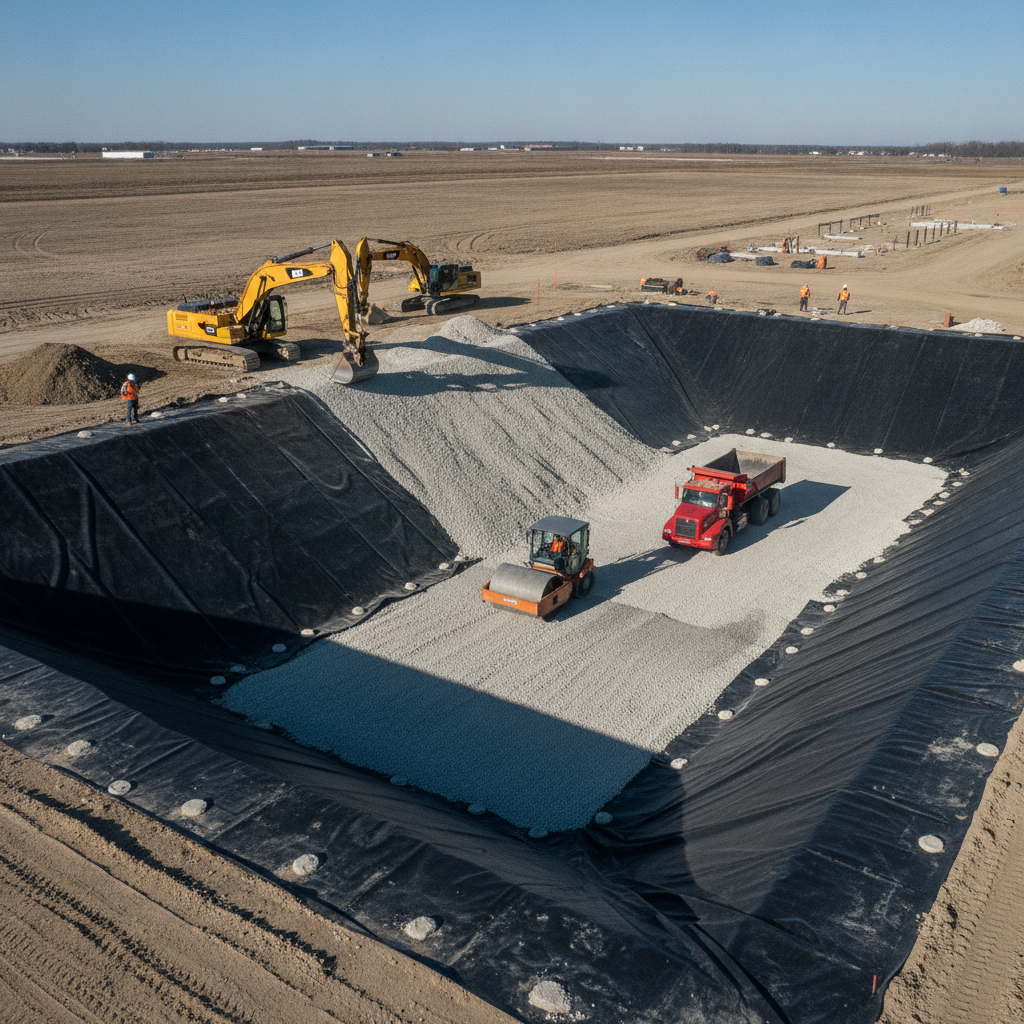
While the Geotechnical soil report provides the initial roadmap, field conditions can often differ from what is predicted by discrete soil borings. The final depth and horizontal extent of an undercut are confirmed during construction, primarily through a process called proof rolling. A proof roll involves driving a heavy, fully loaded piece of equipment (like a tandem-axle dump truck or a vibratory roller) systematically across the exposed subgrade. The observing engineer looks for any pumping, rutting, or deflection, which are visual indicators of weak or unstable soils that must be removed. This field verification is a crucial quality control step. The undercut continues until the bottom of the excavation is firm and stable under the proof roll, ensuring that all unsuitable material has been removed before any new fill is placed. While the engineering principles of subgrade verification are consistent, specific documentation and inspection requirements can vary by jurisdiction, and it is crucial to confirm these with the authority having jurisdiction over the project. This ensures that the permit submittals and final construction records are in full compliance with local standards.
Selecting and Placing Engineered Backfill
Once the unsuitable soils are removed, they must be replaced with a material that has known, reliable engineering properties. This is known as engineered fill or structural fill. The material selection is critical and is typically specified in the project’s technical specifications, guided by the geotechnical report. Common backfill materials include clean sand, crushed stone, or a well-graded soil-aggregate mixture. The material must be free of organics and debris and capable of achieving a high level of compaction. Placement of the engineered fill is a methodical process. It is placed in controlled layers, or “lifts,” typically 8 to 12 inches thick. Each lift is compacted to a specified density, commonly 95% to 98% of the maximum dry density as determined by a Standard or Modified Proctor test. A third-party construction materials testing firm must be on-site to perform density tests on each lift to verify that the required compaction is achieved before the next lift is placed. This rigorous quality control ensures the final building pad is uniformly dense and capable of supporting the structure without settlement.
Enhancing Subgrade Stability with Geosynthetics
In situations with very soft underlying soils or high groundwater, the performance of an undercut can be significantly enhanced with the use of geosynthetics. A geotextile separation fabric is often placed at the bottom of the excavation before backfilling begins. This fabric acts as a barrier, preventing the clean engineered fill from mixing with the weaker native soils below, which could compromise the integrity of the building pad over time. It also aids in dewatering and stabilizing the excavation bottom. For even greater reinforcement, a geogrid can be used. A geogrid is a polymer mesh that provides tensile strength, interlocking with the aggregate fill to create a mechanically stabilized layer. This composite system distributes loads over a wider area, increasing the subgrade’s bearing capacity and providing a robust platform for construction. The integration of geosynthetics is a key component of modern site development for high-performance facilities and is a core competency of experienced Civil Engineers.
Managing Groundwater During Undercut Operations
Groundwater presents one of the most significant challenges during undercutting. Attempting to excavate and backfill in saturated conditions can quickly turn the subgrade into an unworkable quagmire, making it impossible to achieve proper compaction. Effective dewatering is therefore essential for a successful undercut operation. The approach to dewatering depends on the site’s specific hydrogeology. Common methods include installing sump pumps in excavated pits, using wellpoint systems, or constructing perimeter underdrains to intercept groundwater before it enters the work area. The drainage design for the dewatering operation must be carefully planned to handle the expected volume of water and discharge it in an environmentally compliant manner. Failure to control groundwater can destabilize the excavation slopes, compromise the subgrade, and lead to significant project delays and cost overruns. This aspect of the work requires close coordination between the civil engineering team and the contractor.
RSP’s Process for Undercut Design and Oversight
At RSP Engineers, we approach undercutting with a rigorous, integrated process to mitigate risk and ensure a stable foundation for our clients’ mission-critical facilities. Our methodology focuses on proactive collaboration and meticulous oversight. We begin by working closely with the Geotechnical engineer to fully understand the subsurface conditions and their recommendations. This collaboration allows us to translate the geotechnical data into a clear, constructible set of civil engineering plans and technical specifications. During construction, our role shifts to providing comprehensive Construction Management Services. Our field personnel observe critical activities like the initial topsoil stripping, the undercut excavation, and the proof rolling of the subgrade. We review material submittals for the engineered fill to ensure they meet project requirements and diligently track the results of all compaction testing. This hands-on oversight ensures that the design intent is executed correctly in the field, providing our clients with the assurance that their facility is built on a solid, reliable foundation.
Common Issues and Pitfalls in Undercutting
Even with a solid plan, undercutting operations can encounter challenges. One of the most common issues is underestimating the volume of unsuitable soil. The actual extent of poor material discovered during excavation may be larger than predicted by the soil borings, leading to budget and schedule impacts. Another frequent pitfall is inadequate dewatering, which results in a saturated, unstable excavation bottom that cannot be properly compacted. This can lead to a vicious cycle of chasing soft spots and failing compaction tests. Using poor-quality backfill or failing to place it in properly compacted lifts is another critical error. This compromises the entire purpose of the undercut and can lead to long-term settlement. Finally, a lack of communication between the design team, the geotechnical consultant, and the contractor can lead to misinterpretations of the specifications or a slow response to unexpected field conditions. Proactive project management and clear lines of communication are essential to navigate these potential issues successfully. Frequently Asked Questions What is the primary purpose of undercutting a building pad? The primary purpose is to remove weak, compressible, or otherwise unsuitable native soils and replace them with strong, predictable engineered fill. This creates a stable, uniform subgrade with a high soil bearing capacity, preventing differential settlement that could damage the structure and its sensitive equipment. How is the depth of an undercut determined? The initial depth is recommended in the Geotechnical soil report based on soil borings. However, the final depth is confirmed in the field during construction. The excavation continues until a firm, unyielding bottom is verified, often through a process called proof rolling with heavy equipment. Can we avoid undercutting by using a different foundation type? In some cases, deep foundations like piles or drilled shafts can transfer building loads through weak soils to a deeper, competent bearing layer, avoiding a massive undercut. However, this is often more expensive and complex than a shallow foundation on an improved subgrade. The optimal solution depends on a detailed cost-benefit analysis performed by the structural and Geotechnical engineer. What happens if we encounter unexpected poor soils during construction? This is a common scenario. When unexpected unsuitable soils are found, the civil engineering team and geotechnical consultant must be notified immediately. They will assess the situation and direct the contractor on the additional excavation required. This typically results in a change order to account for the increased scope of work. Is a geotextile fabric always necessary in an undercut? Not always, but it is highly recommended, especially when the underlying soils are very soft or saturated. The geotextile acts as a separator to prevent the new fill from being contaminated by the poor soils below and helps stabilize the bottom of the excavation. The cost is minimal compared to the long-term benefit it provides to the site development.
Build Your Foundation with Confidence
A successful data center project starts from the ground up. Ensuring your building pad is stable and secure is the first and most critical step in protecting your investment. The team at RSP Engineers provides expert site engineering services to guide your project through every phase, from initial site assessment and Geotechnical Engineering coordination to detailed design and rigorous construction administration. We have the experience to anticipate challenges, manage complex earthwork operations, and deliver a foundation you can build on with confidence. Contact us today to discuss your mission-critical project needs.
Conclusion
Undercutting is more than just digging and filling; it is a precise engineering process fundamental to the long-term success of data centers and other settlement-sensitive facilities. A successful operation hinges on a thorough geotechnical investigation, diligent field verification, and strict quality control during backfill placement. By understanding the strategies for design, execution, and oversight, developers can mitigate risks associated with poor soil conditions. Ultimately, a properly executed undercut is a critical investment in the structural integrity and operational reliability of any major site development project, requiring experienced civil engineering leadership.
FAQs
-
Undercutting Strategies for Data Center Building Pads requires careful planning, qualified engineering, and compliance with the applicable codes and permits.
-
Getting Undercutting Strategies for Data Center Building Pads right protects safety, supports regulatory compliance, and avoids costly redesigns or delays.
-
RSP Engineers provides licensed expertise and end-to-end support for Undercutting Strategies for Data Center Building Pads, from early planning through permitting.