
Managing Unsuitable Soils During Data Center Site Preparation
Learn how civil engineering and geotechnical investigation address unsuitable soils (soft, organic, expansive) in data center site preparation, from removal and replacement to ground improvement.
The Critical Role of Geotechnical Investigation
The first line of defense against subsurface risk is a comprehensive geotechnical investigation. This is not merely a box to check but a critical investment that informs the entire site plan design. A qualified Geotechnical engineer executes a planned program of exploration, typically involving a series of soil boring tests across the proposed development area. These borings allow for the collection of soil samples at various depths, which are then subjected to laboratory analysis to determine their physical and engineering properties. The investigation identifies the soil stratigraphy, groundwater levels, and the presence of any problematic materials. Key parameters evaluated include soil bearing capacity, compressibility, and shrink-swell potential. The findings are compiled into a detailed Geotechnical soil report, which provides the civil engineering team with specific recommendations for foundation design, pavement sections, and, most importantly, the remediation of any unsuitable soils. This report is the definitive guide for all subsequent earthwork and foundation construction activities.
Identifying Common Types of Unsuitable Soils
Comparison of Soil Remediation Techniques
| Remediation Technique | Best Suited For | Key Design and Construction Considerations | Relative Cost & Schedule Impact |
|---|---|---|---|
| Removal and Replacement (Over-excavation) | Shallow depths (typically < 15 feet) of organic soils, soft clays, or uncontrolled fill. | Requires clear limits of removal, sourcing of suitable engineered fill, and rigorous compaction testing. Potential for dewatering if groundwater is present. | Moderate to High. Highly dependent on volume of material, haul distances, and availability of fill. Can have significant schedule impact. |
| Soil Stabilization (Lime/Cement) | Improving the properties of cohesive clay soils at shallow to moderate depths. | Requires uniform mixing of stabilizing agents, proper moisture conditioning, and a curing period. Weather-dependent. | Moderate. Can be faster and more cost-effective than removal if suitable fill is scarce. |
| Aggregate Piers (Stone Columns) | Improving deeper deposits of soft or loose soils to increase bearing capacity and control settlement. | Specialized equipment and contractors are required. Design is based on column spacing and diameter to achieve desired ground improvement. | High. Best for situations where deep foundations or massive over-excavation are the only other alternatives. |
| Dynamic Compaction | Densifying loose, granular soils at significant depths. | Involves repeatedly dropping a heavy weight. Creates significant ground vibration, requiring careful monitoring and exclusion zones. | Moderate to High. Effective for large, open sites but not suitable for projects near existing structures. |
| Surcharging/Preloading | Consolidating soft, compressible clays and silts over time. | A temporary load (e.g., a mound of soil) is placed on the site to induce settlement before construction. Requires a long time frame (months to over a year). | Low to Moderate Cost. Major schedule impact, making it unsuitable for most fast-tracked data center projects. |
Unsuitable soils can take many forms, each presenting unique challenges for data center construction. Recognizing these materials is the first step toward effective remediation. While conditions vary nationwide, several common types of problematic soils are frequently encountered during site development for large-scale facilities. Common categories include: Organic Soils: Materials like peat, muck, and topsoil with high organic content are highly compressible and have very low strength. They are incapable of supporting structural loads and will cause significant settlement over time. Expansive Clays: These soils exhibit significant volume changes with variations in moisture content, swelling when wet and shrinking when dry. This movement can exert immense pressure on foundations and utility lines, leading to costly structural damage. Uncontrolled Fill and Debris: Many seemingly ideal sites have a history of previous use, which may have left behind buried foundations, construction debris, or fill material that was not properly placed or compacted. This creates unpredictable and non-uniform support for new structures. Soft Clays and Silts: These fine-grained soils often have low bearing capacity and are prone to long-term consolidation and settlement under the heavy, concentrated loads of a data center structure and its equipment.
Remediation Strategies: Removal vs. Ground Improvement
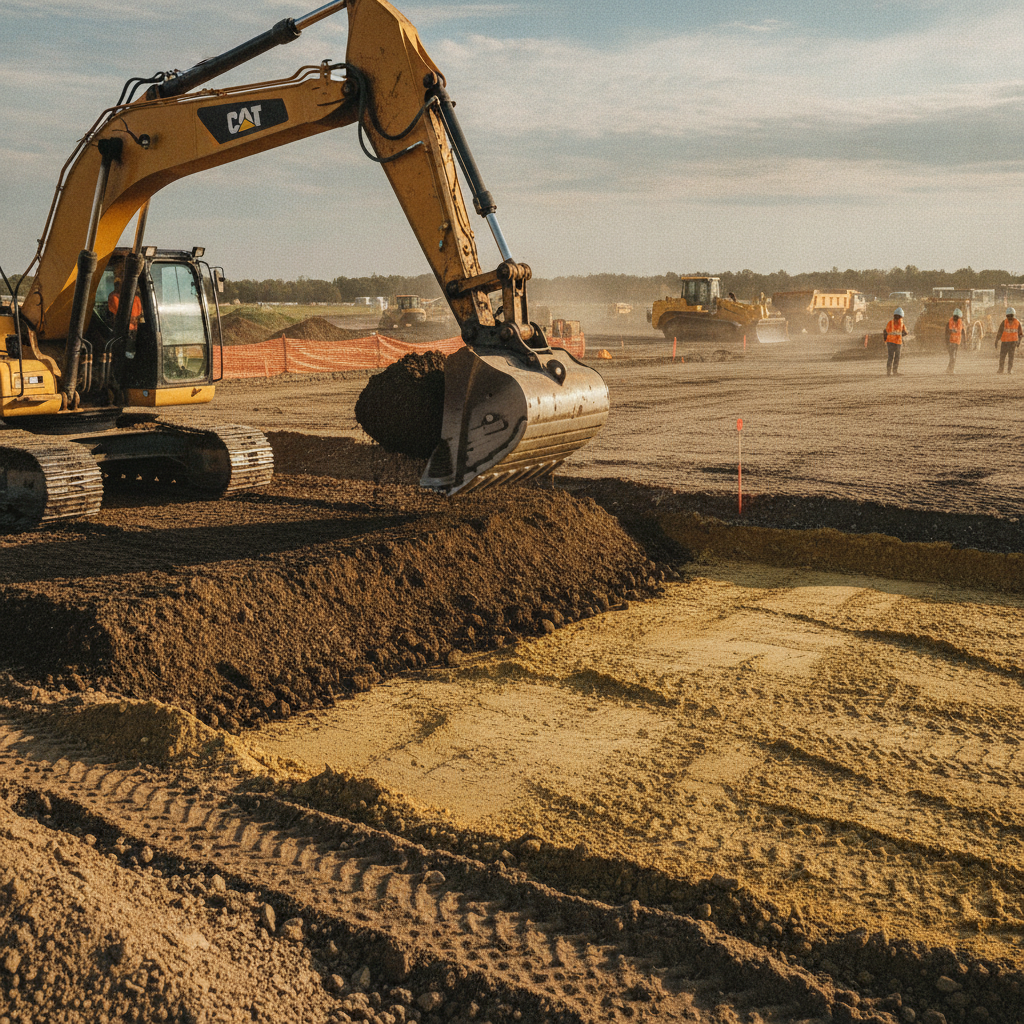
Once the Geotechnical soil report identifies the type, depth, and extent of unsuitable soils, the project team must decide on a remediation strategy. The two primary paths are complete removal and replacement or in-situ ground improvement. The optimal choice depends on the soil type, the depth of the problematic layer, project economics, and the overall construction schedule. This decision is a critical component of the civil engineering design process. The most common and direct method is over-excavation, which involves removing all unsuitable material and replacing it with engineered fill (such as select granular soils or crushed stone) placed and compacted in controlled lifts. For deeper or more extensive pockets of poor soil, ground improvement techniques may be more feasible. These methods modify the existing soil to increase its strength and reduce compressibility. Because earthwork operations can have environmental implications, associated permitting requirements vary by jurisdiction, and every project team should confirm the applicable standards with the local, state, regional, and federal authorities that hold review authority over the site.
Engineering Design and Documentation for Soil Remediation
Translating the selected remediation strategy into a buildable plan is a core task for Civil Engineers. The construction documents must provide clear, unambiguous instructions for the contractor. This includes detailed grading plans that show the horizontal limits and bottom elevations for all areas of over-excavation. Cross-sections are crucial for visualizing the scope of the earthwork. The plans are accompanied by technical specifications that define the requirements for all materials and procedures. This includes the type and quality of engineered backfill, the lift thickness for placement, and the required level of compaction (often specified as a percentage of the material’s maximum dry density). The specifications also outline the frequency and type of quality control testing, such as field density tests, that must be performed to verify compliance. This documentation is essential for ensuring the final subgrade provides the uniform, stable support required by the data center’s foundation design.
Construction Administration and Field Verification
Effective remediation doesn’t end with a good design; it requires diligent oversight during construction. The role of the Professional Engineer and their field representatives during the earthwork phase is critical. This is a key component of comprehensive Construction Management Services. The engineer’s representative observes the excavation process to confirm that the limits of unsuitable material in the field match what was anticipated from the soil boring test data. As engineered fill is placed, field technicians perform tests to verify that each lift meets the project’s compaction specifications. This rigorous quality assurance process provides documented proof that the new building pad is constructed as designed. The engineer also plays a vital role in problem-solving, helping the team address unforeseen conditions, such as encountering more unsuitable soil than expected or dealing with unexpected groundwater, and managing the associated change order process.
The RSP Engineers Approach to Geotechnical Risk Management
At RSP Engineers, we treat subsurface conditions as a primary risk to be managed, not a problem to be discovered. Our approach to data center site development integrates geotechnical considerations from day one. We collaborate closely with a qualified Geotechnical engineer during the due diligence phase to build a comprehensive understanding of the site’s opportunities and constraints before significant capital is committed. Our civil engineering team then uses this data to inform every aspect of the site plan design, from building placement to stormwater management strategies. We develop clear, detailed earthwork plans and specifications that minimize ambiguity for contractors. During construction, our team provides proactive construction administration, working with the owner and contractor to verify compliance, solve field issues efficiently, and keep the project on track. This integrated process is designed to de-risk the project by addressing the greatest variable—the ground itself—head-on.
Common Issues and Unforeseen Conditions
Even with a thorough investigation, unforeseen conditions can arise during earthwork. Being prepared for these issues is key to keeping the project on schedule and within budget. A common challenge is groundwater infiltration into deep excavations, which may require extensive dewatering systems that were not originally planned. Another frequent issue is discovering that the extent of unsuitable material is greater than what was interpolated from the soil borings. This can have a cascading effect on the budget for removal and the schedule for importing replacement fill. Finally, on previously developed sites, the project may uncover buried utilities, old foundations, or contaminated soils that require specialized handling and disposal, adding complexity to the permitting and construction process. Frequently Asked Questions How early should a geotechnical investigation be performed for a data center project? A geotechnical investigation should be performed as early as possible, ideally during the site selection and due diligence phase. An early Soil Test provides critical data that can influence the purchase price, overall project budget, and preliminary site plan design. It allows the team to identify potential ‘fatal flaws’ before making a significant investment. What is the difference between soil stabilization and simple compaction? Compaction is a mechanical process that increases the density of a soil by pressing the particles closer together, reducing air voids. Soil stabilization is a chemical process that fundamentally changes the properties of the soil. Agents like lime or cement are mixed into the soil, creating a chemical reaction that increases strength, reduces plasticity, and improves durability. Can unsuitable soils stop a data center project from moving forward? It is extremely rare for unsuitable soils to completely halt a project, as most geotechnical challenges can be solved with engineering. However, severe conditions can dramatically increase costs and extend the schedule to a point where the project is no longer financially viable. This is why early identification through a Geotechnical soil report is paramount. Who is responsible if more unsuitable soil is found than expected? Responsibility is typically defined in the construction contract. Most contracts treat subsurface conditions as a shared risk. Developers often carry a contingency fund for unforeseen conditions. When more unsuitable material is found, the contractor submits a change order, which is reviewed by the owner and the civil engineer. This process is a standard part of construction management services. How does large-scale earthwork affect stormwater permitting? Large-scale earthwork significantly increases the disturbed area on a site, which is a primary trigger for stormwater management regulations under the National Pollutant Discharge Elimination System (NPDES) program. The project will require a comprehensive Stormwater Pollution Prevention Plan (SWPPP) with robust erosion and sediment control measures to prevent soil from leaving the site and impacting nearby waterways.
Partner with RSP Engineers for Mission-Critical Site Development
The success of your data center project rests on a solid foundation. Navigating the complexities of unsuitable soils requires a partner with deep expertise in both geotechnical coordination and practical civil engineering design. The team at RSP Engineers provides the comprehensive site development services needed to de-risk your investment, from initial due diligence and permitting to detailed design and rigorous construction administration. We transform subsurface challenges into engineered solutions, ensuring your facility is built on stable ground for long-term success.
Conclusion
Effectively managing unsuitable soils is a non-negotiable discipline in data center development. It is a complex challenge that demands a proactive, integrated approach combining a thorough geotechnical investigation, strategic civil engineering design, and diligent construction oversight. By addressing these subsurface risks early and systematically, developers can protect their investment, control costs, and maintain aggressive project schedules. Ultimately, building resilient digital infrastructure begins with a profound respect for the ground it stands on and the expertise required to make it a stable foundation for the future.
FAQs
-
Managing Unsuitable Soils During Data Center Site Preparation requires careful planning, qualified engineering, and compliance with the applicable codes and permits.
-
Getting Managing Unsuitable Soils During Data Center Site Preparation right protects safety, supports regulatory compliance, and avoids costly redesigns or delays.
-
RSP Engineers provides licensed expertise and end-to-end support for Managing Unsuitable Soils During Data Center Site Preparation, from early planning through permitting.