
The Easement Process Explained
Explore the easement process in Florida land development, covering types, creation, and the roles of civil engineers and surveyors. Learn how easements impact site design and permitting.
Defining Easements in Land Development
An easement is a legal right to use another’s land for a specific purpose. Common types include utility easements, drainage easements, and access easements. These are essential in site development to ensure proper infrastructure placement and access.
Common Types of Easements
Easement Types and Their Characteristics
| Easement Type | Purpose | Holder | Typical Width |
|---|---|---|---|
| Utility | Installation and maintenance of utilities | Utility companies | 10-20 feet |
| Drainage | Stormwater management | Local government | 15-30 feet |
| Access | Ingress and egress | Property owners | Varies |
| Conservation | Resource protection | Conservation organizations | Varies |
| Temporary Construction | Construction activities | Contractors | Varies |
Understanding the various types of easements is key to effective land development: Utility Easements: Allow for the installation and maintenance of utilities such as water, sewer, and electricity. Drainage Easements: Facilitate the management of stormwater and prevent flooding. Access Easements: Provide ingress and egress to landlocked parcels. Conservation Easements: Protect natural resources by restricting development. Temporary Construction Easements: Allow for construction activities on adjacent properties.
How Easements Are Created
Easements can be established through several methods: Express Grant or Deed: A formal agreement between property owners. Plat Dedication: Easements shown on a recorded plat. Prescription: Long-term use without permission. Necessity: Required for access to a landlocked property. Condemnation/Eminent Domain: Government acquisition for public use.
The Easement Process in Florida
The process of establishing an easement involves several steps: Identify the need for an easement. Prepare a legal description and sketch by a licensed surveyor. Negotiate with the affected property owner. Determine valuation and compensation. Draft the easement instrument. Conduct a title review. Execute and record the easement. Agency dedication and acceptance.
The Role of Civil Engineers and Surveyors
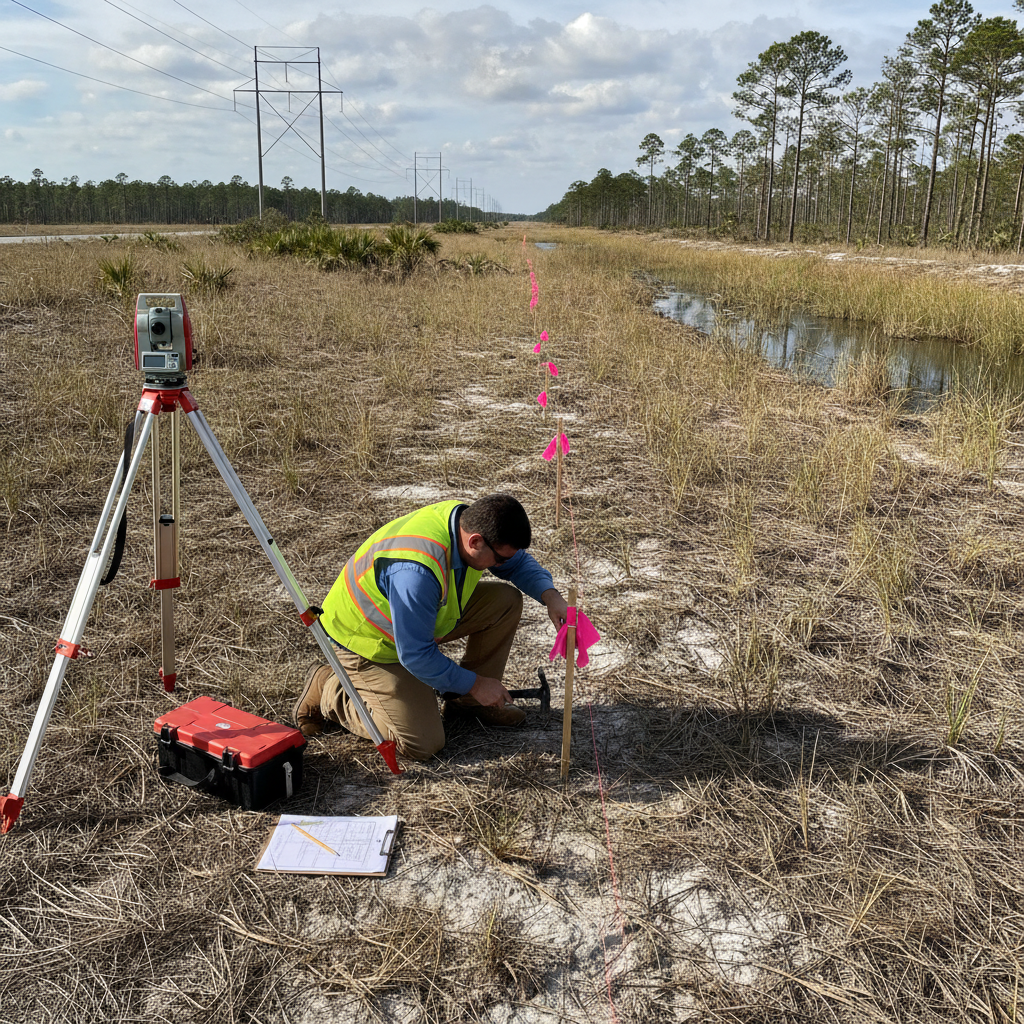
Civil engineers and surveyors play a pivotal role in the easement process. They ensure that easements are accurately described and located, which is crucial for permitting and compliance with the Florida Building Code. Their expertise helps prevent encroachments and ensures that easements do not interfere with site design.
Handling Encroachments and Vacating Easements
Encroachments occur when structures are built over easements. These must be addressed to maintain the easement’s purpose. Vacating an easement involves a legal process to remove the easement from the property, often requiring agency review and approval.
Impact on Site Design and Permitting
Easements significantly impact site design and permitting. Permanent structures generally cannot be built over easements, which can affect the layout of a development. Proper planning and coordination with utility companies and local agencies are essential to avoid conflicts.
Common Issues in the Easement Process
Common issues include disputes over easement boundaries, compensation disagreements, and delays in agency approvals. Addressing these proactively with thorough planning and legal guidance can mitigate potential problems.
Contact RSP Engineers
For expert guidance on the easement process and site development in Florida, contact RSP Engineers. Our team of licensed engineers and surveyors can assist with planning, permitting, and ensuring compliance with local regulations.
Conclusion
Understanding the easement process is essential for successful land development in Florida. By working with experienced professionals like RSP Engineers, you can navigate the complexities of easements and ensure your project complies with all necessary regulations.
FAQs
-
An easement is a legal right to use another’s land for a specific purpose, such as utility installation or access.
-
Easements can be created through express grants, plat dedications, prescription, necessity, or condemnation.
-
Generally, permanent structures cannot be built over easements, as they must remain accessible for their intended use.