
How to Comply With the Florida Accessibility Code
Learn how to design site-civil work to comply with the Florida Accessibility Code, focusing on accessible routes, parking, curb ramps, and more.
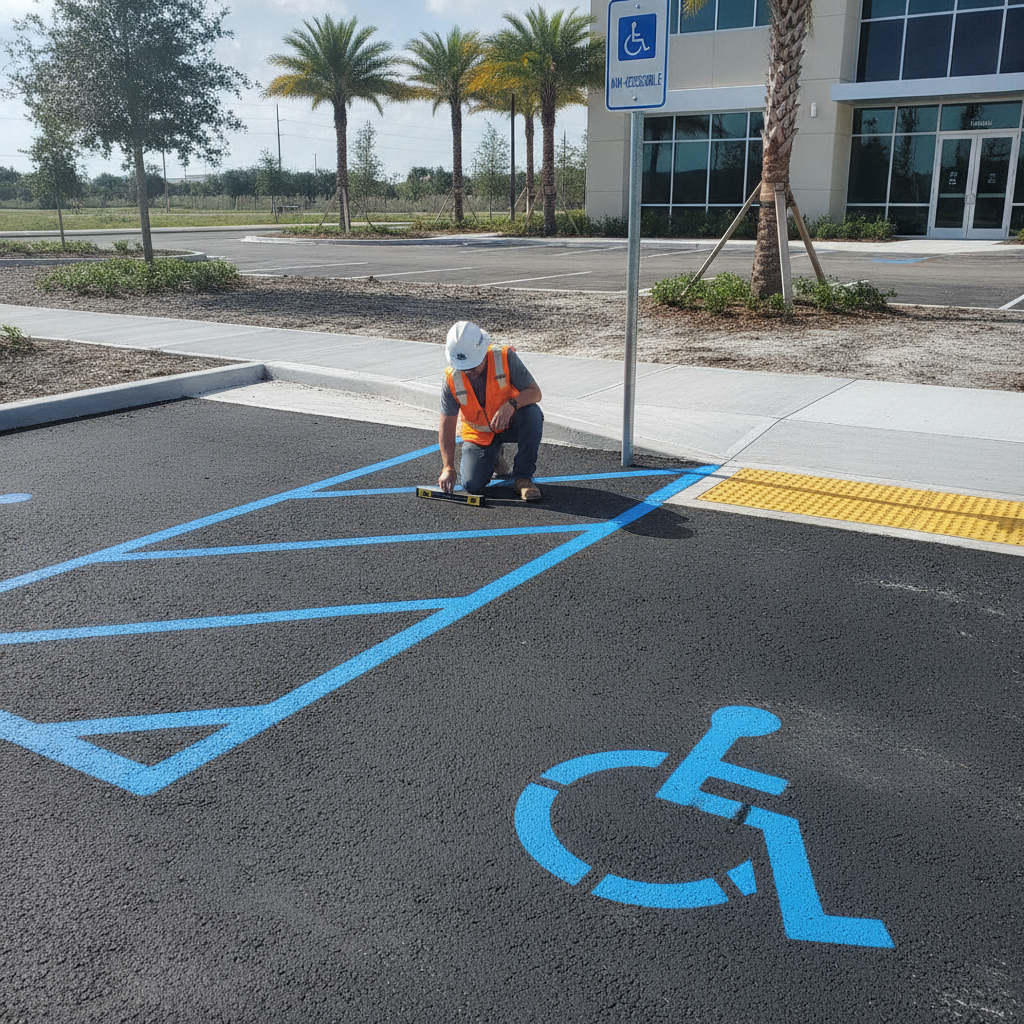
Understanding the Florida Accessibility Code
The Florida Accessibility Code is part of the Florida Building Code and incorporates specific provisions for site-civil work. It mandates that all public and commercial spaces provide accessible routes, parking, and entrances. This code is designed to ensure that individuals with disabilities have equal access to facilities and services. Key elements of the code include requirements for accessible routes, parking spaces, curb ramps, and sidewalks. Each of these elements must meet specific criteria to be considered compliant.
Designing Accessible Routes and Connectivity
Florida Accessibility Code Requirements Table
| Element | Key Code Requirement | Notes |
|---|---|---|
| Accessible Route | Max slope 1:20 (5%), min width 36 inches | Connects all accessible elements |
| Accessible Parking | Max slope 2%, van-accessible spaces required | Proper signage and striping needed |
| Curb Ramps | Max slope 1:12 (8.33%), detectable warnings | Truncated domes required |
| Sidewalks | Max running slope 5%, max cross slope 2% | Ensure proper drainage |
| Ramps | Landings required, handrails if rise > 6 inches | Ensure compliance with slope requirements |
Accessible routes are pathways that connect all accessible elements within a site. These routes must have a maximum slope of 1:20 (5%) and a cross slope not exceeding 1:50 (2%). The width of these routes should be at least 36 inches to accommodate wheelchairs and other mobility devices. Connectivity between accessible elements is crucial. This includes ensuring that routes connect parking areas, building entrances, and other key site features. Proper grading and drainage design are essential to maintain these slopes and prevent water accumulation.
Accessible Parking Requirements
Accessible parking is a critical component of the Florida Accessibility Code. The code specifies the number of accessible spaces required based on the total number of parking spaces. Additionally, at least one in every six accessible spaces must be van-accessible, featuring a wider access aisle. Each accessible parking space must have a maximum slope of 2% in any direction. Proper striping and signage are also required to designate these spaces clearly.
Passenger Loading Zones and Curb Ramps
Passenger loading zones must provide an accessible route to the building entrance. These zones should have a level area with a maximum slope of 2% to facilitate safe loading and unloading. Curb ramps are essential for transitioning between sidewalks and roadways. These ramps must have a slope not exceeding 1:12 (8.33%) and include detectable warnings, such as truncated domes, to alert visually impaired individuals.
Sidewalks, Ramps, and Entrances
Sidewalks must maintain a running slope of no more than 5% and a cross slope of no more than 2%. Ramps, which are necessary for elevation changes, must include landings at the top and bottom, with handrails on both sides if the rise exceeds 6 inches. Accessible entrances should be clearly marked and provide a smooth transition from the exterior to the interior. Proper grading and striping are crucial to ensure compliance.
Common Civil Engineering Pitfalls
Common pitfalls in civil engineering projects include slopes exceeding 2% at accessible parking and routes, non-compliant curb ramps, and excessive cross slopes. These issues can lead to non-compliance and potential legal challenges. Plan review and inspection processes are in place to enforce compliance. Engineers must document all design elements and ensure they meet the code requirements.
RSP Engineers’ Approach to Accessibility Compliance
At RSP Engineers, we prioritize compliance with the Florida Accessibility Code in all our projects. Our team of licensed engineers conducts thorough site assessments to identify potential compliance issues early in the design process. We collaborate closely with clients to develop solutions that meet both functional and regulatory requirements. Our approach includes detailed plan reviews, coordination with permitting agencies, and on-site inspections to ensure that all elements meet the necessary standards. We also provide documentation and support throughout the construction phase to address any compliance concerns that may arise.
Common Issues and Solutions
One of the most common issues in accessibility compliance is the miscalculation of slopes, leading to non-compliant accessible routes and parking areas. To address this, we use advanced surveying tools and software to ensure precise grading and slope calculations. Another frequent challenge is the improper installation of curb ramps and detectable warnings. Our team ensures that all ramps are constructed to the correct specifications and that detectable warnings are installed in accordance with the code.
Contact RSP Engineers
For expert guidance on complying with the Florida Accessibility Code, contact RSP Engineers. Our team of licensed engineers is ready to assist with all aspects of site development, from planning and permitting to construction and inspection. Reach out to us today to ensure your project meets all accessibility requirements.
Conclusion
Compliance with the Florida Accessibility Code is essential for successful site development projects. By understanding the requirements for accessible routes, parking, and other elements, civil engineers can design spaces that are both functional and inclusive. Partnering with experienced professionals like RSP Engineers ensures that your project meets all regulatory standards and provides equal access to all users.
FAQs
-
The maximum slope for accessible routes is 1:20 (5%), with a cross slope not exceeding 1:50 (2%).
-
The number of accessible parking spaces required depends on the total number of parking spaces. At least one in every six accessible spaces must be van-accessible.
-
Curb ramps must have a maximum slope of 1:12 (8. 33%) and include detectable warnings, such as truncated domes.