
Rural Data Center Site Development Considerations
A guide to the unique civil engineering challenges of developing data centers in rural locations, including utility infrastructure, permitting, roadway access, and stormwater management.
The Land Acquisition and Due Diligence Challenge
Identifying a suitable rural parcel is more complex than simply finding enough acreage. The initial due diligence phase is critical for de-risking the investment. A thorough feasibility study must assess not only the physical characteristics of the land but also its regulatory and environmental context. This includes a deep dive into local zoning compliance, comprehensive plans, and any overlay districts that could impact a high-intensity use like a data center. Early identification of fatal flaws is paramount. Our engineers investigate potential environmental constraints, such as federally protected wetlands, endangered species habitats, and cultural or archaeological resources. A preliminary geotechnical investigation provides essential data on soil stability, bearing capacity, and groundwater levels, which directly influences foundation design and site grading costs. Overlooking these initial steps can lead to costly redesigns and significant delays during the permitting process.
Utility Infrastructure: Bridging the Service Gap
Rural vs. Urban Data Center Site Development: Key Civil Engineering Distinctions
| Feature | Rural Site Challenge | Urban/Suburban Site Challenge |
|---|---|---|
| Power Infrastructure | Requires new transmission lines and substations; very long lead times for interconnection. | Tapping into an existing, robust grid; may require capacity upgrades but infrastructure is present. |
| Water & Wastewater | Often requires on-site wells, water treatment plants, and package wastewater facilities. | Connection to existing municipal water and sewer mains; focus is on capacity and connection fees. |
| Roadway Access | Existing roads may require significant upgrades for width, weight, and geometry to support heavy haul routes. | Focus on traffic impact mitigation, signalization, and managing construction in congested areas. |
| Stormwater Management | Requires large, on-site detention/retention systems to manage 100% of runoff from new impervious surfaces. | May connect to existing municipal storm systems; often involves underground detention due to land constraints. |
| Permitting Timeline | Can be prolonged due to smaller agency staff and lack of familiarity with project type. | Often complex with numerous overlapping jurisdictions, but review processes are more established. |
| Fiber Connectivity | Requires extension of major fiber optic lines to the site, which can be costly and time-consuming. | Multiple existing providers are typically available at or near the site boundary. |
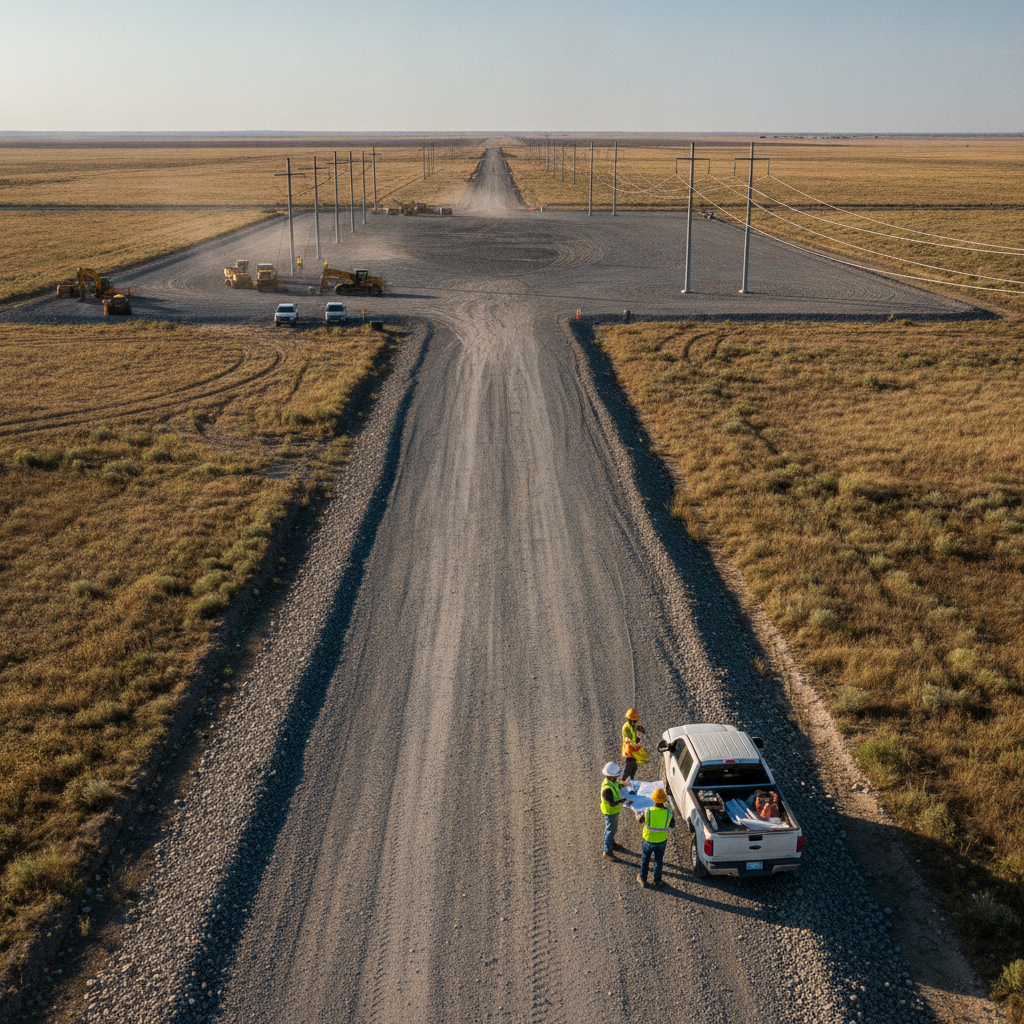
The single greatest challenge in rural data center development is the lack of existing utility infrastructure. Unlike urban sites, rural parcels are often miles from high-capacity power, water, sewer, and fiber optic lines. The civil engineering scope must therefore include extensive planning and design for service extensions. For power, this can mean coordinating the design and construction of new substations and high-voltage transmission lines, a process with an extremely long lead time involving multiple stakeholders. Water supply and wastewater treatment often require on-site solutions. This could involve designing high-capacity wells and a sophisticated water treatment plant to meet both operational and cooling demands. For wastewater, a self-contained package treatment plant or large-scale septic system may be necessary. Proactive and early utility coordination with power companies, regional water authorities, and telecom providers is non-negotiable to align project timelines with the reality of infrastructure delivery.
Roadway and Access Engineering for Heavy Haul Routes
Data center construction involves the delivery of massive and heavy equipment, including generators, cooling units, and prefabricated modules. Rural road networks are rarely designed to accommodate this level of traffic. A key part of the site development process is a thorough transportation and traffic impact analysis. This study assesses the capacity of existing roads, bridges, and intersections to handle heavy haul trucks and a surge in construction workforce traffic. The analysis often reveals the need for significant roadway improvements. This can include widening roads, improving turning radii at key intersections, reinforcing culverts, and potentially upgrading bridge weight capacities. The design must also incorporate safe and efficient on-site circulation, emergency vehicle access that meets local fire code, and sufficient parking for both construction and permanent staff, all while adhering to principles of ADA compliance.
Stormwater Management in Undeveloped Landscapes
Converting acres of open land into a campus of buildings, parking lots, and roadways creates vast new impervious surfaces. This dramatically alters the site’s natural hydrology and necessitates a robust stormwater management system. In rural areas without municipal storm sewer systems, all stormwater must be managed on-site. The drainage design must be engineered to collect, convey, treat, and control runoff to prevent flooding, erosion, and downstream environmental impacts. Engineers typically design large-scale solutions like wet or dry detention ponds, retention basins, or underground storage systems to manage peak flow rates and water quality. These systems must be designed in compliance with local, state, and federal regulations, including the National Pollutant Discharge Elimination System (NPDES) program under the Clean Water Act. The scale of these drainage features can significantly impact the usable area of a site and must be factored into the initial site plan design.
Permitting and Agency Coordination with Limited Local Resources
Navigating the regulatory approval process in a rural jurisdiction presents its own set of challenges. While regulations may be less complex than in a dense urban core, local review agencies often have smaller staffs and may be less familiar with the technical requirements of a large-scale data center. This can lead to longer review cycles if the permit submittals are not exceptionally clear, complete, and well-documented. A proactive strategy for agency review is essential. This involves early engagement with planning, building, public works, and environmental departments to introduce the project and establish clear expectations. Because these facilities can have regional impacts, coordination may also be required with county, state, and even federal agencies. Permitting requirements vary by jurisdiction, and every project team should confirm the applicable standards with the local, state, regional, and federal authorities that hold review authority over the site. A meticulously prepared application package is the best tool for facilitating a smooth and predictable permitting process.
The RSP Engineers Approach to Rural Data Center Development
At RSP Engineers, we approach rural data center projects with a strategy centered on early-stage risk mitigation and proactive problem-solving. Our process begins with a comprehensive feasibility and due diligence study to vet potential sites against the project’s core requirements. We identify all critical path items, especially utility coordination and major transportation improvements, to build a realistic project timeline and budget from day one. Our integrated team of civil engineers, planners, and environmental specialists works collaboratively to create a holistic site development plan. We prepare exhaustive permit submittals designed for clarity and completeness to streamline the agency review process. During construction, our team provides dedicated construction administration services to ensure the design is executed flawlessly and to quickly resolve any issues that arise in the field, keeping the project on track.
Common Issues and Mitigation Strategies
Even with meticulous planning, rural projects can encounter obstacles. A common issue is discovering unforeseen geotechnical conditions, such as rock formations or unstable soils, that require costly foundation redesigns. Mitigation involves conducting a thorough geotechnical investigation with deep soil borings early in the design process. Another frequent challenge is delays in securing utility agreements and easements for off-site infrastructure extensions. We mitigate this through persistent and early utility coordination, initiating formal discussions long before the final design is complete. Environmental hurdles, such as the discovery of protected species or jurisdictional wetlands, can also halt a project. Early environmental screenings and field delineations are critical to identify these areas and design around them or begin the necessary federal and state permitting processes, such as a Clean Water Act Section 404 permit. Finally, construction logistics, including workforce housing and material staging in a remote area, must be planned for to avoid costly mobilization delays.
Partner with RSP for Your Mission-Critical Project
Developing a data center on a rural site requires a specialized skill set that goes beyond standard site development. The challenges of remote infrastructure, complex logistics, and unique regulatory environments demand an experienced engineering partner. RSP Engineers provides the nationwide expertise needed to navigate these complexities. Our team excels at utility coordination, creative drainage design, and securing entitlements through diligent permitting strategies. Connect with us to leverage our experience for your next mission-critical facility and ensure your project is built on a solid foundation.
Conclusion
The shift toward rural data center development unlocks significant opportunities for growth and scalability. However, the path is paved with unique infrastructure and regulatory challenges. Success depends on a proactive, technically sound approach to civil engineering that addresses utilities, access, and stormwater from the earliest stages of planning. With expert site development guidance and meticulous attention to the permitting process, developers can transform a remote parcel of land into a state-of-the-art mission-critical asset.
FAQs
-
The most significant challenge is almost always high-voltage power. Establishing a connection to the transmission grid and building a new substation is a multi-year process that involves extensive studies, easements, and coordination with the utility provider. It is the longest lead-time item and must be the first priority in any site development plan.
-
You should engage a civil engineering firm during the site selection phase, even before land acquisition. An engineer can perform critical due diligence to identify potential fatal flaws related to utilities, zoning, access, and environmental constraints that could make a site unviable or prohibitively expensive to develop.
-
It depends on the scale and cooling strategy. While on-site wells and wastewater systems are common for rural sites, a hyperscale data center’s demand for cooling water can be immense, potentially exceeding the sustainable yield of on-site wells. A detailed hydrogeological study is needed to confirm water availability. Similarly, a large on-site workforce may require a more advanced wastewater treatment solution than a conventional septic system.