
Residential vs. Commercial Site Plans: What Changes?
Explore the key differences between residential and commercial site plans in Florida, focusing on zoning, drainage, utilities, and permitting. Learn how these factors impact land development projects.
Scope and Scale of Projects
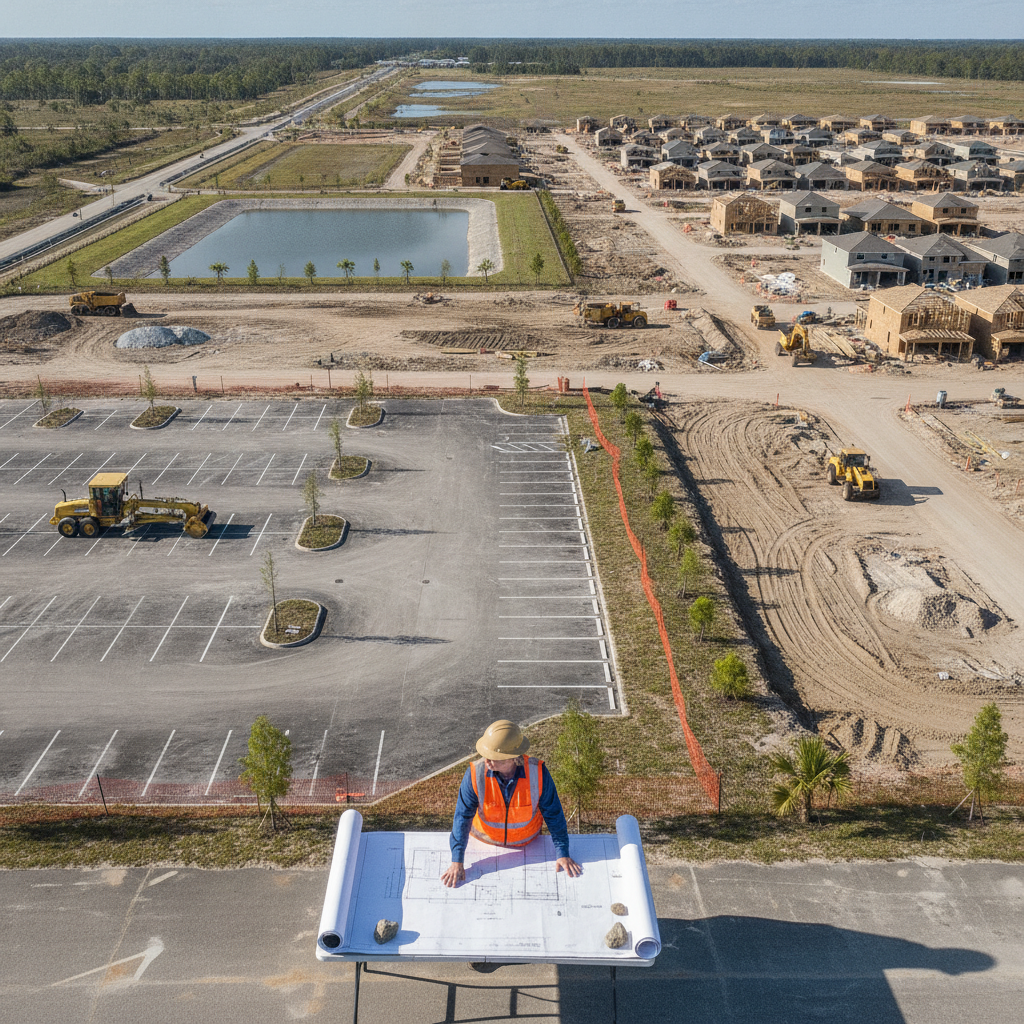
The scope and scale of residential versus commercial site plans differ significantly. Residential projects typically involve smaller parcels with less complex infrastructure requirements. In contrast, commercial developments often require extensive planning to accommodate larger buildings, parking facilities, and increased utility demands. This difference in scale affects everything from site plan design to construction timelines. For residential projects, the focus is often on maximizing the number of units within zoning constraints, while commercial projects prioritize maximizing usable space and accessibility for customers and deliveries. This requires a nuanced understanding of zoning regulations and land use policies.
Zoning and Land Use Considerations
Comparison of Residential vs. Commercial Site Plan Requirements
| Aspect | Residential | Commercial |
|---|---|---|
| Scope and Scale | Smaller parcels, fewer units | Larger parcels, extensive infrastructure |
| Zoning and Land Use | Density restrictions | Intensity and use categories |
| Parking Requirements | Fixed ratios per unit | Customer and employee parking |
| Stormwater Management | Retention ponds, swales | Detention basins, underground storage |
| Utility Demand | Domestic water and sewer | Fire flow, hydrants, specialized systems |
Zoning and land use are pivotal in determining the allowable density for residential projects and the intensity for commercial developments. Residential zoning typically restricts the number of units per acre, while commercial zoning focuses on the type of business activities permitted and the building footprint. Understanding these distinctions is essential for ensuring zoning compliance. Residential projects may face restrictions on building height and setbacks, whereas commercial projects might need to adhere to specific use categories and operational hours. Navigating these regulations requires a thorough review of local zoning ordinances and potential engagement with zoning boards.
Parking Requirements and ADA Compliance
Parking requirements differ substantially between residential and commercial projects. Residential developments often have fixed ratios based on the number of units, while commercial projects must consider customer and employee parking, delivery zones, and ADA-compliant spaces. Commercial sites must also adhere to specific drive-aisle and backup dimensions to accommodate larger vehicles. Ensuring ADA compliance involves providing accessible parking spaces and pathways, which are critical for both residential and commercial developments.
Stormwater and Drainage Design
Stormwater management is a critical component of both residential and commercial site plans, but the approach varies significantly. Commercial projects typically have a greater impervious area, necessitating more robust drainage design solutions to manage increased runoff and treatment volumes. Residential projects may focus on retention ponds and swales, while commercial sites might require detention basins and underground storage systems. The design must comply with local and state regulations to prevent flooding and protect water quality.
Utility Demand and Sizing
Utility demand and sizing are key considerations in site planning. Residential projects generally have lower utility demands, focusing on domestic water and sewer connections. In contrast, commercial developments require larger utility infrastructure to support fire flow, hydrants, and specialized systems like grease interceptors and lift stations. Proper utility coordination is essential to ensure that the infrastructure can support the development’s needs without overloading existing systems. This often involves collaboration with local utility providers and adherence to specific design standards.
Fire Access and Turning Radii
Fire access and turning radii are critical safety considerations in site planning. Residential projects must ensure that emergency vehicles can access all areas of the development, while commercial sites often require more extensive planning to accommodate larger fire apparatus. Designing appropriate turning radii and access routes is essential for compliance with fire safety regulations and ensuring the safety of occupants and visitors.
Landscaping and Buffer Requirements
Landscaping and buffer requirements vary between residential and commercial projects. Residential developments often focus on aesthetic landscaping to enhance curb appeal, while commercial sites may require buffers to screen adjacent properties and mitigate noise and visual impacts. Compliance with local landscaping ordinances is essential for both types of projects, and it often involves selecting appropriate plant species and designing irrigation systems to support sustainable growth.
Traffic Studies and Access Management
Traffic studies and access management are crucial for both residential and commercial developments. Residential projects may require basic traffic impact analyses, while commercial sites often necessitate comprehensive studies to assess the impact on local roadways and intersections. Access management involves designing driveway connections that comply with FDOT and county standards, ensuring safe and efficient ingress and egress for vehicles and pedestrians.
RSP Engineers’ Approach to Site Plan Development
At RSP Engineers, we understand the complexities involved in developing both residential and commercial site plans. Our team of Florida Licensed Engineers is adept at navigating the intricacies of zoning compliance, stormwater management, and utility coordination. We work closely with clients to ensure that every aspect of the site plan meets regulatory requirements and project goals. Our process involves thorough site assessments, detailed design work, and proactive communication with local agencies to streamline the permitting process. By leveraging our expertise, we help clients achieve successful project outcomes while minimizing delays and costs.
Common Issues in Site Plan Development
Common issues in site plan development include navigating complex zoning regulations, managing stormwater runoff, and ensuring utility infrastructure can support the proposed development. Delays in the permitting process and unforeseen site conditions can also pose challenges. To mitigate these issues, it’s essential to engage experienced professionals who can anticipate potential obstacles and develop effective solutions. RSP Engineers is committed to providing the expertise and guidance needed to overcome these challenges.
Contact RSP Engineers
For expert guidance on your next site plan development project, contact RSP Engineers. Our team specializes in site development, permitting, and utility coordination to ensure your project meets all regulatory requirements and achieves your vision. Reach out today to learn how we can support your project from planning through construction.
Conclusion
Understanding the differences between residential and commercial site plans is essential for successful land development in Florida. From zoning compliance to stormwater management, each project type presents unique challenges and opportunities. By partnering with experienced professionals like RSP Engineers, developers can navigate these complexities and achieve their project goals efficiently and effectively.
FAQs
-
Residential site plans typically focus on maximizing the number of units within zoning constraints, while commercial site plans prioritize usable space and accessibility. Differences also exist in parking requirements, utility demands, and stormwater management strategies.
-
Zoning regulations determine the allowable density for residential projects and the intensity for commercial developments. Compliance with these regulations is crucial for obtaining necessary permits and approvals.
-
Stormwater management involves designing systems to handle runoff and prevent flooding. Residential projects may use retention ponds, while commercial sites often require detention basins and underground storage solutions.