
Engineering Checklist Before Buying Land
Discover the essential engineering checklist for pre-acquisition due diligence in Florida. Learn about zoning, environmental assessments, utility availability, and more.
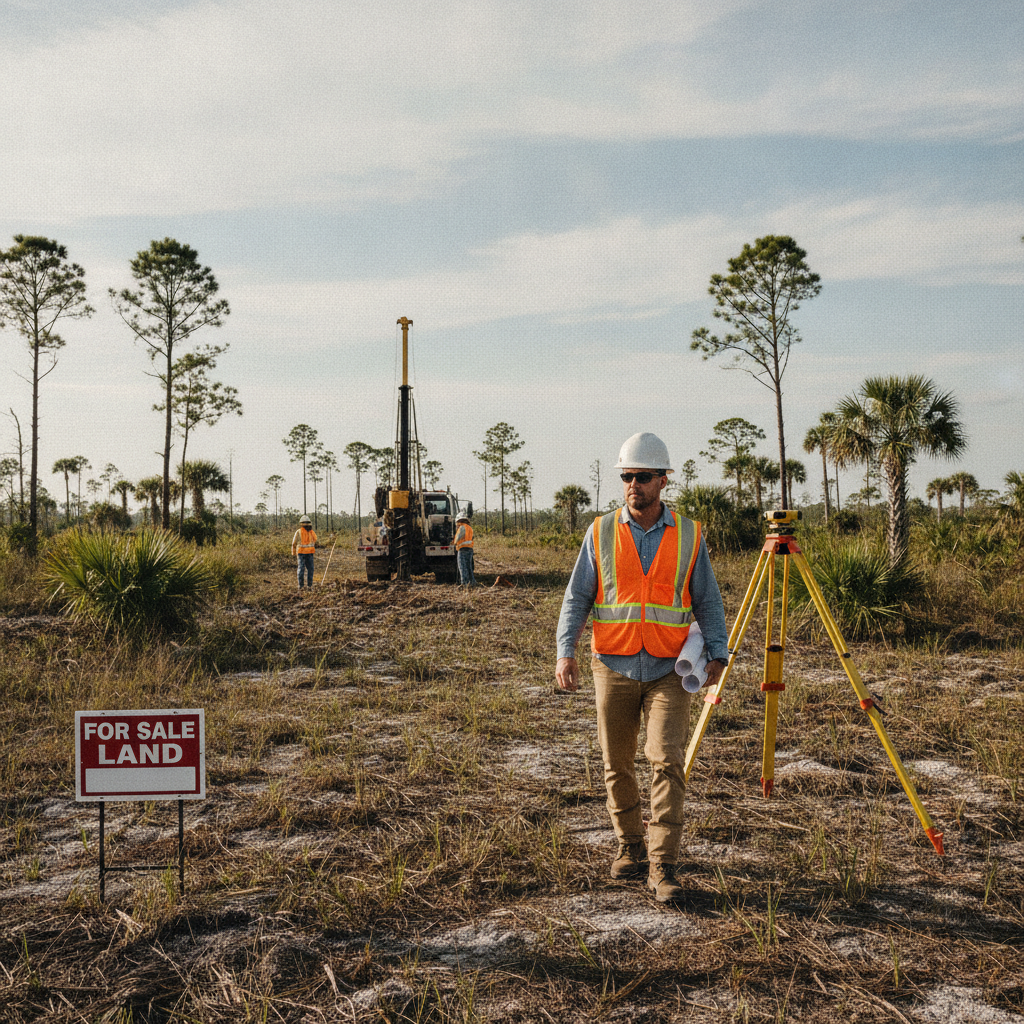
Zoning and Future Land Use (FLU) Designation
Understanding the zoning and Future Land Use (FLU) designation of a property is crucial for determining its development potential. Zoning dictates the types of structures that can be built, while FLU provides a broader vision for land use in the area. An entitlement gap analysis can reveal discrepancies between current zoning and desired development plans, which may require rezoning or variances. Verify current zoning classifications and FLU designations. Identify any entitlement gaps that may affect development plans. Consult with local planning departments for potential rezoning requirements.
Allowable Density, Intensity, and Setbacks
Checklist Item Importance and Risk Table
| Checklist Item | Importance | Risk if Skipped |
|---|---|---|
| Zoning and FLU Designation | Determines allowable uses and development potential | Non-compliance with zoning laws, potential legal issues |
| Environmental Assessments | Identifies contamination and protected species | Environmental liabilities, project delays |
| Geotechnical Borings | Assesses soil conditions for construction | Foundation failures, increased construction costs |
| Utility Availability | Ensures access to essential services | Inadequate infrastructure, costly extensions |
| Permitting Feasibility | Ensures project can proceed legally | Project delays, increased costs |
Each parcel of land has specific regulations regarding allowable density, intensity, and setbacks. These factors influence the scale and layout of the proposed development. Understanding these parameters helps in designing a compliant site plan and avoiding costly redesigns. Review local ordinances for density and intensity limits. Assess setback requirements from property lines and natural features. Ensure proposed development aligns with these regulations.
Boundary/ALTA Survey and Title/Easements
A comprehensive boundary or ALTA survey is essential for identifying property lines, easements, and encroachments. This survey provides a legal description of the land and highlights any title issues that could impede development. Conduct a boundary or ALTA survey to confirm property dimensions. Identify existing easements and encroachments. Resolve any title discrepancies before acquisition.
Environmental Assessments and Protected Species
Environmental assessments, such as a Phase I Environmental Site Assessment (ESA), are critical for identifying potential contamination and the presence of protected species. These assessments help in understanding environmental liabilities and compliance with state and federal regulations. Perform a Phase I ESA to assess environmental risks. Identify any protected species or habitats on the property. Plan for necessary mitigation measures if required.
Soils and Geotechnical Borings
Soil conditions significantly impact the feasibility and cost of construction. Geotechnical borings provide data on soil composition, bearing capacity, and groundwater levels, which are essential for foundation design and site preparation. Conduct geotechnical borings to evaluate soil conditions. Analyze soil reports for potential construction challenges. Incorporate findings into foundation and site design.
Topography, Drainage Basin, and Stormwater Management
Understanding the topography and drainage characteristics of a site is vital for effective stormwater management. Identifying the drainage basin and assessing flood risks, including FEMA flood zones, ensures compliance with local and state regulations. Review topographic maps and existing grades. Identify the site’s drainage basin and flood zone status. Design a stormwater management plan that meets regulatory standards.
Utility Availability and Capacity
Access to utilities such as potable water, sewer, and reclaimed water is a fundamental consideration for any development project. Evaluating utility availability and capacity helps in planning infrastructure needs and coordinating with local utility providers. Assess the availability of potable water, sewer, and reclaimed water services. Determine the capacity of existing utility infrastructure. Plan for necessary utility extensions or upgrades.
Transportation Access and Traffic Management
Transportation access and traffic management are critical components of site development. Evaluating right-of-way, concurrency, and access management ensures that the site is accessible and compliant with transportation regulations. Analyze existing transportation access and right-of-way conditions. Evaluate traffic concurrency and access management requirements. Plan for necessary improvements to meet transportation standards.
Impact Fees and Development Costs
Understanding the financial implications of impact fees and development costs is essential for budgeting and financial planning. These fees contribute to infrastructure improvements and must be factored into the overall project cost. Calculate potential impact fees based on development plans. Estimate total development costs, including infrastructure improvements. Incorporate these costs into the project’s financial analysis.
Permitting Feasibility and Agency Review Timelines
Permitting is a complex process that involves multiple agencies, including SFWMD, SWFWMD, FDOT, and local municipalities. Understanding the feasibility and timelines for obtaining necessary permits is crucial for project scheduling and execution. Identify required permits and associated agencies. Assess the feasibility of obtaining permits within desired timelines. Plan for agency review and potential delays in the permitting process.
RSP Engineers’ Approach to Pre-Purchase Feasibility
At RSP Engineers, we provide comprehensive pre-purchase feasibility assessments to guide our clients through the complexities of land acquisition. Our team of Florida Licensed Engineers conducts detailed analyses of zoning, environmental conditions, and utility availability to ensure informed decision-making. We coordinate with local agencies to streamline the permitting process and mitigate potential risks.
Common Issues in Land Acquisition
Common issues in land acquisition include zoning discrepancies, environmental liabilities, and utility constraints. These challenges can lead to project delays and increased costs if not addressed during the due diligence phase. By conducting thorough assessments and engaging with local agencies early, these issues can be effectively managed.
Contact RSP Engineers for a Pre-Purchase Feasibility Assessment
For a comprehensive pre-purchase feasibility assessment, contact RSP Engineers. Our team of Professional Engineers specializes in site development, permitting, and utility coordination to ensure your project is set up for success. Reach out to us today to discuss your land acquisition needs and how we can assist you in navigating the complexities of Florida land development.
Conclusion
Conducting a thorough engineering checklist before buying land is essential for successful land acquisition and development in Florida. By addressing key factors such as zoning compliance, environmental assessments, and utility availability, stakeholders can mitigate risks and ensure a smooth development process. Engaging with experienced civil engineers and conducting detailed due diligence are critical steps in making informed decisions and achieving project success.
FAQs
-
A zoning and FLU analysis is crucial for understanding the development potential of a property. It ensures compliance with local regulations and identifies any entitlement gaps that may require rezoning or variances.
-
Environmental assessments identify potential contamination and the presence of protected species, which are critical for compliance with environmental regulations. These assessments help in mitigating environmental liabilities and planning necessary mitigation measures.
-
Geotechnical borings provide essential data on soil conditions, which influence foundation design and construction feasibility. Understanding soil composition and groundwater levels helps in avoiding costly construction issues.