
Protecting Public Roads From Data Center Construction Traffic
Learn how data center developers can protect public roads during construction. Our guide covers haul route planning, pavement surveys, bonding, and traffic control to ensure project success and commun
The Critical Role of Pre-Construction Condition Assessments
The foundation of any effective roadway protection plan is establishing a definitive baseline of the existing infrastructure’s condition. Before the first construction vehicle arrives, a thorough pre-construction condition assessment must be performed on all designated haul routes and adjacent public roads. This process involves high-resolution video documentation, detailed photographic logs, and a written pavement condition survey conducted by a qualified Professional Engineer. The survey notes all existing deficiencies, such as cracking, rutting, potholes, and drainage issues. This baseline documentation serves as the undisputed record of the roadway’s condition prior to the project’s impact. It protects the developer from being held responsible for pre-existing damage and provides the local roadway authority with a clear benchmark for post-construction evaluation. In some cases, agencies may require more intensive analysis, such as pavement core sampling and falling weight deflectometer (FWD) testing, to determine the structural capacity of the road and establish appropriate weight limits. This initial investment in detailed documentation is a crucial step in transparent construction administration.
Strategic Haul Route Planning and Permitting
Key Roadway Protection Measures: A Comparison
| Measure | Purpose | Key Engineering Deliverable | Common Agency Requirement |
|---|---|---|---|
| Pre-Construction Survey | Establish a baseline of existing road conditions to prevent disputes over damage. | High-resolution video log, detailed pavement condition report, and photographic documentation. | Required prior to issuance of land disturbance or building permits. |
| Haul Route Plan | Designate specific, approved routes for heavy vehicles to minimize community impact. | A map exhibit with turn-by-turn directions, roadway classifications, and restrictions. | Formal approval by the local transportation or engineering department. |
| Stabilized Construction Entrance | Prevent mud, dirt, and debris from being tracked onto public roads. | A site plan design detail showing aggregate type, thickness, and dimensions (e.g., 50-foot length). | Mandatory for NPDES and local erosion and sediment control permits. |
| Traffic Control Plan (TCP) | Ensure safe ingress/egress and minimize disruption to public traffic flow. | Drawings showing signage, flagger stations, and queuing areas, compliant with MUTCD. | Review and approval required for any work impacting the public right-of-way. |
| Maintenance Bond / Escrow | Provide financial security to the public agency for potential roadway repairs. | Cost estimate for potential repairs and coordination of the bonding/escrow agreement. | Typically required before major construction begins and held until project completion. |
| Post-Construction Restoration | Repair any damage caused by construction traffic and restore the road to its original condition. | Post-construction condition survey, punch list of repairs, and final inspection report. | Completion of all repairs is necessary for bond release and final project acceptance. |
Simply choosing the shortest path to a site is rarely an acceptable approach for haul route planning. A strategic haul route plan identifies specific roadways capable of handling heavy truck traffic while minimizing impacts on residential areas, schools, and other sensitive receptors. The civil engineering team analyzes roadway classifications, existing traffic volumes, turning radii at intersections, and overhead clearance constraints. The goal is to create a logistical plan that is safe, efficient, and approved by the governing transportation agency. This plan becomes a formal exhibit in the permit submittals to the authority having jurisdiction. The agency will review the proposed routes for compliance with their standards and may impose specific conditions, such as time-of-day restrictions for deliveries or requirements for traffic control during peak hours. It is essential to remember that permitting requirements vary by jurisdiction, and every project team should confirm the applicable standards with the local, state, regional, and federal authorities that hold review authority over the site. Securing a formal, approved haul route plan is a non-negotiable step before commencing major construction activities.
Implementing On-Site Debris and Sediment Control Measures
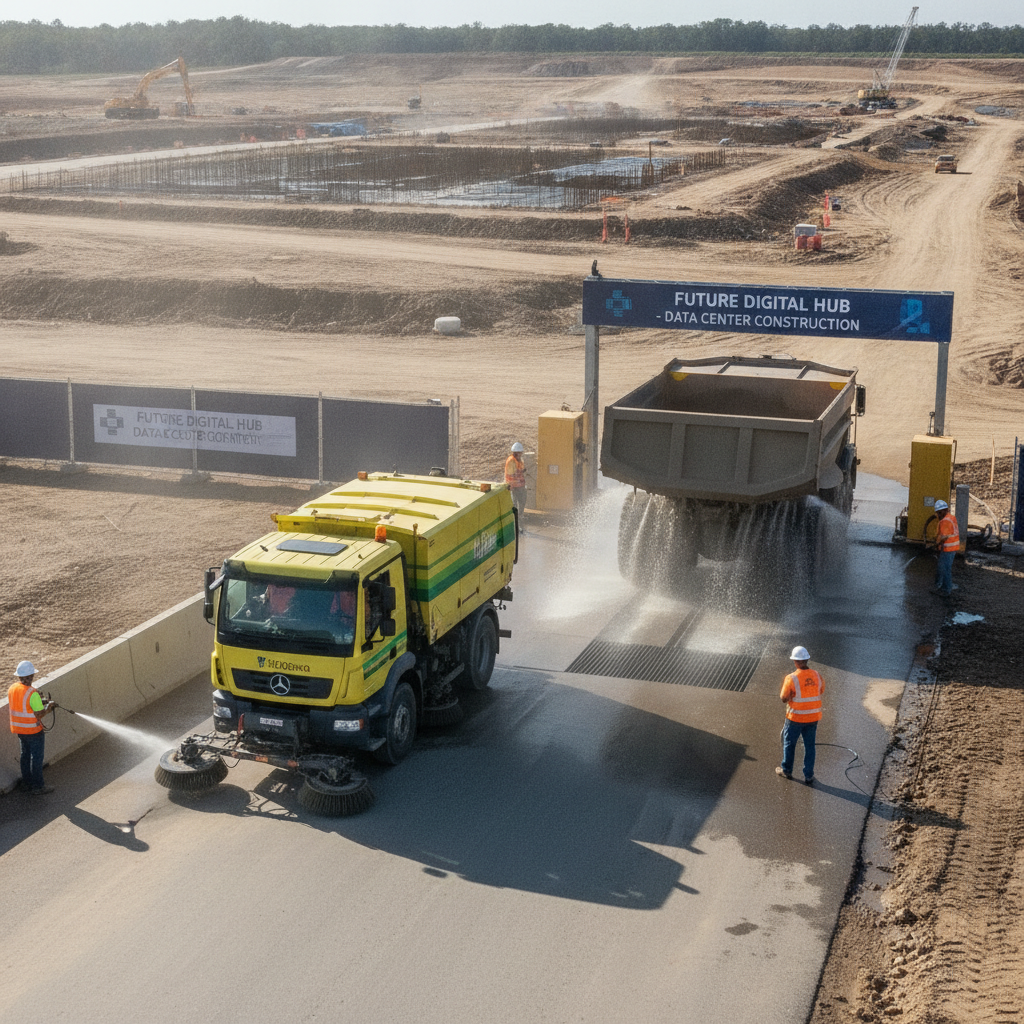
Protecting the road surface extends beyond structural integrity; it also involves keeping it clean and safe. Construction sites are a major source of mud, rock, and debris that can be tracked onto public roadways, creating hazardous driving conditions and clogging public stormwater management systems. A key requirement of most land development permits, including the federal NPDES program, is the implementation of effective track-out control measures. This typically includes a stabilized construction entrance—a long pad of coarse aggregate (e.g., 3-inch stone) that helps dislodge mud from vehicle tires before they exit the site. For large-scale projects like data centers, more robust solutions like automated wheel wash stations may be required. Furthermore, the plan must include a commitment to regular street sweeping to remove any material that does escape the site. These measures are critical for maintaining public safety, ensuring environmental compliance, and demonstrating a commitment to responsible site development.
Managing Traffic Flow and Public Safety at Site Access Points
The interface between the construction site and the public road network is a point of high potential conflict. A well-designed Traffic Control Plan (TCP) is essential for managing this interface safely and efficiently. The TCP, designed in accordance with national standards like the Manual on Uniform Traffic Control Devices (MUTCD), outlines the specific use of signage, channelizing devices, and certified flaggers to guide both construction and public traffic. The plan addresses vehicle queuing to prevent trucks from backing up onto public roads and establishes clear procedures for ingress and egress. Effective traffic management minimizes disruption to the public and reduces the risk of accidents. The civil engineering team must coordinate this plan with the local transportation authority and law enforcement to ensure it aligns with community expectations and public safety protocols. Proper implementation of the TCP is a daily responsibility of the general contractor and a key element of diligent construction administration.
Financial Assurances: Bonding and Repair Escrows
Even with the best preventative measures, some level of roadway wear and tear is inevitable. To protect public funds, most local jurisdictions require developers to post a financial guarantee to cover the cost of any potential repairs. This is typically done through a performance bond, letter of credit, or a cash escrow account held by the public agency. The amount of this financial assurance is calculated based on the length of the haul route, the existing condition of the pavement, and the anticipated volume and type of construction traffic. This bond serves as an insurance policy for the public. If the developer fails to restore the roadways to their pre-construction condition (or better), the agency can draw on these funds to hire a contractor and complete the work. The bonding process requires careful negotiation and clear documentation, ensuring the terms for release are well-defined and tied to a successful post-construction inspection. This is a critical part of the agency review and permitting process.
Post-Construction Roadway Restoration and Acceptance
Once major construction activities are complete, the final step is to formally restore the public roadways and secure the release of the performance bond. This process begins with a post-construction condition assessment, conducted in the same manner as the pre-construction survey. The engineering team compares the new video and survey data against the original baseline to identify any new damage attributable to construction traffic. A joint inspection with representatives from the local roadway authority is typically held to review the findings and agree on a final punch list of required repairs. Repairs may range from minor crack sealing and pothole patching to more significant mill-and-overlay operations. Once all required restoration work is completed to the agency’s satisfaction, a formal acceptance is issued, and the developer can petition for the release of the bond or escrow funds. This final step in the construction administration phase closes out the developer’s obligation and leaves the community’s infrastructure in a state of good repair.
RSP Engineers’ Proactive Approach to Roadway Protection
At RSP Engineers, we believe that protecting public infrastructure is a fundamental responsibility in land development. Our approach is built on proactive engagement and meticulous documentation. We begin by collaborating with clients and local agencies early in the design process to identify optimal haul routes and establish clear expectations. Our team conducts highly detailed pre-construction surveys, creating an unambiguous record that protects all parties. We integrate roadway protection measures directly into the overall site plan design, ensuring that elements like stabilized entrances and on-site traffic circulation are planned from day one. Throughout the permitting process, we serve as a dedicated liaison with transportation and engineering departments, navigating the review process to secure timely approvals. During construction, our construction administration services include monitoring compliance with the approved plans, helping our clients uphold their commitments and build a positive legacy in the communities they serve.
Common Challenges in Managing Construction Traffic Impacts
Even with a robust plan, challenges can arise. One of the most common issues is subcontractor non-compliance, where drivers deviate from the approved haul route to save time. This requires constant vigilance and clear communication from the general contractor. Another frequent problem is inadequate street sweeping, leading to public complaints and potential stop-work orders from local inspectors. Disputes can also arise over the cause of damage, especially in areas with poor pre-existing pavement, reinforcing the critical importance of the initial baseline survey. Effectively managing these challenges requires a partnership between the developer, the civil engineering consultant, and the construction team.
Partner with RSP Engineers for Your Next Mission-Critical Project
Navigating the complexities of public infrastructure protection requires specialized expertise and a proactive mindset. The team at RSP Engineers provides the comprehensive site engineering services needed to manage construction traffic impacts effectively. From initial site plan design and haul route analysis to negotiating bonds and overseeing final restoration, we guide our clients through every step. Contact us today to ensure your project’s logistics are built on a solid foundation of expert civil engineering, streamlined permitting, and responsible community partnership.
Ensuring Long-Term Success Through Responsible Construction Practices
In conclusion, protecting public roads during data center construction is an essential element of project management and corporate responsibility. A well-executed plan based on thorough documentation, strategic planning, and clear financial assurances safeguards public assets and fosters positive community relations. By prioritizing these measures, developers can mitigate risks, avoid costly delays, and ensure a smooth path from groundbreaking to project completion. This commitment requires diligent construction administration, transparent communication with public agencies, and the guidance of an experienced civil engineering firm to navigate the technical and regulatory landscape.
FAQs
-
A pre-construction pavement condition survey is a detailed inspection and documentation of a road’s state before construction begins. It typically includes high-resolution video, photos, and a written report by a Professional Engineer that identifies and catalogs all existing distresses like cracks, potholes, and rutting. This creates a crucial baseline for assessing any potential construction traffic damage later.
-
The official haul route is typically proposed by the developer’s civil engineering team and then submitted to the local public works or transportation department for review and approval. The agency, or ‘authority having jurisdiction,’ has the final say and may require modifications based on road capacity, traffic safety, and community impacts before issuing a permit.
-
While not universal, requiring a bond or other financial surety is a very common practice for large-scale projects with significant heavy truck traffic, such as data centers. The requirement and amount are determined by the local agency responsible for the public roads. The goal is to protect taxpayers from footing the bill for repairs caused by private land development.