
Planning Data Center Expansion Without Disrupting Operations
A guide for data center owners on expanding a live campus. Learn civil engineering strategies for protecting utilities, managing construction, and ensuring zero downtime.
Establishing a Secure and Isolated Construction Zone
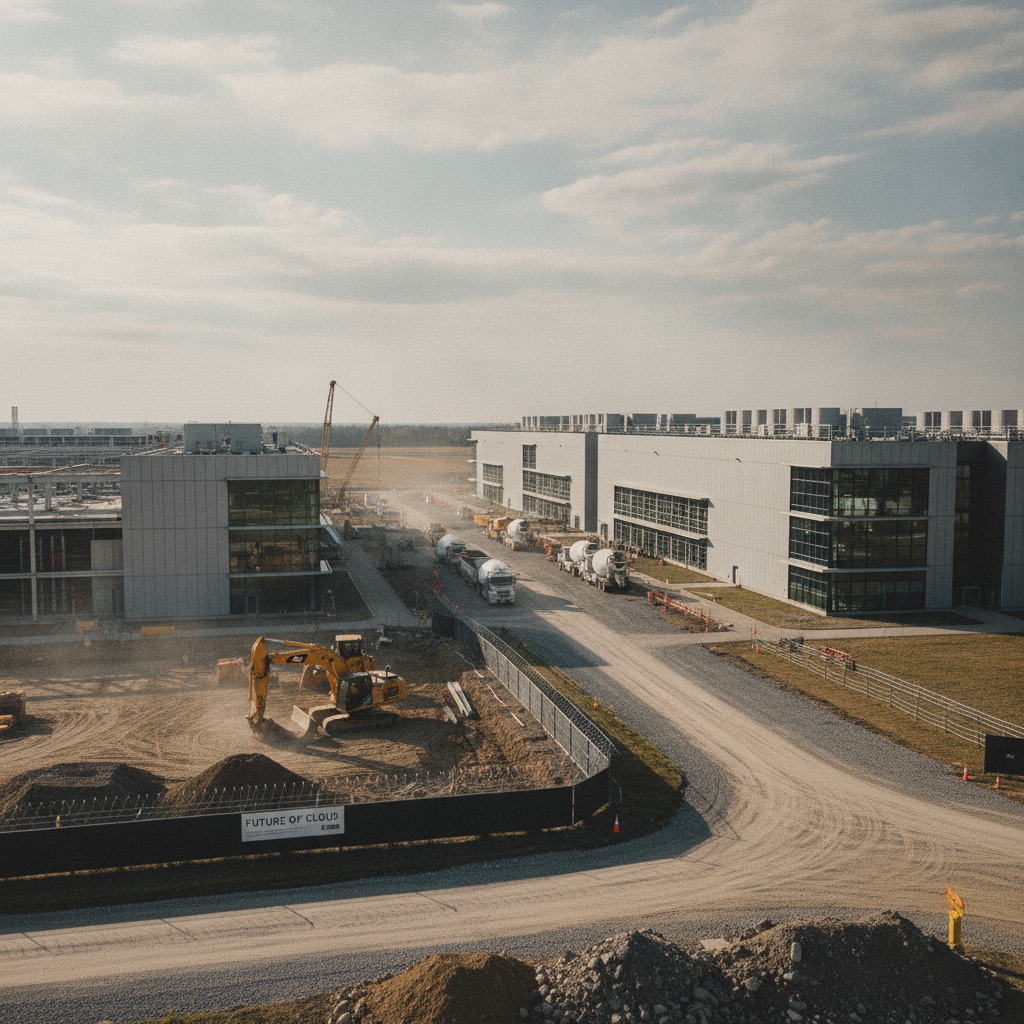
The first principle of a live site expansion is absolute physical separation. A clear, impenetrable boundary must be established between the operational data center and the new construction area. This begins with a detailed site logistics plan that dictates the flow of people, materials, and equipment. We recommend robust construction fencing with controlled-access gates, often supplemented with visual screening to minimize distractions for the operations team. Access control is paramount. Construction traffic must be routed through dedicated entrances, completely separate from the access points used by data center staff and visitors. This plan must also account for emergency vehicle access to both the existing facility and the construction site, ensuring unimpeded routes are maintained at all times. Staging areas for material deliveries and contractor parking should be strategically located within the construction zone to prevent any encroachment on operational areas.
Protecting Critical Live Utility Infrastructure
Comparison of Expansion Mitigation Strategies
| Mitigation Strategy | Key Civil Engineering Task | Primary Risk Addressed | Best For… |
|---|---|---|---|
| Physical Site Segregation | Design of construction fencing, separate access gates, and haul roads. | Security breaches, operational interference, traffic conflicts. | All live site expansion projects, regardless of scale. |
| Subsurface Utility Engineering (SUE) | Commissioning and interpreting utility surveys (Quality Levels D through A). | Accidental utility strikes, service outages, costly repairs. | Projects with dense, poorly documented, or critical underground infrastructure. |
| Phased Utility Tie-ins | Developing a detailed sequence for connecting new utilities to live systems. | Unplanned downtime during system cutovers. | Expansions requiring new power, water, or fiber connections to existing buildings. |
| Vibration & Dust Monitoring | Specifying monitoring locations, thresholds, and response actions. | Damage to sensitive electronic equipment from environmental factors. | Sites where heavy construction (e.g., blasting, pile driving) occurs near operational facilities. |
| Independent Stormwater Management | Designing a separate erosion control and drainage system for the construction area. | Contamination of existing stormwater systems or cooling water intakes. | Large-scale projects with significant earthwork and long construction durations. |
The highest-risk activity during a data center expansion is excavation. The ground beneath a live campus is a complex web of critical infrastructure, including high-voltage power conduits, chilled water loops for cooling, and redundant fiber optic ducts. Damaging any of these can trigger an immediate outage. Therefore, the most critical preparatory step is commissioning a comprehensive Subsurface Utility Engineering (SUE) investigation to accurately locate and identify all existing underground utilities. Once mapped, a protection plan is essential. This often involves establishing strict “no-dig” zones, using physical barriers over critical corridors, and specifying hand-digging or hydro-excavation when working in close proximity to live lines. Every aspect of this work requires intense utility coordination between the civil engineer, the contractor, and the facility’s operations team. Permit requirements for utility modifications or new service tie-ins vary by jurisdiction, and every project team should confirm the applicable standards with the local, state, regional, and federal authorities that hold review authority over the site. This proactive engagement prevents delays and ensures all work complies with the utility provider’s standards.
Phased Site Development and Permitting Strategy
A monolithic approach to permitting and construction is rarely feasible for a live site expansion. A phased strategy is necessary to manage complexity and risk. This involves breaking the project into logical, sequential stages, each with its own set of plans, permits, and construction activities. For example, Phase 1 might include mass grading and utility relocations, while Phase 2 focuses on building foundations and vertical construction. This allows for a more controlled and predictable site development process. This approach extends to the permitting strategy. The project may require amendments to existing environmental or site plan permits, as well as new applications for specific components of the expansion. A clear phasing plan, explicitly detailed in the construction documents, is crucial for securing agency approvals. It demonstrates to reviewers that the project has a logical sequence designed to maintain public safety, environmental compliance, and operational stability throughout the construction lifecycle.
Managing Construction Traffic and Site Access
Effectively managing traffic is crucial for both safety and operational continuity. The project must be designed with a completely separate circulation network for construction vehicles. This typically involves designing and building dedicated, temporary haul roads capable of supporting heavy trucks, keeping them far from the sensitive roadways used for day-to-day data center operations. A stabilized construction entrance with a wheel wash station is often required to prevent tracking mud and debris onto public roads. A formal traffic control plan is a key component of the civil engineering design. This plan addresses on-site circulation, delivery scheduling to avoid peak operational hours, and coordination with local transportation agencies for any necessary off-site improvements or permits for oversized loads. The goal is to make the construction logistics invisible to the data center’s core functions, ensuring that operational and employee traffic flow remains unchanged.
Environmental Controls for Mission-Critical Environments
Data centers are highly sensitive environments. The dust, vibration, and noise from construction can pose a direct threat to operating equipment. An aggressive environmental control plan is non-negotiable. This includes robust dust control measures, such as regular watering of the site and the use of soil tackifiers on stockpiles. For activities like pile driving or heavy soil compaction near the live facility, vibration monitoring is essential. Sensors are placed on the existing building to ensure that ground vibrations remain below the tolerance thresholds of sensitive servers and storage arrays. Furthermore, stormwater management requires special attention. The expansion will alter the site’s drainage patterns, and a carefully designed Stormwater Pollution Prevention Plan (SWPPP) is required to manage runoff. This plan must prevent sediment-laden water from the construction zone from entering the existing site’s drainage systems, where it could clog inlets or compromise the water quality in cooling system intakes or retention ponds.
The RSP Engineers Approach to Live Site Expansion
At RSP Engineers, we approach data center expansions with a risk-mitigation mindset. Our process is designed to provide clarity and control from the earliest stages of planning through final construction. Discovery & Risk Assessment: We begin by conducting a thorough due diligence investigation, reviewing all existing as-builts, geotechnical reports, and operational protocols. We work with your facilities team to identify every potential point of conflict between construction and operations. Integrated Design & Phasing: Our team develops a comprehensive site plan design that integrates the construction logistics plan from day one. We create detailed phasing drawings that clearly define the scope of work for each stage, ensuring contractors have a clear roadmap and permitting agencies understand the project’s progression. Proactive Agency Coordination: We engage with regulatory agencies early and often. By presenting a well-defined phasing and mitigation plan, we streamline the path to achieving zoning compliance and securing all necessary land development and environmental permits. Construction Administration: Our involvement doesn’t end when permits are issued. We provide robust construction administration services, reviewing submittals, responding to RFIs, and conducting site visits to verify that the protective measures and construction sequencing are being implemented exactly as designed.
Common Challenges in Data Center Expansions
Even with careful planning, challenges can arise. Being aware of common pitfalls is the first step to avoiding them. Key issues include inaccurate or missing as-built information for legacy utilities, which can lead to costly discoveries during excavation. Another frequent challenge is underestimating the complexity of modifying the existing stormwater management system to accommodate the new impervious area. Finally, scope creep, where construction activities slowly encroach on operational zones, can occur without vigilant oversight and a clearly communicated logistics plan.
Partner with RSP for Your Mission-Critical Expansion
Executing a flawless data center expansion requires a specialized skill set that blends advanced civil engineering with a deep understanding of mission-critical risk. The team at RSP Engineers has the experience to navigate the complexities of live site development, from initial due diligence and master planning to intricate utility coordination and securing complex permitting approvals. We act as a seamless extension of your team, focused on protecting your current operations while delivering your future capacity. Contact us today to discuss how we can help de-risk your next expansion project.
Conclusion
Expanding a live data center is a high-stakes endeavor where there is no margin for error. Success depends on a foundation of meticulous planning, proactive risk mitigation, and seamless execution. By prioritizing the separation of construction and operations, protecting critical utility infrastructure through detailed investigation, and implementing a phased approach to site development, owners can confidently grow their capacity without compromising current service levels. A partnership with an experienced civil engineering firm that understands the unique demands of mission-critical facilities is the key to navigating the complexities of stormwater management, permitting, and construction on a live campus.
FAQs
-
Protecting live fiber requires a multi-layered approach. It starts with a high-quality Subsurface Utility Engineering (SUE) investigation to precisely locate the conduits. During design, we establish clear buffer zones. During construction, we require contractors to use non-destructive methods like hydro-excavation for visual confirmation before any mechanical digging begins nearby and often specify physical barriers like concrete caps for added protection.
-
The first step is a comprehensive feasibility and risk assessment. This involves a deep dive into the existing site conditions, including a title and ALTA survey review, a Geotechnical Engineering analysis, a utility capacity assessment, and a preliminary review of zoning and land use regulations to identify any potential entitlement hurdles for the site development.
-
Yes, phasing is often the preferred strategy for large, multi-building expansions. A master site plan can be approved upfront, with detailed engineering and building permits secured for each phase or building sequentially. This approach can improve cash flow and allow design adjustments based on lessons learned from earlier phases. This requires careful coordination with the agency review teams.