
Navigating the Replatting Process in Florida: A Civil Engineering Guide
A detailed guide for developers on the technical and legal requirements for replatting property in Florida. Learn about surveys, civil engineering, permitting, and common pitfalls.
Understanding the Legal Framework for Replatting
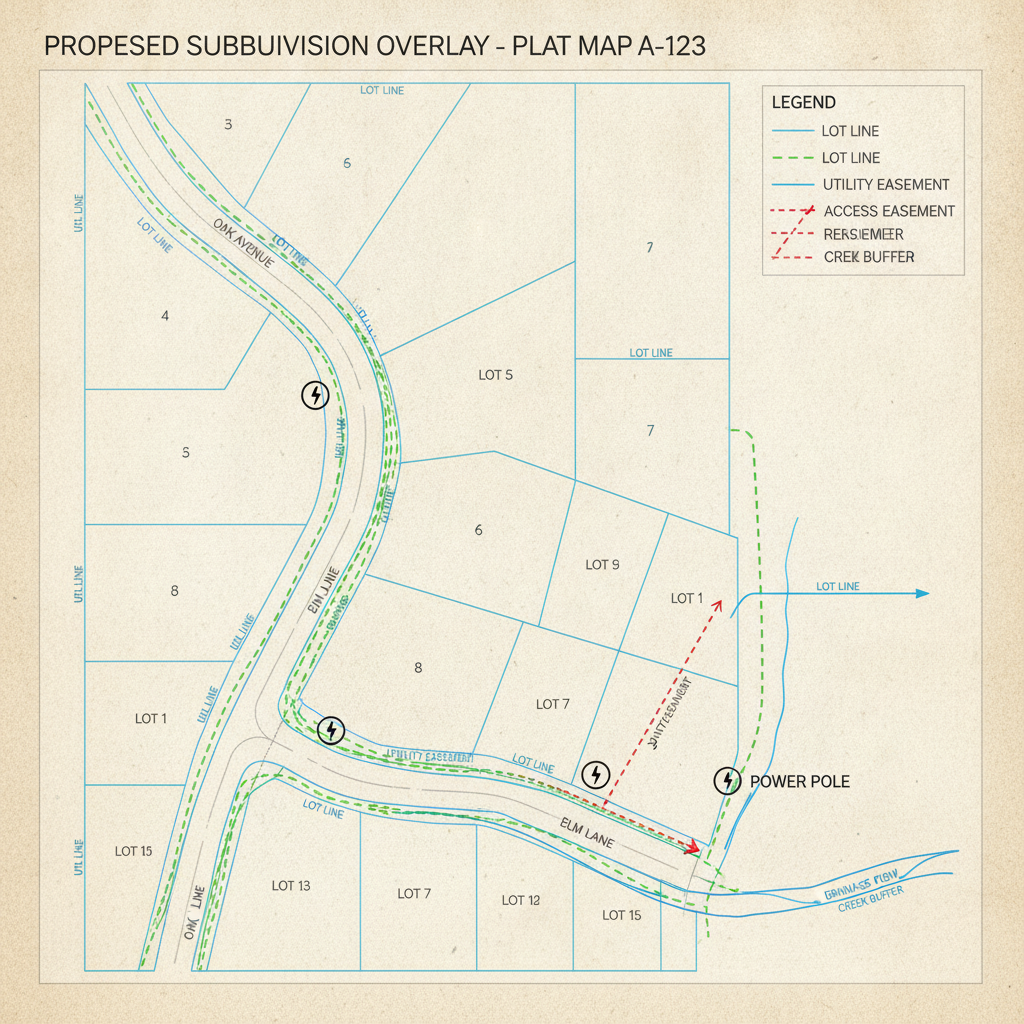
The foundation for all platting and replatting activities in Florida is Chapter 177, Part I of the Florida Statutes. This statute sets the minimum standards for plat preparation and recording. However, it grants significant authority to local governments—cities and counties—to establish more stringent requirements through their own land development codes and comprehensive plans. This local oversight is where the majority of the technical and procedural hurdles reside. A successful replat hinges on satisfying both state law and local regulations governing zoning compliance, infrastructure standards, and public dedications. Before any design work begins, a critical first step is a thorough title search to identify all existing encumbrances on the property. These can include mortgages, liens, covenants, restrictions, and, most importantly, easements. An undiscovered drainage easement or utility right-of-way can completely derail a proposed lot configuration. Identifying these constraints early is essential for a viable site plan design and is a core component of the initial due diligence performed by experienced Civil Engineers.
Key Triggers for a Replat Application
Replat Application Requirements: Lot Combination vs. Subdivision
| Requirement | Lot Combination (Simpler Replat) | Subdivision (Complex Replat) |
|---|---|---|
| Boundary Survey | Required to confirm the perimeter of the parent parcels being combined. | Required to establish the parent tract and provide the basis for creating new internal lots. |
| Utility Impact Analysis | Minimal analysis needed; typically involves capping unused services and confirming continuity for the new, larger lot. | Extensive analysis required, including new service design, capacity calculations, and detailed utility coordination with providers. |
| Stormwater Management Review | Often exempt or requires a simple letter if total impervious area does not increase significantly. | Full stormwater management design and permitting required, including calculations, drainage plans, and often a new pond. |
| Traffic/Access Study | Almost never required unless the new use generates significantly more traffic. | Frequently required to analyze the impact on adjacent roadways and ensure safe access for all new lots. |
| Public Hearing Requirement | Rarely required; often approved administratively by staff. | Almost always required, involving presentations to a Planning Board and/or City/County Commission. |
| Infrastructure Dedication | None required. Existing easements are simply shown on the new plat. | Often requires dedication of new rights-of-way for roads, as well as public utility and drainage easements. |
A replat is not an arbitrary process; it is triggered by specific development goals that alter the legal description of a property. The most common scenarios include subdividing a single large tract into multiple smaller lots for a new residential community, or conversely, a lot combination or assemblage, where several smaller parcels are merged into one larger parcel suitable for a commercial development or multifamily complex. Another frequent trigger is a lot line adjustment, where adjacent property owners agree to move a shared boundary. This is often done to resolve an encroachment or improve the usability of one or both parcels. In nearly all cases, a proposed change in land use is the underlying driver. For example, developing a vacant parcel requires creating legally recognized lots that meet all current zoning compliance criteria, such as minimum lot area, width, and frontage. The replat is the legal instrument that creates these new lots, making them eligible for building permits and conveyable to future owners. This process ensures that the new configuration aligns with the community’s master plan and that all necessary public infrastructure is accounted for in the site development plan.
The Distinct Roles of the Surveyor and Engineer
A common point of confusion in the replatting process is the distinction between a Professional Surveyor and Mapper (PSM) and a Professional Engineer (PE). While their work is deeply collaborative, their responsibilities are distinct. The PSM is legally responsible for the plat document itself. Their work involves performing a precise boundary survey of the existing property, establishing the exact geometry of the new lot lines, setting physical monuments, and preparing the final plat map in accordance with Florida Statutes. The plat must bear the signature and seal of a Florida-licensed PSM to be recordable. The Professional Engineer, on the other hand, is responsible for the design of the physical improvements required to support the new lot configuration. This includes the drainage design, stormwater management systems, utility infrastructure (water, sewer, reuse), and roadway access. The engineer prepares the construction plans and supporting calculations that demonstrate compliance with all local and state regulations. Essentially, the surveyor defines the legal boundaries of the property, while the engineer designs the functional infrastructure that makes the property usable and compliant, providing essential site engineering services.
Civil Engineering Design and Infrastructure Analysis
The civil engineering component is where a replat transforms from a legal concept into a buildable project. Any change to lot lines necessitates a thorough analysis of its impact on public and private infrastructure. A primary focus is utility coordination. Our engineers must identify all existing water mains, sewer lines, and franchise utilities (power, communications) and design new service connections for each proposed lot. This may involve extending public mains, relocating existing lines that conflict with the new layout, and securing necessary utility easements. Equally critical is stormwater management. Creating new lots, especially in a subdivision, almost always increases the amount of impervious surface (roofs, driveways, roads). This triggers a comprehensive review under local and Water Management District rules. Our team performs detailed hydrologic and hydraulic calculations to design a system that collects, treats, and attenuates stormwater runoff. This often involves designing swales, inlets, pipes, and sometimes a retention or detention pond. Proper drainage design is non-negotiable for obtaining agency approval and preventing future flooding issues.
Navigating the Agency Review and Permitting Process
Once the plat and engineering plans are complete, they are submitted to the local governing agency for a formal review. This is a multi-departmental process where the application is scrutinized for compliance with all applicable codes. A typical review loop involves the Planning and Zoning Department (for land use and density), the Public Works or Engineering Department (for utilities, drainage, and roads), the Transportation Department (for access and traffic impact), and often the Fire Department (for emergency access). A complete and well-prepared permit submittal is crucial to minimize review cycles and avoid costly delays. Our role as your civil engineering firm near me is to act as the project advocate during this phase. We proactively communicate with agency reviewers, clarify technical details, and efficiently address their comments. For more complex replats, such as major subdivisions, the process may also require public hearings before a Planning and Zoning Board and final approval from the City Council or Board of County Commissioners. Successfully navigating this agency review process requires both technical expertise and strong professional relationships.
The RSP Engineers Replatting Process
At RSP Engineers, we approach every replatting project with a systematic process designed to maximize efficiency and minimize risk. Our approach is divided into distinct phases: Phase 1: Due Diligence and Feasibility Study. We begin by thoroughly researching the property’s zoning, comprehensive plan designations, and existing plat restrictions. We identify potential fatal flaws, such as deed restrictions, title issues, or major infrastructure conflicts, before significant resources are invested. Phase 2: Survey Coordination and Engineering Design. We collaborate with a trusted Professional Surveyor and Mapper to obtain an accurate boundary and topographic survey. Our engineering team then develops the comprehensive site plan design, including grading, drainage, utilities, and access, ensuring full compliance with all agency standards. Phase 3: Agency Submittal and Management. We prepare and submit a complete and professional application package to the governing agencies. Our team manages all communication, responds to reviewer comments promptly, and represents the project at any required meetings or public hearings. This proactive management is a key part of our construction management services. Phase 4: Final Plat Recordation. Upon receiving all necessary approvals, we coordinate the final steps, including obtaining all required signatures on the plat document and ensuring it is properly recorded with the Clerk of the Circuit Court, making the new lot configuration official.
Common Issues and Pitfalls in Florida Replatting
Even with careful planning, replatting projects can encounter obstacles. One of the most common issues is the discovery of unforeseen easements during the title search or survey. A forgotten utility easement running through a proposed lot can force a complete redesign. Another pitfall is creating a lot that becomes non-conforming with current zoning compliance standards; even if the parent parcel was grandfathered, the new lots must meet today’s rules for size, width, and setbacks. A frequently overlooked legal requirement is obtaining a mortgagee’s joinder and consent. If there is a mortgage on the property, the lender must formally consent to the replat before it can be recorded, as it alters their collateral. Finally, a critical engineering mistake is assuming inadequate infrastructure capacity. Proposing a new subdivision without confirming that the downstream sewer system or adjacent water main can handle the additional load is a recipe for denial. This underscores the importance of early and thorough utility coordination and analysis. Frequently Asked Questions (FAQ) How long does the replatting process take in Florida? The timeline varies dramatically based on complexity and jurisdiction. A simple lot line adjustment or combination might take 3 to 6 months. A complex multi-lot subdivision requiring public hearings and extensive engineering can easily take 9 to 18 months or longer, depending on agency review backlogs and the number of revisions required. Can I replat a property that is in a flood zone? Yes, but it adds a significant layer of regulatory scrutiny. The project will require strict adherence to FEMA and local floodplain management ordinances. The drainage design must demonstrate no adverse impact on flood storage, and finished floor elevations for any future structures will be tightly controlled. This is a critical component of the civil engineering analysis. What is the difference between a replat and a variance? These are two distinct land use processes. A replat legally changes the property boundaries shown on a recorded plat. A variance is a request for relief from a specific requirement of the zoning code (e.g., reducing a required setback). A variance does not alter the legal lot lines; it only grants permission to deviate from a specific development standard on that existing lot. Do I need an attorney for a replat? While not always legally mandatory for the application itself, it is highly recommended. An experienced land use attorney can provide invaluable assistance in reviewing title work, interpreting complex deed restrictions, drafting necessary legal documents like unity of title, and reviewing the final plat for legal sufficiency before recordation. What happens if my replat application is denied? A denial is typically accompanied by a staff report outlining the specific reasons for the decision, such as non-compliance with a code provision or an inadequate stormwater management plan. The next step is to work with your Professional Engineer to understand the deficiencies, revise the plans to address the comments, and resubmit the application for another review.
Your Partner for Florida Land Development
The replatting process is a critical step in unlocking the full potential of your property, but it is fraught with technical and regulatory challenges. Partnering with an experienced Florida civil engineering firm is essential for a smooth and successful outcome. The team at RSP Engineers has the expertise to manage every aspect of your project, from initial feasibility and site plan design to final agency approval. We specialize in navigating complex permitting requirements, ensuring zoning compliance, and delivering sound engineering solutions. Contact us today to discuss how we can guide your next land development project to completion.
Conclusion
Successfully replatting property in Florida is a multi-disciplinary effort that requires a deep understanding of state law, local codes, and sound engineering principles. It is a formal process that legally redefines property for future development. By engaging a qualified team, including a civil engineer and surveyor, early in the process, developers can proactively address issues related to stormwater management, utility coordination, and access. This strategic approach not only ensures regulatory compliance but also minimizes costly delays, paving the way for a successful and profitable site development project.
FAQs
-
Navigating the Replatting Process in Florida: A Civil Engineering Guide requires careful planning, qualified engineering, and compliance with the applicable codes and permits.
-
Getting Navigating the Replatting Process in Florida: A Civil Engineering Guide right protects safety, supports regulatory compliance, and avoids costly redesigns or delays.
-
RSP Engineers provides licensed expertise and end-to-end support for Navigating the Replatting Process in Florida: A Civil Engineering Guide, from early planning through permitting.