
Managing Setbacks and Buffers on Data Center Sites
Learn how zoning setbacks, security standoffs, and environmental buffers impact data center site design. A guide for developers on maximizing buildable area and navigating permitting.
Differentiating Setbacks from Buffers in Site Planning
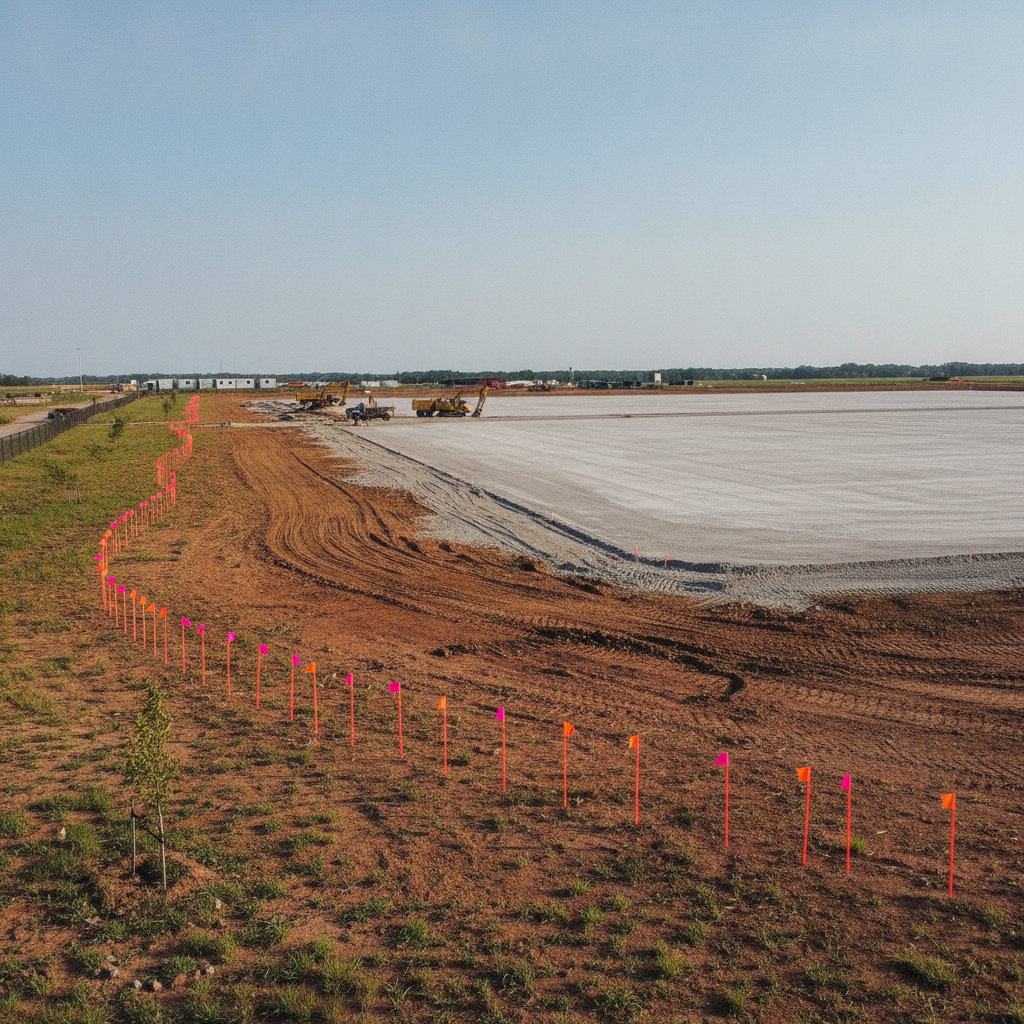
While often used interchangeably, setbacks and buffers serve distinct purposes in land development. A setback is a mandatory minimum distance that a structure, parking lot, or other improvement must be located from a property line, public right-of-way, or another feature. Its primary function is to ensure orderly development, provide access for emergency services, and maintain adequate light and air between properties. Setbacks are typically defined with precise dimensions in local zoning ordinances. A buffer, on the other hand, is an area of land specifically designated to separate one land use from another or to protect a sensitive natural resource. Buffers are often required adjacent to residential areas, schools, or parks to mitigate visual and acoustic impacts. They can also be mandated around wetlands, streams, and conservation areas. Unlike a simple setback line, a buffer has a width and often includes specific requirements for landscaping, screening (like fences or berms), or preservation of existing vegetation. Both constraints directly reduce the buildable envelope of a site, making their early identification crucial for any civil engineering analysis.
Zoning and Land Use Code Setback Requirements
Comparison of Common Data Center Buffer Types
| Buffer/Setback Type | Primary Purpose | Typical Design Considerations | Key Regulatory Driver |
|---|---|---|---|
| Zoning Setback | Orderly development, public safety, access | Building height, road classification, parking placement | Local Zoning / Land Development Code |
| Security Standoff | Anti-Terrorism/Force Protection (AT/FP) | Threat assessment, vehicle access control, perimeter fencing | Owner Requirements / Industry Standards |
| Environmental Buffer | Water quality, habitat protection | Wetland delineation, stream classification, protected species | Federal, State, and Local Environmental Agencies |
| Utility Easement | Infrastructure access and maintenance | Location of existing power, water, fiber, gas lines | Recorded Easement Documents / Utility Provider |
| Landscape/Acoustic Buffer | Visual screening, noise mitigation | Planting density, fence height, sound wall design, berms | Local Zoning / Conditional Use Permit |
The most common constraints encountered during site development are zoning setbacks. These are established by the local authority having jurisdiction to regulate the placement of buildings and infrastructure. A typical zoning code will specify minimum front, side, and rear yard setbacks for principal structures, accessory buildings, and parking areas. These dimensions can be influenced by the site’s zoning district, the classification of adjacent roadways, and the height of the proposed building. For data centers, which often have large footprints and significant equipment yards, these requirements can dramatically shrink the developable area. Navigating these regulations requires a thorough review of the applicable land development code during the project’s due diligence phase. It is not enough to simply identify the setback dimensions; a skilled civil engineering team must also understand how they are measured and what, if any, encroachments are permitted. Zoning and land use code requirements for setbacks and buffers vary by jurisdiction, and it is essential to confirm all applicable standards with the local, state, regional, and federal authorities that hold review authority over the site. This proactive zoning compliance analysis prevents surprises during the formal agency review process and forms the foundation of a viable site plan design.
Environmental and Natural Resource Buffers
Beyond property lines, data center sites are often constrained by environmental buffers designed to protect sensitive natural resources. Federal programs like the Clean Water Act, as well as state and local regulations, mandate buffers around wetlands, streams, rivers, and other jurisdictional water bodies. These buffers are no-disturbance zones intended to protect water quality, preserve wildlife habitats, and maintain ecological functions. The width and specific restrictions of these buffers depend on the classification of the resource and the governing regulations. Identifying these environmental constraints requires detailed site investigation, including wetland delineations and ecological assessments. The presence of significant environmental buffers can render large portions of a property undevelopable, impacting everything from building placement to the routing of access roads and utilities. Effective stormwater management and drainage design must also account for these protected areas, often requiring innovative solutions to treat and convey runoff without disturbing the buffer zone. Securing the necessary environmental permits is a critical path item, and early engagement with regulatory agencies is key to a successful outcome.
Security and Operational Standoff Distances
Data centers are mission-critical facilities that house vital digital infrastructure, making security a paramount concern. This translates directly into physical site design through the implementation of security standoff distances. These are specialized buffers designed to protect the facility from external threats. Unlike zoning setbacks, which are driven by public code, standoff distances are typically determined by the owner’s internal security protocols, insurance requirements, or industry best practices for Anti-Terrorism/Force Protection (AT/FP). These security buffers create a controlled perimeter around the main data hall and critical infrastructure, restricting vehicle access and providing a clear zone for surveillance. The required standoff distance can be substantial, often exceeding standard zoning setbacks and further compressing the usable area of a site. A comprehensive site plan design must integrate these security requirements with all other site constraints, including grading, drainage design, utility routing, and emergency access. This requires close collaboration between the civil engineering team, architects, and security consultants.
Utility and Infrastructure Easement Constraints
Often overlooked during initial site selection are existing utility and infrastructure easements. These legal encumbrances grant utility providers the right to install, operate, and maintain their infrastructure—such as high-voltage power lines, major pipelines, or fiber optic cables—across a property. Easements function as no-build zones, effectively creating another layer of setbacks that must be honored in the site design. Building structures or even placing significant fill within an easement is typically prohibited. A critical first step in any land development project is to obtain a title report and a comprehensive boundary and topographic survey that identifies all recorded easements. However, unrecorded easements can also exist, necessitating thorough research and utility coordination with local providers. These constraints can dictate the entire site layout, influencing building orientation, parking configuration, and the location of critical stormwater management facilities. Proactive utility coordination is essential to avoid conflicts that could derail the project schedule and budget.
Landscape, Screening, and Acoustic Buffers
As data centers become more prevalent in developed areas, community acceptance is a growing factor in the approvals process. Local jurisdictions often impose requirements for landscape and screening buffers, particularly when a site abuts residential, recreational, or other sensitive land uses. These buffers are intended to mitigate the visual impact of the large, industrial-style buildings and associated equipment yards. Requirements may specify a minimum buffer width, the type and height of vegetation, the installation of opaque fencing, or the construction of earthen berms. In addition to visual screening, acoustic buffers are becoming increasingly important. The cooling systems and backup generators essential to data center operations can produce significant noise. Local ordinances may set maximum allowable noise levels at the property line, necessitating acoustic studies and the design of mitigation measures like sound walls or specialized enclosures. Integrating these buffer requirements into the site plan design is a key aspect of achieving zoning compliance and securing community support for the project.
The RSP Engineers Approach to Buffer and Setback Analysis
At RSP Engineers, we treat setback and buffer analysis as a foundational element of our site engineering services. Our process begins with comprehensive due diligence, where we conduct a deep dive into local land development codes, identify all recorded easements, and screen for potential environmental constraints. We utilize advanced GIS mapping to create a consolidated constraints exhibit, providing clients with a clear visual representation of the net buildable area before significant capital is invested. This initial analysis informs a collaborative site plan design process. Our team works closely with architects, security consultants, and other stakeholders to optimize the layout, strategically placing the building, parking, and critical infrastructure to maximize efficiency while respecting all required setbacks and buffers. We proactively engage with regulatory agencies to clarify code interpretations and identify potential pathways for relief, such as the variance process, if a specific constraint presents an unavoidable hardship. This strategic approach to civil engineering and permitting minimizes risk and helps keep projects on schedule.
Common Challenges in Setback and Buffer Management
Even with careful planning, data center projects can encounter significant challenges related to setbacks and buffers. One common issue is conflicting requirements, where a security standoff distance overlaps with a protected environmental buffer, forcing a difficult design compromise. Another challenge is the discovery of unrecorded utility easements during construction, which can halt work and require immediate redesign. These situations underscore the importance of exhaustive upfront research. The variance process, while a potential solution for zoning setback encroachments, is often a lengthy and uncertain undertaking with no guarantee of approval. Applicants must typically demonstrate a unique hardship associated with the property that is not self-created. Furthermore, the cumulative impact of multiple buffers can severely constrain the placement of essential infrastructure, such as stormwater management ponds and underground utilities, requiring complex and often costly drainage design solutions. An experienced civil engineering firm can help anticipate and mitigate these common pitfalls.
Partner with RSP for Strategic Data Center Site Development
Navigating the complex web of setbacks, buffers, and easements on a data center project requires specialized expertise and a proactive approach. The team at RSP Engineers provides the comprehensive site engineering services needed to turn constrained properties into successful mission-critical facilities. We excel at due diligence, site plan design, and navigating the complexities of the permitting process nationwide. From initial feasibility studies and zoning compliance reviews to detailed drainage design and utility coordination, our engineers act as your strategic partner. We identify challenges early, develop creative solutions, and manage the agency review process to secure timely approvals. Let our team help you maximize your site’s potential and mitigate risks. Contact RSP Engineers today to discuss your data center project.
Conclusion: Maximizing Your Buildable Area
In conclusion, setbacks and buffers are fundamental design parameters that shape every aspect of a data center project. They are not afterthoughts but core components of a successful site development strategy. By understanding the differences between zoning, environmental, security, and utility constraints, developers can make more informed site selection decisions and create more efficient and resilient designs. A proactive partnership with an experienced civil engineering firm is the best way to manage these challenges, ensuring that your project’s buildable area is maximized and your path to operation is clear. This strategic approach to land development is essential for success in the competitive mission-critical market.
FAQs
-
A zoning setback is a publicly mandated requirement from a local government agency designed for general welfare and orderly development. A security standoff distance is typically a private requirement driven by the data center owner’s specific operational and security protocols to protect the facility from threats. While both restrict development, their origins and purposes are distinct.
-
Obtaining a variance is sometimes possible but is never guaranteed. The process involves a formal application to a local board or commission, and the applicant must typically prove that a unique physical hardship of the property prevents compliance with the code. The success of a variance application depends heavily on the specific facts and the criteria set by the local jurisdiction. It is a key part of zoning compliance strategy.
-
Security standoffs directly reduce the developable area and can dictate the entire site layout. They influence the location of the main building, access drives, perimeter fencing, and employee parking. They also impact the civil engineering design for grading, utilities, and stormwater management, as this infrastructure must be located outside the secure perimeter or hardened to meet security standards.