
Integrating Security Requirements Into Data Center Site Layouts
Learn how civil engineering integrates physical security into data center site layouts, from standoff distances and anti-ram barriers to secure utility corridors and stormwater management. A guide for
Establishing Layered Perimeters and Standoff Distances
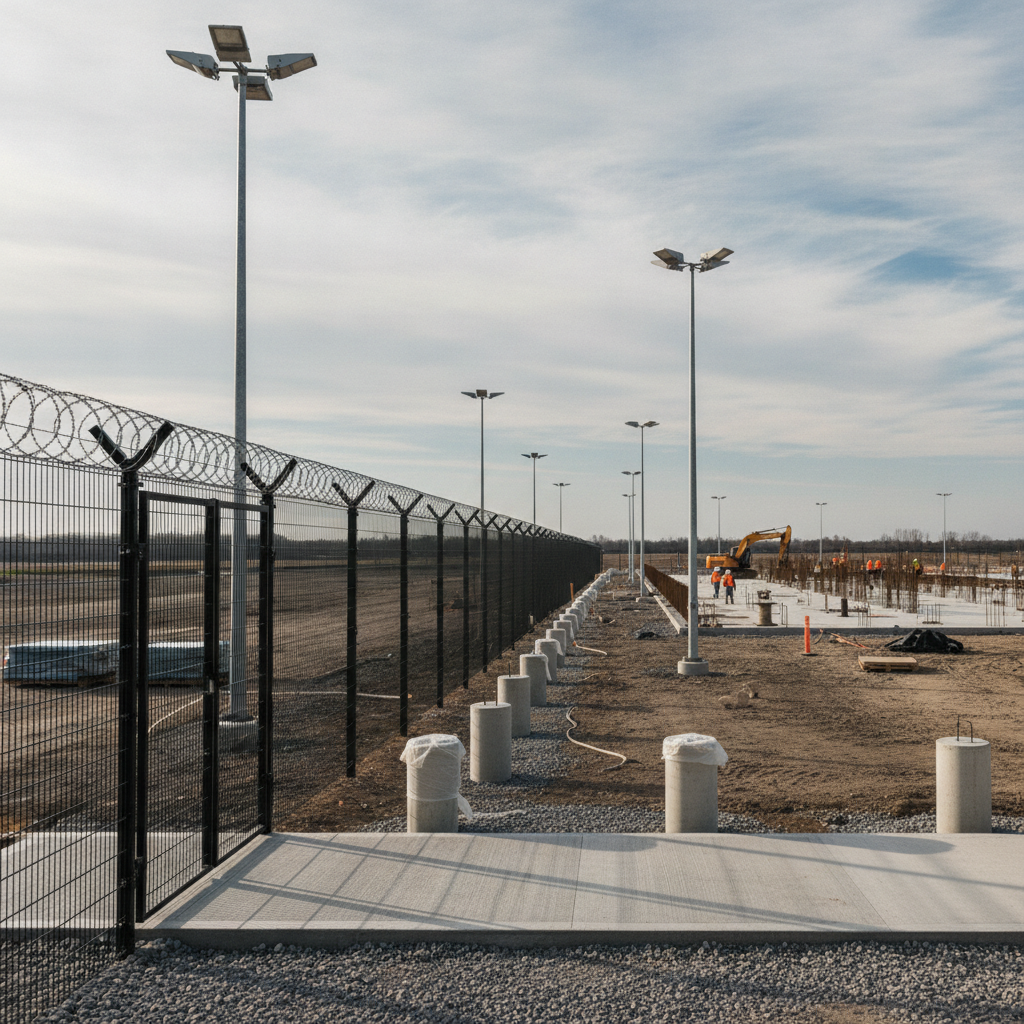
A core principle of physical security is creating layered defenses, forcing any potential adversary to overcome multiple obstacles. This strategy begins with the overall site plan design. The outermost layer is typically the property boundary, where the first controls are established. A skilled civil engineer works with the project team to maximize standoff distance—the physical space between a potential threat and the asset being protected. This is a critical countermeasure against vehicle-borne explosive devices and other external threats. Maximizing standoff distance involves strategic placement of the data center building, critical infrastructure, and parking areas on the site. This process is heavily influenced by zoning compliance, which dictates setbacks from property lines and public rights-of-way. The site grading plan is also a key tool; creating berms or subtle changes in elevation can enhance these distances and create natural barriers, all while being integrated into the site’s overall stormwater management plan. The goal is to create a clear, observable buffer zone that is difficult to breach unnoticed.
Designing Secure Fencing, Gates, and Anti-Ram Barriers
Key Security Features and Civil Engineering Considerations
| Security Feature | Civil Engineering Design Task | Key Integration Challenge |
|---|---|---|
| Standoff Distance | Strategic building and infrastructure placement; site grading. | Balancing security goals with zoning setbacks and site constraints. |
| Anti-Ram Bollards | Structural foundation design; precise layout and grading integration. | Preventing interference with underground utilities and stormwater flow. |
| Perimeter Fencing | Foundation design; alignment with topography; gate integration. | Ensuring continuous security across uneven terrain and at utility crossings. |
| Secure Utility Conduits | Duct bank design; redundant routing; coordination with providers. | Navigating existing easements and congested underground corridors. |
| Surveillance Camera Placement | Grading for clear sightlines; pole foundation and conduit design. | Coordinating with landscape plans to prevent future visual obstruction. |
| Controlled Entry Gate | Roadway geometry design; vehicle queuing analysis; sally port layout. | Accommodating vehicle turning radii while maintaining a secure checkpoint. |
The next layer of defense involves physical barriers. High-security fencing, such as anti-climb and anti-cut systems, defines the secure perimeter. The civil engineering design for this includes specifying the fence type, height, and, critically, the foundation design required to support it based on soil conditions and wind loading. These designs must be robust enough to withstand determined attempts at breaching while also accommodating site topography without creating gaps. Vehicle access points are hardened using engineered gate systems, often incorporating sally ports or vehicle traps for thorough screening. To protect against hostile vehicle attacks, anti-ram barriers like bollards, reinforced walls, or earthen berms are integrated into the site layout. The placement and design of these features are a critical site engineering services task, as they must be positioned to be effective without impeding authorized circulation or emergency access. The specific design standards for these barriers, including foundation depth and crash ratings, often vary by jurisdiction and project-specific threat assessments, so it is crucial to confirm all requirements with the applicable local, state, regional, and federal authorities.
Utility Coordination for Secure and Resilient Infrastructure
A data center’s lifelines are its utilities: power, water, and fiber optic connectivity. Protecting this infrastructure is paramount. A key role for the civil engineer is comprehensive utility coordination to ensure these services are delivered via secure, redundant, and defensible pathways. This often means routing critical utilities underground in concrete-encased duct banks and designing diverse entry points into the facility to avoid a single point of failure. The design process involves creating dedicated, secure utility corridors that are separated from public access and other site functions. Manholes, vaults, and other access points must be secured and located in controlled areas. This requires intensive collaboration with each utility provider to understand their requirements and constraints while achieving the project’s security goals. The final design is a complex network that balances security, maintainability, and resilience, forming a critical part of the overall site development package submitted for permitting.
Integrating Surveillance and Lighting with Site Topography
Effective surveillance depends on clear lines of sight. A civil engineer shapes the land to support the security mission, using the grading plan to eliminate blind spots, potential hiding places, and visual obstructions. This ensures that security cameras have unobstructed views of the perimeter, access points, and other critical zones. The design process involves a collaborative effort between the civil engineer and the security systems designer to optimize camera placement relative to the site’s topography. Site lighting is another critical security layer that is integrated into the civil engineering plans. The design includes the location of light poles, fixture specifications, and the routing of underground power conduits. The goal is to provide consistent, overlapping illumination across the site without creating glare that could blind cameras or security personnel. Furthermore, landscaping must be carefully planned. While aesthetically important, trees and dense shrubs can offer concealment if not placed strategically. The landscape plan must complement, not compromise, the site’s security posture and clear zones.
Stormwater Management as a Security Asset
Innovative site development treats every site element as a potential contributor to the security plan, and stormwater management is no exception. While its primary purpose is to manage runoff and comply with environmental regulations like the National Pollutant Discharge Elimination System (NPDES), stormwater infrastructure can be designed to serve a dual security purpose. A large, deep retention or detention pond can create a significant natural barrier, effectively increasing standoff distance along one side of a property. Similarly, vegetated swales and other drainage features, while designed for water conveyance and treatment, can be configured to impede foot and vehicle traffic. This requires a sophisticated approach to drainage design, where hydraulic performance is modeled alongside security objectives. The civil engineer ensures that these dual-purpose features meet all regulatory requirements for flood control and water quality while seamlessly integrating into the site’s layered defense strategy, turning a compliance necessity into a security asset.
Controlled Access, Circulation, and Emergency Response
The flow of vehicles and personnel onto and around the site must be tightly controlled. The civil engineering design establishes the entire circulation network, including public access roads, secure employee parking, and segregated loading/delivery zones. Roadway geometry, curb lines, and traffic control measures are designed to channel vehicles to designated screening points and prevent unauthorized access to sensitive areas. This design must also account for the critical needs of emergency responders. The site layout must provide clear, unobstructed access for fire trucks, ambulances, and law enforcement vehicles, with adequate turning radii and load-bearing pavement. This is a key point of review during the permitting process with the authority having jurisdiction. Simultaneously, the design must ensure ADA compliance, providing accessible routes from parking areas to the building entrance for all personnel, seamlessly integrating universal design with high-security protocols.
RSP Engineers’ Approach to Secure Site Design
At RSP Engineers, we understand that a successful mission-critical project is built on a foundation of integrated, intelligent design. Our process begins with a deep dive into the project’s specific security requirements, often in collaboration with the owner’s security consultant and architectural team. We embed these requirements into the earliest conceptual layouts, ensuring that security is a driver of the design, not an afterthought. Our team of experienced professionals excels at translating security strategy into actionable civil engineering plans. We manage the complex interplay between grading, drainage design, utility infrastructure, and physical barriers. We navigate the intricate permitting process with local and state agencies, advocating for designs that meet both regulatory and security objectives. From the initial feasibility study through final construction administration, we provide the expertise needed to deliver a secure, resilient, and fully operational site.
Common Challenges in Data Center Security Design
Integrating security into a site plan is not without its challenges. Project teams must be vigilant to avoid common pitfalls that can compromise the final design. One of the most frequent issues is attempting to add security features late in the design process, which often leads to costly rework and suboptimal solutions. Another challenge is a lack of coordination between the civil engineer, architect, and security consultant, resulting in conflicting designs, such as a fence line that interferes with a required fire access lane. Other common problems include underestimating the impact of security hardware on site infrastructure. For example, anti-ram bollards can inadvertently block stormwater flow if not properly integrated into the site’s drainage design. Similarly, a landscape plan chosen for aesthetics might create perfect hiding spots for an intruder if not reviewed for security implications. Successfully navigating these challenges requires an experienced team that maintains a holistic view of the project from start to finish.
Partner with RSP Engineers for Your Mission-Critical Site Development
Developing a secure data center requires a partner with proven expertise in complex site development. As one of the nation’s leading Civil Engineering firms specializing in mission-critical projects, RSP Engineers provides the comprehensive services needed to transform your vision into a secure and resilient reality. Our team is ready to assist with every phase of your project, from initial due diligence and conceptual design to navigating the complexities of permitting and providing diligent construction administration. Contact us today to discuss how we can engineer a secure foundation for your critical infrastructure investment.
Conclusion: A Foundation of Security Built on Civil Engineering
Ultimately, the physical security of a data center is only as strong as its underlying site design. An effective security posture is not a collection of disparate features but a fully integrated system where every element works in concert. This integration is the core responsibility of the civil engineering team. By thoughtfully planning for layered perimeters, hardened barriers, secure utility coordination, and clear lines of sight from day one, we build security into the land itself. This proactive, holistic approach to site development provides a resilient foundation that protects critical assets for years to come.
FAQs
-
A civil engineer should be engaged at the very beginning, during the site selection and due diligence phase. Early involvement allows for the assessment of a property’s suitability for implementing security requirements, such as achieving necessary standoff distances and accommodating secure utility paths, which can significantly impact project viability and cost.
-
Absolutely. Any linear feature installed on a site, such as a line of bollards or a concrete barrier, can act as a small dam, impeding the natural flow of stormwater. It is a critical civil engineering task to integrate these barriers into the grading and drainage design to ensure they do not cause unintended ponding or erosion.
-
The civil engineer leads the technical coordination with power, water, and fiber providers. This involves designing secure, often redundant, pathways for these critical services, negotiating service locations, and managing the complex utility coordination and easement acquisition process. Our goal is to ensure resilient service that is protected from physical threats.