
Common Data Center Geotechnical Failures
Explore common geotechnical failures in data center projects, from inadequate soil investigation to differential settlement. Learn how RSP Engineers’ civil engineering expertise prevents costly mistak
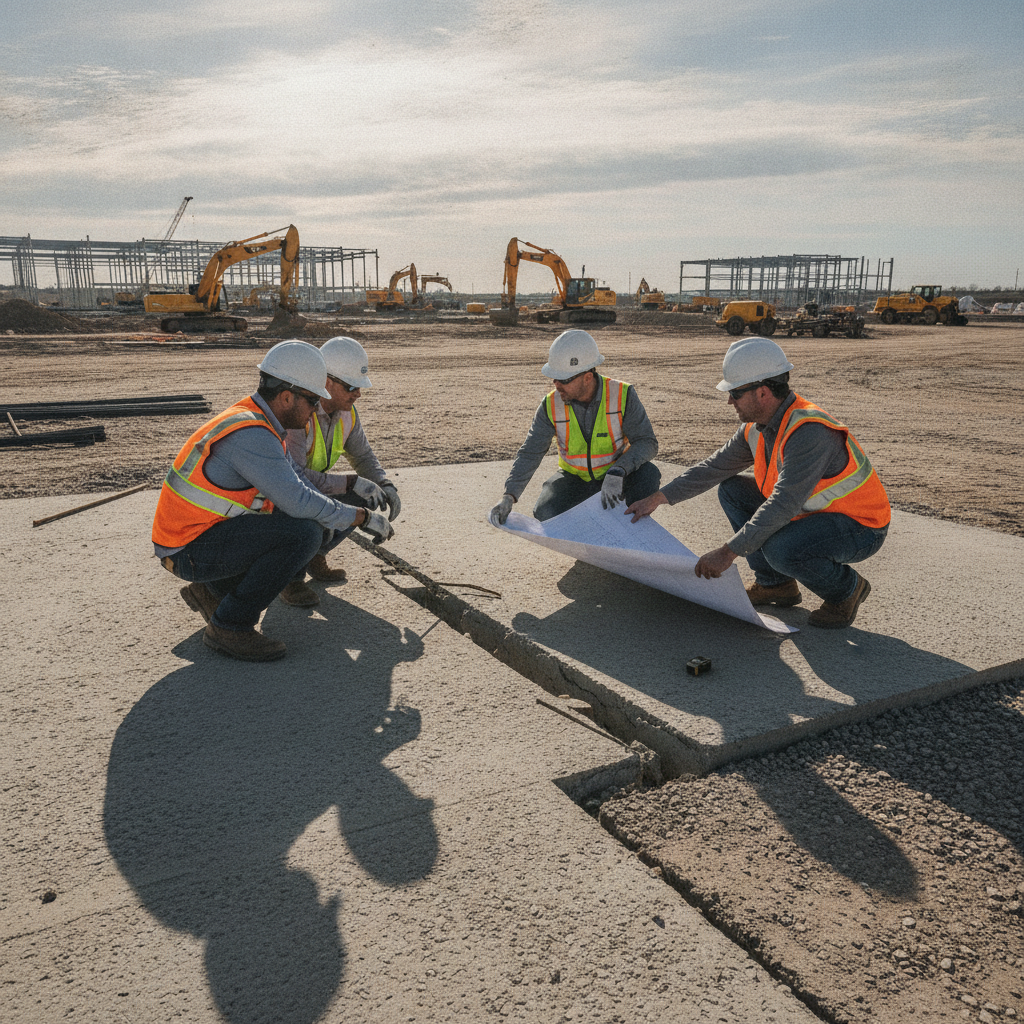
The High Cost of an Inadequate Subsurface Investigation
The single most frequent point of failure begins before any dirt is moved: a rushed or under-scoped subsurface investigation. Treating the Geotechnical Engineering report as a simple box to check is a recipe for disaster. A proper investigation for a data center must be significantly more robust than for a typical commercial building due to the extreme sensitivity of the equipment to movement. This involves a sufficient number of soil borings, drilled to appropriate depths, to accurately characterize the site’s geology and identify any variability. Cutting corners here means you are essentially designing blind. A comprehensive Geotechnical soil report is the foundational document for the entire site development project. It provides critical parameters like soil bearing capacity, potential settlement, and groundwater levels. Without this data, the structural engineer cannot design an appropriate foundation, and the civil engineer cannot properly plan for grading and utilities. An inadequate investigation leads to unforeseen conditions during construction, resulting in costly change orders, significant delays, and a design that may not be suitable for the actual subsurface conditions encountered.
Overlooking Problematic Florida Soil Conditions
Geotechnical Risk Mitigation Strategies
| Geotechnical Risk | Primary Consequence | Mitigation Strategy |
|---|---|---|
| Inadequate Site Investigation | Unforeseen soil conditions, costly change orders | Comprehensive Geotechnical soil report with sufficient borings and lab testing. |
| Expansive or Collapsible Soils | Heave or settlement causing slab/foundation failure | Soil stabilization (lime/cement), over-excavation and replacement, or deep foundation systems. |
| High Groundwater Table | Foundation instability, construction delays | Permanent underslab drainage, robust waterproofing, and a detailed construction dewatering plan. |
| Poor Fill Compaction | Long-term differential settlement under slabs and equipment | Strict QA/QC, nuclear densometer testing on each lift, and use of approved fill materials. |
| Karst Topography (Sinkholes) | Catastrophic structural collapse | Ground Penetrating Radar (GPR) surveys, deep borings, and potential use of deep foundations or grout injection. |
| Liquefaction Potential | Loss of soil bearing capacity during seismic events | Ground improvement techniques like vibro-compaction, stone columns, or deep soil mixing. |
Florida’s unique geology presents specific challenges that can be devastating to data centers if not properly identified and addressed. Much of the state is underlain by limestone, creating a high potential for karst topography. The sudden formation of a sinkhole beneath a data hall is a catastrophic, facility-ending event. Beyond karst, Florida sites often contain layers of very soft organic soils, peats, or expansive clays. These materials have low strength and high compressibility, leading to significant and often unpredictable settlement under the heavy, concentrated loads of a data center. Identifying these problematic soils is a primary objective of the geotechnical investigation. Techniques like Ground Penetrating Radar (GPR) can help map potential voids in karst terrain. Deep soil borings and laboratory testing on soil samples are essential to quantify the risks of settlement from compressible soils. The mitigation strategy, whether it involves deep foundations like piles, ground improvement techniques, or complete removal and replacement of unsuitable soils, is dictated by these early findings. Ignoring these regional soil risks during the site plan design phase is a critical error.
Mismanaging Groundwater and Its Impact on Foundations
Data centers often feature extensive below-grade infrastructure, including utility trenches, fuel tank vaults, and sometimes basement levels. Underestimating the seasonal high groundwater table can lead to persistent problems, including foundation uplift, water infiltration, and major construction challenges. A high water table can significantly reduce the effective soil bearing capacity and complicate excavation, requiring extensive and costly dewatering operations. If not managed correctly, this can compromise the integrity of foundation subgrades and utility backfill. A thorough geotechnical study must accurately determine the seasonal high water table and provide clear recommendations for foundation design and construction. This may include specifying permanent underslab drainage systems, robust waterproofing membranes, or even adjusting the entire facility’s finished floor elevation. The drainage design for the site must also account for how it interacts with groundwater, ensuring that stormwater management systems do not inadvertently raise the local water table around the foundation.
Critical Failures in Earthwork and Compaction Control
Even with a perfect design, a data center’s foundation is only as good as the earthwork it’s built upon. The process of preparing the building pad—placing and compacting structural fill—is a critical phase where failures are common. Using poor-quality or unapproved fill material, placing fill in lifts that are too thick, or failing to achieve the specified compaction percentage (typically 95% to 98% of the soil’s maximum dry density) will create a subgrade that will continue to settle for years. This slow, creeping settlement is a primary cause of cracked slabs, misaligned equipment, and broken utility lines. Rigorous quality assurance and quality control (QA/QC) during construction is the only way to prevent these failures. This involves a qualified Geotechnical engineer or technician on-site to observe earthwork, test the fill material, and perform frequent density tests (e.g., nuclear densometer testing) on each lift of compacted soil. This oversight, a key component of construction administration, ensures that the conditions assumed in the design are actually achieved in the field. Without it, the entire foundation system is at risk.
Differential Settlement: The Silent Killer of Data Center Operations
The ultimate consequence of most geotechnical failures is differential settlement—when one part of the building settles more than another. While uniform settlement might be manageable, differential movement is uniquely destructive to data centers. Server racks are installed in long, perfectly aligned rows. Cooling pipes, power conduits, and fiber optic cables are rigid and have very low tolerance for movement. Even a few millimeters of differential settlement can warp racks, crack coolant lines, sever fiber connections, and compromise the integrity of sensitive equipment. Preventing differential settlement is the central goal of data center geotechnical design. It requires a deep understanding of the building’s load distribution and the soil’s response. The foundation system, whether it’s a shallow raft slab, a mat foundation, or a deep pile system, must be designed to distribute loads evenly and bridge over any minor variations in the underlying soils. This is where the initial Geotechnical soil report and ongoing construction testing become invaluable, providing the data needed to design a foundation that ensures long-term stability.
Unmitigated Seismic, Liquefaction, and Karst Risks
While Florida is not a high-seismic region, the risk is not zero, and certain soil types can be susceptible to liquefaction. Liquefaction occurs when saturated, loose sandy soils lose their strength during ground shaking and behave like a liquid, causing a complete loss of foundation support. A proper geotechnical analysis must evaluate the liquefaction potential of the site’s soils. If the risk is present, ground improvement techniques such as vibro-compaction or stone columns may be required to densify the soil and mitigate the risk. Similarly, the risk of karst topography must be fully addressed. A data center cannot be built over an area with a high potential for sinkhole activity. The geotechnical investigation must specifically look for signs of karst, such as voids, ravelling sands, or soft zones in the limestone bedrock. If such features are found, the site may be deemed unsuitable, or extensive and expensive remediation like pressure grouting may be necessary. Ignoring these large-scale geological hazards can lead to a total loss of the asset.
The RSP Engineers Proactive Geotechnical Approach
At RSP Engineers, we view geotechnical analysis not as a preliminary step, but as an integrated component of the entire project lifecycle. Our process begins with a deep dive into the client’s operational requirements and the specific tolerances of their equipment. We then scope and manage a robust Geotechnical Engineering investigation tailored to the unique demands of the mission-critical facility. We don’t believe in a one-size-fits-all approach; every boring location, every lab test, is chosen to answer specific questions about the site’s ability to support the infrastructure. Our Civil Engineers work hand-in-hand with our geotechnical partners and the structural design team. The findings from the Geotechnical soil report directly inform our site plan design, grading plans, and utility layouts. During construction, our Construction Management Services team provides rigorous on-site observation and testing to verify that earthwork, compaction, and foundation installation meet the design specifications. This proactive, hands-on approach closes the gap between design and construction, preventing minor issues from becoming major failures.
Common Issues Encountered During Construction
Even with the best design, the construction phase presents daily challenges. A common issue is the contractor attempting to use on-site soils as structural fill that do not meet the project’s specifications for plasticity or organic content. Another is encountering a perched water table that wasn’t identified in the initial borings, requiring a rapid redesign of dewatering efforts. We also frequently see attempts to place fill in lifts that are too thick to achieve proper compaction, a shortcut that guarantees future settlement problems. Our role during construction administration is to be the owner’s expert on the ground, identifying and resolving these issues in real-time. By reviewing material submittals, observing proof-rolls, and witnessing compaction tests, we ensure compliance with the plans and specifications. This active oversight is crucial for holding the construction team accountable and protecting the long-term integrity of the project. It’s about catching a potential ten-million-dollar problem when it’s still a ten-thousand-dollar fix.
Ready to De-Risk Your Next Mission-Critical Project?
Data center development demands zero tolerance for foundational errors. The financial and operational stakes are too high for guesswork. The RSP Engineers team provides comprehensive Geotechnical Engineering analysis, integrated site engineering services, and rigorous construction administration to protect your investment from the ground up. We translate complex subsurface data into practical, buildable designs that ensure long-term stability. Contact us today to discuss your project’s unique challenges and build with confidence.
Conclusion
Ultimately, geotechnical diligence is not a cost center; it is a fundamental investment in the long-term viability and operational uptime of a data center. The risks associated with soil-structure interaction are too significant to be overlooked. A proactive approach, beginning with a comprehensive Geotechnical soil report, followed by an integrated design process, and verified through meticulous construction administration, is the only way to ensure a stable foundation. For mission-critical facilities where failure is not an option, building on a solid ground of engineering certainty is non-negotiable.
FAQs
-
The most common and damaging failure is differential settlement. It is often the result of other root causes, such as inadequate soil compaction during construction or building over unidentified soft, compressible soils. Because data center infrastructure has such low tolerance for movement, even minor settlement can cause significant operational disruptions.
-
There is no magic number, as it depends entirely on the site’s geological variability, the size of the building footprint, and the proposed column loads. However, for a mission-critical facility, the density of borings is much higher than for a standard warehouse. We typically recommend a grid pattern across the building pad and key infrastructure areas to create a detailed subsurface model, which is essential for a reliable site plan design.
-
Absolutely. A report that identifies unmitigable risks, such as an active sinkhole feature directly under the proposed building or extremely deep, soft soils that make a stable foundation cost-prohibitive, can lead to a ‘no-go’ decision. More often, a report identifying significant challenges (like the need for deep foundations) will trigger a major re-evaluation of the project’s budget and feasibility. A good Geotechnical soil report defines the path forward, even if that path is difficult.