
Managing Excess Excavated Material During Data Center Construction
A guide for data center developers on managing excess excavated soil. Learn about on-site reuse, off-site disposal, permitting, and logistics from the civil engineering experts at RSP Engineers.
The Scale of Earthwork in Mission-Critical Development
Mission-critical facilities like data centers demand precise and robust site preparation. Unlike typical commercial projects, they often require deep foundations to support heavy equipment loads, extensive underground utility corridors for power and fiber, and large-footprint stormwater management systems. This level of subsurface construction necessitates massive excavation efforts. A typical hyperscale data center campus can easily generate over 250,000 cubic yards of excess soil, creating a significant logistical challenge that must be addressed in the earliest stages of civil engineering design. The goal of a balanced site design is to match the volume of excavated material (cut) with the volume of material needed for fill. However, factors like existing topography, the need for imported structural fill, and the unsuitability of native soils often result in a large surplus. An effective earthwork strategy, developed by an experienced Professional Engineer, involves detailed cut/fill analysis using 3D modeling software. This analysis informs the overall site plan design and provides the foundational data needed to plan for the handling, storage, and ultimate disposition of every cubic yard of soil.
On-Site Reuse and Placement Strategies
Comparison of On-Site vs. Off-Site Soil Management Options
| Management Strategy | Key Considerations | Typical Cost Impact | Permitting Complexity |
|---|---|---|---|
| On-Site Reuse (Berms/Fill) | Requires suitable soil properties (geotechnical verification) and available space within the site plan. | Low (cost of moving and compacting soil on-site). | Low (generally covered under the primary site development permit). |
| On-Site Stockpiling (Future Use) | Needs dedicated, stable area. Requires long-term erosion control and SWPPP management. | Low to Moderate (costs for stabilization and maintenance). | Low to Moderate (may require updates to stormwater permits). |
| Off-Site Disposal (Clean Fill) | Requires soil characterization to prove it's uncontaminated. Dependent on finding a receiving site. | High (transportation and tipping fees). | Moderate (requires disposal facility approval, transport manifests). |
| Off-Site Disposal (Contaminated Soil) | Extensive testing and characterization required. Limited, specialized disposal facilities available. | Very High (high transportation costs and extremely high tipping fees). | High (involves state/federal environmental agency oversight). |
| Beneficial Reuse (Off-Site) | Material is used at another construction or reclamation site. Requires clean characterization and a willing recipient. | Moderate (primarily transportation costs, may have no tipping fee). | Moderate to High (requires approval from agencies overseeing the receiving site). |
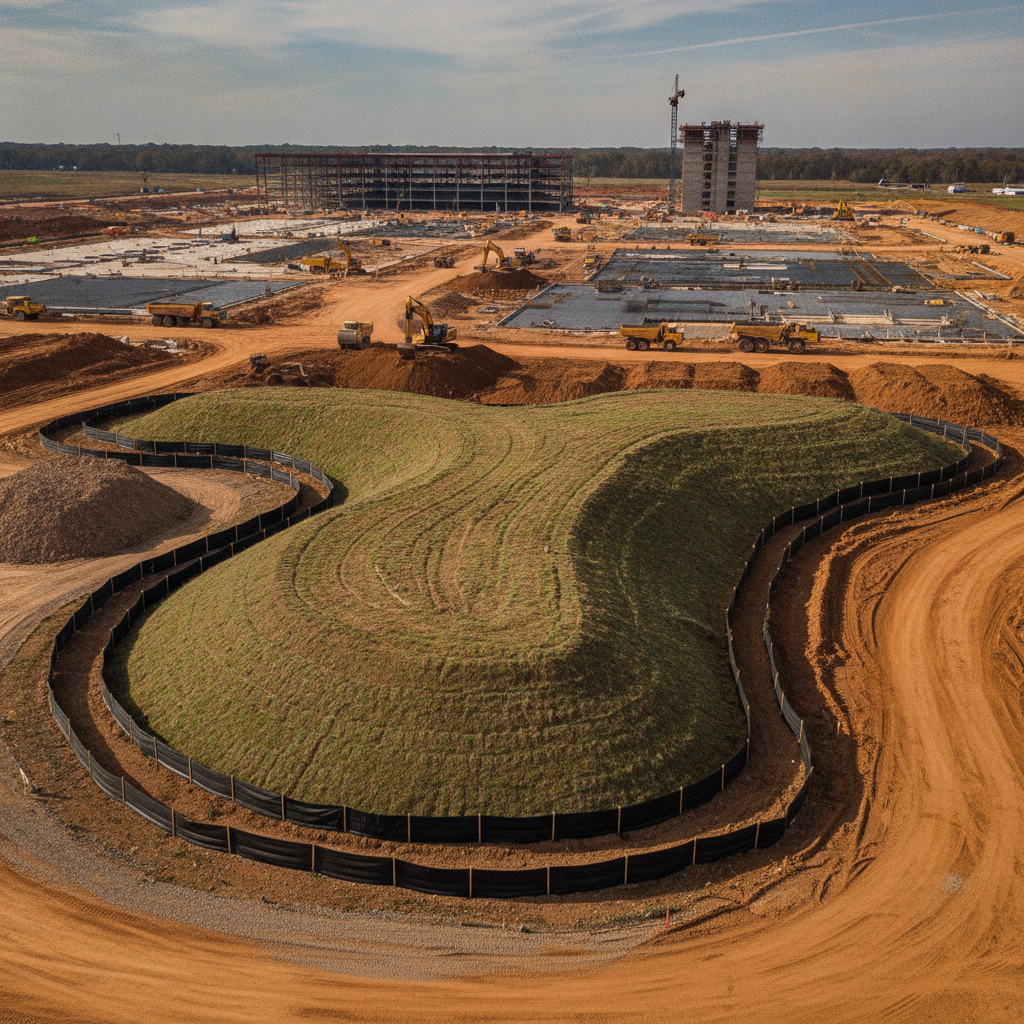
The most cost-effective and logistically simple solution for excess material is on-site reuse. A well-planned project can incorporate this surplus soil directly into the site design, turning a potential liability into a functional asset. Common strategies include creating landscape berms for visual screening or acoustic buffering from adjacent properties, which can be a key requirement for securing zoning compliance. Another effective approach is to place and compact the material in areas designated for future campus expansion, raising the grade to minimize earthwork costs in subsequent phases. However, not all excavated material is suitable for reuse. The viability of on-site placement depends entirely on the soil’s properties. A thorough Geotechnical Engineering investigation is critical to classify the material, assessing factors like composition, moisture content, and compaction characteristics. Soils with high organic content, expansive clays, or other undesirable properties may be unsuitable for use as structural fill under buildings or pavement. This early-stage geotechnical analysis is fundamental to the land development process, ensuring that any reused material provides a stable foundation for future construction.
Characterization and Permitting for Off-Site Disposal
When on-site reuse is not feasible, the project team must plan for off-site disposal or beneficial reuse. This process is heavily regulated and begins with comprehensive material characterization. A Phase I Environmental Site Assessment (ESA) helps identify potential recognized environmental conditions, and subsequent soil sampling and laboratory analysis may be required to test for contaminants. This step is crucial for classifying the material as clean fill, contaminated soil, or hazardous waste, which dictates the available disposal options and associated costs. The results of this testing form the basis of the permit submittals required for transport and disposal. The regulatory landscape for soil management is complex and varies significantly across the country. Permitting requirements for soil disposal and reuse vary by jurisdiction, and the project team must confirm all applicable standards with the local, state, regional, and federal authorities that hold review authority over both the source and destination sites. This includes securing transport manifests, disposal facility approvals, and ensuring compliance with regulations like the Resource Conservation and Recovery Act (RCRA) for contaminated materials. Failure to navigate this process correctly can lead to significant fines and project delays.
Logistics of Stockpiling and Material Hauling
Managing large volumes of soil on an active construction site requires careful logistical planning. Temporary stockpiles must be strategically located to avoid interfering with construction sequencing, laydown areas, and access roads. Furthermore, these stockpiles must be managed in accordance with the project’s Stormwater Pollution Prevention Plan (SWPPP). This involves implementing robust erosion and sediment control measures, such as silt fencing, temporary seeding, or soil binders, to prevent sediment runoff into nearby waterways, a key component of NPDES permit compliance. Transporting material off-site introduces another layer of complexity. The project’s civil engineering team must develop a detailed haul route plan that minimizes impacts on public roadways and surrounding communities. This often requires coordination with local transportation departments to address potential road wear, traffic congestion, and safety concerns. The logistics plan must account for the number of truck trips per day, hours of operation, and requirements for cleaning truck tires before they enter public roads to prevent track-out of mud and debris. Effective utility coordination is also vital to ensure haul routes do not conflict with ongoing utility installation work.
The RSP Engineers Approach to Excavated Material Management
At RSP Engineers, we integrate excavated material management into our civil engineering process from day one. Our approach begins with a detailed site assessment, including a comprehensive Geotechnical Engineering investigation and 3D terrain modeling to generate precise cut/fill estimates. This allows us to work with the client and design team to maximize on-site reuse opportunities, creatively incorporating soil into landscape features or future development pads. This proactive planning minimizes the need for costly and complex off-site disposal. For material that must leave the site, we manage the entire lifecycle. This includes coordinating soil characterization, identifying and vetting suitable disposal or reuse sites, navigating the complex web of agency review, and preparing all necessary permit submittals. During construction, we provide oversight to ensure stockpiles are managed correctly, erosion controls are maintained, and hauling operations proceed smoothly and in full compliance with local requirements. Our goal is to provide a seamless, predictable, and cost-effective solution that keeps the project on schedule.
Common Issues and Mitigation Strategies
Even with careful planning, challenges can arise. One of the most significant risks is the discovery of unexpected contamination during excavation, which can halt work and trigger extensive regulatory procedures. This risk can be mitigated by conducting thorough due diligence, including historical site research and a robust Phase I ESA, before acquisition. Another common issue is encountering native soils that are unsuitable for structural fill, forcing a shift from a balanced site to one requiring significant export and import of material. This is where having a contingency plan, including pre-qualified disposal sites and material suppliers, becomes invaluable. Weather can also pose a major challenge. Heavy rain can saturate stockpiles, making soil difficult to handle and compact, and can overwhelm erosion control measures if they are not properly designed and maintained. Effective mitigation involves robust drainage design within the temporary stockpile areas and having weather-contingent schedules for hauling operations. Proactive construction administration and communication between the engineering team and the contractor are key to addressing these issues before they impact the project budget or timeline. Frequently Asked Questions How early in the project should we plan for excess soil management? Planning should begin during the site selection and due diligence phase. A preliminary geotechnical analysis and cut/fill modeling can provide an early estimate of surplus soil, which should be factored into the project’s pro forma. A formal Soil Management Plan should be developed as part of the initial site plan design. What kind of testing is required before moving soil off-site? The specific testing depends on the site’s history and the requirements of the receiving facility or jurisdiction. It typically starts with a Phase I ESA. If potential contamination is identified, analytical testing for contaminants of concern (e.g., heavy metals, petroleum hydrocarbons, pesticides) is required. The results classify the soil and determine its legal disposal pathway. Can excess soil be used to build stormwater management features? Yes, this is a common and effective beneficial reuse strategy. Excess clean fill can be used to construct the embankments for detention or retention ponds. However, the soil must meet certain geotechnical specifications for stability and permeability, and the design must be approved as part of the overall stormwater management system permit. What are the primary environmental concerns with large stockpiles? The main concerns are erosion and sedimentation. Rain can wash soil from unprotected stockpiles into the stormwater system and, ultimately, into local waterways, violating the federal Clean Water Act. Dust generation during dry, windy conditions is another concern, impacting air quality and potentially creating a nuisance for neighboring properties. A robust SWPPP is required to manage these risks. Who is responsible for coordinating haul routes and traffic control? This is a collaborative effort. The civil engineering team typically designs the proposed haul routes and prepares the traffic control plans. The general contractor is then responsible for implementing the plan, managing the trucking subcontractors, and coordinating directly with local transportation authorities or law enforcement for any required permits or escorts.
Optimize Your Earthwork Strategy with RSP Engineers
Navigating the complexities of large-scale earthwork for data center projects requires specialized expertise. Don’t let surplus soil become a critical path liability. The team at RSP Engineers provides comprehensive civil engineering, permitting, and construction administration services to streamline your site development process. We develop proactive, data-driven soil management plans that save time, reduce costs, and ensure regulatory compliance. If you’re looking for one of the top Civil Engineering firms to support your next mission-critical project, contact us today to discuss your site’s unique challenges and opportunities.
Conclusion
Effectively managing excess excavated material is a critical, non-negotiable component of successful data center construction. It is far more than a simple logistics task; it is an integrated discipline that touches on geotechnical analysis, environmental compliance, transportation planning, and financial management. By prioritizing a strategic soil management plan from the earliest stages of land development, project owners can mitigate risks, control costs, and ensure their project proceeds on a solid foundation. A proactive approach transforms surplus soil from a potential problem into a manageable part of the site development process.
FAQs
-
Managing Excess Excavated Material During Data Center Construction requires careful planning, qualified engineering, and compliance with the applicable codes and permits.
-
Getting Managing Excess Excavated Material During Data Center Construction right protects safety, supports regulatory compliance, and avoids costly redesigns or delays.
-
RSP Engineers provides licensed expertise and end-to-end support for Managing Excess Excavated Material During Data Center Construction, from early planning through permitting.