
Data Center Earthwork Planning for Phased Construction
A guide to strategic earthwork planning for phased data center construction. Learn how to manage interim grades, balance cut/fill, and protect operational assets.
The Strategic Importance of Phased Earthwork for Data Center Campuses
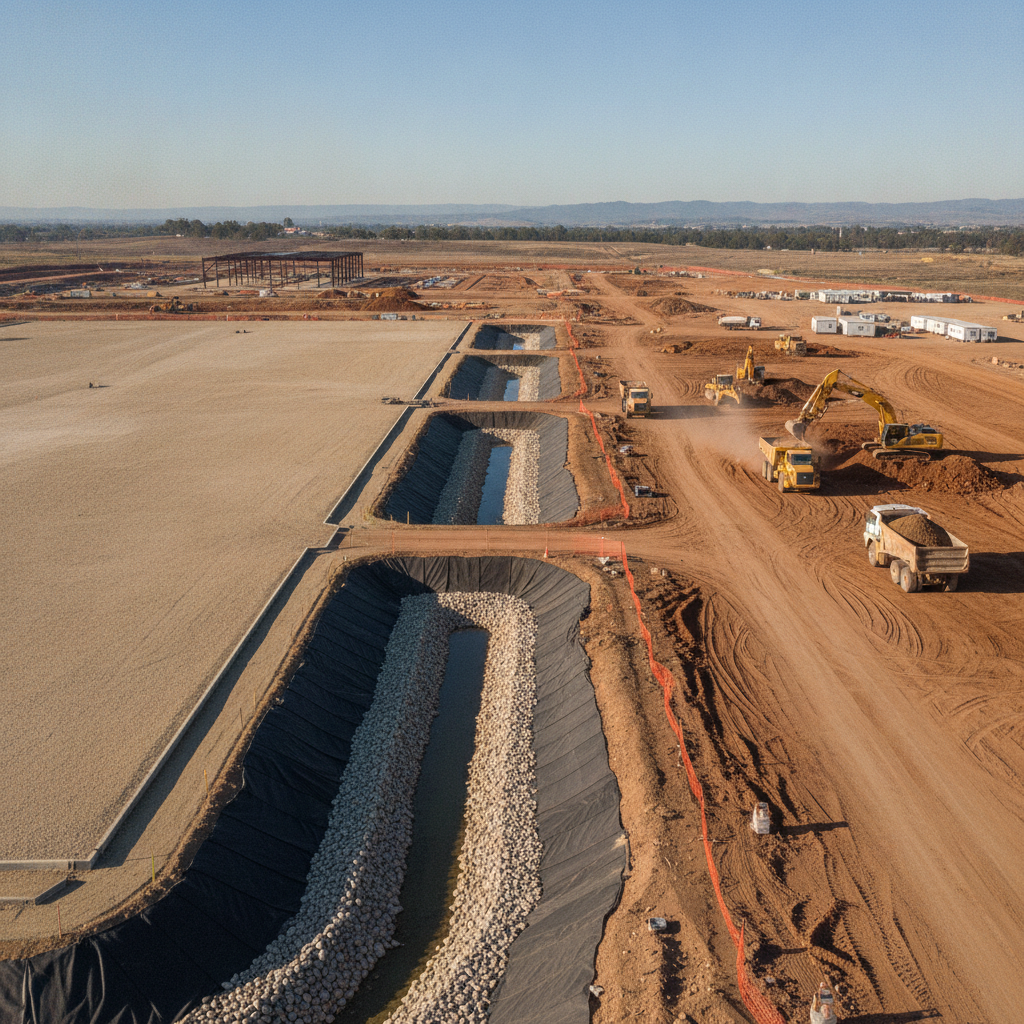
For mission-critical facilities, every decision is weighed against risk and operational continuity. Phased earthwork planning is a foundational element of this strategy. A poorly executed plan can lead to drainage failures, soil instability, and costly rework, jeopardizing both active construction zones and operational facilities. The goal is to treat the entire campus as a single, evolving system rather than a series of disconnected projects. This requires a comprehensive mass grading strategy that considers the ultimate site build-out from day one. Effective planning transforms earthwork from a simple construction task into a strategic asset. By balancing cut and fill across the entire project lifecycle, developers can significantly reduce costs associated with importing or exporting soil. Furthermore, a well-designed phasing plan ensures that each completed phase is stable, secure, and fully protected from adjacent construction activities. This foresight is essential for maintaining the high-availability environment that data centers demand, making robust civil engineering a cornerstone of successful campus development.
Defining Phase Boundaries and Interim Site Conditions
Key Considerations for Phased Earthwork Strategy
| Consideration | Phase 1 Focus | Future Phase Focus | Risk Mitigation Strategy |
|---|---|---|---|
| Earthwork Balance | Achieve balance within the phase if possible, or strategically import/export to meet schedule. | Utilize stockpiles from previous phases and plan cut/fill to achieve overall campus balance. | Develop a master grading plan and cut/fill analysis for the entire site build-out at the project's inception. |
| Stormwater Management | Implement robust temporary drainage and sediment control for the interim condition. | Transition from temporary to permanent systems as phases are built out. Integrate new phases seamlessly. | Model interim and final drainage conditions. Ensure temporary systems are maintainable and permitted. |
| Haul Routes & Access | Establish clear, dedicated construction access and haul routes separate from public roads. | Re-evaluate and modify haul routes to avoid conflict with newly operational facilities. | Create a comprehensive Site Logistics Plan that is updated with each new construction phase. |
| Stockpile Management | Identify strategic, non-interfering locations. Segregate topsoil from structural fill. Stabilize for erosion control. | Draw down on stockpiles for fill material. Re-grade stockpile areas for their ultimate purpose. | Test and classify all stockpiled material. Maintain detailed records of soil volumes and types. |
| Geotechnical Stability | Ensure slopes at phase boundaries are stable for the interim condition. Protect new building pads. | Ensure new excavation does not undermine the stability of previously completed pads or slopes. | Involve a Geotechnical engineer in all phasing discussions. Implement temporary shoring or slope stabilization as needed. |
A critical first step in phased earthwork is establishing logical and defensible phase boundaries. These are typically aligned with building footprints, power blocks, or major infrastructure corridors. Once these limits are set, the civil engineering team must design for the “in-between” states. This means creating detailed interim grading plans that ensure positive drainage and site stability at the conclusion of each phase. A completed building pad for Phase 1 cannot be allowed to flood or suffer from erosion because of grading work in Phase 2. This involves designing temporary stormwater management features like swales, sediment basins, and diversions that function effectively until the next phase begins and permanent systems are installed. All temporary measures must comply with local, state, and federal regulations, including requirements under the National Pollutant Discharge Elimination System (NPDES). Permitting requirements for erosion and sediment control vary by jurisdiction, and every project team should confirm the applicable standards with the local, state, regional, and federal authorities that hold review authority over the site. This proactive approach to permitting prevents costly delays and ensures environmental compliance throughout the project’s long duration.
Achieving Earthwork Balance Across Multiple Phases
The concept of a “balanced site,” where the volume of excavated soil (cut) equals the volume of soil needed for embankments (fill), is a primary goal in site development. In a phased project, this calculation becomes a multi-variable equation. A project team might choose to run an earthwork deficit in Phase 1, importing material to quickly establish a building pad, with the knowledge that excess soil from Phase 2 will balance the ledger. Conversely, excess soil from an early phase can be stockpiled for use in a later one. This decision-making process is heavily influenced by a thorough Geotechnical Engineering investigation. The Geotechnical engineer provides critical data on soil suitability, identifying which on-site materials can be used as structural fill and which must be amended or exported. This upfront analysis, often involving a soil boring test, allows the civil engineer to create a master grading plan that minimizes hauling distances and avoids the high costs of off-site soil transport, delivering significant value over the project’s life.
Stockpile Strategy: Location, Management, and Reuse
On a multi-year data center build, soil stockpiles are not just temporary piles of dirt; they are valuable material assets. A strategic stockpile management plan is essential. The first consideration is location. Stockpiles must be placed where they will not interfere with current construction, future building footprints, major utility corridors, or operational site access. They must also be situated and shaped to prevent sediment runoff into protected areas or existing stormwater systems. Proper management involves implementing robust erosion control measures, such as seeding, mulching, or using erosion control blankets to stabilize the pile. The material itself should be segregated based on its classification from the geotechnical soil report. Topsoil is separated for later use in landscaping, while suitable fill materials are reserved for future building pads or embankments. This systematic approach to stockpile management ensures that valuable on-site resources are preserved and ready for efficient reuse in subsequent phases.
Protecting Operational Phases from Active Construction
Once a data center phase is commissioned, it becomes a highly secure, sensitive environment. Subsequent construction next door cannot be allowed to compromise its operations. A key part of the earthwork plan is the complete separation of construction activities from the live facility. This begins with establishing and enforcing dedicated haul routes for all earthmoving equipment, keeping heavy machinery far from operational traffic, critical infrastructure, and facility air intakes. Effective mitigation also includes stringent dust control measures, such as water trucks and soil tackifiers, to maintain air quality. Depending on the proximity and nature of the work, vibration monitoring may be required to ensure that activities like soil compaction do not impact sensitive equipment in the operational data center. Physical barriers, clear signage, and a coordinated site logistics plan are all critical components of a site engineering services package designed to de-risk phased construction.
RSP’s Approach to Phased Earthwork Planning
At RSP Engineers, our approach to phased earthwork is proactive and integrated. We begin by developing a comprehensive master site plan design that envisions the site at full build-out. Using advanced 3D modeling and grading software, we perform a detailed cut/fill analysis for the entire campus, allowing us to devise a strategy that minimizes earthwork costs over the project’s lifetime. This master plan serves as the roadmap for all subsequent phasing. Our process emphasizes close collaboration with the project owner, contractor, and Geotechnical engineer. We develop detailed phasing exhibits that clearly delineate the scope of work for each stage, including interim drainage design, erosion control, and stockpile locations. By planning for the interim conditions with the same rigor as the final design, we help clients avoid common pitfalls, ensure regulatory compliance, and deliver a site that is stable, secure, and ready for future growth. Our expertise in land development for mission-critical projects ensures a seamless and predictable site construction process.
Common Challenges in Phased Data Center Grading
Even with careful planning, phased earthwork projects can encounter challenges. One of the most common is discovering unforeseen geotechnical conditions, such as rock outcroppings or pockets of unsuitable soil not identified in the initial Soil Test. This can disrupt the earthwork balance and require costly change orders for soil removal and import. Another frequent issue is inadequate management of interim conditions. If temporary stormwater management systems are not properly designed or maintained, it can lead to significant erosion, flooding of completed work areas, and potential permit violations. Finally, a breakdown in site logistics, where construction traffic encroaches on operational zones, can create serious safety and security risks. Mitigating these challenges requires an experienced civil engineering team and a contractor committed to executing the phasing plan with precision. Frequently Asked Questions How do you ensure the site drains correctly between phases? We design specific interim grading plans that establish positive drainage for the site at the end of each construction phase. This often includes temporary swales, sediment basins, and diversion berms that safely convey stormwater runoff without impacting completed building pads or causing off-site erosion. These systems are a key component of the NPDES permit compliance strategy. What is “earthwork balance” and why is it important for a phased project? Earthwork balance is the goal of matching the volume of soil excavated (cut) on a site with the volume needed for fill. For a phased project, achieving this balance across the entire campus lifecycle is crucial for cost control. It minimizes the expensive process of hauling dirt to or from the site, making the best use of on-site materials and contributing to a more sustainable site development project. How do you handle unsuitable soils discovered during grading? When unsuitable soils are found, we work closely with the Geotechnical engineer to determine the best course of action. Solutions may include over-excavation and replacement with engineered fill, amending the soil with agents like lime or cement to improve its properties, or strategically placing the unsuitable material in non-structural areas like landscape berms. The solution is always documented in the geotechnical soil report. What permits are typically required for large-scale earthwork? Large-scale earthwork typically requires a grading permit from the local authority having jurisdiction. Additionally, if the site disturbance is over a certain size (typically one acre), a stormwater permit under the federal NPDES program is required. Other permits related to environmental impacts, such as those for wetlands or protected species, may also be necessary depending on site conditions. How do you protect an operational data center from adjacent construction dust and vibration? Protection involves a multi-layered approach. We specify dedicated haul routes to keep heavy equipment away from the operational facility. A comprehensive dust control plan, including water trucks and soil stabilization, is implemented. For work close to the live building, vibration monitoring is used to ensure construction activities remain below contractually defined tolerance thresholds for sensitive equipment. Your Partner in Mission-Critical Site Development Successfully navigating the complexities of phased data center earthwork requires a civil engineering partner with deep experience in mission-critical projects. At RSP Engineers, we provide the strategic foresight and technical expertise to develop comprehensive, cost-effective grading and site plan design solutions. From initial feasibility and master planning to detailed permitting and construction administration, our team is equipped to manage your project’s unique challenges. Contact us to discuss how our site engineering services can help ensure the success of your next phased data center development. Conclusion Strategic earthwork planning is a fundamental pillar of successful phased data center development. By looking beyond the immediate needs of a single phase and creating a master plan for the entire campus, developers can mitigate risks, control costs, and ensure long-term site stability. An integrated approach that combines expert civil engineering, detailed Geotechnical Engineering, and meticulous construction administration is the key to transforming a complex construction sequence into a seamless and successful project, protecting your investment and ensuring operational continuity for your mission-critical infrastructure. Related Articles Navigating Utility Coordination for Large-Scale Data Center Sites Stormwater Management Design for Mission-Critical Facilities The Civil Engineer’s Role in Data Center Site Selection
FAQs
-
Data Center Earthwork Planning for Phased Construction requires careful planning, qualified engineering, and compliance with the applicable codes and permits.
-
Getting Data Center Earthwork Planning for Phased Construction right protects safety, supports regulatory compliance, and avoids costly redesigns or delays.
-
RSP Engineers provides licensed expertise and end-to-end support for Data Center Earthwork Planning for Phased Construction, from early planning through permitting.