
Identifying Fatal Flaws on Proposed Data Center Sites
A guide for data center developers on identifying critical fatal flaws in site selection, covering power, fiber, zoning, environmental constraints, and geotechnical issues. Learn how early due diligen
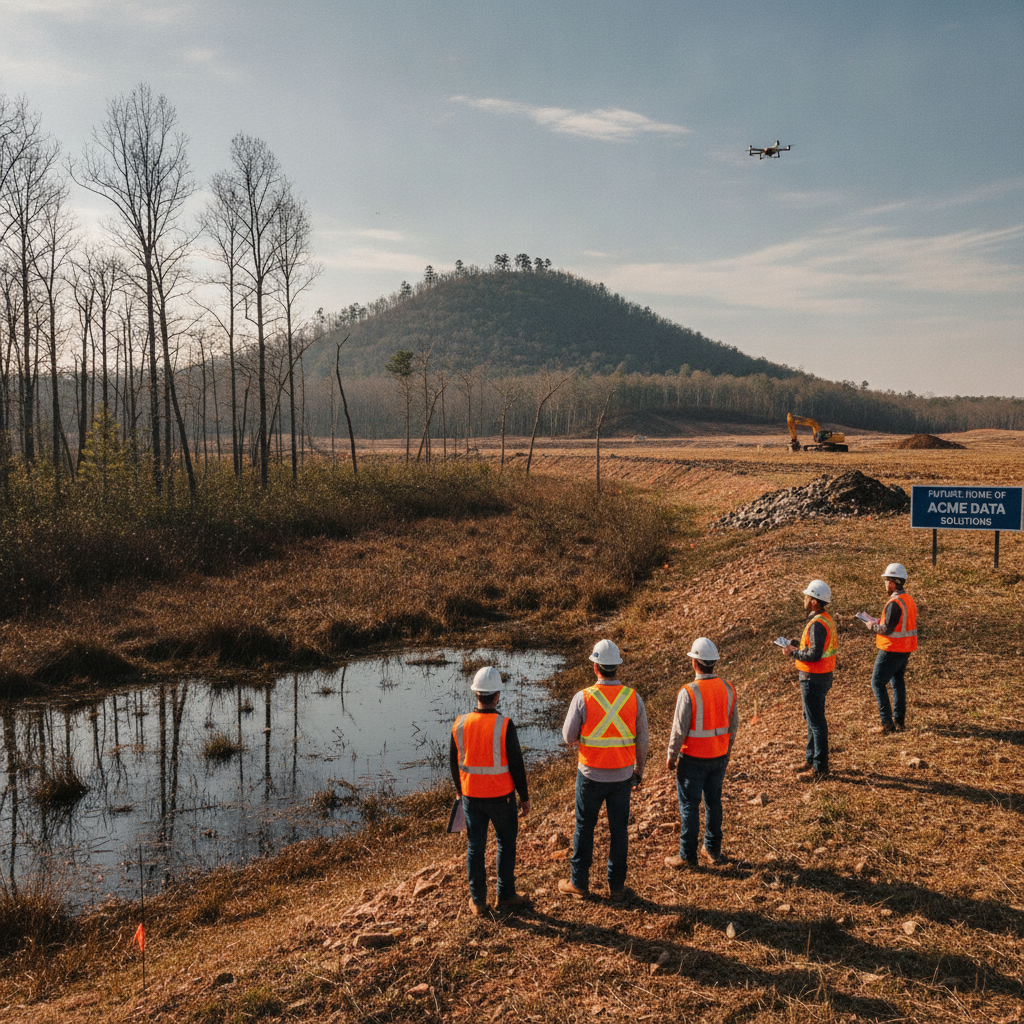
Power and Fiber Infrastructure: The Non-Negotiables
Data centers are among the most power-intensive facilities on the planet. A lack of adequate, reliable, and timely power is the most common fatal flaw. A thorough investigation must confirm not just the proximity of high-voltage transmission lines, but the actual available capacity at the nearest substation. This requires direct and early engagement with the utility provider to understand their capital improvement plans, potential upgrade costs, and, most importantly, their delivery timeline. A multi-year wait for a new substation can render an otherwise ideal site useless for a project with an aggressive speed-to-market goal. Equally important is fiber optic connectivity. Developers must verify the presence of diverse, high-capacity fiber routes from multiple carriers to ensure redundancy and low latency. The analysis should confirm physical access points, pathway diversity to avoid single points of failure, and the provider’s ability to meet the project’s bandwidth requirements. Relying on outdated maps is not enough; a civil engineering team must verify this infrastructure in the field and with the providers to confirm true power availability and data connectivity before a site is acquired.
Zoning, Entitlements, and Community Acceptance
Fatal Flaw Screening Matrix for Data Center Sites
| Potential Flaw | Key Investigation Method | Early-Stage Indicator | Impact if Unresolved |
|---|---|---|---|
| Power Availability | Direct utility provider consultation; transmission line capacity review. | Utility states a 3+ year timeline for upgrades; no substation capacity. | Project is non-viable; timeline does not meet market demand. |
| Zoning & Entitlements | Zoning code review; pre-application meeting with local planning staff. | Data center is not a permitted use; significant public opposition. | Inability to secure permits; lengthy and costly legal challenges. |
| Environmental Constraints | Wetland delineation; FEMA map review; Phase I ESA. | Large jurisdictional wetlands or floodplains covering buildable area. | Reduced development yield; costly mitigation; permit denial. |
| Stormwater Outfall | Topographic analysis; downstream infrastructure review; drainage calculations. | No legal or physical discharge point; downstream system at capacity. | Inability to permit stormwater system; site is undevelopable. |
| Geotechnical Conditions | Preliminary Geotechnical soil report; review of geologic maps. | Presence of sinkhole potential, shallow rock, or unsuitable soils. | Extreme foundation costs; long-term structural risk; construction delays. |
| Fiber Connectivity | Carrier map review; direct consultation with multiple fiber providers. | No diverse fiber routes available; high cost for new laterals. | High latency; lack of redundancy; failure to meet operational specs. |
A project can be technically feasible but politically impossible. A fatal flaw can be buried deep within local land use regulations. The site’s zoning designation must explicitly permit data center use, or there must be a clear and predictable path to obtaining a rezoning or special use permit. This involves a detailed review of the local comprehensive plan, zoning ordinance, and development standards. Some jurisdictions have specific noise limitations, architectural requirements, or equipment screening rules that can add significant cost and complexity. The entitlement process itself can be a fatal flaw if it is fraught with uncertainty or known community opposition. Permitting requirements vary by jurisdiction, and every project team should confirm the applicable standards with the local, state, regional, and federal authorities that hold review authority over the site. Early engagement with planning staff and understanding the political climate are crucial. A project that requires numerous variances, faces organized local resistance, or is inconsistent with the community’s long-term vision has a high risk of failure during the public hearing phase, making a hostile entitlement path a critical flaw to identify.
Environmental Constraints: Wetlands, Floodplains, and Protected Species
Federal, state, and local environmental regulations can severely limit the usable area of a site. The presence of jurisdictional wetlands, regulated under the Clean Water Act, can create significant no-build zones and require extensive permitting for any proposed impacts. A preliminary wetland delineation is essential to quantify these constraints. Similarly, any portion of the site located within a FEMA floodplain may be undevelopable or require costly mitigation and specialized construction techniques. These constraints directly reduce the buildable area available for the data center, its cooling equipment, and associated infrastructure. Beyond wetlands and floodplains, due diligence must assess potential habitats for threatened and endangered species and the presence of cultural or archaeological resources. Discovering these protected resources late in the design process can trigger lengthy consultations with state and federal agencies, potentially halting a project indefinitely. A Phase I Environmental Site Assessment (ESA) is also a standard part of this process to identify potential contamination from prior land uses, which can introduce significant cleanup costs and liabilities.
Stormwater Management and Topographical Challenges
Every development must manage the stormwater runoff it generates. A critical and often overlooked fatal flaw is the lack of a legal, positive outfall for a stormwater management system. The site must have a viable discharge point—such as a public storm sewer, a drainage ditch, or a natural water body—with sufficient capacity to handle the post-development flow. If no outfall exists, or if downstream properties or infrastructure cannot handle the additional volume, the site may be unworkable. This requires a thorough drainage design analysis early in the process. The site’s topography also plays a major role. Steep slopes can dramatically increase the cost of earthwork and site grading, while extremely flat terrain can present challenges for creating positive drainage. A topographical survey and preliminary grading plan are necessary to understand the potential for a balanced site, where cut and fill volumes are minimized. Excessive earthwork not only drives up costs but can also extend the construction schedule, impacting the project’s financial model.
Geotechnical and Subsurface Risks
The ground beneath a data center must provide stable support for its massive, vibration-sensitive equipment. A preliminary Geotechnical Engineering investigation is crucial to identify subsurface fatal flaws. Unsuitable materials like highly plastic clays, organic soils, or undocumented fill can require expensive remediation or deep foundation systems. The presence of shallow bedrock can make utility trenching and foundation excavation prohibitively expensive, while the potential for karst topography (sinkholes) in certain regions presents a catastrophic risk. An initial desktop study by a Geotechnical engineer, followed by a limited program of soil boring test work, can provide the necessary data to assess these risks. A comprehensive Geotechnical soil report will inform foundation design, pavement sections, and overall site feasibility. Ignoring subsurface conditions is a gamble that can lead to severe structural issues, construction delays, and long-term operational problems. This early Soil Test is a small investment to avoid a multi-million dollar mistake.
Access, Transportation, and Logistics
A data center site must have both legal and practical physical access. Legal access is confirmed through a title search to ensure no easements or deed restrictions prevent entry. Practical access involves evaluating the existing road network. Can the surrounding roads handle the weight and volume of construction traffic, including oversized deliveries of generators and cooling units? Is the site accessible from major highways for operational staff and material logistics? A preliminary traffic impact analysis can determine if off-site roadway improvements, such as turn lanes or signalization, will be required by the reviewing transportation agency. These improvements can add significant, and sometimes prohibitive, costs and permitting timelines to a project. The analysis must also consider internal circulation, ensuring adequate turning radii for emergency vehicles and delivery trucks, and confirming that site access points provide safe sight distance.
The RSP Engineers Due Diligence Process
At RSP Engineers, our approach to identifying fatal flaws is systematic and proactive. We begin with a comprehensive desktop analysis, leveraging GIS data, zoning ordinances, utility maps, and environmental databases to create a preliminary risk profile. This is followed by direct outreach to utility providers and jurisdictional authorities to verify data and understand the political and regulatory landscape. Our team of experienced Civil Engineers and planners knows the right questions to ask to get to the core of a site’s viability. This initial research is validated with a thorough site visit to observe conditions on the ground. Based on our findings, we develop a concise fatal flaw analysis report or a more detailed due diligence study. This report provides clients with a clear, go/no-go recommendation, backed by engineering data and risk assessment. By engaging a Professional Engineer early, our clients can confidently focus their resources on viable properties and avoid costly mistakes, accelerating their path from site selection to operation.
Common Issues Encountered During Site Vetting
Even with a structured process, surprises can arise. One common issue is the discovery of unrecorded utility easements during an ALTA/NSPS Land Title Survey, which can conflict with the proposed building layout. Another is relying on outdated municipal utility maps, only to find that the actual infrastructure in the field is smaller, older, or in a different location than shown. These survey discrepancies can force significant redesign late in the process. Developers should also be wary of underestimating agency review cycles. In many jurisdictions, review timelines for complex projects like data centers are extending. A preliminary discussion with agency staff can provide a more realistic picture of the permitting timeline than the standard schedule published online. Identifying these potential delays early allows for more accurate project pro forma and delivery date forecasting.
Partner with RSP for Mission-Critical Site Selection
Navigating the complexities of data center site selection requires a partner with deep expertise in land development, utility infrastructure, and regulatory permitting. RSP Engineers provides the comprehensive civil engineering design and due diligence services needed to de-risk your site acquisition process. Our team excels at early-stage fatal flaw analysis, detailed utility coordination, and navigating the complexities of permit acquisition. We provide clear, actionable intelligence to help you make confident investment decisions and accelerate your speed-to-market. Let our team handle the technical due diligence so you can focus on developing the future of digital infrastructure.
Conclusion
In the high-stakes world of data center development, what you don’t know can absolutely hurt you. A proactive, technically rigorous fatal flaw analysis is not an expense; it is an investment in certainty. By systematically evaluating power, zoning, environmental, geotechnical, and logistical factors before acquisition, developers can avoid catastrophic financial losses and project delays. Partnering with experienced Civil Engineering firms to conduct this essential due diligence is the first and most important step in successful site development for mission-critical facilities.
FAQs
-
By far, the most common fatal flaw is a lack of sufficient power or an unacceptably long timeline for the utility to provide the required capacity. A site without a clear and timely path to power availability is a non-starter, regardless of its other positive attributes.
-
You should engage a firm like RSP Engineers as soon as you have a list of candidate sites and before you go under contract. An early-stage fatal flaw analysis is a low-cost investment that provides the critical data needed to make an informed acquisition decision and negotiate favorable contract terms.
-
Sometimes. For example, poor soil conditions can be overcome with expensive deep foundations, or minor wetland impacts can be mitigated through a complex permitting process. However, the solution often involves significant cost, time, or a reduction in the project’s scope. The goal of the analysis is to determine if the cure is worse than the disease from a financial and scheduling perspective.