
Hurricane-Resistant Data Center Structural Systems
A guide to hurricane-resistant structural systems for data centers. Learn about continuous load path, building envelope hardening, equipment anchorage, and flood mitigation from civil and structural e
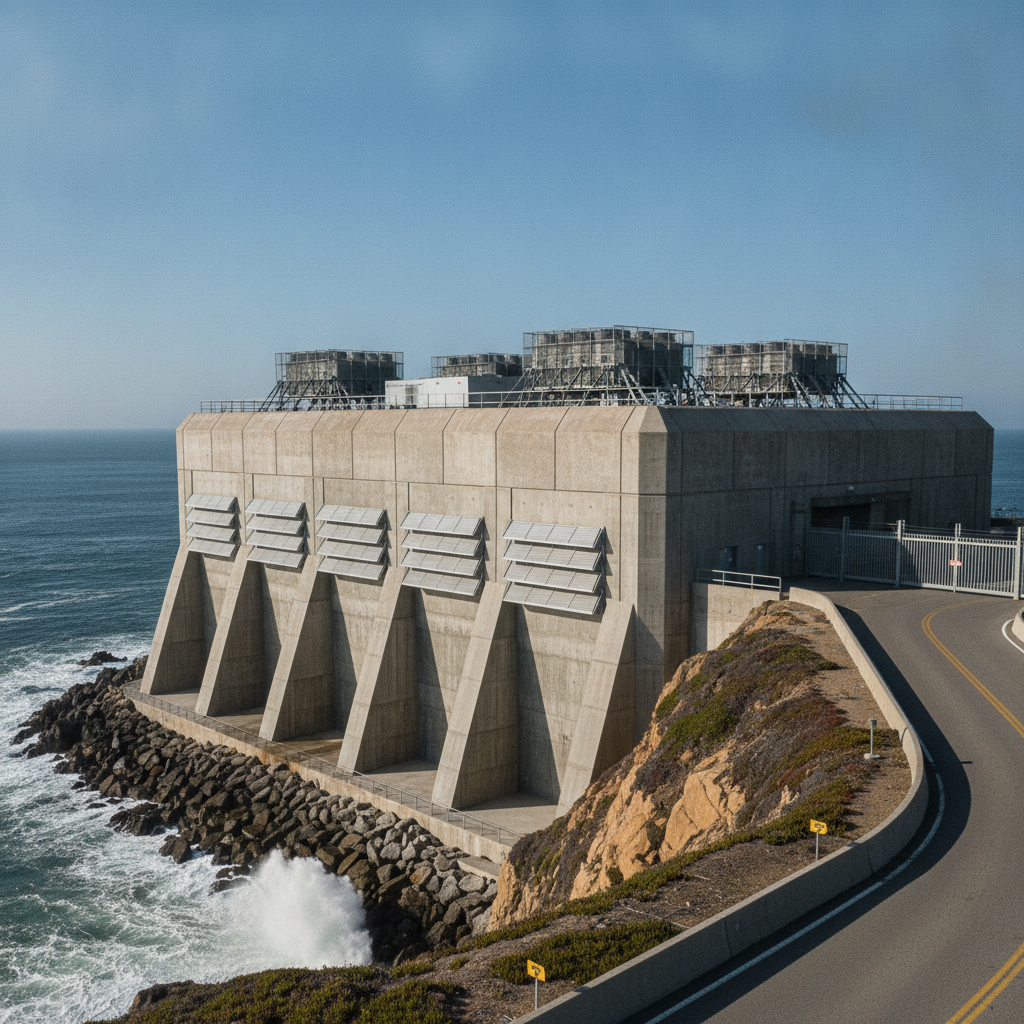
The Core of Resilience: Continuous Load Path Design
The fundamental principle of resisting extreme wind forces is the implementation of a continuous load path. This is an engineered system of interconnected structural elements that transfers loads from the point of application down to the foundation. During a hurricane, a building is subjected to immense positive and negative pressures (suction), particularly uplift on the roof. A continuous load path ensures these forces are safely managed by tying the entire structure together. This path starts at the roof sheathing or deck, which is fastened to trusses or joists. These members are connected to walls with hurricane ties or straps. The walls are then anchored to the foundation, and the foundation is designed to resist overturning and sliding. Every connection in this chain—from a single nail to a massive anchor bolt—is a critical link. A failure at any point can lead to a cascading, catastrophic collapse. The design must account for lateral (shear) loads, vertical (gravity and uplift) loads, and the combined effects of these forces, all calculated based on the facility’s risk category and design wind speeds as defined in standards like ASCE 7.
Hardening the Building Envelope and Openings
Key Hardening Strategies for Hurricane-Prone Regions
| System/Component | Primary Threat | Engineering Strategy | Key Considerations |
|---|---|---|---|
| Building Structure | High Winds (Uplift & Lateral Loads) | Design a continuous load path from roof to foundation using robust connections. | Use of hurricane ties, shear walls, moment frames, and deep foundations. |
| Building Envelope | Wind Pressure & Debris Impact | Specify impact-resistant materials (e.g., reinforced concrete) and rated assemblies for all openings. | Enhanced roofing attachment, missile-impact-rated louvers and doors. |
| Rooftop Equipment | Wind-Induced Overturning & Uplift | Secure all units to the structure with engineered anchorage and dunnage. | Calculations must account for equipment shape, height, and wind exposure. |
| Yard Equipment | Wind, Debris & Flooding | Anchor to heavy-duty concrete pads; elevate above DFE; consider protective screening walls. | Fuel tank buoyancy, access for maintenance, and stormwater management. |
| Foundation | Scour, Hydrostatic Pressure & Uplift | Use deep foundations (piles, caissons) in scour-prone areas; design walls for flood loads. | Requires a site-specific Geotechnical soil report to inform design. |
| Utility Infrastructure | Physical Damage & Outages | Route utilities in underground, concrete-encased duct banks with diverse entry points. | Early and continuous utility coordination with all service providers. |
The building envelope—the roof, walls, doors, and louvers—is the facility’s first line of defense against wind, rain, and debris. For data centers, materials like reinforced concrete, precast panels, or fully grouted reinforced masonry are common choices for their inherent strength and impact resistance. The design must address not only the main structural system but also the components and cladding, which experience significantly higher localized wind loads at corners and edges. Protecting openings is paramount. All doors, ventilation louvers, and other penetrations must be rated for the design wind pressure and resistant to impact from wind-borne debris. This often involves specialized, missile-impact-rated assemblies. The roofing system is another frequent point of failure. Enhanced fastening patterns, robust flashing details, and proper membrane adhesion are critical to prevent peeling and water intrusion. Building code requirements for wind-resistant design and impact protection can vary by jurisdiction, and every project team must confirm the applicable standards with the local, state, regional, and federal authorities that hold review authority over the site. A Professional Engineer must oversee the design to ensure all local and national standards are met.
Protecting Critical Rooftop and Yard Equipment
A data center’s functionality depends on a vast array of external equipment, including cooling towers, backup generators, fuel tanks, and electrical transformers. If this equipment is damaged or dislodged, the facility will go offline even if the main building remains intact. Worse, inadequately secured equipment can become massive, destructive projectiles in a hurricane. The structural engineering design must include robust anchorage for every piece of equipment. This involves designing concrete equipment pads and structural steel dunnage capable of resisting wind-induced overturning and sliding forces. The anchorage system, from the bolts connecting the equipment to its frame to the anchors embedding it in the concrete, must be part of the continuous load path. In many cases, structural screens or perimeter walls are designed to shield yard equipment from direct wind forces and debris. This requires close utility coordination and careful site plan design to ensure access for maintenance while providing necessary protection.
Mitigating Flood and Storm Surge Risks
High winds are only part of the threat; hurricanes bring storm surge and extreme rainfall, creating significant flood risk. The civil engineering discipline plays a crucial role in mitigating these hazards. Site selection is the first step, using resources like FEMA flood maps to avoid high-risk zones where possible. When a site is within a potential flood zone, a detailed flood risk assessment is necessary to establish a design flood elevation (DFE). The primary strategy is elevation. All critical infrastructure—including server racks, electrical switchgear, and backup generators—must be located above the DFE. This can be achieved by elevating the entire site with fill, which has significant site development implications, or by designing the building with a non-critical or “sacrificial” lower level. In such designs, the ground floor is built with flood-resistant materials and flood vents to allow water to pass through, preventing the buildup of dangerous hydrostatic pressure on the foundation walls.
Ensuring Utility and Infrastructure Redundancy
A hardened structure is of little use without reliable power, cooling, and data connectivity. True resilience requires hardened and redundant utility infrastructure. The site engineering services team must plan for diverse utility pathways, with power and fiber entering the site from different directions and routed through hardened, concrete-encased underground duct banks to prevent disruption. On-site power generation is standard, but the generators and their fuel supply must be protected to the same level as the data hall itself. This means elevating them above flood levels and ensuring fuel tanks are securely anchored to resist both wind forces and buoyancy forces from floodwaters. Effective utility coordination with power, water, and telecom providers is essential from the earliest stages of project planning to ensure that off-site infrastructure is as reliable as possible and that on-site systems are seamlessly integrated.
The RSP Engineers Approach to Mission-Critical Hardening
At RSP Engineers, our approach to designing resilient data centers is proactive and integrated. We understand that structural hardening is inseparable from smart site development and meticulous utility planning. Our process is designed to identify and mitigate risks at every stage of the project lifecycle. Our process begins with comprehensive due diligence, including a thorough site investigation report, flood zone analysis, and assessment of utility infrastructure. During the design phase, our Civil Engineers and structural partners work in lockstep with architects and MEP engineers to create a fully integrated, hardened facility design. We manage the complex process of agency review and permit submittals, ensuring compliance with all applicable codes. Finally, through rigorous construction administration, we verify that the design’s critical details are executed correctly in the field, delivering a facility built to withstand the storm.
Common Issues in Hurricane-Resistant Design
Even with the best intentions, design and construction flaws can compromise a facility’s resilience. One common issue is underestimating the force of wind-borne debris, leading to the specification of non-impact-rated doors or louvers that fail. Another is neglecting component and cladding loads, where localized wind pressures at corners and roof edges can be double the pressure on the main wall surface, leading to peeling of the building skin. Inadequate equipment anchorage remains a frequent failure point. Finally, a lack of integrated drainage design can lead to compound flooding, where heavy rainfall combines with storm surge to overwhelm the site’s capacity, a risk that a robust stormwater management plan can mitigate. Frequently Asked Questions How are wind loads determined for a data center? Wind loads are calculated based on procedures outlined in model building codes and standards like ASCE 7. The calculation considers the building’s geographic location (to determine the basic wind speed), its height and shape, and its assigned Risk Category. For mission-critical facilities like data centers, a higher Risk Category is used, resulting in more stringent wind load requirements. What is the difference between hardening and resilience? Hardening refers to strengthening a facility’s physical components to resist damage from a specific threat, such as designing a wall to withstand debris impact. Resilience is a broader concept that includes hardening but also encompasses a facility’s ability to absorb a shock, continue operating (even if in a limited capacity), and rapidly recover its full functionality after an event. Does elevating a data center solve all flood risks? No. While elevating critical equipment above the design flood elevation is the most important step, it doesn’t solve all risks. The project must also consider site access for staff and fuel deliveries during a flood event, the protection of underground utilities, and the impact of localized flooding from intense rainfall, which requires a comprehensive drainage design. How important is the roofing system in a hurricane? The roofing system is critically important and is often one of the first components to fail. It must be designed to resist powerful uplift forces that try to peel it from the structure. This requires enhanced fastening, proper flashing, and a robust membrane, all specified as part of the core structural engineering package. What is a “continuous load path” and why does it matter? A continuous load path is an unbroken chain of structural connections that transfers forces from the roof and walls down into the foundation. It matters because if any link in that chain fails—a weak roof-to-wall connection, for example—the entire system can be compromised, leading to a catastrophic structural failure during a high-wind event. Are pre-engineered metal buildings suitable for data centers in high-wind zones? While often cost-effective, standard pre-engineered metal buildings typically require significant engineering enhancements to serve as hardened data centers. The building envelope, connection details, and bracing systems must be specifically designed to meet the higher wind load and impact-resistance requirements for a mission-critical facility. Partner with RSP Engineers for Resilient Data Center Development Designing a data center to withstand hurricane-force events requires a specialized, multidisciplinary engineering team. RSP Engineers provides the expert civil engineering, permitting, and site development services needed to navigate the complexities of mission-critical projects. From initial due diligence and zoning compliance to detailed design and construction oversight, we ensure your facility is built on a foundation of resilience. Contact us today to discuss how our site engineering services can protect your critical infrastructure investment. Conclusion The development of hurricane-resistant data centers is a testament to proactive engineering and risk management. Success hinges on an integrated design philosophy that treats the building, the site, and the supporting infrastructure as a single, cohesive system. By focusing on core principles like the continuous load path, building envelope integrity, and robust equipment protection, developers can safeguard their assets and ensure operational continuity. Investing in superior structural engineering and thorough civil engineering is not a cost—it is a critical investment in the long-term viability and resilience of mission-critical infrastructure. Related Articles You May Like Data Center Site Selection: A Civil Engineer’s Due Diligence Checklist Navigating Stormwater Permitting for Large-Scale Industrial Projects The Role of Geotechnical Engineering in Foundation Design for Mission-Critical Facilities
FAQs
-
Hurricane-Resistant Data Center Structural Systems requires careful planning, qualified engineering, and compliance with the applicable codes and permits.
-
Getting Hurricane-Resistant Data Center Structural Systems right protects safety, supports regulatory compliance, and avoids costly redesigns or delays.
-
RSP Engineers provides licensed expertise and end-to-end support for Hurricane-Resistant Data Center Structural Systems, from early planning through permitting.