
How to Incorporate Rain Gardens into Site Design
Learn how to effectively incorporate rain gardens into Florida site design, focusing on siting, drainage, soil media, plant selection, and stormwater management.
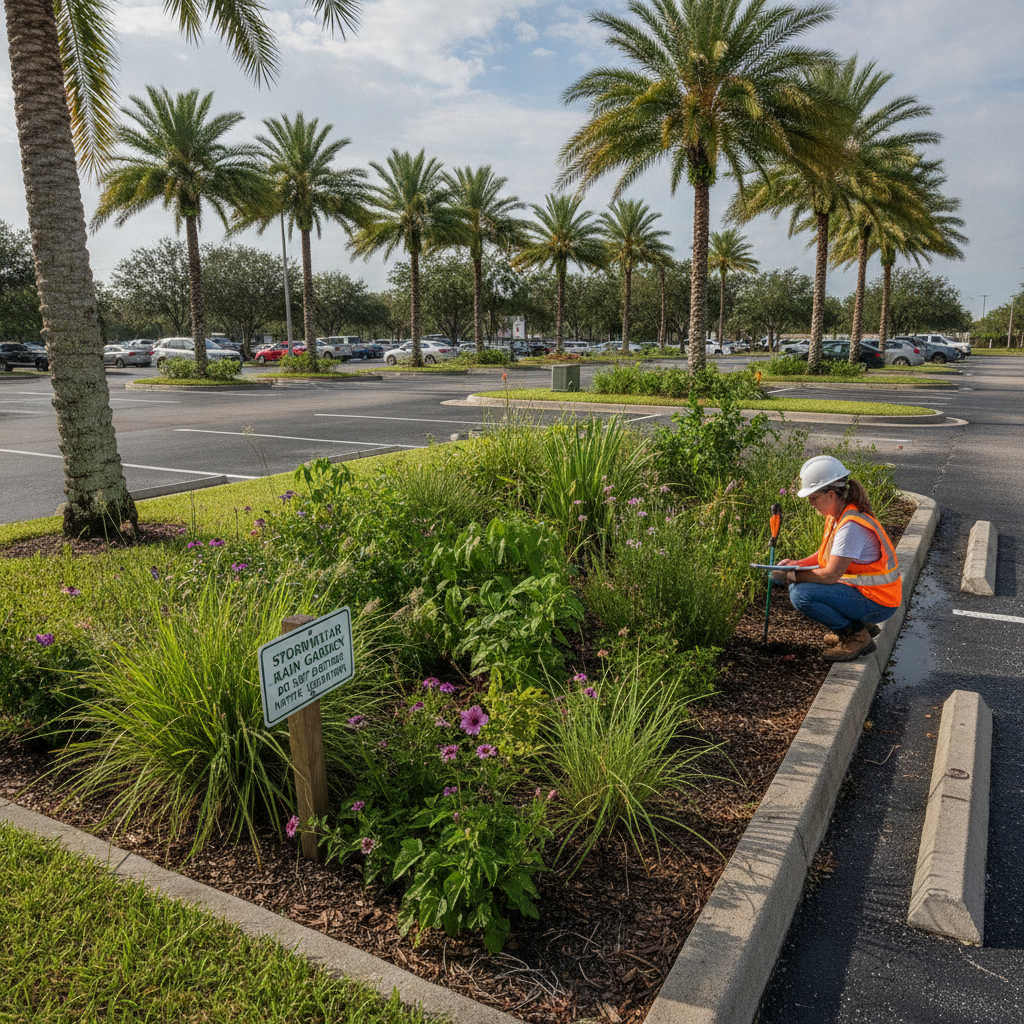
Siting and Drainage-Area Sizing
The first step in incorporating a rain garden into site design is selecting an appropriate location. Ideally, the site should be positioned to capture runoff from impervious surfaces such as parking lots or rooftops. The drainage area should be sized to ensure the rain garden can handle the expected volume of water. This involves calculating the runoff coefficient and considering the seasonal high water table to prevent waterlogging.
Soil Media and Infiltration
Design Parameters for Rain Gardens
| Parameter | Recommended Value | Considerations |
|---|---|---|
| Drainage Area | 5-10% of impervious area | Adjust based on site-specific runoff |
| Soil Media Depth | 18-36 inches | Ensure adequate infiltration |
| Infiltration Rate | 1-3 inches per hour | Conduct soil test to verify |
| Plant Species | Native to Florida | Consider drought and flood tolerance |
| Overflow Design | Capacity for 10-year storm | Prevent erosion and flooding |
Choosing the right soil media is crucial for the rain garden’s functionality. The soil should promote infiltration while retaining enough moisture for plant growth. A typical mix includes sand, compost, and topsoil. It’s important to conduct a soil test to determine the infiltration rate and adjust the media composition accordingly. This ensures that the rain garden can effectively filter pollutants and reduce runoff.
The Role of the Seasonal High Water Table
In Florida, the seasonal high water table can significantly impact rain garden design. It’s essential to ensure that the bottom of the rain garden is above the water table to prevent saturation and maintain proper drainage. This may require elevating the garden or incorporating underdrains to facilitate water movement.
Inlet and Overflow Design
Proper inlet and overflow design is critical to the success of a rain garden. Inlets should be designed to evenly distribute water across the garden, while overflow structures must safely convey excess water during heavy rain events. This prevents erosion and ensures the garden functions effectively under varying conditions.
Plant Selection with Native Species
Plant selection is a key component of rain garden design. Using native species is recommended as they are adapted to local conditions and require less maintenance. Native plants also provide habitat for local wildlife and enhance the ecological value of the garden. Consideration should be given to the plants’ tolerance to wet and dry conditions.
Maintenance and Stormwater-Treatment Credit
Regular maintenance is essential to ensure the long-term performance of a rain garden. This includes removing debris, managing invasive species, and ensuring the inlet and overflow structures are functioning properly. In Florida, rain gardens can provide stormwater-treatment credit as part of a site’s overall stormwater management plan, contributing to regulatory compliance and sustainability goals.
RSP Engineers’ Approach to Rain Garden Design
At RSP Engineers, we integrate rain gardens into site designs by conducting thorough site assessments and collaborating with clients to meet their stormwater management goals. Our team of Florida Licensed Engineers ensures compliance with local regulations and optimizes the design for both functionality and aesthetics.
Common Issues in Rain Garden Implementation
Common challenges in rain garden implementation include incorrect sizing, poor soil media selection, and inadequate maintenance. Addressing these issues early in the design process can prevent costly modifications and ensure the garden’s success.
Contact RSP Engineers
For expert guidance on incorporating rain gardens into your site design, contact RSP Engineers. Our team specializes in stormwater management, site development, and permitting to ensure your project meets all regulatory and environmental standards.
Conclusion
Incorporating rain gardens into site design is a sustainable approach to stormwater management that enhances both the environmental and aesthetic value of a project. By considering factors such as siting, soil media, and plant selection, developers can create effective bioretention systems that comply with Florida’s unique regulatory landscape.
FAQs
-
The ideal location is where it can capture runoff from impervious surfaces, away from building foundations, and above the seasonal high water table.
-
The size should be based on the drainage area and expected runoff, typically 5-10% of the impervious area.
-
Native plants are recommended for their adaptability to local conditions and low maintenance requirements.