
Overcoming Permit Delays for a Miami Mixed-Use Project
Explore how RSP Engineers navigated complex permit delays for a Miami mixed-use project, addressing DERM, utility, and stormwater challenges. A case study for developers.
The Initial Challenge: A Complex Site with Overlapping Jurisdictions
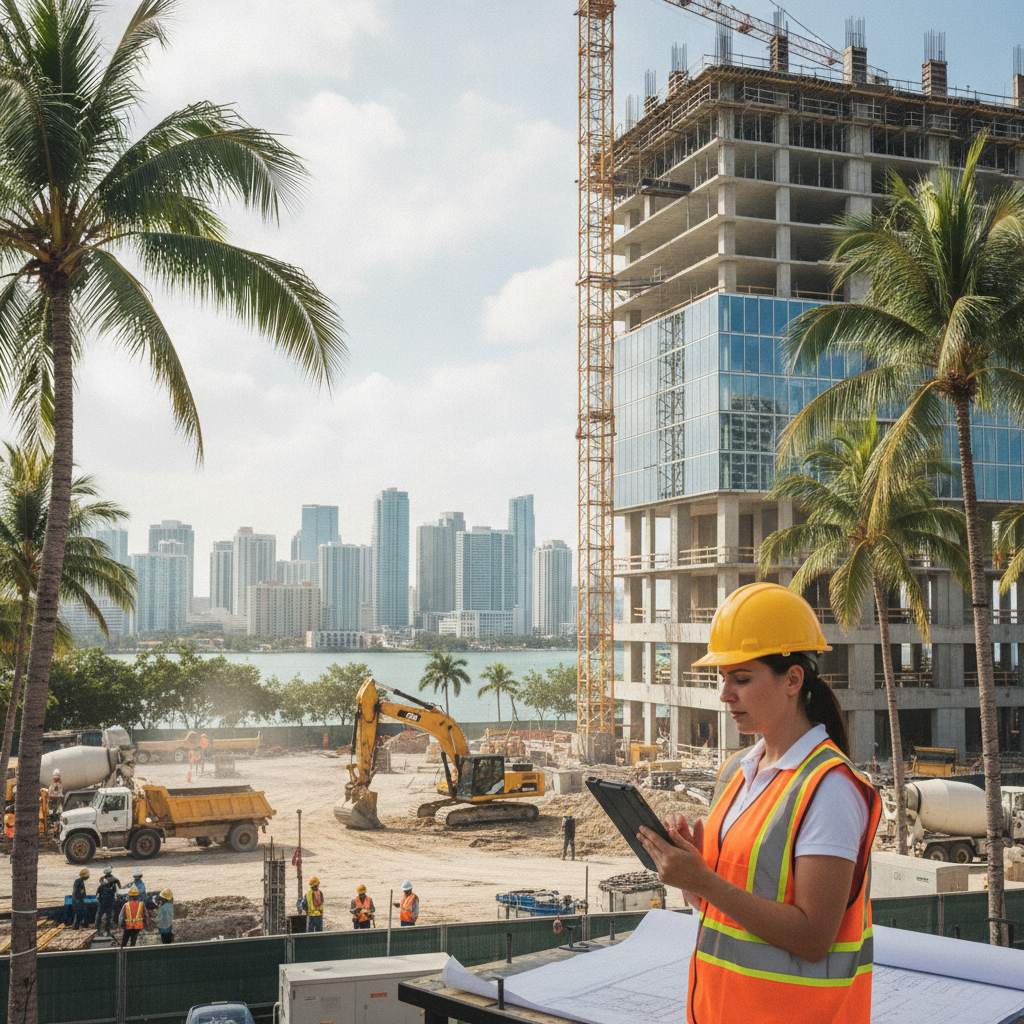
The project, a proposed multi-story structure with retail, office, and residential components, was situated on an urban infill parcel in the City of Miami. This location immediately triggered a multi-agency review process involving not only the City’s Planning and Zoning Department but also Miami-Dade County’s Department of Environmental Resources Management (DERM), the Florida Department of Transportation (FDOT), and various utility providers. The initial site development plan, while ambitious, underestimated the granular detail required by each reviewing body. The primary challenge stemmed from the overlapping jurisdictions. The City of Miami focused on zoning compliance, setbacks, and local ordinances, while DERM held authority over all aspects of stormwater management, water quality, and potential soil contamination. Concurrently, FDOT scrutinized the project’s impact on an adjacent state roadway, demanding a comprehensive traffic analysis. This created a situation where satisfying one agency’s requirements could inadvertently conflict with another’s, leading to a cycle of comments and revisions. The initial permit submittals lacked the integrated strategy needed to address these parallel review paths simultaneously.
Identifying the Root Causes of Initial Permit Stagnation
Permit Delay Causes vs. Strategic Solutions
| Delay Cause | Primary Reviewing Agency | RSP's Strategic Solution |
|---|---|---|
| Insufficient Water Quality Calculations | Miami-Dade DERM | Redesigned stormwater system with a multi-stage treatment train and provided detailed efficiency calculations. |
| Unresolved Utility Conflicts | Miami-Dade Water & Sewer / City of Miami | Commissioned a SUE investigation, designed viable utility relocation corridors, and negotiated service agreements. |
| Inadequate Traffic Impact Study | FDOT | Conducted an enhanced study and engineered off-site improvements like turn lanes and ADA-compliant crosswalks. |
| Vague Zoning Interpretation | City of Miami Planning & Zoning | Scheduled in-person meetings with staff to clarify code intent and adjusted site layout to demonstrate clear compliance. |
| Incomplete ADA Compliance Plan | City of Miami Building Department | Performed a detailed path-of-travel analysis and updated site plans to explicitly show all accessible routes and features. |
| Lack of Coordinated Submittals | All Agencies | Implemented a centralized comment-response matrix and scheduled joint agency calls to resolve inter-departmental conflicts. |
The project’s forward momentum stalled after the first round of reviews, resulting in a lengthy Request for Additional Information (RAI) from multiple agencies. The core issues were technical and procedural. DERM, for instance, flagged the drainage design for failing to meet the County’s stringent water quality treatment requirements for high-density urban sites. The proposed system did not provide adequate nutrient removal, a key concern for protecting Biscayne Bay. This was not a simple calculation error but a fundamental design flaw that required a significant rework of the entire stormwater management system. Simultaneously, the utility coordination efforts were incomplete. The plans showed conflicts between the proposed building foundation and existing municipal water mains and communications conduits. Without secured service agreements and approved relocation plans, the project was considered non-viable from a utility perspective. Furthermore, the initial traffic study was deemed insufficient by FDOT, which requested a more detailed analysis of peak hour turn movements and pedestrian access, triggering a need for a revised roadway engineering plan. These combined issues created a permitting logjam that required a systematic and expert-led response.
Proactive Agency Coordination and Communication Strategy
To break the deadlock, our first step was to move beyond email exchanges and establish direct, proactive communication. We initiated pre-application follow-up meetings with plan reviewers at the City of Miami and Miami-Dade DERM. The goal was not to contest their comments but to fully understand the technical basis for each one and collaboratively discuss potential solutions. This approach transforms the relationship from adversarial to cooperative, demonstrating a commitment to compliance. A critical component of this strategy was establishing a single point of contact at our firm for each agency, ensuring consistent communication and accountability. We developed a detailed comment-response matrix that tracked every agency request, our proposed solution, the date of submission, and the follow-up action. This organizational tool proved invaluable in managing the dozens of outstanding items and demonstrating diligent progress to the reviewers. This level of organized, persistent follow-up is a hallmark of effective permit submittals and is essential for navigating complex agency review cycles.
Revising the Stormwater Management and Drainage Design
Addressing DERM’s comments required a complete overhaul of the stormwater management plan. The original design, a conventional retention-based system, was insufficient for the site’s constraints and water quality demands. Our team redesigned the system to incorporate a multi-stage treatment train approach. This included the use of baffle boxes with nutrient-removing inserts for pre-treatment, followed by an underground exfiltration trench system to maximize on-site storage and groundwater recharge. This revised drainage design not only met the required water quantity control but also significantly exceeded the minimum water quality treatment efficiency mandated by DERM. We provided detailed supporting calculations, product specifications, and a maintenance plan to give the agency confidence in the long-term performance of the system. By engineering a solution that was both robust and compliant, we were able to resolve one of the most significant hurdles to permit approval and demonstrate a high level of technical proficiency in Florida civil engineering.
Resolving Utility Conflicts and Securing Service Agreements
Unraveling the project’s utility conflicts demanded a meticulous utility coordination process. We commissioned a Subsurface Utility Engineering (SUE) investigation to accurately locate all existing underground infrastructure, moving beyond the often-unreliable record drawings. This provided a clear map of the conflicts between our proposed foundation and existing water, sewer, and fiber optic lines. Armed with this precise data, we engineered viable relocation corridors for the affected utilities. Our team then led negotiations with Miami-Dade Water and Sewer and other providers to finalize relocation plans and secure the necessary service agreements. This involved preparing detailed plan and profile drawings for the new utility alignments and negotiating the terms of required easement acquisition. By taking ownership of the entire process—from investigation to design and negotiation—we removed the burden from the client and presented the permitting agencies with a fully resolved, buildable plan, satisfying a critical component of the site development approval process.
Navigating Traffic and Roadway Engineering Requirements
The comments from FDOT required a sophisticated roadway engineering response. We conducted a new, more detailed Traffic Impact Study that analyzed intersection capacity, queuing lengths, and pedestrian safety with greater precision. The study’s findings led to design modifications, including the addition of a dedicated right-turn lane and upgraded pedestrian crosswalks with ADA-compliant features. These changes were necessary to mitigate the development’s impact on the adjacent state road. We prepared a complete set of signing, pavement marking, and signalization plans for agency review. A key part of our strategy was demonstrating that the proposed improvements would not only accommodate the new traffic but also enhance safety and efficiency for the existing corridor. Securing FDOT permits often requires this level of detailed analysis and a willingness to incorporate off-site improvements. This comprehensive approach satisfied the agency’s concerns and cleared another major obstacle to receiving the final development order.
The RSP Engineers Approach to Permit Expediting
Our methodology for accelerating stalled permits is built on a foundation of technical expertise and proactive management. It begins with a comprehensive diagnostic review of all existing plans and agency comments to identify the true technical and procedural roadblocks. We then prioritize the most critical items—those holding up all other reviews—and focus our resources there first. This often involves re-engaging in robust due diligence that should have been completed initially. We believe in preparing exceptionally thorough permit submittals that anticipate reviewer questions and provide clear, defensible engineering. This reduces the likelihood of lengthy RAIs. Throughout the agency review process, we maintain persistent, professional communication, providing regular status updates to both the client and the agency staff. This approach ensures that the project is never out of sight or out of mind, transforming a reactive process into a forward-moving collaboration. This extends through the project lifecycle, including providing construction administration support to ensure the built project matches the approved plans.
Common Pitfalls in Miami-Dade Permitting
Many promising projects get bogged down in permitting due to a few common, avoidable mistakes. One of the most frequent is underestimating the complexity of DERM’s stormwater criteria, particularly regarding sea-level rise and water quality. Another pitfall is incomplete initial zoning compliance analysis, where developers proceed with a design that is fundamentally at odds with local code, leading to costly redesigns late in the process. Poor utility coordination is another major source of delay. Failing to identify and resolve conflicts with existing infrastructure early on can bring a project to a complete halt. Finally, submitting incomplete or poorly detailed plan sets is a guaranteed way to receive extensive comments. A successful site development project in Miami requires a permit application that is not just complete, but meticulously detailed and technically sound from the very first submission.
Your Partner for Complex Miami Permitting
Navigating the complexities of a Miami mixed-use development requires more than just a set of plans; it requires a strategic partner. The team at RSP Engineers has a proven track record of guiding clients through the most challenging permitting environments in Florida. We specialize in comprehensive site development services, from initial due diligence and zoning compliance analysis to sophisticated stormwater management design and final permit acquisition. Don’t let permit delays jeopardize your project’s success. Contact us today to discuss how our expert civil engineering services can bring clarity and momentum to your development.
Conclusion
The successful permitting of a complex mixed-use project in Miami is not a matter of luck, but the result of a deliberate and expert-led strategy. As this case study illustrates, overcoming significant delays requires a combination of technical redesign, proactive agency coordination, and meticulous project management. By addressing the root causes of agency comments with robust engineering solutions, particularly in stormwater management and utility design, a stalled project can be put back on the path to approval. Ultimately, a well-executed permitting strategy is the essential foundation for any successful development in South Florida.
FAQs
-
You should engage a qualified Civil Engineer near me during the earliest stages of due diligence, even before the land is acquired. An upfront feasibility study can identify major permitting, utility, and site constraints, saving you from costly surprises and providing a realistic development timeline.
-
The most frequent cause of delays with Miami-Dade DERM is an inadequate stormwater management plan. This often relates to insufficient water quality treatment calculations, a failure to account for the site’s specific soil and groundwater conditions, or an unrealistic drainage design that doesn’t fit the site’s physical constraints.
-
No reputable engineering firm can guarantee a specific timeline, as the final decision rests with the government agencies. However, a strategy built on a thorough permit submittal, proactive agency communication, and rapid, accurate responses to comments significantly reduces the risk of unforeseen delays and accelerates the review process.