
How to Evaluate a Site for Data Center Development
A comprehensive guide for data center developers on evaluating potential sites. Learn the critical civil engineering due diligence steps for power, fiber, water, zoning, and geotechnical analysis.
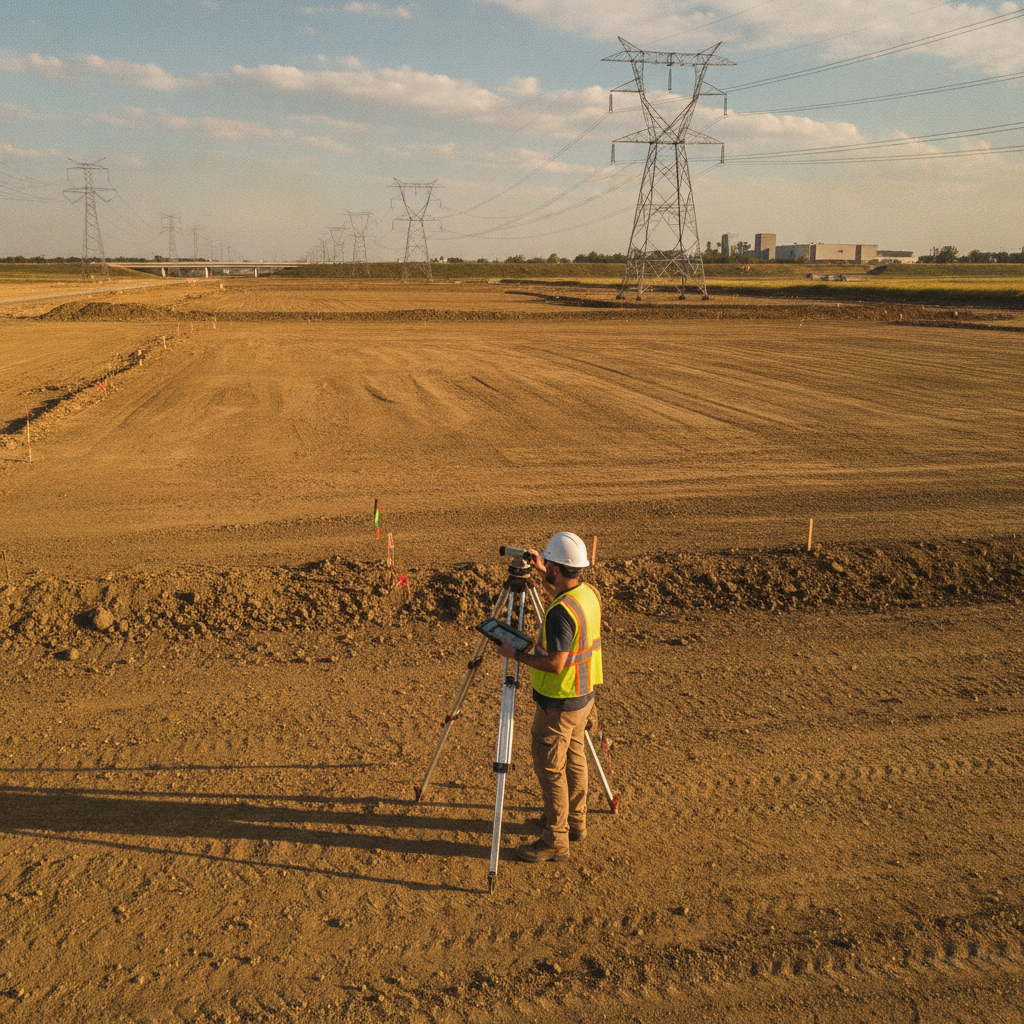
Assessing Power and Fiber Infrastructure Capacity
For a data center, power isn’t just a utility; it’s the lifeblood. The first and most critical step is to confirm the availability of robust, reliable, and scalable electrical power. This involves direct and early utility coordination with the local power provider to verify the capacity of nearby substations and transmission lines. Key questions include the total megawatts (MW) available, the timeline and cost for new service, and the potential for redundant power feeds from separate substations to ensure uptime. Equally important is fiber connectivity. A data center requires low-latency, high-bandwidth connections to major fiber backbones. The evaluation must identify the proximity and diversity of long-haul and metro fiber routes from multiple carriers. A site with only a single fiber provider or route presents a significant operational risk. A thorough analysis will map existing fiber infrastructure and confirm carrier plans for expansion, ensuring the site can meet the connectivity demands of future tenants.
Zoning, Entitlements, and Permitting Pathways
Data Center Site Evaluation Matrix
| Evaluation Factor | Key Metrics / Questions | Potential Risk Level |
|---|---|---|
| Power Availability | MW Capacity? Redundant Feeds? Provider Timeline & Cost? | High |
| Fiber Connectivity | Proximity to Long-Haul/Metro Fiber? Carrier Diversity? Latency? | High |
| Zoning & Permitting | Is Data Center a Permitted Use? Rezoning Needed? Clear Permitting Path? | High |
| Water & Sewer Capacity | Sufficient GPM for Cooling? Sewer Capacity for Discharge? Alternative Sources? | Medium |
| Geotechnical Conditions | Soil Bearing Capacity? Rock Depth? High Water Table? Findings of Soil Test? | Medium |
| Environmental Constraints | Wetlands? Endangered Species? Floodplain? Phase I ESA Findings? | High |
| Site Accessibility | Adequate Road Capacity for Construction? Need for Off-site Improvements? | Medium |
A site’s physical attributes are irrelevant if the local regulations prohibit data center development. A detailed review of the local zoning ordinance is necessary to confirm that a data center is a permitted or conditional use. If it’s not, the project may require a lengthy and uncertain rezoning or special exception process. This analysis must also identify any overlay districts, height restrictions, setback requirements, or architectural standards that could impact the site plan design. Beyond zoning, the team must understand the entire entitlement and permitting process. This includes identifying all authorities with review power, from local planning commissions to state environmental agencies and federal bodies. Permitting requirements vary by jurisdiction, and every project team should confirm the applicable standards with the local, state, regional, and federal authorities that hold review authority over the site. A clear understanding of the required permit submittals, typical review timelines, and potential political hurdles is crucial for developing a realistic project schedule and mitigating risks associated with agency review.
Water, Sewer, and Cooling System Feasibility
Modern data centers, particularly those supporting high-density computing, have significant water demands for their cooling systems. The site evaluation must confirm that the local municipal utility can provide the required volume of potable or reclaimed water for cooling makeup and domestic use. It’s also critical to assess the capacity of the sanitary sewer system to accept the corresponding wastewater discharge, or ‘blowdown’, from cooling towers. If municipal services are insufficient, the analysis must explore alternatives. This could include the feasibility of drilling on-site wells, which involves its own set of hydrogeological studies and water use permitting. Another strategy is designing closed-loop cooling systems that drastically reduce water consumption. The chosen cooling strategy has major implications for the site development budget, operational costs, and overall sustainability profile of the facility.
Geotechnical and Topographic Site Constraints
The ground beneath a site holds critical clues to its development potential. A preliminary Geotechnical Engineering investigation is non-negotiable. This typically involves a Soil boring test program to determine soil composition, bearing capacity, groundwater levels, and the depth to bedrock. The findings from the Geotechnical soil report directly influence foundation design, site grading strategies, and overall construction costs. Discovering poor soils or shallow rock late in the process can lead to major budget overruns. Topography also plays a significant role. A relatively flat site is ideal, as it minimizes the need for extensive earthwork. Steep slopes can dramatically increase grading costs and create complex challenges for stormwater management and drainage design. A thorough topographic survey is essential for creating an accurate grading plan that balances cut and fill, establishes proper drainage patterns, and ensures ADA compliance for pedestrian routes.
Environmental and Natural Hazard Risk Analysis
Unseen environmental liabilities can stop a project in its tracks. A Phase I Environmental Site Assessment (ESA) is a standard part of due diligence to identify potential contamination from past land uses. The evaluation must also include a review of federal and state databases for regulated resources. This includes delineating any jurisdictional wetlands, identifying habitats for threatened or endangered species, and screening for cultural or archaeological resources that could trigger extensive regulatory review under programs like the National Environmental Policy Act (NEPA). Furthermore, the site must be assessed for natural hazard risks. This involves reviewing FEMA floodplain maps to ensure the development area is outside the 100-year and 500-year floodplains. The analysis should also consider risks from seismic activity, high winds, wildfires, or other regional hazards. Mitigating these risks through resilient design is a key component of mission-critical facility planning.
Access, Transportation, and Haul Route Logistics
A data center site must be accessible for both construction and operations. The evaluation should analyze the condition and capacity of the existing road network to handle heavy construction traffic, including oversized deliveries of equipment like generators and cooling units. This may require a traffic impact analysis to determine if off-site improvements such as turn lanes, signalization, or road widening are necessary. The Professional Engineer must ensure all proposed access points provide adequate sight distance and meet local and state transportation agency standards. The on-site circulation plan is equally important. It must accommodate tractor-trailer deliveries, provide adequate employee and visitor parking, and ensure emergency vehicle access to all sides of the building. All site elements, including parking and pedestrian pathways, must be designed for full ADA compliance. Proper planning for logistics during the construction administration phase is essential for a smooth build-out.
The RSP Engineers Site Evaluation Process
At RSP Engineers, we employ a phased approach to data center site evaluation to provide clients with clarity and confidence. Our process begins with a desktop-level feasibility study, using GIS data, utility maps, and zoning codes to quickly screen multiple candidate sites and eliminate non-starters. This initial analysis identifies key opportunities and constraints before committing to significant expenditure. For promising sites, we proceed to a comprehensive due diligence phase. This involves direct engagement with utility providers and regulatory agencies, on-site reconnaissance, and commissioning a preliminary Geotechnical Engineering report. We synthesize all findings into a detailed due diligence report that includes a risk matrix, conceptual site layouts, a preliminary opinion of probable costs, and a clear go/no-go recommendation. This rigorous process empowers our clients to negotiate effectively and invest with a full understanding of the site development pathway.
Common Pitfalls in Data Center Site Selection
Even sophisticated developers can fall into common traps during site selection. One of the most frequent is accepting a utility provider’s initial capacity estimates at face value without a formal availability study, only to discover later that major system upgrades are required with multi-year lead times. Another pitfall is underestimating the complexity and timeline of the local permitting process, especially in jurisdictions unfamiliar with data center projects. Other common issues include discovering unexpected environmental constraints like jurisdictional wetlands mid-way through design, failing to budget for significant off-site roadway improvements mandated by a traffic study, or encountering poor soil conditions that require costly foundation solutions. A proactive, thorough due diligence process led by experienced Civil Engineers is the best defense against these preventable and expensive setbacks.
Partner with RSP Engineers for Your Next Mission-Critical Project
Navigating the complexities of data center site selection requires a multi-disciplinary team with deep expertise in land development and mission-critical facilities. The team at RSP Engineers provides comprehensive site engineering services, from initial feasibility studies and due diligence to full design, permitting, and Construction Management Services. We help you identify and vet the optimal site, ensuring your project is built on a solid foundation. Contact us today to de-risk your next data center development and accelerate your time to market.
Conclusion: A Foundation for Success
In the fast-paced world of data center development, the temptation to shortcut due diligence can be strong. However, a rigorous, data-driven site evaluation is not an expense—it is a critical investment in the project’s success. By systematically analyzing power, fiber, zoning, environmental, and geotechnical factors, developers can avoid catastrophic risks and select sites that support their long-term operational and financial goals. A successful site development project begins with a partnership with a civil engineering firm that understands the unique demands of mission-critical infrastructure.
FAQs
-
A civil engineer should be engaged at the very beginning of the site selection process. Early involvement allows for rapid screening of multiple parcels, identification of fatal flaws before any capital is committed, and strategic guidance on which sites merit a full due diligence investigation. This is a core part of our site engineering services.
-
By far, the most common deal-breaker is a lack of adequate power capacity or an unacceptably long and expensive timeline for the utility provider to deliver the required service. Without power, a site is not viable, regardless of its other positive attributes.
-
Yes, but it comes at a cost. A site with steep slopes or significant grade changes will require extensive earthwork and potentially expensive retaining walls. It also complicates drainage design and stormwater management. These factors must be carefully quantified in the due diligence budget to determine if the site is still financially feasible.