
Greenfield vs. Brownfield Data Center Development
Explore the key civil engineering differences between greenfield and brownfield data center development, including permitting, utilities, environmental risks, and site design.
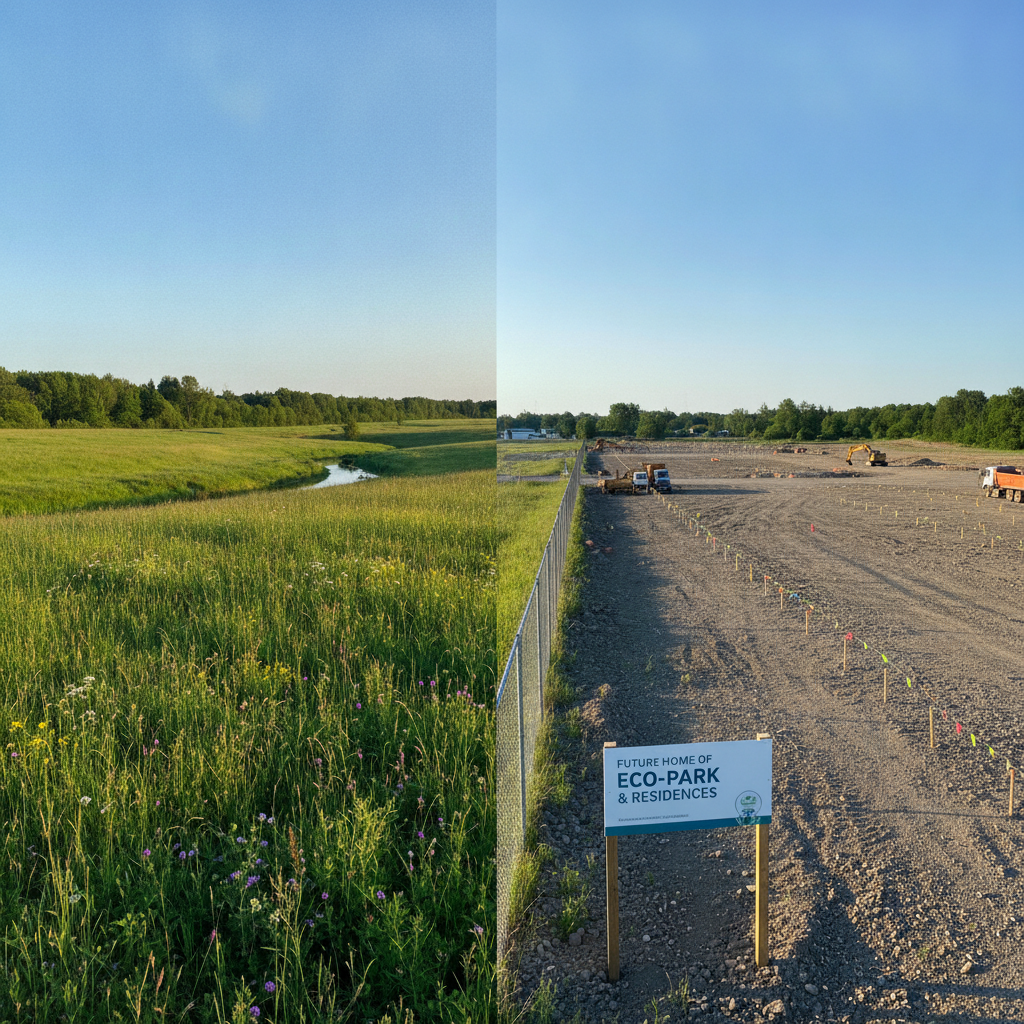
Defining Greenfield and Brownfield Sites in the Data Center Context
In land development, the terms ‘greenfield’ and ‘brownfield’ define the site’s history and existing condition. A greenfield site is undeveloped land, often agricultural or forested, that has never been used for industrial or commercial purposes. It represents a ‘blank slate’ for designers, free from the constraints of prior construction, demolition debris, or environmental contamination. This allows for maximum flexibility in site layout, grading, and utility routing. Conversely, a brownfield site is a property that has been previously developed. Its former use, which could range from a manufacturing plant to a shopping center, may have resulted in environmental contamination, abandoned infrastructure, or subsurface obstructions. Redeveloping these sites often involves remediation, demolition, and creative design solutions to work around existing constraints. While they present more unknowns, brownfield sites are often located in established areas with valuable access to existing utility infrastructure, a critical factor for power-hungry data centers.
Site Acquisition and Entitlement Pathways
Comparison of Key Data Center Development Factors
| Factor | Greenfield Development | Brownfield Redevelopment |
|---|---|---|
| Land Cost & Availability | Often lower per-acre cost but may be in remote locations. Large, contiguous parcels are more common. | Higher per-acre cost but often in strategic locations with better access to labor and fiber. |
| Permitting & Entitlements | May require complex rezoning and face community opposition. Environmental permits are typically simpler. | Often pre-zoned for industrial use but requires extensive environmental permitting and potential remediation plans. |
| Utility Infrastructure | Requires significant investment in new, extended utility lines (power, water, fiber). High upfront cost and long lead times. | Often has access to existing high-capacity utilities, but requires thorough assessment for capacity, condition, and reliability. |
| Environmental Risk | Low risk of pre-existing contamination. Focus is on protecting natural resources (wetlands, habitats). | High risk of soil and groundwater contamination from prior uses, requiring extensive due diligence and potential remediation. |
| Subsurface Conditions | Generally predictable native soils. Primary risk is unexpected rock or poor soil quality. | High risk of unknown obstructions like old foundations, buried tanks, and contaminated debris. |
| Construction Schedule | Schedule is often dictated by the long lead times for utility extensions and entitlement processes. | Schedule is heavily influenced by demolition, environmental remediation, and resolving subsurface surprises. |
| Design Flexibility | Maximum flexibility. A 'blank slate' to optimize site layout, security, and future expansion. | Design is constrained by existing property lines, easements, topography, and remaining infrastructure. |
The journey from site acquisition to a fully entitled project differs dramatically between greenfield and brownfield sites. Greenfield parcels, particularly in rural or exurban areas, may appear to offer a simpler path forward. However, they can face significant hurdles related to zoning compliance and community acceptance. A proposal to build a large data center may require a comprehensive rezoning or special use permit, triggering extensive public hearings and scrutiny from adjacent landowners concerned about noise and visual impact. The land use entitlement process can be lengthy and unpredictable. Brownfield sites are often already zoned for industrial or commercial use, which can streamline the initial zoning compliance process. However, they come with their own set of regulatory complexities, primarily related to environmental history. Permitting requirements vary by jurisdiction, and every project team should confirm the applicable standards with the local, state, regional, and federal authorities that hold review authority over the site. The agency review process for a brownfield site will likely involve close coordination with environmental protection agencies to ensure any required remediation meets stringent standards before construction can begin.
Utility Infrastructure and Capacity Planning
For a data center, utility availability is not just a consideration—it is the primary driver of site viability. Greenfield sites often lack the robust infrastructure required. This necessitates extensive and costly off-site improvements, including the extension of high-voltage transmission lines, large-diameter water mains for cooling, sanitary sewer force mains, and redundant fiber optic ducts. The utility coordination process involves negotiating easements and service agreements with multiple providers, which can add significant time and cost to the project. A thorough capacity analysis is required to ensure providers can meet the massive and continuous power and water demands. Brownfield sites frequently benefit from proximity to existing, high-capacity infrastructure. A former industrial facility may already be served by heavy power, water, and sewer lines. However, this infrastructure must be carefully evaluated. A Professional Engineer must assess the age, condition, and remaining capacity of these utilities to determine if they can be reused, upgraded, or must be fully replaced. While the presence of utilities is an advantage, verifying their suitability for a modern, mission-critical facility is a crucial step in the site development due diligence process.
Geotechnical and Environmental Due Diligence
The subsurface conditions of a site dictate foundation design, earthwork costs, and overall project risk. On greenfield sites, the primary focus of Geotechnical Engineering is to characterize the native soils through a Soil Test or soil borings to inform foundation and pavement design. While generally straightforward, even undeveloped land can hide surprises like rock formations or unsuitable soils. Brownfield sites demand a much more intensive level of due diligence. The process typically begins with a Phase I Environmental Site Assessment (ESA) to research the property’s history and identify potential contamination. If risks are found, a Phase II ESA is conducted, involving soil and groundwater sampling to confirm the presence and extent of hazardous materials. The findings can trigger a need for costly remediation, which must be completed before or during construction. Furthermore, the subsurface may contain abandoned foundations, utility lines, or buried debris that can obstruct excavation and require specialized removal techniques, adding unforeseen costs and delays.
Stormwater Management and Drainage Design
Modern stormwater management regulations are stringent nationwide, requiring developers to control the quantity and quality of runoff from their sites. On a greenfield project, engineers design a new system from scratch. This often involves creating large detention or retention ponds, bioswales, and other green infrastructure to manage the increased runoff from new impervious surfaces like rooftops and parking lots. The drainage design must comply with local and federal regulations, such as the National Pollutant Discharge Elimination System (NPDES) program. For brownfield sites, the challenge is often retrofitting or replacing an outdated, non-compliant system. The existing site may have 100% impervious coverage with no stormwater treatment. The redevelopment project must introduce modern stormwater management solutions within the confines of the existing layout. This might involve underground detention systems, permeable pavements, or other innovative techniques to meet current water quality standards. The permitting process requires demonstrating a net improvement in stormwater treatment compared to the pre-existing condition.
Site Layout, Demolition, and Grading Strategies
A key advantage of a greenfield site is the complete freedom it offers for site plan design. The building footprint, parking areas, utility yards, and security perimeters can be optimized for operational efficiency and future expansion without existing constraints. The grading plan can be designed for balanced earthwork, minimizing the costly import or export of soil. This flexibility allows the project team to create a highly efficient and purpose-built campus. Brownfield development requires working within established boundaries. The site layout may be dictated by existing property lines, easements, or structures that must remain. The first phase of work is often demolition planning and execution, which requires careful management of hazardous materials and waste streams. Grading can be complicated by the need to manage and properly dispose of contaminated soils, or by the presence of old foundations that must be removed. The civil engineering team must develop a precise plan to navigate these obstacles while preparing the site for new construction.
How RSP Engineers Navigates Site Selection and Design
At RSP Engineers, our approach to data center development begins with a rigorous due diligence and feasibility study. We understand that the success of a mission-critical facility is built on the foundation of a well-chosen and thoroughly vetted site. Our team of experienced Civil Engineers collaborates with clients to evaluate both greenfield and brownfield opportunities, providing clear, data-driven analysis to inform their decisions. Our process includes comprehensive utility coordination with power, water, and communications providers to confirm capacity and delivery timelines. We manage the entire entitlement process, from initial zoning analysis to final permit submittals. For brownfield sites, we oversee environmental consultants and geotechnical experts to quantify risks and develop mitigation strategies. This integrated approach ensures that our site plan design is not only efficient and compliant but also resilient and cost-effective, paving the way for successful construction administration and project delivery.
Common Challenges in Data Center Site Development
Regardless of the path chosen, data center projects face common hurdles. One of the most significant is securing adequate power. The long lead times for substation upgrades and new transmission lines can delay a project for years, making early and continuous utility coordination essential. On brownfield sites, the discovery of unexpected contamination or buried foundations during excavation can halt construction and lead to costly change orders and schedule overruns. Navigating the complex web of local, state, and federal agency review processes also requires deep expertise and proactive communication to keep the project on track.
Partner with RSP Engineers for Your Mission-Critical Project
Choosing the right site is the first step toward a successful data center project. Navigating the complexities of either a greenfield or brownfield development requires a partner with deep expertise in site engineering services, regulatory permitting, and mission-critical infrastructure. The team at RSP Engineers provides the comprehensive civil engineering and land development services needed to transform a promising site into an operational asset. From initial feasibility and due diligence to final construction oversight, we help clients manage risk and achieve certainty. Contact us to discuss how our nationwide experience can support your next data center project.
Conclusion
The decision between a greenfield and brownfield site for data center development involves a complex trade-off between a blank slate and existing infrastructure. Greenfield sites offer design flexibility but often require massive investments in new utilities and face entitlement challenges. Brownfield sites provide strategic locations and potential utility advantages but come with inherent risks related to environmental history and subsurface conditions. A successful outcome depends on a meticulous due diligence process and a sophisticated civil engineering strategy. By carefully weighing these factors, developers can select the path that best aligns with their project goals, budget, and timeline, ensuring the delivery of a reliable and resilient mission-critical facility.
FAQs
-
The most significant risks are typically environmental liability and unknown subsurface conditions. Discovering extensive contamination or buried obstructions after acquisition can dramatically increase costs and delay the project. A thorough Phase II ESA and geotechnical investigation are critical to mitigate these risks.
-
Not necessarily. While they avoid the complexities of environmental remediation, greenfield sites can face strong community opposition and require a lengthy and contentious zoning compliance process. Projects may also trigger extensive environmental reviews if they impact wetlands, floodplains, or endangered species habitats.
-
Power is a primary driver. A brownfield site located near an existing electrical substation with available capacity can have a major strategic advantage, potentially saving years and millions of dollars compared to a greenfield site that requires new high-voltage transmission lines. This makes utility coordination a top priority in early due diligence.