
Grading Around Generator and Transformer Equipment Pads
Expert civil engineering guidance on grading around generator and transformer pads for data centers. Learn about positive drainage, spill containment, and utility coordination for mission-critical fac
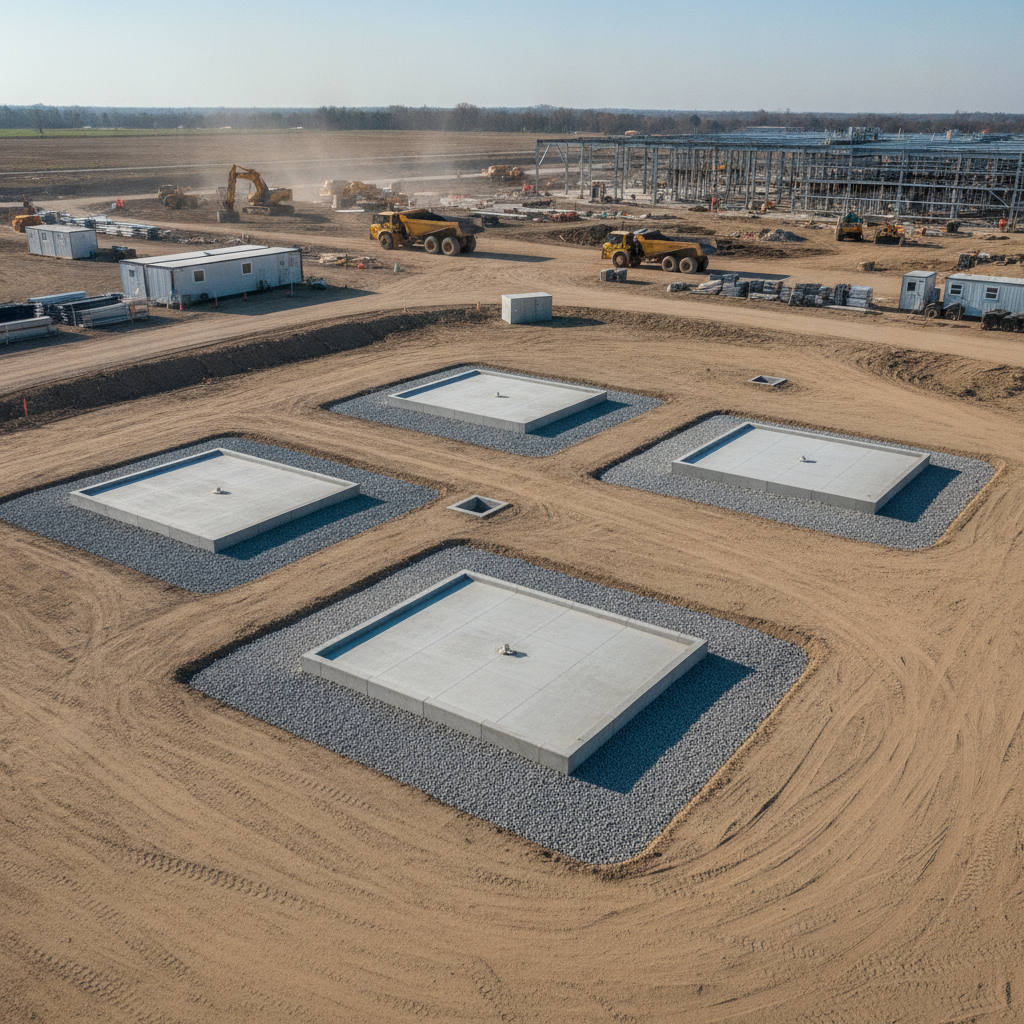
Establishing Positive Drainage Away from Critical Equipment
The primary goal of grading around any exterior equipment pad is to ensure positive drainage. Water must be directed away from generators, transformers, and switchgear to prevent ponding, infiltration, and potential damage to sensitive electrical components. Standing water can compromise foundations, accelerate corrosion, and create safety hazards for maintenance personnel. Effective stormwater management begins with a meticulously planned grading design. A civil engineer will design the surrounding grades to slope away from the concrete pad on all sides, typically at a minimum slope of 1% to 2%. This gentle but firm gradient is sufficient to convey stormwater to adjacent swales, catch basins, or other elements of the site’s overall drainage design. The design must account for the entire tributary area, ensuring that runoff from other parts of the site, such as roofs or parking lots, does not sheet flow toward the equipment yard. This requires careful integration of the equipment pad grading with the comprehensive site plan design.
Designing for Spill Containment and Environmental Compliance
Comparison of Equipment Pad Surfacing Materials
| Material | Key Advantages | Design Considerations | Typical Application |
|---|---|---|---|
| Crushed Stone / Gravel | High permeability, lower initial cost, easy to install and repair. | Requires regular maintenance to prevent rutting, potential for dust generation, may require a geotextile fabric sub-layer. | General equipment yards where heavy, frequent traffic is not expected; areas where dust control is less critical. |
| Asphalt Pavement | Durable, smooth surface, effective dust control, moderate cost. | Impermeable surface requires structured drainage (inlets/swales), susceptible to damage from fuel/oil spills without proper sealant. | Access roads, maintenance pathways, and areas requiring a clean, stable surface for personnel and light vehicles. |
| Reinforced Concrete | Highest durability and load-bearing capacity, resistant to spills, minimal maintenance. | Highest initial cost, requires proper jointing and curing, repairs can be complex and expensive. | Heavy-duty access roads, crane pads for equipment replacement, and areas directly beneath transformers where oil leaks are a concern. |
| Pervious Pavers | Excellent stormwater infiltration, can reduce runoff and the need for detention ponds, aesthetically pleasing. | Higher installation cost, requires specialized sub-base, potential for clogging without regular maintenance. | Pedestrian pathways, light-duty vehicle areas, and projects with strict stormwater runoff regulations. |
Generators and transformers often contain significant volumes of diesel fuel, oil, or other coolants that are considered pollutants. A release of these substances can result in costly cleanup operations and regulatory fines. Therefore, spill containment is a non-negotiable aspect of equipment pad design. The grading itself can be a primary tool for creating a containment area, often by incorporating raised concrete curbing or sloped earth berms around the pad perimeter. This secondary containment system is designed to hold the entire volume of the largest container, plus a safety factor for precipitation. Federal regulations, such as the Spill Prevention, Control, and Countermeasure (SPCC) rule, provide a framework for these requirements. However, specific design standards for containment volume, materials, and discharge controls often vary by jurisdiction, and every project team should confirm the applicable standards with the local, state, regional, and federal authorities that hold review authority over the site. A Professional Engineer must certify that the design meets all relevant environmental compliance standards, which may include provisions for controlled drainage outlets or oil-water separators.
Setting Pad Elevations for Flood Mitigation and Access
Determining the correct finished floor elevation for generator and transformer pads is a critical decision made early in the site development process. The elevation must protect the equipment from potential flooding while facilitating safe and efficient access for maintenance and fuel delivery. The starting point for this analysis is often the FEMA Flood Insurance Rate Maps (FIRMs), which delineate the 100-year and 500-year floodplains. As a best practice, critical equipment pads should be elevated a minimum of one to two feet above the Base Flood Elevation (BFE), though local ordinances may require a higher freeboard. This flood mitigation strategy provides a crucial buffer against storm surge and extreme weather events. Beyond flood risk, the pad elevation must be coordinated with the surrounding access roads and yard grades to ensure that slopes for maintenance vehicles and personnel comply with ADA compliance standards where applicable and allow for the maneuvering of heavy equipment needed for installation or replacement.
Coordinating Grading with Underground Utility Infrastructure
An equipment yard is a complex web of underground infrastructure, including electrical duct banks, communication conduits, fuel lines, and grounding grids. The site grading plan must be developed in close coordination with the electrical and mechanical designs to avoid conflicts and ensure the long-term integrity of these systems. Proper utility coordination is essential to prevent costly rework during construction. The grading design dictates the required cover over underground utilities. For example, electrical duct banks carrying high-voltage lines require a specific depth of cover to protect them from surface loads and accidental excavation. The grading plan must accommodate these depths while maintaining the necessary surface slopes for drainage. Furthermore, the process of trenching, backfilling, and compacting soil around these utilities must be carefully specified and executed to prevent settlement, which could damage the conduits or create depressions in the finished grade that trap water.
Surface Material Selection for Equipment Yards
The choice of surface material for the area surrounding equipment pads impacts maintenance, safety, and operational efficiency. The selection depends on factors like vehicle loading, dust control requirements, and budget. Each option presents a different set of design and performance characteristics that must be evaluated by the civil engineering team. Common choices include crushed stone, asphalt, and reinforced concrete. Crushed stone is often favored for its permeability and lower cost, but it can require more maintenance to keep level and can be a source of dust. Asphalt provides a durable, sealed surface that is easy to clean but can be susceptible to degradation from fuel spills. A full concrete apron offers the highest durability and load-bearing capacity but comes at a premium cost. The final decision on surface materials should align with the facility’s operational protocols and long-term maintenance strategy.
Integrating Access Roads and Maintenance Pathways
Reliable access to generator and transformer pads is fundamental for refueling, routine inspections, and emergency repairs. The civil engineering plan must incorporate well-designed access roads and pathways capable of supporting heavy vehicles, such as fuel tankers and cranes used for equipment replacement. This involves more than just a path; it requires a detailed access road design. The design must consider vehicle weight, specifying an appropriate pavement section and subgrade preparation to handle the anticipated loads. Geometric considerations are also critical, including adequate width and large-enough turning radii to allow large trucks to maneuver without leaving the improved surface. The grading of these access roads must be seamlessly integrated with the equipment yard grading to ensure smooth transitions and prevent drainage problems at the interface between different surface types. This planning is a key part of ensuring effective site logistics for the life of the facility.
RSP Engineers’ Approach to Mission-Critical Site Grading
At RSP Engineers, our approach to grading for mission-critical facilities is rooted in a holistic understanding of site constraints and operational needs. Our process begins with a thorough site analysis, including a review of Geotechnical Engineering reports, topographical surveys, and flood studies. We work collaboratively with the client, architects, and other engineering disciplines to develop an integrated site plan design that balances performance, cost, and regulatory compliance. Our team of experienced Civil Engineers leverages advanced modeling software to optimize grading for positive drainage and earthwork balance, minimizing import and export costs. We meticulously handle utility coordination to de-conflict underground infrastructure and ensure constructability. Throughout the permitting process, we engage with the authorities having jurisdiction to secure approvals efficiently. During construction, we provide administration services to ensure the design is implemented correctly, verifying compaction, slopes, and elevations to protect our client’s investment.
Common Challenges in Equipment Pad Grading
Even with a solid plan, several challenges can arise during the design and construction of equipment yards. One common issue is encountering unsuitable soils, which may require over-excavation and replacement with engineered fill to provide a stable subgrade for pads and access roads. A detailed geotechnical soil report is essential to identify these conditions early. Another frequent challenge is late-stage changes to the electrical or mechanical design, which can force last-minute rerouting of underground conduits and disrupt the grading and drainage plan. This highlights the need for proactive communication among all design disciplines. Finally, ensuring proper construction execution is vital. Poor compaction of backfill in utility trenches can lead to future settlement and drainage failures, underscoring the importance of robust Construction Management Services and quality assurance testing.
Partner with RSP Engineers for Your Data Center Site Development
Executing a successful data center project requires a team of experts who understand the unique challenges of mission-critical facilities. The team at RSP Engineers provides the comprehensive site engineering services needed to navigate complex design and regulatory landscapes. From initial due diligence and conceptual site plan design to final construction documents and permitting, we are your trusted partner. Our expertise in stormwater management, utility design, and grading ensures your facility is built on a foundation of resilience and reliability. Contact us today to discuss how our civil engineering solutions can support your next project.
Ensuring Long-Term Reliability Through Strategic Site Grading
In conclusion, the grading around generator and transformer pads is far more than just moving dirt. It is a foundational element of a data center’s physical infrastructure that directly impacts operational reliability, safety, and environmental compliance. A successful design requires a deep understanding of stormwater management principles, careful utility coordination, and a forward-looking approach to maintenance and flood mitigation. By prioritizing expert civil engineering from the outset, developers and operators can protect their critical assets and ensure the long-term success of their mission-critical facility.
FAQs
-
A typical design specifies a minimum slope of 1% to 2% away from the pad in all directions. This ensures positive drainage and prevents water from ponding against the concrete foundation, which is critical for protecting the equipment and ensuring long-term stability.
-
Secondary containment requirements are driven by federal, state, and local regulations based on the volume of oil or coolant in the equipment. For large, oil-filled transformers, secondary containment is almost always mandatory to comply with environmental protection rules like the EPA’s SPCC plan requirements.
-
The final surface grade determines the necessary depth for trenching to achieve the required burial depth for electrical duct banks. The grading plan must be coordinated with the electrical design to ensure adequate cover is maintained across the entire site, protecting conduits from damage while maintaining proper drainage.