
Evaluating Former Industrial Sites for Data Center Conversion
A civil engineering guide for data center developers on evaluating former industrial sites. Learn about environmental assessments, utility upgrades, stormwater retrofits, and permitting for brownfield
Phase I & II Environmental Site Assessments (ESAs)
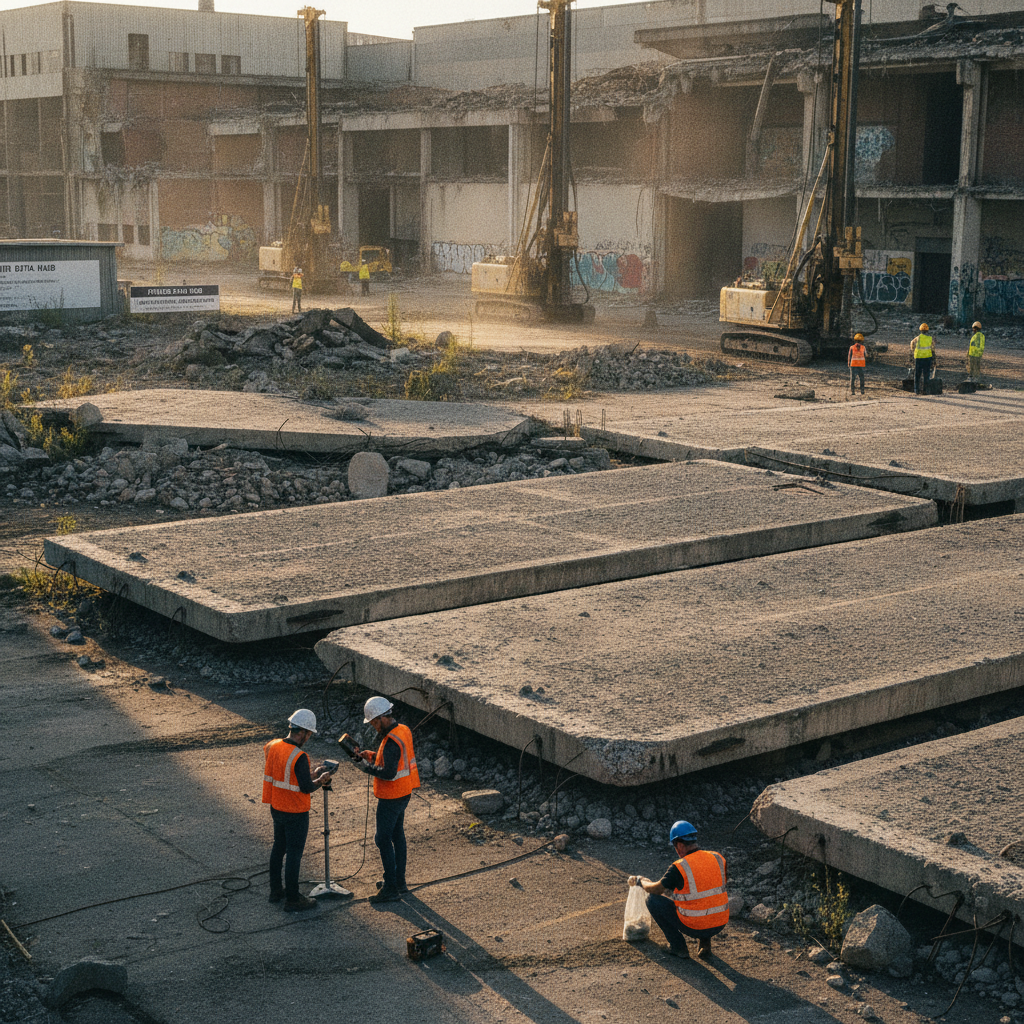
The first and most critical step in evaluating any former industrial property is understanding its environmental history. A Phase I Environmental Site Assessment (ESA) is a non-intrusive investigation into the site’s past usage to identify potential or existing environmental contamination. This involves reviewing historical records, aerial photographs, and government databases, as well as conducting a thorough site inspection to identify any Recognized Environmental Conditions (RECs). RECs are indicators that contamination may be present, such as old storage tanks, stained soil, or historical records of chemical use. If the Phase I ESA identifies RECs, a Phase II Environmental Site Assessment is required. This is an intrusive investigation that involves collecting and analyzing soil, groundwater, and sometimes soil vapor samples to confirm the presence, type, and extent of contamination. The results of the Phase II ESA are fundamental to determining the feasibility and cost of remediation. Cleanup strategies can range from soil excavation and disposal to in-situ treatments. Permitting requirements and cleanup standards vary by jurisdiction, and it is essential to confirm all applicable regulations with the local, state, regional, and federal authorities overseeing the project. Early engagement with these agencies is a key part of any successful brownfield development strategy.
Geotechnical Investigation and Structural Reuse Analysis
Key Due Diligence Comparison: Greenfield vs. Industrial Redevelopment
| Evaluation Factor | Greenfield Development | Industrial Site Conversion (Brownfield) |
|---|---|---|
| Environmental Liability | Low; typically requires a basic Phase I ESA. | High; requires comprehensive Phase I & II ESAs, with potential for costly remediation and long-term monitoring. |
| Utility Availability | Often requires significant extension of power, water, and fiber from off-site locations. | Frequently located near existing substations and major utility corridors, but requires capacity verification and upgrades. |
| Geotechnical Conditions | Generally predictable native soils; requires standard Geotechnical Engineering investigation. | Complex and unpredictable; may include undocumented fill, buried debris, and contaminated soils requiring special handling. |
| Stormwater Permitting | Straightforward design on a clean slate, but requires creating a full system from scratch. | Complex retrofit required to bring the site into compliance; space constraints are a major design challenge. |
| Zoning & Entitlements | May require rezoning from agricultural or residential, which can face community opposition. | Often already zoned for intensive use, but may require a conditional use permit specific to data centers. |
| Demolition & Site Prep | Minimal clearing and grubbing. | Extensive costs for hazardous material abatement, structural demolition, and removal of old foundations. |
Former industrial sites often contain a legacy of subsurface structures, including old foundations, utility tunnels, and extensive concrete slabs. A comprehensive Geotechnical Engineering investigation is necessary to assess the suitability of the site for a new, heavy data center structure. This involves performing a series of soil boring test procedures to determine soil bearing capacity, groundwater levels, and the composition of subsurface materials. The findings are compiled into a Geotechnical soil report, which guides foundation design. A key decision point is whether to reuse existing foundations and slabs. While reuse can potentially save on demolition and material costs, it requires careful analysis. The existing concrete must be evaluated for its structural integrity and load-bearing capacity to ensure it can support the immense weight of data center equipment. Often, the existing foundations were not designed for the specific loading requirements of modern server racks and cooling systems, necessitating complete removal and replacement. The geotechnical investigation will also identify undocumented fill material or buried debris that could compromise the stability of new foundations, making this a critical risk-assessment step in the site development process.
Utility Infrastructure Capacity and Upgrades
Data centers have immense power and connectivity requirements that far exceed those of most previous industrial uses. A primary driver for selecting an industrial site is often its proximity to existing high-voltage transmission lines and electrical substations. However, proximity does not guarantee capacity. A thorough utility coordination and capacity study is essential. This involves engaging directly with the local utility provider to confirm the available power, the cost and timeline for any necessary substation upgrades, and the feasibility of providing redundant power feeds for reliability. Beyond power, the evaluation must assess other critical utilities. This includes water service for cooling systems (especially for liquid-cooled facilities), sanitary sewer capacity for facility operations, and, most importantly, access to multiple, diverse fiber optic networks. The civil engineering team must map existing utility corridors, identify potential conflicts with the proposed site plan design, and develop a strategy for bringing robust, redundant services to the site. Securing firm commitments from utility providers early in the due diligence phase is crucial to avoid costly project delays.
Stormwater Management and Drainage Retrofits
Many older industrial sites were developed before modern stormwater management regulations were enacted. These properties often feature vast expanses of impervious surfaces (roofs, parking lots) with inadequate or non-compliant drainage systems that discharge directly into local waterways. Converting the site to a data center, which also has a large impervious footprint, triggers the need to bring the entire property into compliance with current local, state, and federal water quality and quantity control standards, such as the National Pollutant Discharge Elimination System (NPDES). This typically requires a complete drainage design retrofit. The engineering team must design systems to manage runoff, treat pollutants, and control the rate of discharge to pre-development levels. Solutions may include underground detention systems, bioretention basins, or permeable pavements. The limited space on a previously developed site can make designing these features challenging. A successful stormwater retrofit requires creative engineering solutions to meet regulatory requirements while maximizing the usable area for the data center facility and its supporting infrastructure.
Zoning, Permitting, and Regulatory Pathways
Zoning is a fundamental checkpoint in the due diligence process. While a property may be zoned for industrial use, that designation does not automatically permit a data center. Local ordinances may classify data centers as a unique use category with specific requirements for noise, setbacks, and generator screening. Achieving zoning compliance may require a conditional use permit, a special exception, or even a full rezoning of the property. This entitlement process involves public hearings and discretionary approvals from local authorities, adding time and uncertainty to the project schedule. Beyond zoning, the project will require a host of other permits. These can include land disturbance permits, building permits, environmental permits for cleanup activities, and potentially federal-level reviews under programs like the Clean Water Act if wetlands are present. The permitting strategy must be developed early, identifying all required approvals and the critical path for obtaining them. A knowledgeable Professional Engineer can navigate the complex web of agency review processes and ensure that permit submittals are complete and technically sound, minimizing review cycles and delays.
Demolition Planning and Site Logistics
The final major evaluation area is the scope and cost of demolition and site preparation. This process is more complex than simply clearing a vacant lot. It begins with identifying and abating hazardous materials within existing structures, such as asbestos, lead-based paint, and PCBs. A specialized contractor must handle the removal and disposal of these materials in accordance with strict environmental regulations. Once abatement is complete, the structural demolition can begin. A key site development strategy is to crush existing concrete and asphalt on-site for reuse as engineered fill or road base, which can yield significant cost savings and sustainability benefits. The civil engineering plan must account for the logistics of this operation, including equipment access, stockpile locations, and dust control. The plan must also address the removal of old underground utilities and foundations, which can be a source of unforeseen costs and delays if not properly identified during the geotechnical and environmental investigations.
RSP Engineers’ Approach to Industrial Site Conversion
At RSP Engineers, we guide our clients through the complexities of industrial site conversion with a systematic, risk-based approach. Our process begins with a comprehensive due diligence phase, where we assemble a multi-disciplinary team to conduct environmental, geotechnical, and utility investigations in parallel. We identify critical path items early, focusing on potential deal-breakers like severe contamination or lack of viable power. Our team excels at developing integrated solutions that address multiple challenges simultaneously. For example, our drainage design for a stormwater retrofit can be coordinated with the demolition plan to use excavated areas for new ponds or underground systems. We manage the entire entitlement and permitting process, from initial zoning analysis to final agency review and approval. By providing clear, data-driven recommendations, we empower our clients to make informed decisions, transforming challenging brownfield sites into high-value, mission-critical assets.
Common Challenges in Data Center Brownfield Projects
Even with thorough due diligence, converting industrial sites can present unexpected hurdles. Developers should be prepared for common challenges that can impact budget and schedule. These often include the discovery of undocumented underground storage tanks or buried waste during excavation, which can halt construction and trigger additional assessment and remediation. Another frequent issue is encountering soil or groundwater contamination that is more widespread than initial testing indicated, expanding the scope and cost of cleanup. Delays in securing utility service agreements are also a significant risk. Negotiations for power capacity upgrades or the installation of new fiber can be lengthy and are often outside the developer’s direct control. Finally, subsurface conditions can be highly variable across a large industrial site. A foundation design based on borings in one area may need to be revised if different conditions, such as soft soils or large obstructions, are found elsewhere on the site, requiring agile responses from the civil engineering and construction teams.
Partner with RSP Engineers for Your Data Center Development
Navigating the complexities of an industrial site conversion requires an experienced engineering partner. RSP Engineers provides the comprehensive site engineering services needed to turn a challenging brownfield property into a state-of-the-art data center. Our team manages every aspect of the civil design, from initial due diligence and environmental assessments to final permitting and construction administration. We specialize in creative stormwater management solutions, intricate utility coordination, and efficient site development strategies. Contact us today to discuss how we can help you de-risk your next mission-critical project and ensure a successful outcome.
Conclusion: Unlocking Value in Former Industrial Sites
Former industrial sites represent a significant opportunity to meet the growing demand for data centers in strategic, well-located areas. However, their conversion is a complex endeavor fraught with potential risks related to environmental contamination, subsurface conditions, and infrastructure limitations. A successful project depends on a rigorous due diligence process led by a skilled civil engineering team. By systematically evaluating environmental liabilities, utility capacity, and regulatory pathways, developers can mitigate risks, control costs, and transform these legacy properties into valuable assets for the digital age. Proactive site development planning and expert engineering are the keys to unlocking their potential.
FAQs
-
The most critical first step is commissioning a Phase I Environmental Site Assessment (ESA). This initial screen for potential contamination is essential for understanding environmental liabilities and is required by lenders to secure financing. It sets the stage for all subsequent due diligence activities.
-
It depends. Reuse is only possible if a structural analysis confirms the slab can support the heavy and concentrated loads of data center equipment and a Geotechnical soil report confirms the underlying soils are stable. In many cases, the age, condition, and original design of the slab make it unsuitable, necessitating full demolition and replacement.
-
The timeline varies dramatically based on the type and extent of contamination, the required remediation methods, and the specific review timelines of the governing environmental agencies. Minor cleanup might take a few months, while complex projects involving groundwater treatment can take several years to receive full regulatory closure.