
Erosion and Sediment Control for Data Center Campuses
A guide to erosion and sediment control (ESC) for data center campuses. Learn about best management practices (BMPs), permitting, and stormwater management for large-scale land development projects. R
The Unique Scale of Data Center Site Development and Its ESC Implications
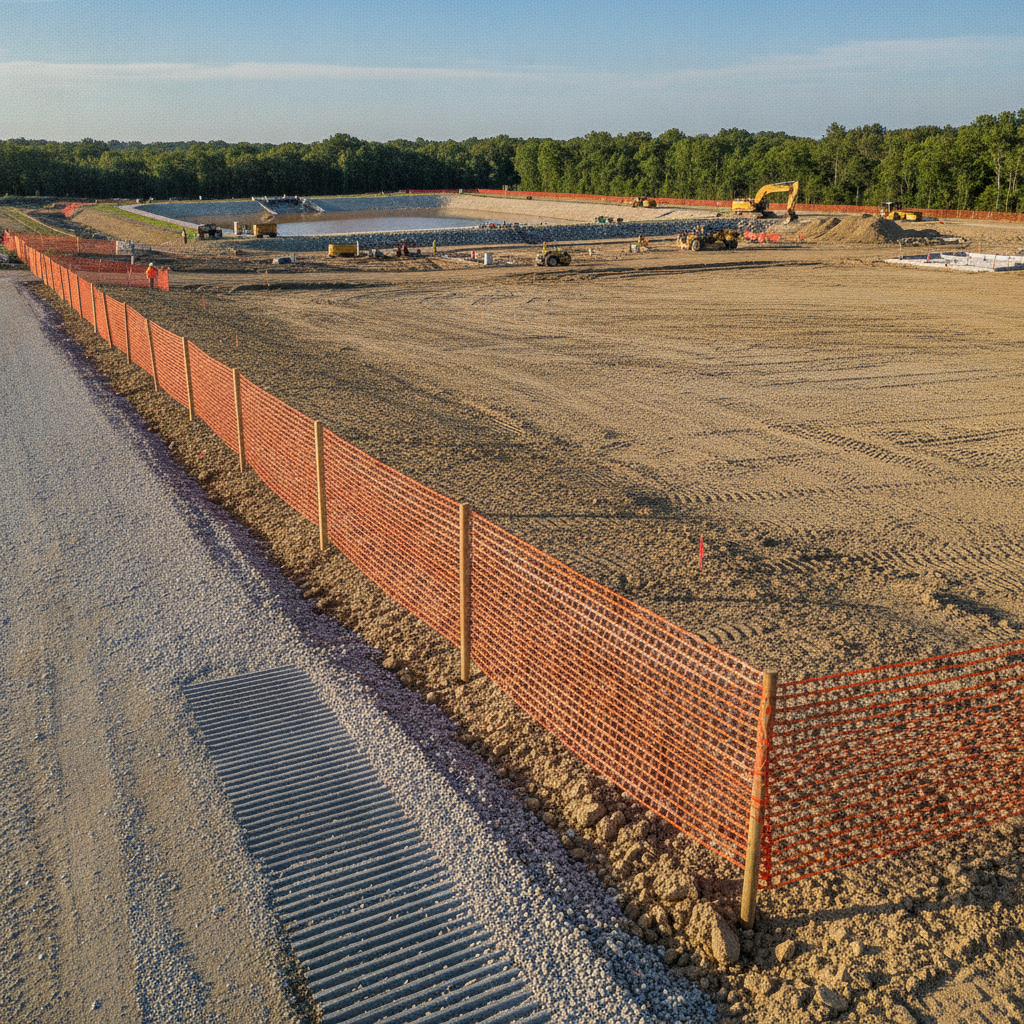
Unlike typical commercial projects, data center campuses are defined by their immense scale. The initial phase often involves grading the entire site, creating vast areas of exposed soil that are highly susceptible to erosion from wind and rain. The sheer volume of earth moved, the creation of deep utility trenches, and the long duration of construction activities amplify the erosion potential and the challenge of controlling sediment. This scale dictates a different approach to ESC. Standard perimeter controls may be insufficient to manage the vast drainage areas and runoff volumes. The logistics of maintaining controls over hundreds of acres require a comprehensive strategy that anticipates construction sequencing and adapts to changing site conditions. Effective stormwater management on these sites depends on a system of large, engineered controls rather than just isolated, passive measures. The success of the project hinges on the ability of the civil engineering team to design a system that is both effective and practical to implement and maintain throughout the project’s life.
Navigating the Regulatory Framework: NPDES and Construction General Permits
Comparison of Key Erosion and Sediment Control BMPs
| BMP Type | Primary Function | Ideal Application (Scale/Slope) | Key Design Consideration |
|---|---|---|---|
| Silt Fence / Super Silt Fence | Perimeter control for sheet flow | Small drainage areas (< 0.25 acre per 100 ft); low-gradient slopes | Must be trenched in; not for concentrated flow; requires frequent inspection. |
| Sediment Basin | Detain and treat concentrated flow | Large drainage areas (5+ acres) | Requires engineered design for volume, dewatering time, and emergency spillway. |
| Stabilized Construction Entrance | Prevent track-out of mud onto roadways | All points of construction ingress/egress | Requires specific aggregate size, thickness, and length; needs regular maintenance. |
| Erosion Control Blanket | Slope stabilization and seed protection | Steep slopes (steeper than 3H:1V) and channels | Must have intimate contact with soil; proper anchoring is critical to prevent undermining. |
| Temporary Seeding & Mulching | Surface stabilization for exposed soils | Any disturbed area inactive for 14+ days | Seed mix should be appropriate for the season and region; mulch prevents seed loss. |
The primary federal regulation governing stormwater discharges from construction sites is the National Pollutant Discharge Elimination System (NPDES) program, established under the Clean Water Act. For construction activities that disturb one or more acres of land, operators are typically required to obtain coverage under a Construction General Permit (CGP). A central requirement of the CGP is the development and implementation of a Stormwater Pollution Prevention Plan (SWPPP), a site-specific document that details the ESC measures, or Best Management Practices (BMPs), that will be used. The SWPPP is a living document that must be maintained throughout the construction process. It identifies all potential sources of pollution, describes the practices to be used to reduce pollutants in stormwater discharges, and outlines procedures for inspection, maintenance, and record-keeping. While the federal NPDES program sets a national baseline, specific implementation, permit thresholds, and design standards for BMPs vary by jurisdiction. Every project team must confirm the applicable standards with the local, state, regional, and federal authorities that hold review authority over the site. Failure to comply with these regulations can result in significant penalties and work stoppages, making expert guidance from experienced Civil Engineers essential for navigating the agency review process.
Perimeter Controls: The First Line of Defense
Perimeter controls are the foundational elements of any ESC plan, designed to intercept and filter sediment-laden sheet flow before it leaves the project boundary. For data center sites, the extensive length of the perimeter demands durable and correctly installed solutions. Common perimeter controls include silt fences, super silt fences, and reinforced filter berms. The selection depends on the contributing drainage area and slope steepness. It is critical to understand that these are not standalone solutions. Silt fences, for example, are designed for sheet flow, not concentrated flow, and can be quickly overwhelmed or undermined if placed in a ditch or swale. On a large campus, they serve as a final barrier along the site boundary, working in concert with upstream controls that manage the bulk of the runoff. Proper installation and regular maintenance are paramount to their effectiveness, as fallen or damaged fences provide no sediment containment and can concentrate flow, worsening erosion.
Managing Concentrated Flow: Sediment Basins and Traps
Given the large, graded pads and extensive road networks on data center campuses, managing concentrated stormwater flow is a primary challenge. Sediment basins are the most effective BMP for this purpose. These are large, engineered impoundments designed to detain runoff long enough for suspended soil particles to settle out before the water is discharged from the site. A properly designed basin includes a stable inlet, a storage volume calculated for the specific drainage design, and a controlled outlet structure, such as a skimmer or riser pipe, that releases the cleaner, clarified water from the surface. For smaller drainage areas within the larger site, sediment traps may be used. These are smaller, temporary ponds that function similarly to basins but are typically used for areas of five acres or less. The design of these features requires careful hydraulic capacity calculations to ensure they can handle runoff from significant storm events without being overtopped. These engineered systems are a cornerstone of effective stormwater management on large-scale projects.
Stabilization Techniques for Exposed Soils and Slopes
The most effective way to prevent erosion is to stabilize the soil surface itself. A comprehensive ESC plan includes measures for both temporary and permanent stabilization. As soon as grading is complete in a specific area, even if it will be disturbed again later, temporary seeding and mulching should be applied. This quickly establishes a root mat that holds soil in place and reduces the impact of raindrops, a primary cause of soil particle dislodgement. For steep slopes, which are common around large building pads and stormwater basins, more robust measures are necessary. Erosion control blankets, made of straw or coconut fiber, can be installed to protect the soil while vegetation establishes. In areas with highly erosive soils or significant concentrated flow, hard armoring solutions like riprap or turf reinforcement mats may be required for permanent slope stabilization. The goal is to minimize the duration of soil exposure across the entire project site through proactive stabilization.
Critical Site Management and Phasing Strategies
A successful ESC plan is not just a set of drawings; it is an operational strategy. Construction phasing is a key element, involving a deliberate sequence of construction activities to limit the amount of land disturbed at any one time. By stabilizing one area before moving on to the next, the overall erosion risk is significantly reduced. This requires close coordination between the land development team, the contractor, and the civil engineer. Other critical site management practices include establishing a single, stabilized construction entrance with coarse aggregate to knock mud and sediment off vehicle tires before they enter public roads. All storm drain inlets that could receive runoff from the site must be protected with filters to prevent sediment from entering the permanent drainage system. Finally, a plan for dust control, often involving water trucks, is essential for managing air quality and preventing wind erosion on large, exposed sites.
RSP Engineers’ Approach to Integrated ESC Planning
At RSP Engineers, we view erosion and sediment control as an integral part of the overall site design, not an afterthought. Our process begins with a thorough site assessment, including analysis of topography, soil types, and drainage patterns. We work closely with our clients to understand the project’s construction sequence and develop a phased ESC plan that aligns with the master site plan design. Our team of experienced engineers prepares a comprehensive SWPPP that meets all regulatory requirements and provides clear, constructible details for the contractor. Our services extend beyond design into the construction phase. We provide support for pre-construction meetings, review contractor submittals, and can perform compliance inspections to ensure BMPs are installed and maintained correctly. This integrated approach, combining expert design with practical construction-phase support, helps ensure compliance and protect our clients’ investments. We are one of the leading Civil Engineering firms specializing in mission-critical facilities.
Common Challenges in Data Center ESC Implementation
Even the best-designed ESC plan can fail if not properly implemented and maintained. One of the most common issues is inadequate maintenance of BMPs. Silt fences fill with sediment, basins accumulate silt that reduces their capacity, and construction entrances become contaminated with mud. A regular inspection and maintenance schedule, as required by the NPDES permit, is essential to keep the system functioning. Another challenge is contractor education and buy-in. It is crucial that the site superintendent and all subcontractors understand the importance of the ESC measures and their role in maintaining them. Finally, adapting to major storm events is a significant challenge. A large, un-stabilized site is extremely vulnerable. A proactive plan includes monitoring weather forecasts and taking steps to reinforce controls and stabilize exposed areas before a major storm arrives.
Partner with RSP Engineers for Your Data Center Project
Navigating the complexities of erosion and sediment control for a large-scale data center campus requires specialized expertise. The team at RSP Engineers provides comprehensive site engineering services, from initial due diligence and master planning to detailed civil engineering design and construction administration. We develop practical, compliant, and cost-effective ESC and stormwater management solutions tailored to the unique demands of mission-critical facilities. Contact us today to discuss how our experience can help ensure your project’s success through effective planning and permitting.
Conclusion: Proactive Control for Mission-Critical Development
For data center developers, effective erosion and sediment control is a foundational element of successful site development. The immense scale of these projects necessitates a sophisticated, engineered approach that goes far beyond basic perimeter fencing. By integrating a robust ESC strategy into the project from the outset, developers can ensure stormwater compliance, protect the environment, and avoid the costly delays and liabilities associated with regulatory violations. A proactive partnership with an experienced engineering consultant is the key to managing this critical aspect of mission-critical construction.
FAQs
-
A Stormwater Pollution Prevention Plan (SWPPP) is a site-specific document required under the NPDES Construction General Permit for projects disturbing one or more acres. It identifies potential pollution sources and details the erosion control, sediment control, and other best management practices (BMPs) that will be implemented to protect water quality during construction.
-
Inspection frequency is dictated by the project’s NPDES permit. Typically, inspections are required at least once every 7 or 14 calendar days (depending on the permit) and within 24 hours of a significant rainfall event (e. g. , 0. 5 inches or more). These requirements can vary by jurisdiction, so it’s critical to follow the specific terms of the applicable permit.
-
Yes, construction phasing is a highly effective strategy for both managing environmental risk and controlling costs. By limiting the area of disturbance at any given time, you reduce the scale and quantity of ESC measures needed, which can lower material and maintenance expenses. This requires careful upfront planning and coordination.