
Contaminated Soil Management During Data Center Construction
A civil engineering guide for data center developers on managing contaminated soil during construction, covering characterization, disposal, reuse, and regulatory compliance.
Initial Site Assessment and Due Diligence
The most effective way to manage contaminated soil is to identify it before construction begins. Comprehensive environmental due diligence is the first line of defense. A Phase I Environmental Site Assessment (ESA) is a non-intrusive investigation into the historical use of a property to identify potential or recognized environmental conditions. This research can uncover past activities, such as industrial operations, underground storage tanks, or improper waste disposal, that may have resulted from contamination. If a Phase I ESA identifies potential risks, a Phase II ESA is performed. This involves collecting and analyzing soil and groundwater samples to confirm the presence, type, and extent of contamination. The data gathered during this phase is foundational for all subsequent management decisions. For data center projects, where large-scale earthwork is common, understanding the vertical and horizontal limits of contamination allows the civil engineering team to optimize the site plan design and grading to minimize the volume of impacted soil that must be handled, which can yield significant cost savings.
Characterization and Waste Profiling of Contaminated Media
Contaminated Soil Management Options: A Comparison
| Feature | On-Site Reuse (Under an SMP) | Off-Site Disposal |
|---|---|---|
| Regulatory Approval | Requires a detailed Soil Management Plan (SMP) and approval from environmental agencies. Often involves long-term monitoring or deed restrictions. | Requires waste profiling and acceptance by a licensed facility. Simpler approval process but strict documentation is mandatory. |
| Cost Profile | Lower transportation and disposal fees. Higher upfront costs for planning, agency negotiation, and potential on-site treatment. | High costs for transportation (per truckload) and disposal (per ton). Costs can escalate quickly with large volumes or hazardous classifications. |
| Project Schedule Impact | Can involve lengthy agency review and approval periods for the SMP, potentially delaying earthwork. | Faster to implement once a disposal facility is approved. However, can be slowed by trucking logistics and facility availability. |
| Long-Term Liability | Owner may retain liability for contamination left on-site, managed under institutional or engineering controls. | Liability is transferred to the disposal facility upon acceptance, provided all manifesting and regulations were followed (often called “cradle-to-grave” liability). |
| Site Logistics | Requires significant space on-site for stockpiling, segregation, and potential treatment activities. May conflict with construction sequencing. | Frees up site space quickly as soil is removed. Requires a well-coordinated trucking plan to avoid disrupting other construction activities. |
Once contamination is confirmed, the soil and any impacted groundwater must be thoroughly characterized. This process involves detailed laboratory analysis to identify the specific contaminants and their concentrations. This data is used to create a waste profile, which is a technical document required by disposal facilities to determine if they can legally and safely accept the material. Common analyses include tests for volatile organic compounds (VOCs), semi-volatile organic compounds (SVOCs), heavy metals, and petroleum hydrocarbons. The results of the waste characterization dictate the management pathway. Soils with low levels of certain contaminants might be suitable for reuse on-site under a specific plan, while soils exceeding regulatory thresholds may be classified as non-hazardous or even hazardous waste, requiring disposal at a specially licensed facility. Permitting requirements for soil management and disposal vary by jurisdiction, and every project team should confirm the applicable standards with the local, state, regional, and federal authorities that hold review authority over the site. A qualified environmental professional is essential for navigating these complex classifications and ensuring full compliance.
On-Site Management: Segregation and Stockpile Controls
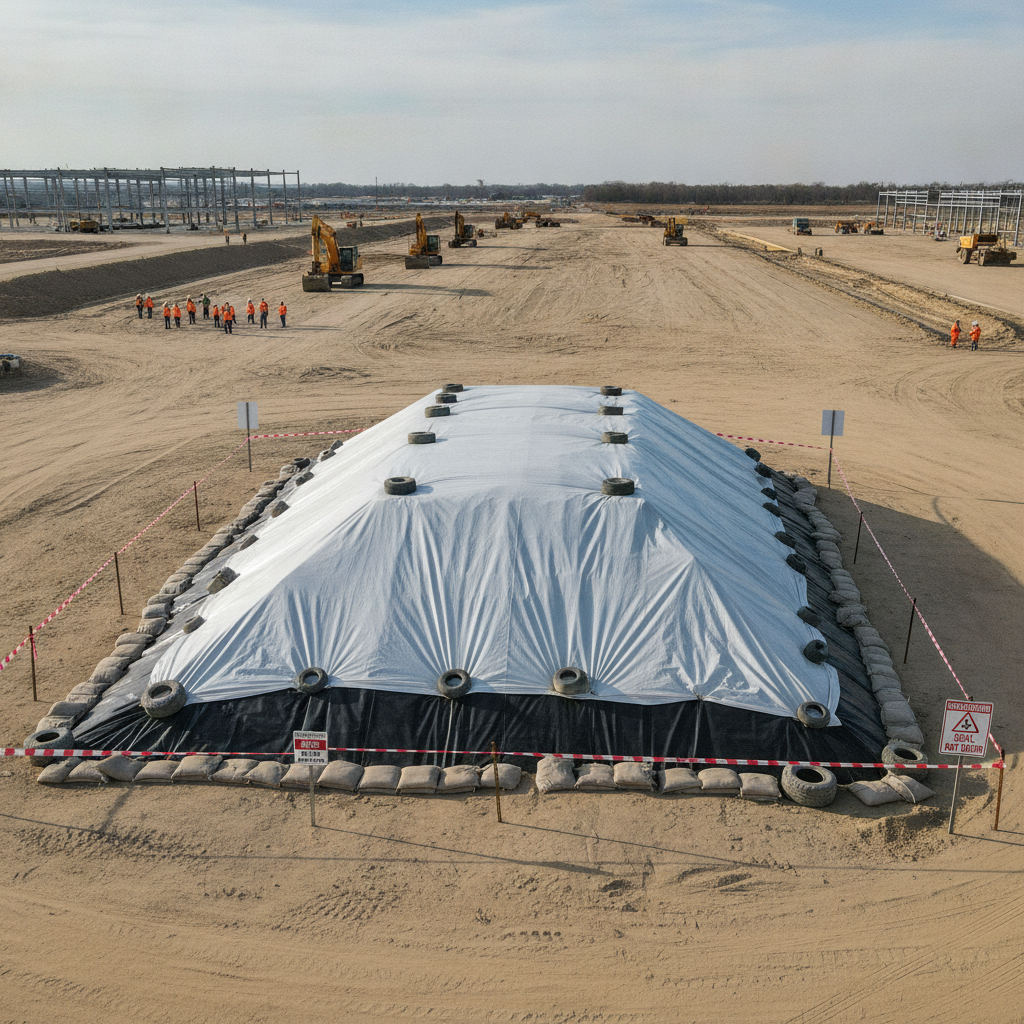
Proper on-site management is crucial to prevent the spread of contamination and protect workers and the environment. Once contaminated soil is excavated, it must be carefully segregated from clean soil. This prevents cross-contamination, which can dramatically increase the volume of soil requiring special handling and disposal, leading to significant cost overruns. Designated, clearly marked stockpile areas should be established for impacted materials. Effective stockpile management includes several key best practices. Stockpiles should be placed on an impermeable liner to prevent contaminants from leaching into the ground. They must also be covered with heavy-duty plastic sheeting to prevent wind-blown dust and to stop rainwater from infiltrating the pile, which can generate contaminated stormwater runoff. Berms or other erosion control measures should be installed around the perimeter to contain any potential runoff. These controls are a critical part of the site’s overall stormwater management and pollution prevention plan.
Transportation, Manifesting, and Regulatory Compliance
When contaminated soil must be removed from a site, its transportation and disposal are tightly regulated. Federal and state laws govern the movement of waste materials to protect public health and the environment. Each truckload of contaminated soil leaving the site must be accompanied by a waste manifest. This document is a chain-of-custody form that tracks the waste from its point of origin (the “generator”) to its final destination at a permitted disposal facility. This system creates a “cradle-to-grave” record of the waste’s journey. The generator, transporter, and disposal facility must all sign the manifest, and copies must be retained for years as proof of proper disposal. Using only licensed transporters and approved disposal facilities is non-negotiable. Failure to comply with RCRA regulations and other transportation rules can result in severe penalties, fines, and legal liability for the property owner. A Professional Engineer or environmental consultant must oversee this process to ensure every step is documented and compliant.
Managing Contaminated Groundwater and Dewatering
Excavations for data center foundations and utility trenches often extend below the water table, requiring construction dewatering. If the groundwater is also contaminated, this process becomes significantly more complex. Pumping contaminated groundwater and discharging it directly to a storm sewer or waterway is illegal and environmentally harmful. The extracted water must be managed as a contaminated waste stream. Management typically involves pumping the water to on-site storage tanks, followed by treatment to remove contaminants before discharge or disposal. On-site water treatment systems can range from simple filtration to complex chemical or biological processes, depending on the contaminants present. Any discharge of treated water requires a permit, such as one issued under the National Pollutant Discharge Elimination System (NPDES) program, which sets strict effluent limitations on contaminant levels. The permitting and operation of these systems require specialized expertise and careful coordination with regulatory agencies.
Worker Health and Safety Protocols (OSHA Compliance)
Protecting the health and safety of construction workers is a top priority on any site with environmental contamination. The Occupational Safety and Health Administration (OSHA) has specific regulations for working at hazardous waste sites, known as the HAZWOPER (Hazardous Waste Operations and Emergency Response) standard. These regulations mandate specialized training for workers, medical monitoring, and the development of a site-specific Health and Safety Plan (HASP). The HASP outlines the known hazards, required personal protective equipment (PPE), air monitoring protocols, and emergency procedures. It establishes site exclusion zones to control access to contaminated areas and specifies decontamination procedures for workers and equipment leaving these zones. Continuous air monitoring may be required to ensure that vapors or dust from the contaminated soil do not exceed safe exposure limits for workers or migrate off-site.
The RSP Engineers Approach to Contaminated Media Management
At RSP Engineers, we address contaminated soil and groundwater as an integrated part of the overall site development process. Our approach combines rigorous environmental science with practical civil engineering solutions. We begin by helping clients conduct thorough due diligence to identify risks early. When contamination is present, we develop comprehensive soil management plans that align with the project’s construction sequencing and budget. Our team of engineers and environmental specialists coordinates directly with regulatory agencies to secure necessary permits and approvals efficiently. During construction, we provide on-site oversight and construction administration services to ensure the management plan is implemented correctly, from stockpile controls to waste manifesting. By embedding environmental compliance within the core engineering design, we help data center developers mitigate risk, avoid costly surprises, and deliver their mission-critical projects on schedule.
Common Pitfalls in Contaminated Soil Projects
Even with a plan, projects can encounter issues. Some common pitfalls include underestimating the volume of impacted soil due to insufficient initial characterization, leading to budget and schedule overruns. Poor stockpile management can cause clean soil to become cross-contaminated, needlessly increasing disposal costs. Another frequent issue is incomplete or inaccurate regulatory documentation, such as manifests, which can create long-term liability risks. Finally, the most significant pitfall is the failure to have a contingency plan for discovering unexpected contamination in an area previously thought to be clean, which can bring work to a halt until a management strategy is developed and approved.
Partner with RSP Engineers for Your Mission-Critical Development
Navigating the complexities of contaminated soil management requires a partner with deep expertise in both civil engineering and environmental compliance. The team at RSP Engineers provides the integrated site engineering services needed to address these challenges proactively. From initial due diligence and permitting to developing practical soil management plans and providing construction-phase support, we help protect your project from the risks of unforeseen environmental conditions. Contact us to discuss how we can support your next data center development.
Conclusion: Proactive Management is Key to Project Success
Successfully managing contaminated soil during data center construction hinges on a proactive, systematic, and well-documented approach. Early identification through due diligence, proper characterization, and a clear management strategy are essential for controlling costs and maintaining the project schedule. By integrating environmental compliance into the broader civil engineering and site development framework, developers can effectively mitigate one of the most significant subsurface risks. This diligence protects not only the project investment but also the health of the workers and the surrounding community.
FAQs
-
A soil management plan is typically required whenever contaminated soil will be excavated and either reused on-site or disposed of off-site. It is a formal document that outlines procedures for characterization, handling, stockpiling, transport, and final placement or disposal, and is often required for agency review and approval.
-
The property owner or developer, as the ‘generator’ of the waste, typically retains ultimate responsibility for the contaminated soil from the point of excavation until its final, proper disposal at a licensed facility. This is known as cradle-to-grave liability and underscores the importance of proper documentation and using reputable transport and disposal partners.
-
Contaminated soil can significantly impact a schedule. Delays can arise from the time needed for laboratory analysis, agency review of management plans, securing disposal facility approval, and the logistics of soil transport. Proactive planning and early characterization during the due diligence phase are the best ways to minimize these delays.