
Equipment Delivery Planning for Phased Data Center Campuses
A guide to civil engineering and logistics planning for equipment deliveries on phased data center campuses. Learn how to manage haul routes, protect live facilities, and ensure project continuity.
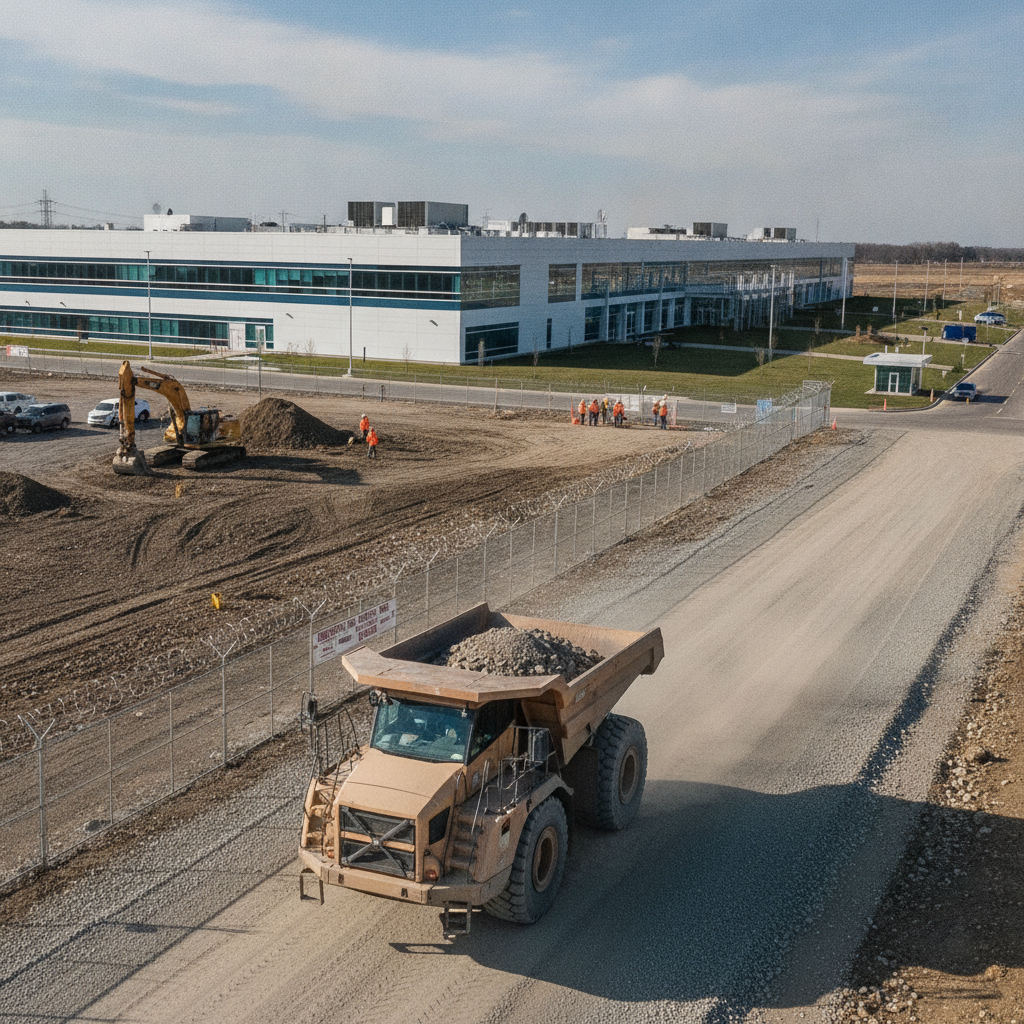
Establishing a Master Logistics and Circulation Plan
The foundation of a successful phased delivery strategy is a campus-wide master logistics and circulation plan. This plan must be developed during the initial site plan design phase, long before the first piece of equipment is ordered. Its primary goal is to establish a clear and enforceable separation between the construction environment and the secure, operational environment. This involves creating completely distinct traffic patterns for staff, visitors, and operational deliveries versus construction vehicles and equipment haulers. Key elements of this master plan include designated construction access points separate from the main campus entrance, secure check-in and screening protocols for all construction traffic, and a network of internal haul routes. The civil engineering team designs these routes to avoid interference with operational buildings, their critical utility feeds, and employee parking areas. This initial planning prevents costly and disruptive logistical conflicts as the campus grows and subsequent phases commence.
Designing Dedicated Construction Haul Routes
Phased Delivery Route Planning Comparison
| Logistics Element | Phase 1 (Initial Build) | Phase 2 (Expansion) | Operational Phase (Steady State) |
|---|---|---|---|
| Primary Access Point | Dedicated, temporary construction entrance off main road, separate from future main entrance. | New dedicated construction entrance for Phase 2, or re-purposed Phase 1 entrance if location is strategic. Phase 1 entrance becomes operational only. | All construction entrances removed and restored. Access is through permanent, secure operational entrances only. |
| Internal Haul Route | Engineered haul roads on undeveloped portions of the site, connecting entrance to Phase 1 pad. | New haul routes designed to bypass the now-operational Phase 1 facility and its infrastructure. | No haul routes exist. All roadways are finished pavement for operational traffic. |
| Laydown & Staging Area | Large, flexible area on a future phase's footprint. | Located on the footprint of a future Phase 3, away from Phase 1 operations. May be smaller and more constrained. | No dedicated construction staging areas. Designated zones for operational deliveries only. |
| Pavement Specification | Heavy-duty aggregate base or temporary asphalt designed for extreme loads. | Similar heavy-duty specification, with added protection (e.g., mats) where routes cross near operational utilities. | Standard-duty and heavy-duty asphalt/concrete designed for cars, trucks, and maintenance vehicles per final design. |
| Security Protocol | Construction-specific security gate with contractor badging and vehicle inspection protocols. | Separate Phase 2 construction gate. Phase 1 security transitions to permanent operational protocol. | Centralized, high-security operational checkpoints. No construction access permitted. |
| Utility Protection Measures | Routes planned to avoid future utility corridors. Temporary crossings are engineered and protected. | Strict avoidance of live Phase 1 utility corridors. May require ground penetrating radar (GPR) scans to verify locations. | All utilities are buried and protected under final pavement and landscaping. |
Construction haul routes are not simply dirt paths; they are engineered infrastructure designed to withstand extreme loads. Deliveries of major equipment like multi-ton generators, chillers, and electrical switchgear require a robust pavement section far exceeding that of a standard roadway. The civil engineering design must account for the specific weight and turning radii of the largest anticipated delivery vehicles, ensuring the route can support them without failure. This often involves a detailed Geotechnical Engineering analysis to determine subgrade strength and specify appropriate base and pavement materials. Furthermore, these routes must be designed to protect finished site elements. A heavy haul route placed too close to a completed building can cause damaging vibrations, while a truck driving over a finished curb or sidewalk can lead to expensive repairs. The design must also carefully navigate and protect underground utilities. A well-designed plan specifies heavy-duty pavement sections for haul routes, reinforced culverts for crossing drainage swales, and clear standoff distances from sensitive infrastructure, ensuring the integrity of both the new and existing site development.
Regulatory Compliance and Permitting for Temporary Access
Establishing new access points and temporary construction routes often requires coordination with and approval from various regulatory bodies. A project may need a specific permit from the local transportation authority to create a new temporary entrance off a public road, which involves demonstrating safe sight lines and traffic control measures. The design of these access points must adhere to established standards for vehicle acceleration and deceleration lanes to ensure public safety. The overall site engineering services must also address how these temporary routes impact the site’s stormwater management system. Changes to grading and the addition of compacted haul roads can alter drainage patterns and require updates to the project’s Stormwater Pollution Prevention Plan (SWPPP) under the federal NPDES program. Permitting requirements vary by jurisdiction, and every project team should confirm the applicable standards with the local, state, regional, and federal authorities that hold review authority over the site. Proactive engagement with these agencies is a critical step in avoiding delays to the permitting and construction schedule.
Sequencing Long-Lead Equipment Deliveries
The arrival of long-lead equipment is a milestone event that requires precise coordination between the construction schedule and the civil engineering site readiness. A multi-megawatt generator arriving before its concrete pad is cured and accessible creates a significant logistical bottleneck. The master plan must integrate the equipment delivery schedule with the site work construction sequence. This ensures that the building pad, access roads, and any necessary crane pads are fully prepared to receive the equipment the moment it arrives on site. This coordination often necessitates the design of dedicated laydown and staging areas. These zones provide a safe, secure location to temporarily store equipment if it arrives ahead of schedule or if installation needs to be delayed. The design of these areas must consider load-bearing capacity, security fencing, and proximity to the final installation point. Proper utility coordination is also essential to ensure that the path from the laydown area to the building is clear of any overhead or underground obstructions.
Protecting Operational Facilities and Live Infrastructure
During a phased expansion, the highest priority is protecting the uptime and integrity of the existing, operational data centers. The logistics plan must incorporate multiple layers of protection to mitigate risks from adjacent construction. This begins with establishing a clear, physically-demarcated construction boundary using fencing and jersey barriers. Haul routes must be planned with extreme care to avoid crossing or running parallel to critical underground infrastructure, such as fiber optic duct banks, primary power feeds, or chilled water lines serving the live facilities. Beyond physical routing, the plan should include protocols for dust, noise, and vibration control. Continuous monitoring may be required to ensure that construction activities do not exceed acceptable thresholds that could impact sensitive electronic equipment. A robust risk mitigation strategy, developed by experienced Civil Engineers, is non-negotiable for ensuring operational continuity and protecting the owner’s investment in the active phases of the campus.
Dynamic Route Planning as Campus Phases Complete
A data center campus is a living site, and the logistics plan must be a dynamic document that evolves with it. As Phase 1 transitions from construction to a fully operational facility, the circulation plan must be immediately updated. The roads and access points once used for Phase 1 construction traffic must be decommissioned, restored to their final condition, and integrated into the operational traffic network. Simultaneously, the haul routes and logistics for the next phase of site development must be activated. This transition requires clear communication and re-training for all contractors, vendors, and security personnel. Signage must be updated across the campus to direct traffic according to the new circulation plan. This process of dynamically managing and updating the logistics plan is repeated for each phase of the build-out, ensuring that the separation between construction and operations is maintained throughout the campus’s multi-year development lifecycle. This is a key component of successful construction administration on complex sites.
The RSP Engineers Approach to Phased Logistics Planning
At RSP Engineers, we treat logistics planning as an integral part of the civil engineering design process from day one. Our approach begins with developing a comprehensive master plan that anticipates the entire campus lifecycle. We utilize advanced vehicle turning simulation software to model the paths of oversized delivery vehicles, ensuring that our proposed haul routes are viable and safe. This allows us to identify and resolve potential conflicts with buildings, utilities, and terrain early in the design phase. Our team integrates the logistics plan directly into the permit submittals, providing clear phasing diagrams that demonstrate to the authority having jurisdiction how traffic will be safely managed at every stage. We work closely with the client, architects, and construction managers to ensure our drainage design, utility layouts, and phasing boundaries support a seamless and conflict-free construction process, protecting our clients’ operational assets and project timelines.
Common Challenges in Data Center Delivery Logistics
Even with careful planning, phased data center projects can encounter logistical hurdles. A common issue is underestimating the pavement requirements for temporary haul roads, leading to route failure, project delays, and costly repairs. Another frequent challenge is the failure to secure adequate off-site staging areas for equipment that arrives before the site is ready, causing congestion and security issues. Poor communication between the general contractor, various subcontractors, and equipment vendors can lead to missed delivery windows and inefficient sequencing. Furthermore, neglecting to update the Stormwater Pollution Prevention Plan (SWPPP) as haul routes and laydown areas are modified can lead to environmental compliance violations. Finally, a failure to properly decommission construction access points and restore the landscape after a phase is complete can compromise the site’s long-term security and aesthetics. Anticipating these challenges is a key function of experienced site engineering services.
Partner with RSP for Mission-Critical Site Logistics
Successfully navigating the complexities of a phased data center build-out requires an engineering partner who understands the critical importance of logistics. The team at RSP Engineers provides expert civil engineering, land development, and utility coordination services tailored to the unique demands of mission-critical facilities. We develop robust, forward-thinking site plans that de-risk your expansion and protect your operations. Contact RSP Engineers today to ensure your project’s logistics are engineered for success from the ground up.
Conclusion
In conclusion, a sophisticated equipment delivery plan is not an afterthought but a foundational element of successful, phased data center development. By integrating logistics into the initial civil engineering and site development process, project owners can ensure a safe and efficient construction environment that coexists with secure, uninterrupted operations. Proactive planning for haul routes, equipment sequencing, and dynamic adjustments protects critical infrastructure, maintains project schedules, and is essential to the successful scaling of mission-critical campuses. This strategic approach to construction logistics is the key to building for the future without compromising the present.
FAQs
-
Planning for oversized loads involves a detailed route analysis, often extending to public roads. We use vehicle simulation software to verify turning radii and clearances. The on-site haul route design includes thickened pavement sections and specially designed crane pads engineered to support the immense point loads during offloading and placement.
-
Crossing live utility corridors is avoided whenever possible. If unavoidable, it requires extensive protection measures. This may involve using ground penetrating radar to verify utility depths, followed by the installation of steel plating or specialized bridging mats to distribute the load and prevent any damage to the critical underground utilities below.
-
Typically, the general contractor is responsible for the maintenance of all temporary construction infrastructure, including haul roads. This is stipulated in the construction documents prepared by the civil engineering team. Maintenance includes grading, dust control, and repairing any damage to ensure the route remains safe and functional throughout the construction phase.