
Drilled Shaft Applications for Data Center Construction
Explore the advantages of drilled shaft foundations for data center construction. Learn about applications in variable soils, rock sockets, low-vibration installation, and integrity testing for missio
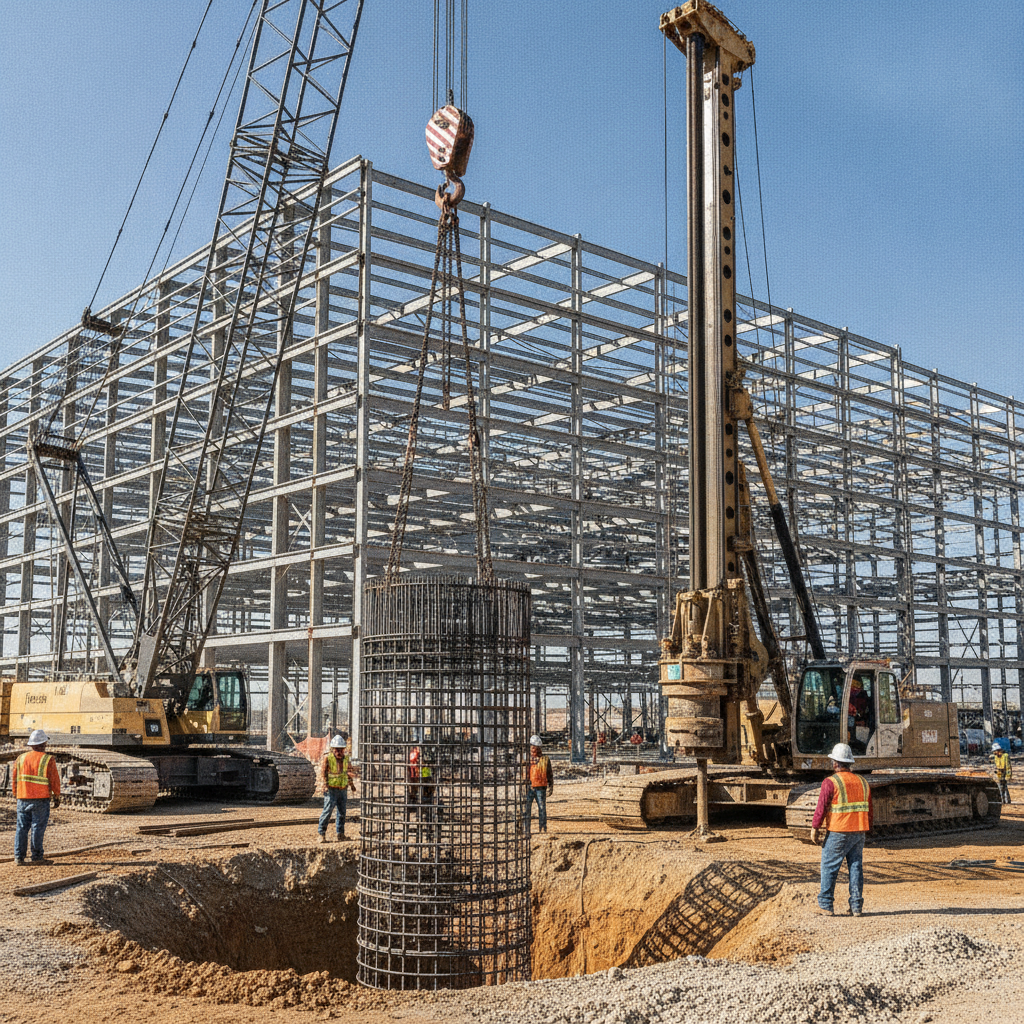
Understanding Drilled Shafts in Geotechnical Engineering
A drilled shaft is a deep foundation element constructed by excavating a cylindrical hole of a specified diameter and depth, placing a reinforcing steel cage, and filling the excavation with high-strength concrete. The entire process is guided by a comprehensive Geotechnical soil report, which provides the critical data on soil layers, rock depth, and groundwater conditions. The analysis performed by a qualified Geotechnical engineer is the first step in determining if drilled shafts are the appropriate foundation system for a given site. The primary function of a drilled shaft is to transfer immense loads from the building’s columns to a subsurface layer with adequate bearing capacity. This load transfer can occur through two primary mechanisms: end bearing, where the load is transferred to the material at the bottom of the shaft, and skin friction, where the load is transferred to the surrounding soil or rock along the shaft’s vertical surface. In many designs, a combination of both mechanisms is utilized to achieve the required capacity, ensuring long-term stability for the data center structure.
Adapting to Variable Subsurface Conditions
Comparison of Deep Foundation Systems for Data Centers
| Feature | Drilled Shafts | Driven Piles | Auger-Cast Piles |
|---|---|---|---|
| Vibration Generation | Very Low: Drilling process generates minimal ground vibration, ideal for sites near operating facilities. | High: Impact or vibratory hammers create significant ground vibrations. | Low to Moderate: Continuous flight auger creates less vibration than driven piles. |
| Noise Level | Moderate: Noise is primarily from the drill rig engine and equipment. | Very High: Hammer impacts generate loud, repetitive noise. | Low: Relatively quiet installation process. |
| Typical Load Capacity | Very High: Can be designed for thousands of tons per shaft, especially with rock sockets. | Moderate to High: Capacity depends on pile size, material, and soil resistance. | Moderate: Generally lower capacity than drilled shafts or large driven piles. |
| Soil/Site Adaptability | Excellent: Highly adaptable to variable soils, obstructions, and rock. Depth is easily adjusted. | Moderate: Can be difficult to drive in dense soils or through obstructions like boulders. | Good: Effective in many soil types but can be challenging in caving sands or with high water tables. |
| Schedule Impact | Slower installation per element, but fewer elements are often needed. | Fast installation per element, but requires mobilization of large pile driving equipment. | Fast installation, often faster than drilled shafts for similar depths. |
| Quality Assurance | Requires extensive inspection and integrity testing (e.g., CSL) to verify integrity. | Driving records (blow counts) provide an initial indication of capacity. Load tests are common. | Requires careful monitoring of grout volume and pressure during installation. |
One of the most significant advantages of drilled shafts is their adaptability to highly variable subsurface conditions, which are common on large-scale site development projects. A single data center campus can span areas with differing soil profiles, including layers of loose sand, soft clay, and dense gravel. A Geotechnical engineer can tailor the depth and diameter of each drilled shaft to found on the most suitable bearing stratum, ensuring consistent performance across the entire site. This flexibility is a key differentiator from other deep foundation systems that may be less effective in non-uniform geologies. This adaptability minimizes risks associated with unexpected ground conditions discovered during construction. If a planned bearing layer is found to be weaker than anticipated based on the initial Soil boring test, the shaft can often be extended deeper to reach a more competent layer without a major redesign. This in-field adjustability provides a level of resilience that is invaluable for keeping complex data center construction projects on schedule. The design must also adhere to all applicable building codes and standards. Foundation design criteria and inspection requirements vary by jurisdiction, and every project team must confirm the applicable standards with the local, state, regional, and federal authorities that hold review authority over the site.
Rock Sockets for Ultimate High-Capacity Bearing
For sites underlain by competent bedrock, drilled shafts can be designed with rock sockets to achieve exceptionally high load capacities. A rock socket is created by extending the shaft excavation several feet into the bedrock, creating a permanent, high-strength connection. This technique allows the structural loads to be transferred directly into the rock mass, providing a foundation with minimal potential for settlement. This is ideal for supporting the heavy, vibration-sensitive equipment found in data centers. Creating a rock socket requires specialized drilling equipment, such as core barrels and rock augers, to penetrate the hard material. The quality of the rock and the integrity of the socket interface are critical. The Geotechnical engineer and structural engineer work together to specify the required socket depth and diameter based on the rock’s compressive strength and the building’s load demands. Verification of the rock quality during drilling is a key part of the construction administration process, ensuring the as-built condition meets the design intent.
Ensuring Shaft Stability: Casing and Slurry Methods
Maintaining the stability of the excavated hole, especially in unstable soils or below the groundwater table, is critical to constructing a sound drilled shaft. Two primary methods are used: temporary or permanent steel casing, and drilling slurry. Casing involves advancing a large steel pipe into the ground as the hole is excavated, which physically prevents the surrounding soil from collapsing inward. The casing can be removed as concrete is placed or, in some cases, left in place permanently. Alternatively, drilling slurry (typically a mixture of water and bentonite or polymer) can be used to fill the excavation. The fluid pressure of the slurry counteracts the pressure from the surrounding soil and groundwater, keeping the hole open and stable until concrete is placed. The choice between casing and slurry depends on factors like soil type, groundwater conditions, cost, and contractor means and methods. Both techniques are essential tools in the civil engineering toolkit for successful deep foundation installation.
The Low-Vibration Advantage for Mission-Critical Expansions
Perhaps the most compelling reason to select drilled shafts for data center construction, particularly for expansions or infill projects, is the low-vibration nature of the installation process. Live data centers are extremely sensitive to ground vibrations, which can disrupt or damage operating servers, storage arrays, and networking equipment. The percussive energy from driven pile hammers can easily exceed acceptable vibration thresholds for mission-critical facilities. In contrast, the rotary drilling process for drilled shafts generates minimal ground vibration, allowing construction to proceed safely adjacent to active data halls. This makes drilled shafts the preferred solution for phased build-outs and campus expansions where operational continuity is non-negotiable. This risk mitigation is a critical factor for facility owners and operators, justifying the selection of drilled shafts even if other systems appear less costly upfront. This is a key consideration in the overall site plan design and construction phasing plan.
RSP Engineers’ Approach to Drilled Shaft Foundation Design
At RSP Engineers, our process for designing drilled shaft foundations is collaborative and data-driven. We work closely with the project’s Geotechnical engineer to thoroughly analyze the subsurface data from the Geotechnical soil report and select the optimal foundation depths and design parameters. Our Civil engineers integrate the foundation plan seamlessly with the overall site plan design, considering grading, utilities, and stormwater management. Our team provides detailed construction documents that specify shaft dimensions, reinforcement details, concrete requirements, and quality control protocols. During construction, we offer comprehensive Construction Management Services, including submittal reviews, site observation, and coordination with the contractor and third-party testing agencies. This hands-on approach ensures that the installed foundations comply with the design intent and provide a reliable base for the mission-critical facility. We are one of the leading Civil Engineering firms specializing in this type of complex project.
Common Challenges in Drilled Shaft Installation
While highly effective, drilled shaft installation is a complex process with potential challenges. A proactive civil engineering and construction team can anticipate and mitigate these issues. Common challenges include encountering unexpected subsurface obstructions like old foundations or boulders, which can slow drilling progress. Significant groundwater infiltration can compromise hole stability and complicate concrete placement, requiring robust dewatering or slurry management plans. Logistical challenges are also a factor. The large-diameter shafts used for data centers require massive volumes of concrete, demanding well-coordinated, continuous pours to ensure monolithic placement. Proper alignment and centering of the heavy reinforcing steel cage within the excavation is also critical to achieving the specified structural performance. Experienced field supervision and quality control are essential to overcoming these hurdles and ensuring a successful installation.
Partner with RSP Engineers for Your Data Center Foundation
Designing and overseeing the construction of foundations for a mission-critical data center requires specialized expertise. The team at RSP Engineers has the experience to guide your project from initial site selection and Geotechnical Engineering coordination through final construction. We provide expert civil engineering, robust site development services, and detailed foundation design to ensure your facility is built on a solid and reliable base. Contact us to discuss how our site engineering services can support the success of your next data center project.
Conclusion
Drilled shaft foundations represent a premier engineering solution for the unique challenges of data center construction. Their ability to provide extremely high load capacity, adapt to diverse and difficult ground conditions, and be installed with minimal vibration makes them an ideal choice for these sensitive, high-value facilities. Successful implementation hinges on a thorough Geotechnical Engineering investigation, detailed civil engineering design, and rigorous quality control during construction. By partnering with an experienced engineering firm, developers can ensure the foundation of their data center is as resilient and dependable as the technology it protects.
FAQs
-
A Geotechnical soil report is the foundational document for all deep foundation design. It identifies the soil layers, their strength, the depth to bedrock, and groundwater levels. This data allows the Geotechnical engineer to determine if shallow foundations are inadequate and to calculate the required depth and diameter for drilled shafts to achieve the necessary load capacity through end bearing or skin friction.
-
Tolerances are specified in the project documents and often follow industry standards. A typical tolerance for the center location of a shaft might be a few inches from the planned location, while the verticality tolerance is often around 1-2% of the shaft’s length. These tight tolerances are crucial for ensuring the building columns align correctly with the foundation elements.
-
Yes, drilled shafts are an excellent foundation choice for resisting high lateral loads from seismic events or wind. The large diameter and deep embedment provide significant lateral stiffness and capacity. The reinforcing steel cage is specifically designed by the structural engineer to handle the tension and shear forces associated with these demanding environmental loads, following the requirements of the applicable building code compliance standards.