
Generator Foundation Design for Data Center Facilities
A comprehensive guide to generator foundation design for data centers, covering dynamic loads, vibration isolation, seismic anchorage, MEP coordination, and environmental compliance.
Static vs. Dynamic Load Considerations in Foundation Design
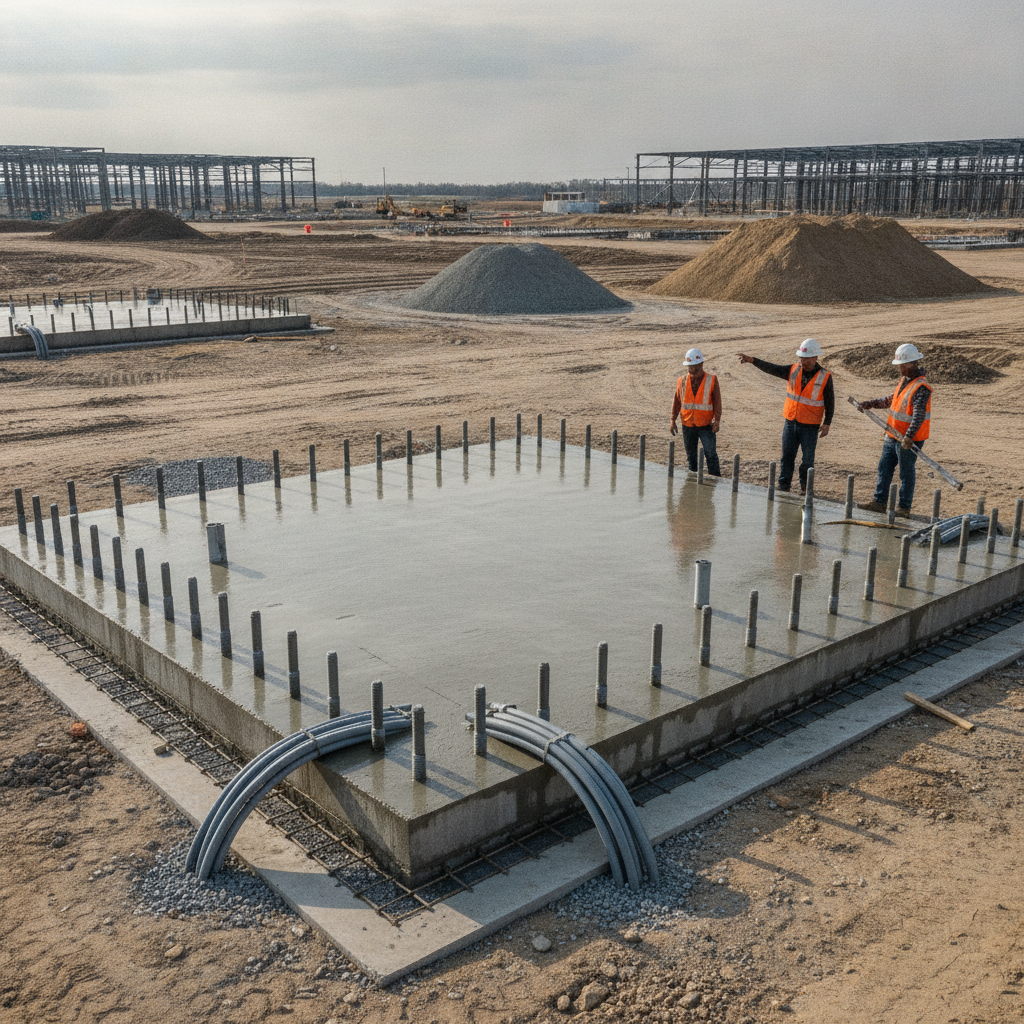
The engineering challenge of a generator foundation begins with understanding the two primary types of forces it must resist: static and dynamic. Static loads are constant and include the dead weight of the generator set, its enclosure, the fuel tank, and any ancillary equipment. While substantial, these loads are straightforward to calculate and are addressed similarly to other structural foundations. The true complexity comes from dynamic loads. These are the forces generated by the engine’s operation, including vibrations from rotating components, unbalanced forces from piston motion, and transient loads during startup and shutdown. These forces can be significant and, if not properly managed, can cause excessive vibration, equipment fatigue, and even structural damage to the generator or adjacent buildings. The primary strategy to counter dynamic loads is to design a foundation with sufficient mass and stiffness. A heavy, rigid foundation—often an inertia block—has a high resistance to movement, effectively absorbing and damping the engine vibration before it can propagate.
Geotechnical Investigation and Soil-Structure Interaction
Key Design Parameters for Generator Foundations
| Design Parameter | Engineering Consideration | Impact on Data Center Operations |
|---|---|---|
| Foundation Mass & Stiffness | Must be sufficient to resist dynamic loads and limit vibration amplitude. Typically, the foundation mass is 3-5 times the generator's mass. | Prevents excessive vibration that could damage the generator or adjacent structures, ensuring long-term reliability. |
| Vibration Isolation System | Selection of spring or elastomeric isolators to decouple the generator's inertia block from the building structure. Tuned to avoid resonance. | Protects sensitive IT equipment in the data hall from damaging low-frequency vibrations, ensuring data integrity. |
| Anchorage & Restraint | Design of anchor bolts and structural connections to resist seismic and high-wind lateral forces per applicable building codes. | Ensures the generator remains in place and operational during and after a natural disaster, maintaining power continuity. |
| Fuel & Electrical Coordination | Integration of sleeves, blockouts, and embedded plates for fuel piping, power conduits, and control wiring. | Avoids costly and time-consuming rework during construction and ensures safe, maintainable utility connections. |
| Containment & Drainage | Incorporation of secondary containment curbs and a dedicated drainage system, often with an oil-water separator. | Ensures environmental compliance with regulations like SPCC, prevents costly cleanups, and protects the site from contamination. |
A generator foundation cannot be designed in a vacuum. Its performance is intrinsically linked to the ground beneath it. This is why a site-specific Geotechnical soil report is a non-negotiable prerequisite for design. This investigation, a core part of Geotechnical Engineering, provides critical data on soil bearing capacity, potential for settlement, and the presence of any problematic soil layers. The goal is to prevent both uniform and differential settlement, which could compromise the alignment of the generator and its connected systems. The findings of the geotechnical report directly influence the foundation design. In areas with strong, stable soils, a shallow mat foundation may be sufficient. However, on sites with poor soil conditions, deep foundations such as piles or caissons might be required to transfer the immense loads to a more competent bearing stratum. This analysis of soil-structure interaction is crucial for ensuring the long-term stability and performance of the entire generator assembly, safeguarding the facility’s operational integrity.
Vibration Isolation and Transmission Control
Even with a massive foundation, some level of vibration is inevitable. The primary goal is to prevent this vibration from reaching the main data center structure, where it could interfere with sensitive servers and other critical equipment. This is achieved through a carefully designed vibration isolation system. The generator is typically mounted on an inertia block, a large concrete mass that is structurally separated from the surrounding foundation slab. This inertia block then rests on specialized isolators, such as heavy-duty springs or elastomeric pads, which act as a buffer. The selection and specification of these isolators are critical. The design must consider the generator’s operating frequencies to avoid resonance—a catastrophic condition where the system’s natural frequency matches the engine’s vibrational frequency, amplifying the motion. Effective vibration transmission control is a hallmark of a well-engineered mission-critical facility.
Anchorage for Seismic and High-Wind Events
Generators must remain operational during and after extreme weather or seismic events. The foundation and its anchorage system are key to ensuring this resilience. The design must account for significant lateral forces generated by high winds and ground shaking. The anchor bolt design is critical, specifying the size, material, embedment depth, and placement of bolts that secure the generator skid to the concrete foundation. These calculations are governed by nationally recognized model building codes and standards, such as ASCE 7, which provides detailed methodologies for determining wind and seismic loads based on the project’s location and risk category. Permitting requirements for seismic anchorage and wind load analysis vary by jurisdiction, and every project team should confirm the applicable standards with the local, state, regional, and federal authorities that hold review authority over the site. The structural engineer of record is responsible for ensuring the anchorage system can withstand the code-prescribed forces, providing a robust connection that prevents the equipment from shifting, overturning, or becoming disconnected from its fuel and electrical lines during a critical event.
Coordination with Mechanical, Electrical, and Plumbing (MEP) Systems
A generator foundation is a nexus of multiple building systems. Successful design requires intensive utility coordination between civil, structural, mechanical, and electrical engineers. The foundation must accommodate numerous penetrations for fuel lines (supply and return), high-voltage power conduits, control wiring, and often, coolant piping. These elements cannot be an afterthought. During the design phase, precise locations for sleeves, blockouts, and embedded plates must be incorporated into the structural drawings. This MEP integration prevents the need for costly and structurally compromising core drilling after the concrete has cured. Careful planning ensures that all systems can be installed, accessed, and maintained efficiently throughout the generator’s lifecycle, preventing clashes and ensuring a seamless construction process.
Containment, Drainage, and Environmental Compliance
Backup generators for data centers typically rely on large volumes of diesel fuel, which presents an environmental risk. Federal regulations, such as the EPA’s Spill Prevention, Control, and Countermeasure (SPCC) rule, often mandate secondary containment to capture any potential leaks or spills. This is typically achieved by designing the generator pad as a concrete basin with curbs high enough to hold the entire volume of the fuel tank, plus an allowance for precipitation. Beyond containment, the pad requires a robust drainage design. This system must manage stormwater while preventing the discharge of fuel or oil. An oil-water separator is a common component, designed to capture hydrocarbons before discharging water to the site’s main stormwater management system. Proper design ensures SPCC compliance and protects the owner from regulatory fines and environmental liability.
Our Process at RSP Engineers
At RSP Engineers, our team of Civil engineers approaches generator foundation design with a holistic, integrated methodology essential for mission-critical projects. Our process ensures that every detail is accounted for, from initial site assessment to final construction oversight. We provide comprehensive site engineering services tailored to the unique demands of data center facilities. Our approach includes: Geotechnical and Site Feasibility: We begin by commissioning and interpreting the Geotechnical soil report to inform a foundation strategy that ensures long-term stability and mitigates settlement risks. Integrated Design and Coordination: We work collaboratively with structural engineers, MEP designers, and equipment vendors to ensure seamless integration of all systems, creating a clash-free and constructible design. Regulatory Compliance and Permitting: We navigate the complex web of local and federal regulations, preparing comprehensive permit submittals for building, environmental, and other necessary approvals. Construction Administration Services: We provide oversight during construction, reviewing submittals, responding to RFIs, and performing site observations to ensure the foundation is built exactly as designed.
Common Issues in Generator Foundation Projects
Even with careful planning, several common issues can arise during the design and construction of generator foundations. Proactive identification and mitigation are key to keeping a project on schedule and within budget. Inadequate Geotechnical Data: Relying on incomplete or outdated soil information is a primary cause of foundation failure or costly change orders. A thorough, project-specific investigation is essential. Poor MEP Coordination: Failure to accurately locate and size penetrations in the design phase often leads to expensive and time-consuming field modifications, such as core drilling, which can compromise the foundation’s structural integrity. Underestimating Dynamic Loads: Using only the manufacturer’s static weight data without a proper dynamic load analysis can result in a foundation that is too flexible, leading to excessive vibration transmission. Neglecting Maintenance Access: A design that packs equipment too tightly without considering future access can make routine maintenance, repairs, or eventual generator replacement prohibitively difficult and expensive.
Partner with RSP Engineers for Your Mission-Critical Infrastructure
Designing and permitting a generator foundation for a data center requires specialized expertise that goes beyond standard structural engineering. It demands a deep understanding of geotechnical principles, dynamic analysis, multi-disciplinary utility coordination, and complex regulatory landscapes. As a leading civil engineering firm near me, RSP Engineers provides the integrated site development and permitting services needed to deliver resilient and reliable infrastructure. Our team is ready to support your project from initial feasibility through construction, ensuring your critical power systems are built on a solid foundation. Contact us today to discuss your foundation design and data center project needs.
Conclusion
The foundation beneath a data center’s backup generator is a critical asset that directly impacts operational resiliency. A successful design is a sophisticated balance of geotechnical, structural, and civil engineering principles. By properly addressing static and dynamic loads, integrating with MEP systems, ensuring robust seismic anchorage, and complying with environmental regulations, developers can safeguard their mission-critical facilities against unforeseen events. Investing in expert engineering for these foundations is a direct investment in the uptime and long-term success of the entire data center.
FAQs
-
There is no single answer, as the thickness is engineered based on multiple factors. It depends on the generator’s total weight (static load), its operational forces (dynamic loads), and the site’s specific soil bearing capacity. For large data center generators, foundations are often several feet thick to provide the necessary mass and rigidity.
-
An inertia block is a large, heavy concrete mass that the generator is mounted on. This block is then separated from the main building foundation by specialized spring or pad isolators. Its purpose is to absorb the intense vibrational energy from the engine, providing a stable mass that damps vibrations before they can be transmitted to the surrounding structure.
-
Absolutely. While a site-wide geotechnical report is necessary for the main building, a specific investigation with soil boring test locations at the generator yard is critical. The immense, concentrated loads from generators require a detailed understanding of the localized soil conditions to prevent differential settlement and ensure stability.