
Differential Settlement Risks Across Data Center Campuses
A comprehensive guide for data center developers on the causes, impacts, and mitigation of differential settlement. Learn how Geotechnical Engineering ensures long-term stability.
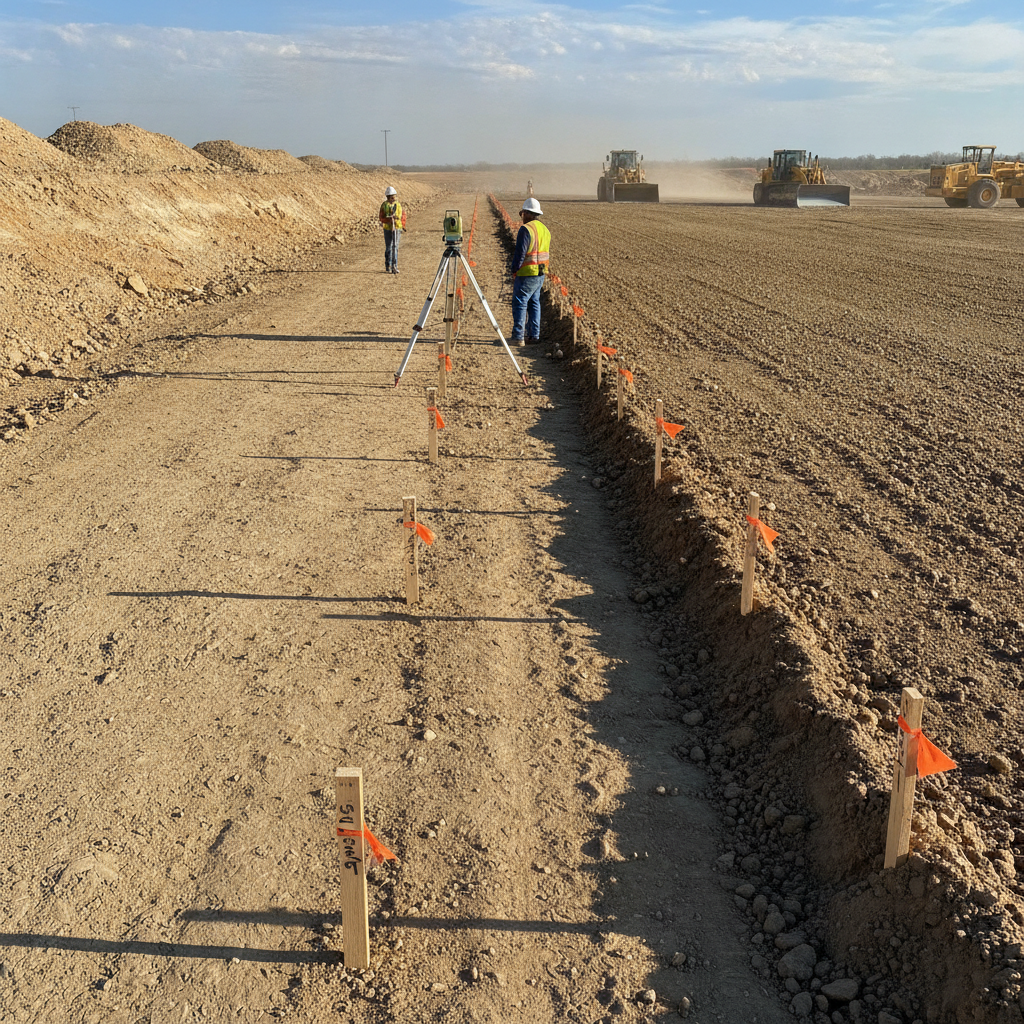
The Mechanics of Differential Settlement in Mission-Critical Facilities
Settlement is the natural process of soil consolidation under a new load. Differential settlement occurs when this process happens at different rates across a building’s footprint. One corner of a foundation may settle more than another, inducing stress, torsion, and bending moments that the structure was not designed to handle. This is particularly dangerous for the rigid, monolithic concrete slabs common in data center construction. The primary causes of this uneven movement stem from variability. This includes non-uniform subsurface conditions, such as moving from a dense sand layer to a soft clay layer beneath a single building pad. It also includes the common practice of balancing cut and fill across a large site, creating a transition zone where engineered fill meets native soil. Finally, highly variable loading—such as a heavily loaded generator yard adjacent to a lighter-loaded administrative building—can cause localized settlement that impacts the entire campus infrastructure.
Identifying High-Risk Subsurface Conditions
Comparison of Subgrade Preparation Techniques
| Technique | Primary Application | Key Considerations | Relative Cost |
|---|---|---|---|
| Over-Excavation & Recompaction | Shallow unsuitable soils; unifying cut/fill zones | Requires sufficient space for stockpiling; dependent on moisture content of soils. | Low to Moderate |
| Surcharging / Preloading | Compressible clays and silts | Requires significant time (months) for consolidation to occur; may need wick drains to accelerate. | Moderate |
| Aggregate Piers / Stone Columns | Improving bearing capacity and controlling settlement in weak soils | Effective at transferring load to deeper, stronger strata; requires specialized equipment. | Moderate to High |
| Deep Soil Mixing | Creating soil-cement columns to support foundations in very poor soils | Provides significant strength and stiffness; can be performed in high water table conditions. | High |
| Mat or Raft Foundation | Distributing heavy loads over large areas of weak or variable soil | A structural solution that spreads load to minimize differential movement; requires significant concrete and steel. | High |
A thorough Geotechnical Engineering investigation is the first line of defense against settlement risks. Certain soil and geologic conditions, found in various regions across the United States, present a higher risk and demand careful analysis. These include compressible soils like soft clays and silts, organic soils such as peat, and areas with undocumented or poorly compacted fill from previous site uses. Variable bedrock depth can also create hard points that cause foundations to pivot or bend as surrounding soils consolidate. Identifying these conditions requires a robust program of soil boring tests, laboratory analysis, and in-situ testing. The specific requirements for a Geotechnical soil report and the level of required subsurface investigation can vary by jurisdiction, and every project team should confirm the applicable standards with the local, state, regional, and federal authorities that hold review authority over the site. A proactive approach to site investigation allows the civil engineering team to design appropriate mitigation measures before construction begins, avoiding costly change orders and long-term performance issues.
Impacts on Data Center Structures and Systems
The consequences of unchecked differential settlement extend far beyond cosmetic cracking. For a data center, the impacts are direct threats to operational uptime. Slabs-on-grade can crack and heave, creating an uneven surface that compromises the integrity of raised flooring systems and server rack alignment. This movement can shear utility connections, including chilled water piping, electrical conduits, and critical fiber optic lines running between buildings or to external networks. Adjacent structures, such as equipment pads for generators, transformers, and cooling towers, are often heavily loaded and can settle independently from the main data hall. This can strain or sever the vital connections between the support infrastructure and the building itself. Ultimately, the precision-engineered environment of the data center is compromised, putting sensitive electronic equipment at risk and potentially leading to costly downtime.
The Challenge of Cut-and-Fill Transitions
Large-scale site development for data center campuses often requires significant earthwork to create level building pads. This process of cutting down high areas and using the material to fill low areas is efficient but creates a significant geotechnical challenge: the cut-to-fill transition. Native soils in the ‘cut’ zone have been consolidated over geologic time, while the ‘fill’ material, even when compacted to specification, will undergo some degree of primary and secondary consolidation under load. When a single, large foundation slab spans this transition, one side is resting on firm, undisturbed ground while the other rests on newly placed fill. This creates a classic scenario for differential settlement. The fill side will inevitably settle more than the cut side, creating a hinge point that can crack the slab and compromise the entire structure. Proper subgrade preparation, including potentially over-excavating the transition zone and replacing it with uniform, engineered fill, is critical to mitigating this risk.
The RSP Engineers Approach to Geotechnical Risk Management
At RSP Engineers, our approach to mitigating settlement risk is proactive and data-driven. We begin every mission-critical project with a comprehensive desktop analysis and a phased Geotechnical Engineering investigation tailored to the site and proposed development. Our process involves a carefully planned program of soil borings, cone penetration testing, and laboratory analysis to build a complete picture of the subsurface. This data informs our settlement analysis, allowing us to predict the magnitude and extent of potential movement under the proposed structural and equipment loads. From there, our Civil engineers and geotechnical professionals collaborate on a holistic site plan design. We provide clear, actionable recommendations for earthwork, subgrade preparation, foundation design, and construction quality control. This integrated approach ensures that potential settlement issues are designed out of the project from the beginning, protecting the owner’s investment and ensuring long-term operational reliability.
Common Issues and Construction Phase Challenges
Even with a robust design, challenges can arise during construction. The most common issue is encountering subsurface conditions that differ from what was anticipated in the Geotechnical soil report, such as pockets of undocumented fill or a higher water table. This requires swift collaboration between the Geotechnical engineer, the civil engineer, and the contractor to adapt the plan. Another significant challenge is ensuring strict adherence to specifications for compaction and moisture control of fill materials. Inadequate quality control during earthwork is a leading cause of future settlement problems. Effective Construction Management Services, including observation and materials testing by qualified technicians, are essential to verify that the design intent is achieved in the field. This oversight confirms that the subgrade will provide the uniform support required for the data center’s foundation. Frequently Asked Questions (FAQ) What is an acceptable tolerance for differential settlement in a data center? Tolerances are extremely tight and are often specified by the equipment manufacturers and structural engineer. While a typical commercial building might tolerate an inch or more of total settlement, a data center’s tolerance for differential settlement across a structural bay or between equipment connection points may be as low as ¼ inch to prevent damage to systems and structures. How does a Geotechnical soil report help prevent settlement issues? A Geotechnical soil report is the foundational document for site design. It characterizes the soil and groundwater conditions, identifies high-risk strata, and provides engineering parameters for settlement analysis. It delivers specific recommendations for foundation types, allowable bearing pressures, and necessary subgrade preparation, giving the design team the data needed to create a stable and resilient site. Can differential settlement occur years after construction is complete? Yes. While most settlement from new loads (primary consolidation) occurs during or shortly after construction, some soils, particularly clays, can experience long-term secondary consolidation or ‘creep’ for many years. Changes in groundwater levels or new, adjacent heavy loads can also induce settlement long after the facility is operational. Are multi-story data centers more susceptible to settlement problems? Multi-story data centers impose significantly higher foundation loads, which increases the magnitude of total settlement. This makes a thorough Geotechnical Engineering investigation and robust foundation design even more critical. However, the risk of differential settlement is still primarily a function of subsurface variability, which must be addressed regardless of building height. What role does stormwater management play in long-term foundation stability? Proper stormwater management and drainage design are crucial. Poor surface drainage can lead to soil saturation near foundations, which can reduce soil bearing capacity and, in some soil types, lead to swelling or consolidation. A well-designed drainage system protects the building’s subgrade from moisture changes that could induce movement over the long term.
Partner with RSP for Your Mission-Critical Development
Navigating the complexities of data center site development requires a partner with deep expertise in both civil and Geotechnical Engineering. The team at RSP Engineers provides comprehensive site engineering services, from initial due diligence and permitting to detailed design and Construction Management Services. We understand the low-risk tolerance of mission-critical facilities and deliver designs that ensure long-term stability and operational uptime. Contact us to discuss how we can mitigate geotechnical risks on your next data center project.
Conclusion: Building Resilient Infrastructure on Solid Ground
For data center developers and operators, foundation performance is mission-critical. The financial and operational risks associated with differential settlement are too significant to overlook. A successful project depends on a proactive, integrated approach that combines a thorough Geotechnical Engineering investigation, sophisticated settlement analysis, and a meticulous site plan design. By addressing these risks head-on, developers can ensure their facilities are built on a stable foundation, ready to support the demands of the digital world for decades to come.
FAQs
-
Differential Settlement Risks Across Data Center Campuses requires careful planning, qualified engineering, and compliance with the applicable codes and permits.
-
Getting Differential Settlement Risks Across Data Center Campuses right protects safety, supports regulatory compliance, and avoids costly redesigns or delays.
-
RSP Engineers provides licensed expertise and end-to-end support for Differential Settlement Risks Across Data Center Campuses, from early planning through permitting.