
Designing in a FEMA VE Zone: A Florida Civil Engineer’s Guide
A guide for Florida developers on the civil engineering requirements for designing in FEMA VE Zones. Learn about base flood elevation, freeboard, foundation design, and permitting challenges.
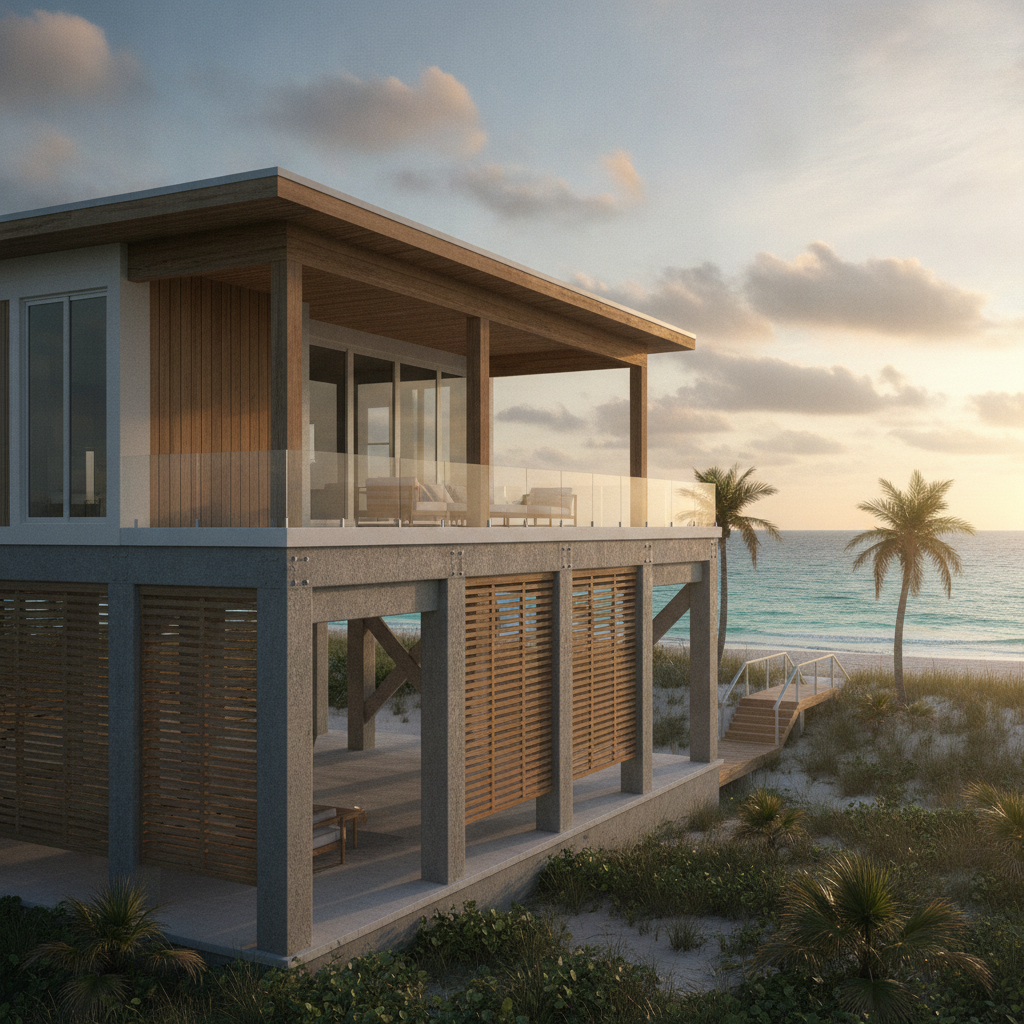
Understanding FEMA Flood Zones: The Critical Distinction of the VE Zone
FEMA maps the entire country into different flood zones, each with a specific risk profile, which are detailed on a FEMA Flood Insurance Rate Map (FIRM). While many are familiar with AE Zones, which are subject to inundation by the 1%-annual-chance flood, VE Zones represent a much higher level of hazard. The ‘V’ stands for velocity, indicating that these areas are not only subject to flooding but also to significant wave action (defined as waves 3 feet or higher) during a base flood event. This additional force of breaking waves is the primary differentiator and the reason for the much stricter building codes. The engineering approach in a VE Zone must account for immense hydrodynamic and hydrostatic forces, as well as the potential for erosion and scour around foundations. The goal of civil engineering design in this context is to create a site and structure that allow floodwaters and waves to pass through with minimal obstruction, thereby reducing the loads on the building. This is fundamentally different from floodproofing techniques like levees or floodwalls, which are generally prohibited in VE Zones because they can redirect wave energy and worsen flooding impacts on adjacent properties.
Establishing the Design Flood Elevation (DFE) and Freeboard Requirements
Key Design Considerations: VE Zone vs. AE Zone
| Design Element | AE Zone Requirements (Typical) | VE Zone Requirements (Mandatory) |
|---|---|---|
| Foundation Type | Slab-on-grade, crawlspace, or piles are often acceptable. | Open pile or column foundation required. No fill for structural support. |
| Lowest Floor Elevation | Lowest floor must be elevated to or above the BFE (plus freeboard). | The bottom of the lowest horizontal structural member must be at or above the BFE (plus freeboard). |
| Below-BFE Enclosures | Allowed, but must have flood vents to equalize hydrostatic pressure. | Prohibited, except for limited storage and access with non-supporting breakaway walls. |
| Site Grading Approach | Grading and fill are commonly used to achieve required elevations. | Use of fill is strictly prohibited. Natural grade must be maintained. |
| Utility Placement | Mechanical and electrical equipment must be elevated above the BFE. | All equipment must be elevated above the DFE, and connections must be designed for flood forces. |
| Required Certifications | Elevation Certificate required. | Elevation Certificate and a V-Zone Design Certification are required. |
A cornerstone of any VE Zone project is determining the required elevation of the structure. This starts with the Base Flood Elevation (BFE), which is the computed elevation to which floodwater is anticipated to rise during the base flood. The BFE is specified on the community’s FIRM. However, the structure cannot simply be built at the BFE. The Florida Building Code and local floodplain ordinances mandate a higher elevation to provide a factor of safety. This additional height is known as freeboard. For example, a local ordinance might require 2 feet of freeboard above the BFE. The final required elevation for the lowest horizontal structural member of the building is called the Design Flood Elevation (DFE), calculated as BFE + freeboard. Adhering to the DFE is non-negotiable and is a primary focus during the permitting and plan review process. A licensed surveyor must certify these elevations during construction, and failure to meet the DFE can halt a project entirely.
Foundation Design Constraints in High-Velocity Wave Environments
In a VE Zone, the foundation is the most critical structural element. Standard foundations like slab-on-grade or crawlspaces are strictly prohibited. The regulations require an open foundation system, typically consisting of pile foundations or columns, that are designed to withstand wave impacts, debris loads, and deep scour. These foundations must be deeply embedded into the ground to resist lateral and uplift forces, a determination often guided by a Geotechnical Engineering analysis. The area below the elevated building must remain as open as possible to allow waves to pass through. Any enclosures below the BFE must be limited in size and constructed with non-supporting breakaway walls designed to fail under specific wave loads without compromising the structural integrity of the building above. Furthermore, a detailed scour analysis is often required to predict how much soil will be washed away from the base of the piles during a storm, ensuring the piles are driven deep enough to remain stable.
Site Grading and Stormwater Management in Coastal Areas
Unlike typical inland projects, extensive site grading and the use of fill for structural support are prohibited in VE Zones. The natural grade and dune features must be preserved to the greatest extent possible, as they serve as natural barriers to storm surge. This constraint significantly impacts the civil engineering design for the site, including access, parking, and especially stormwater management. Designing a compliant drainage design in sandy, coastal soils with a high water table presents a unique challenge. Traditional retention ponds are often infeasible. Instead, engineers typically use systems like French drains, exfiltration trenches, and pervious pavements to manage runoff. The primary goals are to prevent localized flooding and meet water quality treatment requirements mandated by the local Water Management District and the FDEP, all while minimizing disturbance to the natural topography and avoiding any obstruction to flood flows.
Utility Coordination and Floodproofing Strategies
All utilities, including electrical, HVAC, plumbing, and mechanical equipment, must be designed and located to prevent damage from flooding. The Florida Building Code requires that all such equipment be elevated to or above the DFE. Any utility lines that must run below the DFE must be constructed from flood-resistant materials and designed to withstand the harsh coastal environment. This requires meticulous utility coordination between the civil engineer, architect, and MEP engineer. For example, electrical panels, air conditioning units, and water heaters must be physically located on the elevated floors of the structure or on a platform at the DFE. Any ductwork or plumbing below the DFE must be designed to be self-draining and resist saltwater corrosion. This proactive floodproofing is essential for the long-term viability and safety of the structure and is a key component of the building permit review.
Navigating the Permitting Labyrinth: Local, State, and Federal Agency Review
Permitting a project in a VE Zone is a multi-jurisdictional effort involving rigorous agency review. At the local level, the city or county floodplain administrator and building department will scrutinize the plans for compliance with their specific ordinances and the FBC. At the state level, the Florida Department of Environmental Protection (FDEP) often has jurisdiction, particularly concerning coastal construction control lines (CCCL) and impacts on dune systems. The permit submittals must be exceptionally detailed, including elevation certificates, structural calculations for wave loads, and a V-Zone design certification from a qualified engineer or architect. The review process is iterative, often involving multiple rounds of comments and revisions. A successful outcome depends on a proactive strategy, clear communication with reviewers, and a design that demonstrates unambiguous compliance with all applicable codes. The final Certificate of Occupancy is contingent upon as-built certifications confirming every VE Zone requirement was met during construction.
Our Process for VE Zone Development
At RSP Engineers, we approach VE Zone projects with a meticulous, phased process designed to mitigate risk and ensure compliance. Our process begins with a thorough due diligence phase, where we analyze FEMA FIRMs, local codes, and environmental constraints to establish a clear design framework. We then collaborate closely with the project architect and structural engineer to integrate the stringent VE Zone requirements into a cohesive and buildable design. Our civil engineering team focuses on creating a minimal-impact site plan that preserves natural features while delivering a compliant stormwater management system. We manage the complex permitting process by preparing comprehensive permit submittals and engaging with agency reviewers early and often. During construction, we provide critical construction administration services, working with the contractor and surveyor to verify that all work conforms to the approved plans and certifications. This hands-on approach ensures that the final project not only meets but exceeds the resilience standards required for Florida’s most challenging coastal environments.
Common Issues and Pitfalls in VE Zone Design
Even experienced developers can encounter issues when working in VE Zones. One common pitfall is underestimating scour potential, leading to insufficient pile embedment and foundation instability. Another is improperly designed breakaway walls that fail to meet the specific force thresholds, resulting in either premature failure or, worse, a failure to break away, which transfers dangerous loads to the main structure. There can also be significant challenges in reconciling ADA compliance for access ramps and lifts with the strict elevation and no-fill requirements of a VE Zone. Finally, overlooking local freeboard requirements that are more stringent than the state minimum can lead to costly redesigns late in the process.
Your Partner for Coastal Engineering and Development
Designing and permitting a project in a FEMA VE Zone is one of the most complex challenges in Florida land development. It requires a Professional Engineer with specialized expertise in coastal processes, regulatory compliance, and resilient design. The team at RSP Engineers has the experience to guide your project from initial concept through final certification. We provide expert civil engineering, comprehensive stormwater management design, and strategic support for all your permitting needs. Don’t navigate these high-stakes regulations alone. Contact us today to discuss your coastal development project.
Conclusion
Success in a FEMA VE Zone is not just about elevating a building; it’s about a holistic design philosophy that respects and accommodates powerful coastal forces. From deep pile foundations and breakaway walls to minimal-impact site work and resilient utilities, every decision must be filtered through the lens of compliance and safety. Adherence to the Florida Building Code and local floodplain ordinances is paramount. By partnering with an experienced civil engineering firm, developers can confidently navigate the process, protect their investment, and create a lasting, resilient project on the Florida coast.
FAQs
-
The primary difference is the hazard type. An AE Zone is subject to flooding (standing or slow-moving water), while a VE Zone is subject to flooding plus high-velocity wave action (waves 3 feet or higher). This additional wave force requires a much more robust and open foundation design.
-
No. The use of fill for structural support or to elevate a building is strictly prohibited in a VE Zone. The design must accommodate the natural grade of the land to ensure floodwaters and waves can pass underneath the structure without obstruction.
-
Freeboard is an additional height requirement above the Base Flood Elevation (BFE). It provides a factor of safety to account for uncertainties in flood modeling and future environmental changes. It is mandated by the Florida Building Code and local ordinances and is critical for reducing flood risk and lowering flood insurance premiums.