
Data Center Utility Permitting Process Explained
A detailed guide for data center developers on navigating the complex utility permitting process in Florida, covering power, water, fiber, ROW, and agency coordination. Learn how RSP Engineers mitigat
The Foundation: Identifying and Coordinating with Utility Providers
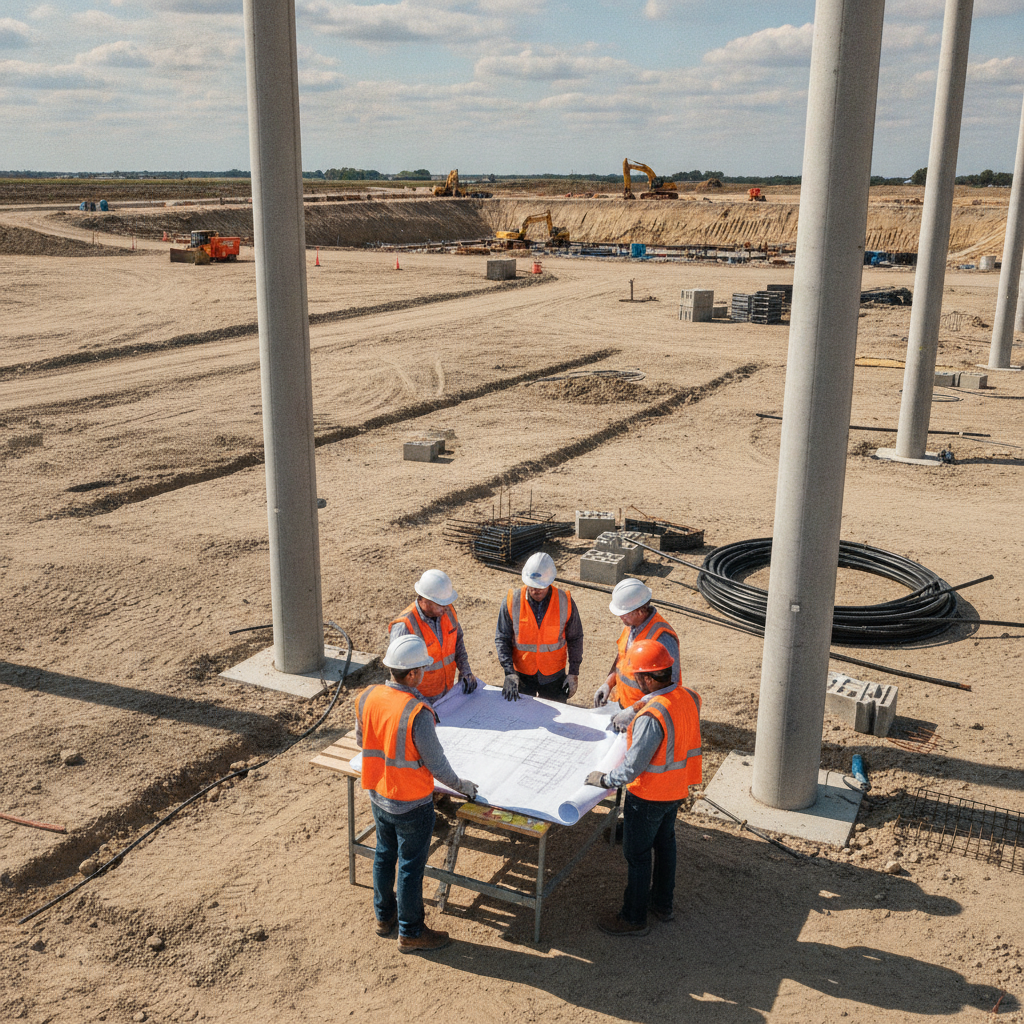
The utility permitting journey begins with comprehensive due diligence. Before a site is even acquired, it’s essential to identify all relevant utility providers and confirm their ability to serve the massive demands of a data center. This involves direct engagement with power companies (like FPL, Duke Energy, or TECO), municipal water and wastewater authorities, and multiple telecommunications providers. The goal is to obtain service availability letters that provide a preliminary confirmation of capacity. This initial phase of utility coordination is far more than a simple inquiry. It requires a detailed capacity analysis based on the project’s projected load, cooling requirements, and data throughput. A Professional Engineer must translate the facility’s technical specifications into a clear request that providers can evaluate against their existing infrastructure. Early engagement builds relationships and provides critical feedback on potential system upgrades or off-site improvements that may be required, which can significantly impact the project’s budget and timeline.
Securing the Corridor: Right-of-Way and Encroachment Permitting
Utility Permit Comparison for Florida Data Center Projects
| Permit Type | Key Agency / Entity | Typical Review Timeline | Critical Considerations |
|---|---|---|---|
| Public Right-of-Way (ROW) Encroachment | FDOT, County, or City Public Works | 60-120 days | Requires detailed MOT plans, restoration bonds, and strict adherence to local construction standards. |
| Electrical Utility Service & Design | Power Company (e.g., FPL, Duke) | 6-18+ months | Driven by system capacity, substation design approval, and easement acquisition. Longest lead time item. |
| Water & Sewer Connection Permit | Local Utility Department | 45-90 days | Contingent on system capacity verification, backflow prevention design, and grease trap requirements. |
| Environmental Resource Permit (ERP) for Crossings | FDEP & Water Management District | 90-180+ days | Triggered by wetland or surface water impacts. Requires detailed environmental assessment and mitigation plans. |
| Fiber Optic Provider ROW Permit | Multiple Telecom Carriers & ROW Authority | 60-120 days per provider | Requires coordination for diverse entry points and potential for joint trench agreements to reduce ROW impacts. |
Once utility routes are identified, the next major hurdle is securing the legal right to install infrastructure within public corridors. This is accomplished through right-of-way (ROW) permitting and encroachment agreements with entities like the Florida Department of Transportation (FDOT), counties, and municipalities. These permits grant permission to construct, operate, and maintain utilities within land owned by the public, such as roadways and their adjacent shoulders. The application package for an encroachment permit is extensive. It typically requires detailed engineering drawings showing the precise horizontal and vertical location of the proposed utility, a comprehensive Maintenance of Traffic (MOT) plan to ensure public safety during construction, and detailed restoration plans. Many agencies also require surety bonds to guarantee that the right-of-way will be restored to its original or better condition. Navigating the specific standards of each jurisdiction is a core competency of experienced Civil Engineers.
Powering the Future: The Nuances of Electrical Utility Permitting
For a data center, securing power is the most critical and often the most time-consuming utility permit. The process extends far beyond a simple service drop; it can involve the design and construction of new substations, the extension of high-voltage transmission lines, and the installation of complex underground duct bank systems. The electrical utility coordination process is a project within the project, managed in parallel with the overall site development plan. Developers must work closely with the power company’s engineering team to align the substation site plan with their stringent technical standards, which often include specific requirements for access, security, and grounding. The design of underground duct bank design must be carefully coordinated to avoid conflicts with other utilities. Furthermore, securing the necessary transmission easements across private property can be a lengthy negotiation process. The power company’s internal review and approval cycle is often the longest lead time item in the entire development schedule.
Water and Wastewater: Permitting for Essential Cooling and Operations
While power takes the spotlight, water and wastewater are equally vital for data center operations, primarily for cooling systems and domestic use. The water and sewer permitting process is typically managed through the local municipal or county utility department. Key components include demonstrating adequate water supply for cooling tower makeup and fire suppression, and ensuring sufficient capacity in the downstream sanitary sewer system. Permit applications require detailed calculations for water demand and sewer discharge, along with plans for on-site infrastructure like fire lines, domestic water services, and sanitary sewer laterals. A critical design element is the backflow prevention assembly, which protects the public water supply and requires specific agency approval. If the site’s cooling or operational needs are exceptionally large, a Consumptive Use Permit (CUP) from the regional Water Management District may be required, adding another layer of regulatory review to the permitting process.
Connectivity is Key: Fiber Optic and Communications Permitting
A data center is useless without robust, redundant connectivity. Securing routes for multiple fiber optic providers is a fundamental requirement. Each provider will have its own infrastructure plan, and the developer’s civil engineering team is responsible for coordinating these efforts. This often involves securing separate encroachment permits for each carrier or negotiating joint trench agreements to streamline installation and minimize disruption. The primary goal is to establish diverse physical entry points into the facility to protect against a single point of failure. The fiber optic permitting process requires careful planning to ensure these redundant paths do not cross or share the same vulnerabilities. This level of telecommunications infrastructure planning is a specialized aspect of site development that demands meticulous attention to detail and proactive coordination with all carriers from day one.
Environmental and Crossing Permits: Protecting Florida’s Resources
Utility corridors in Florida frequently cross environmentally sensitive areas, such as wetlands, conservation areas, or protected species habitats. Any such crossing triggers the need for specialized environmental permits from agencies like the Florida Department of Environmental Protection (FDEP) and the U.S. Army Corps of Engineers. The primary permit in this category is the Environmental Resource Permit (ERP), which governs any activity that impacts wetlands or surface waters. The permitting strategy for these crossings is critical. Techniques like directional drilling are often preferred to minimize surface impact, but they come with their own set of technical challenges and require detailed geotechnical analysis. A thorough wetland delineation must be performed early in the design process to identify all potential impact areas. The agency review for environmental permits can be lengthy and may require mitigation measures, such as purchasing wetland credits, adding significant time and cost to the project.
The RSP Engineers Approach to Utility Permitting Strategy
At RSP Engineers, we treat utility permitting not as a checklist item but as a core strategic component of the project. Our process begins with a comprehensive Utility Due Diligence Report that identifies all providers, constraints, and potential red flags before the client commits to a site. We then create a master permit tracking matrix that outlines every required application, key milestone, and dependency, providing a clear roadmap for all stakeholders. Our team facilitates proactive pre-application meetings with utility companies and regulatory agencies to build consensus and identify potential issues early. We manage the preparation and submittal of all permit packages, ensuring they are complete and technically sound to minimize review cycles. Throughout the process, we serve as the central point of communication, coordinating between the development team, utility providers, and agency reviewers to keep the project moving forward and mitigate schedule risks associated with utility coordination and permit submittals.
Common Pitfalls and Delays in Data Center Utility Permitting
Even with careful planning, challenges can arise. One of the most common issues is the discovery of unforeseen utility conflicts within a crowded public right-of-way, requiring costly and time-consuming redesigns. Another frequent delay stems from a utility provider determining that their existing system lacks the capacity to serve the project, triggering a lengthy and expensive system upgrade that was not budgeted for. Incomplete submittal packages are a primary cause of extended review cycles. A missing signature, an inadequate MOT plan, or a flawed drainage calculation can result in the application being rejected, restarting the review clock. Finally, the easement acquisition process for new power or fiber lines across private property can become bogged down in legal negotiations, halting progress for months. Proactive due diligence and experienced civil engineering oversight are the best defenses against these common pitfalls.
Streamline Your Data Center Permitting with RSP Engineers
The success of your data center project hinges on a proactive and expertly managed utility permitting strategy. Delays in securing power, water, or fiber can have cascading effects on your construction schedule and return on investment. The team at RSP Engineers specializes in navigating Florida’s complex regulatory environment for mission-critical facilities. We provide the expert site development planning, diligent utility coordination, and strategic permitting management needed to de-risk your project and keep it on track. Don’t let permitting be a bottleneck. Contact us today to discuss how our Florida Licensed Engineers can support your next data center development.
Conclusion: Proactive Permitting as a Cornerstone of Data Center Success
In the world of data center development, utility permitting is not a procedural formality; it is a foundational element of project viability. The intricate web of approvals from power companies, municipal authorities, and regulatory agencies requires a strategic, forward-looking approach. By prioritizing early due diligence, comprehensive utility coordination, and meticulous management of the permitting process, developers can mitigate significant schedule risks. Ultimately, a successful outcome depends on the expertise of a civil engineering team that understands the unique demands of both mission-critical facilities and Florida’s regulatory landscape.
FAQs
-
You should begin utility due diligence before you even acquire the land. Formal utility coordination and the application process should start as soon as the site is under contract, as lead times for power company approvals, in particular, can exceed 12-18 months and will dictate the entire project schedule.
-
The single greatest risk is typically the timeline for securing high-voltage power. The internal design, approval, easement acquisition, and construction process managed by the electrical utility company is almost always the longest lead-time item and the most significant driver of the critical path for site development.
-
No. Each utility connection requires a separate set of permits. You will need distinct permits from the power company, the water/sewer authority, each telecommunications provider, and the agency that controls the right-of-way (e. g. , FDOT or the county). This is why a master permitting strategy is essential.