
Data Center Utility Cost Estimating Guide
A comprehensive guide for developers on estimating data center utility costs in Florida, covering power, water, fiber, and stormwater infrastructure. Learn how to build a defensible budget.
Quantifying Electrical Power Infrastructure Costs
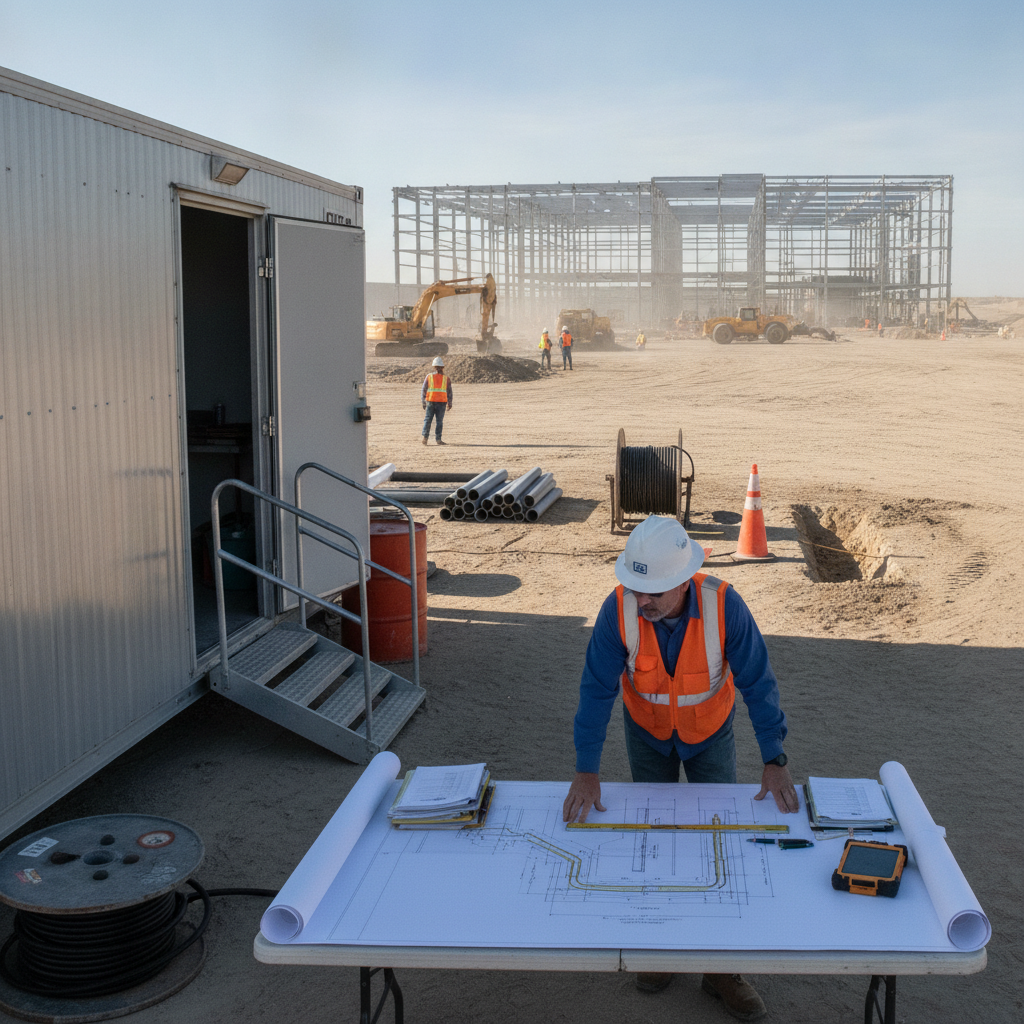
Electrical power is the lifeblood of any data center, and its infrastructure represents the most significant utility capital expenditure. Estimating these costs begins with a thorough electrical load analysis to determine the facility’s ultimate power demand, measured in megawatts (MW). This analysis must account for IT equipment, cooling systems, lighting, and ancillary facilities, while also considering the target Power Usage Effectiveness (PUE). The lower the PUE, the more efficient the facility, but this often requires more sophisticated—and costly—mechanical and electrical systems. The physical infrastructure costs include on-site substations, medium-voltage switchgear, redundant underground duct banks, and transformers. A key variable is the cost of extending high-voltage transmission lines to the site, which can involve significant off-site improvements. Furthermore, utility providers in Florida often levy substantial utility capacity fees or require a Contribution in Aid of Construction (CIAC) to cover their system upgrades needed to serve the new load. Early and frequent utility coordination is essential to accurately capture these pass-through costs, which can run into the millions.
Estimating Water and Wastewater Service Demands
Data Center Utility Cost Component Breakdown
| Utility System | Key Cost Drivers | Typical Unit Cost Basis | Common Florida Permitting Agencies |
|---|---|---|---|
| Electrical Power | Substation construction, feeder extension (overhead/underground), switchgear, CIAC fees, transformer lead times. | $/Megawatt (MW) for capacity fees; $/Linear Foot for feeders. | Local Utility, Florida Public Service Commission (PSC), County/City Building Dept. |
| Water & Wastewater | Cooling tower demand (GPM), fire flow requirements, main extensions, impact fees, lift station upgrades. | $/Gallon Per Day (GPD) for impact fees; $/Linear Foot for mains. | Water Management District (WMD), FDEP, County/City Utilities, Health Dept. |
| Fiber & Telecom | Number of diverse routes, conduit bank installation, right-of-way complexity, carrier fees. | $/Linear Foot for duct bank; Lump Sum for carrier connection. | FDOT, County/City Public Works, Telecom Providers. |
| Natural Gas | Distance to high-pressure main, pressure requirements, regulator station size, system upgrade costs. | $/Linear Foot for main extension; $/BTU or $/CFM for capacity. | Gas Utility Provider, Local Permitting Authority. |
| Stormwater Management | Impervious surface area, soil type, required treatment volume, pond vs. underground system. | $/Cubic Foot of storage; $/Acre of developed land. | Water Management District (WMD), FDEP, County/City Environmental Dept. |
While power gets the most attention, water is equally critical, primarily for cooling systems. The cost of water and wastewater infrastructure is driven by the facility’s cooling design. Water-cooled systems, such as those using cooling towers, are highly efficient but require a substantial and reliable water supply for makeup water, as well as a corresponding capacity for sewer discharge (blowdown). The civil engineering design must accommodate large-diameter potable water mains, backflow preventers, and industrial-grade sewer connections. Cost estimation must include not only the physical pipes and vaults but also significant impact fees charged by municipalities to fund upgrades to their water and wastewater treatment plants. These fees are typically calculated based on projected flow rates (gallons per minute or GPM). The permitting process for these connections can be complex, often requiring detailed hydraulic modeling to prove that the existing municipal system can handle the new demand without adversely affecting other users. A comprehensive estimate also includes costs for fire protection systems, which require dedicated lines and high-flow hydrants, adding another layer to the drainage design and utility plan.
The Critical Role of Fiber and Telecom Connectivity
A data center is useless without robust, low-latency connectivity. The cost of telecommunications infrastructure is determined by the need for diverse and redundant fiber optic pathways. Best practices demand at least two, and often three, separate fiber entry points into the facility from different rights-of-way to eliminate single points of failure. This requires extensive site engineering services to design and permit underground duct banks that may cross public roads, wetlands, or other sensitive areas. The cost model must account for the installation of conduits, manholes, and dark fiber leases or purchases. A significant cost driver is coordinating with multiple telecom carriers and navigating the right-of-way permitting process with local and state agencies like the Florida Department of Transportation (FDOT). These permits can have long lead times and require detailed Maintenance of Traffic (MOT) plans, bonding, and restoration work. The civil engineering team must work closely with carriers to ensure the designed pathways meet their specific technical requirements for bend radii and access point spacing.
Natural Gas for Backup Generation Systems
For data centers requiring N+1 or 2N redundancy, on-site backup power generation is non-negotiable. While diesel is common, natural gas is an increasingly popular choice due to its lower emissions and the elimination of on-site bulk fuel storage. Estimating the cost for natural gas service involves more than just the connection fee. It often requires the extension of a high-pressure gas main to the project site, which is a major civil engineering undertaking. The budget must include costs for trenching, pipe installation, pressure-regulating stations, and extensive safety testing. Similar to electric and water, the gas utility provider may charge for system-wide upgrades needed to guarantee firm, uninterruptible service. The permitting for gas line extensions involves rigorous safety reviews and coordination with other utilities to avoid conflicts within crowded rights-of-way. The on-site design must also incorporate concrete pads for generators, sound attenuation walls, and compliance with local noise ordinances, all of which fall under the purview of site development planning.
Stormwater Management for Massive Impervious Surfaces
Data centers create vast areas of impervious surfaces—roofs, parking lots, and access roads—which dramatically alters the site’s hydrology. In Florida, this necessitates a robust stormwater management system to comply with strict state and local environmental regulations. The cost of this system is a major component of the overall site budget and is a core discipline of civil engineering. The design typically involves large-scale retention or detention ponds, underground exfiltration systems, and complex networks of pipes and control structures. Estimating these costs requires a detailed drainage design based on a thorough hydrological analysis of the site. Key cost factors include the volume of earthwork (excavation and fill) required to construct ponds, the linear footage of storm pipe, the number of inlets and manholes, and the cost of specialized water quality treatment structures. The permitting process, particularly for an Environmental Resource Permit (ERP) from the Water Management District, is intensive and requires sophisticated modeling to demonstrate no adverse off-site impacts. This is a critical path item that directly influences the project schedule and budget.
Navigating Utility Provider Fees and System Upgrades
Beyond the physical installation costs, a significant portion of a data center’s utility budget is allocated to fees and required off-site upgrades mandated by utility providers. These costs, often categorized as Contributions in Aid of Construction (CIAC) or system development charges, are reimbursements to the utility for the capital improvements their system needs to support the new, concentrated load of a data center. This could involve upgrading a regional electrical substation, upsizing miles of water main, or expanding a wastewater lift station. Accurately forecasting these off-site improvements is one of the most challenging aspects of utility cost estimating and requires proactive engagement with providers. A Professional Engineer must request formal load letters and system availability studies from each utility early in the due diligence phase. These studies provide the technical basis for the required upgrades and their associated costs. Failing to account for these multi-million-dollar charges can render a project financially unviable. This process underscores the importance of deep experience in local utility coordination and agency negotiations.
RSP Engineers’ Approach to Utility Cost Modeling
At RSP Engineers, our approach to data center utility cost estimating is systematic and proactive. We begin during the site selection and due diligence phase, initiating immediate contact with all relevant utility providers. Our process involves preparing and submitting formal utility inquiry letters with preliminary load projections to get a documented response on system capacity and potential off-site costs. We then develop a Preliminary Engineering Report that synthesizes this feedback with conceptual site plan design and order-of-magnitude cost opinions. As the project progresses into design development, we refine this model. Our team performs detailed utility coordination, hosting regular meetings with provider engineers to map out connection points, define scopes of work for required upgrades, and negotiate service agreements. We build a comprehensive budget that separates on-site construction costs from off-site requirements and provider fees, giving our clients a clear, transparent view of their total utility infrastructure investment. This rigorous process minimizes surprises and provides the financial certainty needed to move a mission-critical project forward.
Common Pitfalls in Data Center Utility Budgeting
Even with careful planning, several common issues can derail a data center utility budget. The most frequent is underestimating the cost and timeline for off-site improvements. A utility provider’s initial feedback may be optimistic, but detailed system studies can reveal unexpected bottlenecks that require costly upgrades. Another major pitfall is overlooking long-lead items, such as high-capacity transformers or specialized switchgear, which can have procurement timelines exceeding 12-18 months, causing significant project delays if not ordered early. Finally, developers often underestimate the complexity of the permitting process. Securing all necessary approvals for utility work, especially when it crosses multiple jurisdictions or environmentally sensitive areas, can be a lengthy and arduous process. A simple easement acquisition can take months. Failing to build adequate contingency into both the budget and the schedule for these unknowns is a common mistake. Effective construction administration and proactive agency communication are key to mitigating these risks.
Your Partner for Mission-Critical Site Development
Building a defensible utility budget for a data center requires a specialized blend of technical expertise, local knowledge, and proactive project management. At RSP Engineers, we provide the critical site engineering services needed to navigate this complex landscape. From initial due diligence and utility coordination to final permitting and construction administration, our team ensures that your project’s foundational infrastructure is planned, budgeted, and executed with precision. Don’t let utility costs introduce uncertainty into your mission-critical development. Contact us today to discuss how our Florida-based team can support your project’s success.
Conclusion
Accurate utility cost estimating is fundamental to the success of any data center development. It is a multi-faceted discipline that extends far beyond simple unit pricing, requiring a deep understanding of utility coordination, provider fee structures, and the regulatory landscape. By systematically quantifying the costs for power, water, fiber, and stormwater management, developers can mitigate financial risk and create a reliable roadmap for their investment. Ultimately, a successful project hinges on early and expert civil engineering engagement to transform complex utility challenges into a clear, actionable plan.
FAQs
-
You should engage a civil engineering firm near me during the site selection or due diligence phase, before you’ve even acquired the land. An engineer can perform a fatal-flaw analysis focused on utility availability and cost, which is critical for determining a site’s viability for a data center. Early engagement allows for proactive utility coordination and more accurate initial budgeting.
-
CIAC fees are payments made by a developer to a utility company to cover the cost of infrastructure upgrades needed to serve the new project. For a data center’s massive power or water demand, this could include upgrading a substation or running a new water main. These are considered capital contributions and can be a major, multi-million-dollar component of the site development budget.
-
Site selection is paramount. A site located far from existing high-capacity power lines, water mains, or fiber routes will incur exponentially higher costs for extending that infrastructure. Proximity to a major electrical substation is one of the most important factors. Additionally, local zoning compliance and land use regulations can impact the feasibility and cost of on-site infrastructure like cooling towers or generator farms.