
Data Center Utility Coordination
A comprehensive guide for data center developers on coordinating power, water, and fiber utilities. Learn about load letters, substation agreements, and permitting from civil engineers.
Securing Power Capacity: The Critical First Step
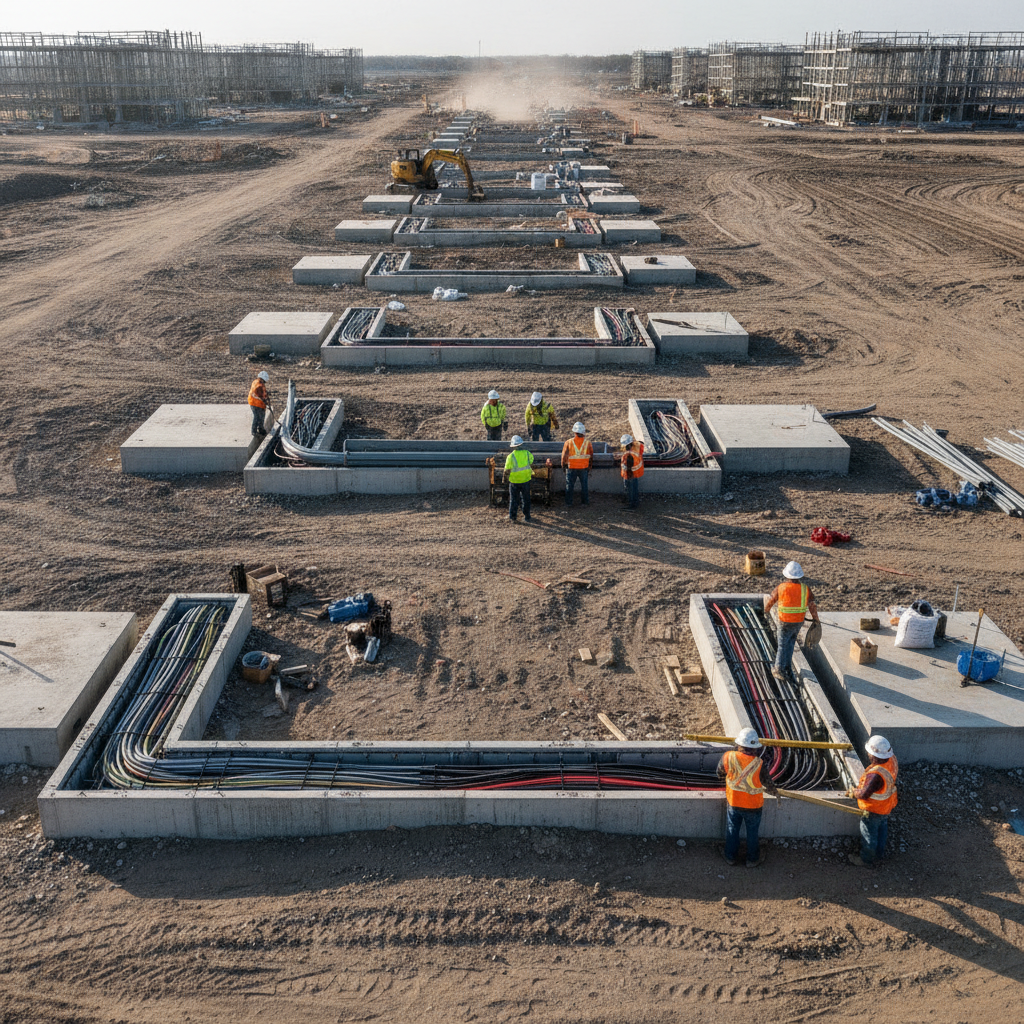
The single most critical utility for any data center is electrical power. The scale of demand, often measured in tens or hundreds of megawatts, requires engaging the utility provider at the earliest possible stage. The process begins with developing a detailed understanding of the facility’s projected electrical load, including initial ramp-up and full build-out scenarios. This information is formalized in a load letter, a document prepared by the project’s electrical engineer that serves as the basis for all discussions with the power company. Upon receiving the load letter, the utility will initiate a capacity study to determine if the existing grid can support the demand. This study analyzes transmission lines, substations, and local distribution networks. In most cases, significant upgrades are required. This phase involves extensive negotiation over the scope of necessary improvements, cost-sharing responsibilities, and the timeline for design and construction of new electrical infrastructure. Securing a firm power commitment can take years, making it the longest lead-time item in data center development and a primary focus of the civil engineering and design team.
Navigating Substation and Interconnection Agreements
Data Center Utility Coordination Checklist
| Utility Type | Key Coordination Task | Typical Lead Time | Primary Stakeholder |
|---|---|---|---|
| Electrical Power | Submit Load Letter & Request Capacity Study | 12-36+ months | Electric Utility Provider |
| Water Supply | Perform Fire Flow & Demand Analysis | 6-12 months | Local Water Department / Authority |
| Wastewater/Sewer | Conduct Capacity & Downstream Analysis | 6-12 months | Local Sewer/Wastewater Authority |
| Fiber/Telecom | Identify Diverse Carrier Routes & Points of Entry | 4-9 months | Multiple Telecom Carriers |
| Substation | Execute Interconnection & Service Agreements | 18-36+ months | Electric Utility & Transmission Operator |
| On-Site Utilities | Finalize Joint Trench & Easement Agreements | 3-6 months | All Utility Providers & Legal Counsel |
For large-scale data centers, connecting to the grid often necessitates the construction of a new electrical substation on or adjacent to the project site. This is a complex project in itself, requiring land acquisition, specialized design, and a separate permitting track. The civil engineering team plays a crucial role in siting the substation, designing access roads, providing grading and drainage plans, and coordinating the necessary real estate transactions, such as easement acquisition for transmission line corridors. The legal and commercial framework for this connection is governed by an interconnection agreement. This document outlines the technical requirements, operational protocols, and financial terms for connecting the data center’s electrical systems to the high-voltage grid. Negotiating these agreements is a meticulous process involving engineers, attorneys, and utility representatives. It defines responsibilities for maintenance, specifies metering arrangements, and establishes the physical point of interconnection, all of which are critical for the long-term operational stability of the facility and its high-voltage transmission infrastructure.
Water and Wastewater: Essential for Cooling and Operations
While power takes the spotlight, water is a close second in importance, especially for data centers relying on water-based cooling systems. A facility’s demand for process cooling water, fire protection, and domestic use can be substantial. The initial phase of utility coordination involves a thorough analysis of the local water provider’s capacity to serve the project. This includes evaluating the size and pressure of existing water mains and the provider’s overall system capacity. If deficiencies are found, the developer may be required to fund off-site improvements, such as new water mains or booster pump stations. Similarly, the project must account for wastewater discharge, including both sanitary sewer and blowdown from cooling towers. A capacity analysis is required to ensure the downstream sewer system can handle the additional flow. The specific requirements for pre-treatment, discharge permits, and impact fees for both water and sewer connections are highly localized. Permitting requirements vary by jurisdiction, and every project team should confirm the applicable standards with the local, state, regional, and federal authorities that hold review authority over the site. This early-stage utility permitting and due diligence is a core function of the land development process.
Fiber and Telecom: The Data Lifeline
A data center is useless without robust, high-speed data connectivity. A key goal of site development is to ensure the facility has access to multiple, geographically diverse fiber optic connectivity routes from different telecommunications carriers. This network redundancy is non-negotiable for mission-critical operations, as it protects against a single point of failure, such as an accidental fiber cut during construction activities. The civil engineer’s role is to identify existing fiber routes near the site and design secure, accessible pathways to bring them into the facility. This involves designing on-site duct bank design and conduit systems that protect the delicate fiber optic cables. The design must accommodate multiple carriers and provide separate points of entry into the building. Coordination extends to securing right-of-way access and crossing permits to install new conduit under roadways or across other properties. Establishing strong relationships with multiple telecom providers early in the process is essential for creating a competitive and resilient telecom infrastructure for the data center’s tenants.
Designing the Utility Corridor: Easements and Joint Trenching
The on-site distribution of power, water, sewer, and fiber is managed within a dedicated utility corridor, the design of which is a primary responsibility of the civil engineering team. This requires careful planning to ensure proper horizontal and vertical separation between different utilities—for example, keeping high-voltage electrical conduits safely distanced from water and sewer lines. The layout must also consider future maintenance access, landscaping, and compliance with local development codes. In many cases, multiple utilities can be installed in a single excavation through a joint trench agreement. This can save significant time and cost but requires meticulous coordination between the various utility providers and contractors. The agreement specifies the exact location and depth of each utility within the trench. The process is further complicated by the need for easement negotiation and acquisition, granting utility providers the legal right to install and maintain their infrastructure on the property. This is a critical component of the overall site development plan.
Utility Permitting and Agency Coordination
Each utility system—power, water, sewer, and telecom—comes with its own set of permitting requirements from various public and private entities. The permit submittals process is a complex matrix of applications, technical drawings, and reviews. For example, installing a new water main may require approvals from the local utility department, the health department, and the transportation agency if it crosses a public road. Electrical infrastructure often requires review from both the power company and the local building authority. A seasoned civil engineering firm manages this entire agency review process, ensuring that applications are submitted correctly and in the proper sequence. This includes securing right-of-way permitting for any work outside the property lines and ensuring environmental compliance for activities near wetlands or other sensitive areas. Proactive communication and strong relationships with agency staff are vital to keep the permitting process on schedule and avoid it becoming a bottleneck for the entire project.
The RSP Engineers Approach to Utility Coordination
At RSP Engineers, we treat utility coordination as a strategic, front-end activity central to project success. Our process begins during site due diligence, where we conduct a comprehensive utility assessment to identify potential risks and opportunities. We create a stakeholder map, establishing direct lines of communication with key personnel at each utility company and regulatory agency. This allows us to champion the project’s needs and anticipate review timelines and technical requirements. Our team develops a holistic Utility Master Plan that integrates with the overall site plan design, optimizing the layout of the utility corridor and ensuring all systems work in harmony. We manage the entire lifecycle, from initial capacity requests and agreement negotiations to preparing detailed construction documents and providing construction administration support. By embedding our Professional Engineer team with the developer from day one, we de-risk the project schedule and ensure a smooth, predictable path from planning to commissioning.
Common Pitfalls in Data Center Utility Planning
Even with careful planning, data center utility projects can encounter significant challenges. One of the most common pitfalls is underestimating the lead time for high-voltage power delivery; developers must assume a multi-year timeline. Another frequent issue is discovering insufficient off-site water or sewer capacity late in the design process, forcing costly and time-consuming system upgrades. Conflicting easement rights can also cause major delays, where a previously granted easement for one utility interferes with the planned route for another. Poor communication between different utility providers is another major risk. Without a central point of coordination, such as an experienced civil engineer, providers may work in silos, leading to conflicts in the field during construction. Finally, failing to account for franchise agreements, which grant specific companies exclusive rights to provide service in an area, can limit options for telecom and other services. A thorough due diligence process is the best defense against these common and costly mistakes.
Partner with RSP Engineers for Your Mission-Critical Project
Successfully navigating the complexities of data center utility coordination demands deep technical expertise and established relationships with providers across the country. The team at RSP Engineers provides the strategic oversight and detailed engineering required to bring power, water, and fiber to your mission-critical facility. We specialize in comprehensive site development services, from initial due diligence and master planning to final permitting and construction support. Let our experts manage the critical path of utility coordination so you can focus on delivering your project on time and on budget.
Conclusion: Proactive Coordination is Non-Negotiable
In the world of data center development, utilities are not a commodity; they are a core component of the project’s foundation. A reactive approach to utility coordination is a recipe for schedule delays and unforeseen costs. Success requires a proactive, integrated strategy led by an experienced civil engineering team that understands the unique demands of mission-critical facilities. By prioritizing utility planning from the outset, developers can mitigate significant risks and create a clear path to a successful and timely project launch, ensuring the reliability of our digital world through robust site development.
FAQs
-
You should engage the power company as soon as a site is under serious consideration, often during the due diligence or feasibility stage. The process of securing a large power commitment, including system studies and infrastructure design, is typically the longest lead-time item in the entire site development schedule, often taking several years.
-
A load letter is a formal document, typically prepared by the project’s electrical engineer, that details the anticipated electrical demand of the data center. It includes the total power requirement in megawatts (MW), voltage requirements, and the expected phasing or ramp-up schedule. This letter is the official request that kicks off the power capacity analysis by the utility provider.
-
The primary risks are a lack of diversity and a single point of failure. If all fiber routes enter the site from the same direction or share a single conduit, a single construction accident could sever all connectivity. The goal is to achieve true network redundancy with multiple carriers entering the property from geographically separate paths.