
Data Center Utility Commissioning: Preparing Critical Infrastructure
A technical guide to data center utility commissioning in Florida. Learn how civil engineers verify power, water, and telecom systems for mission-critical infrastructure.
The Role of Civil Engineering in Pre-Commissioning Site Readiness
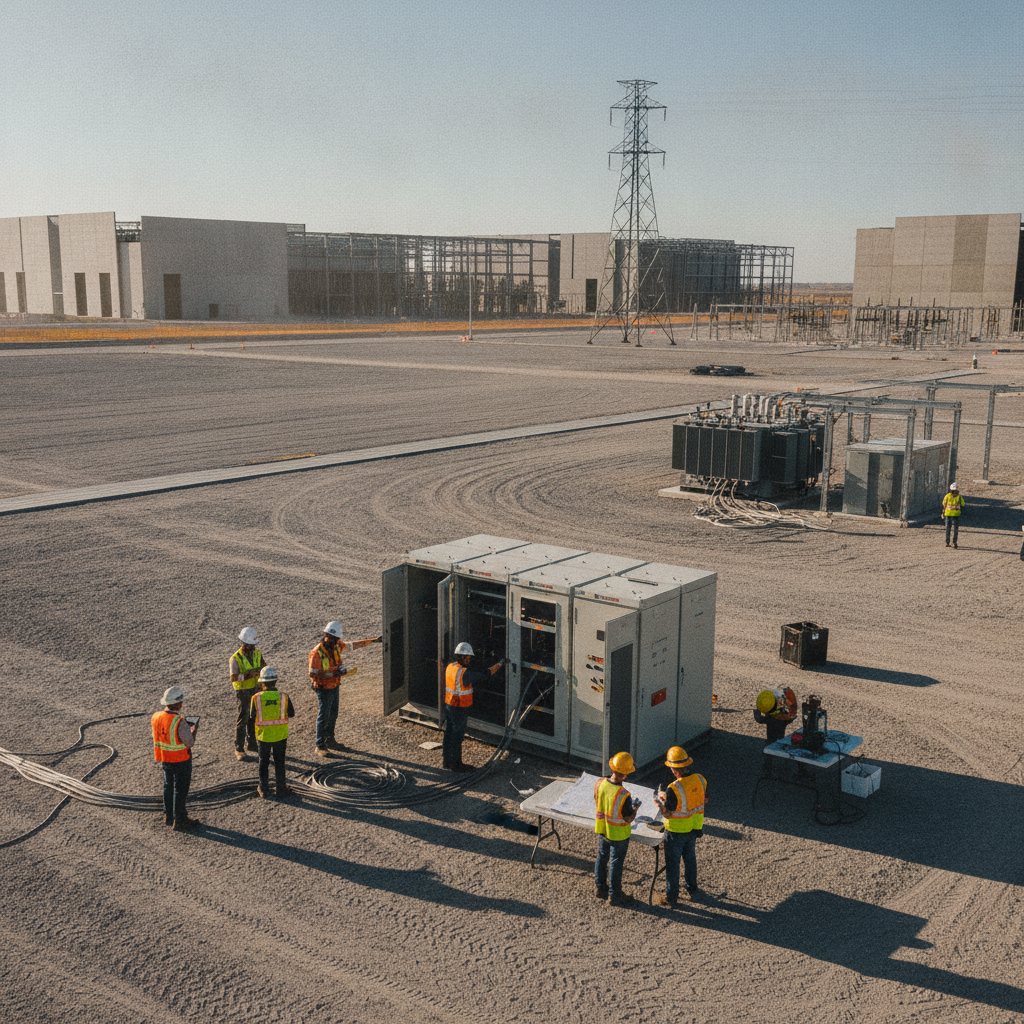
Effective utility commissioning begins with a foundation of solid site development and civil engineering. Before any system can be tested, the underlying infrastructure must be correctly installed. This includes the precise placement and grading of utility corridors, the installation of robust duct banks for power and fiber, and the construction of vaults and manholes. Our role as civil engineers is to ensure that the site is prepared to support these critical systems and facilitate a smooth commissioning process. Proper drainage design is paramount, especially around high-voltage substations and utility yards where standing water can pose significant operational and safety risks. We design grading plans and stormwater systems that protect this infrastructure. Furthermore, meticulous utility coordination during the design phase prevents costly conflicts during construction and ensures that pathways for power, water, and data are clear, protected, and compliant with both utility provider standards and the Florida Building Code.
Power System Commissioning: From Substation to Switchgear
Key Utility Commissioning Verification Points
| Utility System | Key Commissioning Test/Verification | Acceptance Criteria / Standard |
|---|---|---|
| Medium-Voltage Power | Insulation Resistance (Megger) Test, Protective Relay Functional Test | NETA ATS-2021, Utility Provider Standards, Design Specifications |
| Potable/Process Water | Hydrostatic Pressure Test, System Flush & Disinfection | AWWA C651, Florida DOH, 1.5x Operating Pressure for 2 hours |
| Sanitary Sewer | Low-Pressure Air Test, Manhole Vacuum Test, CCTV Inspection | ASTM F1417, Local Utility Standards, No visible defects or infiltration |
| Telecom/Fiber Duct Bank | Mandrel Pull Test, Pull-Rope Installation, Visual Inspection | No obstructions, clean conduits, proper grounding per design |
| Stormwater System | As-Built Survey of Control Structure, Pond Stage-Storage Verification | Matches Permitted ERP Design, SWFWMD/SJRWMD Requirements |
The power distribution network is the lifeblood of any data center. Commissioning this system is a multi-stage process that verifies every component from the utility handoff to the facility’s electrical switchgear. This involves rigorous testing of medium-voltage feeders, transformers, and protective relays. Key activities include insulation resistance testing (Megger testing) to verify cable integrity and point-to-point continuity checks to ensure correct connections. Coordination with the local power utility is a critical path item, often involving complex scheduling for the final utility energization. Before the site goes live, a comprehensive site acceptance testing (SAT) plan is executed. This may involve using load banks to simulate the facility’s future electrical demand, allowing for the verification of generator and UPS performance under controlled conditions. This process ensures the entire power chain is robust and ready for its mission-critical role.
Water and Wastewater Systems: Verifying Flow and Capacity
While power is paramount, water is equally critical for data center operations, primarily for cooling systems. Commissioning for water systems involves verifying both potable water for domestic use and process cooling water for the facility’s HVAC and chiller plants. The primary test is a hydrostatic pressure test, where sections of pipe are pressurized to well above their operating pressure to detect any leaks in joints or materials. This is a non-negotiable step to prevent catastrophic failures once the system is active. Beyond leak detection, commissioning includes system flushing to remove construction debris and disinfection of potable water systems to meet health department standards. For sanitary sewer systems, we verify proper slope and connectivity through low-pressure air testing and CCTV inspections. Verifying that all sanitary sewer connections and lift stations function as designed is crucial for obtaining the Certificate of Occupancy and ensuring long-term site viability.
Telecommunications and Fiber Optic Infrastructure Verification
A data center is a nexus of connectivity, and its value is directly tied to the integrity of its fiber optic infrastructure. Commissioning these systems focuses on the physical pathways—the conduits, manholes, and vaults that protect the delicate fiber cables. The standard procedure is a conduit integrity test, often performed by pulling a mandrel (a cylindrical plug) through each conduit to ensure it is clear of obstructions, debris, or deformities from construction. This phase also involves meticulous manhole and vault inspection to confirm they are free of water infiltration and that grounding systems are properly installed. Successful commissioning requires close telecom provider coordination, as multiple carriers will often build into the site. Providing each carrier with a verified, clean, and accessible pathway is essential for enabling the diverse connectivity that data center tenants demand.
Integrated Systems Testing and Phased Energization
Once individual utility systems are verified, the next step is integrated systems testing (IST). This is where the commissioning agent (CxA) and engineering teams verify that all systems work together as a cohesive whole. For example, an IST scenario might simulate a utility power failure to confirm that the generators start, the automatic transfer switches (ATS) operate correctly, and the cooling systems remain online without interruption. This holistic testing is what truly validates the facility’s resiliency. For large-scale data center campuses, a phased energization plan is often developed. This allows portions of the site to be brought online sequentially, reducing risk and allowing for a more controlled and methodical commissioning process. This requires intense coordination between the owner, contractors, and multiple engineering disciplines. The successful execution of load bank testing during this phase provides tangible proof that the facility can handle its designed capacity before tenant equipment is installed.
Stormwater Management System Commissioning and Turnover
A frequently overlooked but critical component of site commissioning is the stormwater management system. In Florida, these systems are highly regulated and essential for environmental compliance and site integrity. Commissioning involves a final inspection and verification that all components—from retention ponds and control structures to exfiltration trenches and swales—were built according to the permitted drainage design. Key activities include surveying the elevations of weirs and orifices in the control structure verification to ensure they match the permit drawings, which dictate the rate of stormwater discharge. A final as-built certification is prepared by a licensed surveyor and engineer and submitted to the relevant Water Management District (e.g., SWFWMD or SJRWMD). This certification is a legal attestation that the system is built correctly and is often a final requirement to close out the environmental permit.
The RSP Engineers Commissioning Support Process
At RSP Engineers, we integrate commissioning support throughout the project lifecycle. Our process is designed to be proactive, identifying and resolving issues long before they can impact the energization schedule. We begin with pre-design due diligence, engaging utility providers early to confirm capacity and delivery requirements. This informs our integrated design and permitting strategy, where we embed testing and verification requirements directly into the construction documents. During construction, our team provides hands-on construction administration and field observation, witnessing critical tests and verifying that installations comply with the design. We meticulously track all test reports, inspection logs, and other documentation. This culminates in the assembly of a comprehensive turnover package, including the final as-built documentation and certifications required by both the owner and regulatory agencies for final project acceptance.
Common Pitfalls in Data Center Utility Commissioning
Even with a detailed plan, data center commissioning can face challenges. One of the most common pitfalls is inadequate early utility provider coordination, leading to significant delays in getting permanent power to the site. Another frequent issue involves construction defects in underground infrastructure, such as crushed conduits or improperly sealed pipe joints, which are expensive to locate and repair after backfilling. Documentation gaps are also a major risk. A failure in documentation management—losing test reports or failing to document field changes—can jeopardize the entire certification process. Finally, a lack of coordination between the civil site work and the facility construction can lead to sequencing errors, where critical utility pathways are blocked or damaged by other construction activities. Proactive project management and experienced agency review navigation are key to avoiding these costly mistakes.
Your Partner for Mission-Critical Site Development
Successfully bringing a data center online requires a deep understanding of mission-critical infrastructure and a relentless focus on quality. At RSP Engineers, we provide the expert civil engineering and site development services needed to navigate the complexities of utility design, permitting, and commissioning. Our team excels at proactive utility coordination and rigorous construction administration, ensuring your project’s critical systems are ready for energization and long-term operation. Connect with us to discuss how we can support your next mission-critical project in Florida.
Conclusion
Utility commissioning is the final, critical step in de-risking a data center investment. It is a comprehensive process that validates the performance of the most fundamental infrastructure supporting the facility. By focusing on meticulous planning, integrated testing, and thorough documentation, developers can ensure their facility is built on a foundation of reliability. Partnering with an experienced civil engineering firm that understands the nuances of mission-critical infrastructure and the demands of utility commissioning is essential to achieving the uptime and performance that the digital world demands.
FAQs
-
Construction closeout focuses on contractual and administrative completion, like finalizing punch lists and submitting warranties. Commissioning is a technical, quality-assurance process focused on verifying that installed systems, like the power distribution network and process cooling water systems, perform according to the owner’s project requirements and design intent.
-
While a dedicated Commissioning Agent (CxA) often leads the overall effort, the civil engineering firm plays a crucial role in supporting the commissioning of site-specific utilities. We work alongside the CxA, contractors, and utility companies to plan, witness, and document tests for power, water, telecom, and stormwater management systems.
-
As early as possible, preferably during the site selection and due diligence phase. Early engagement allows us to assess utility availability and constraints, which heavily influences site viability and design. This proactive approach to utility coordination and permitting strategy can prevent months of delays down the line.