
Data Center SWPPP Preparation Guide
A comprehensive guide for data center developers on preparing a Stormwater Pollution Prevention Plan (SWPPP) in Florida. Learn about NPDES permits, BMPs, and compliance.
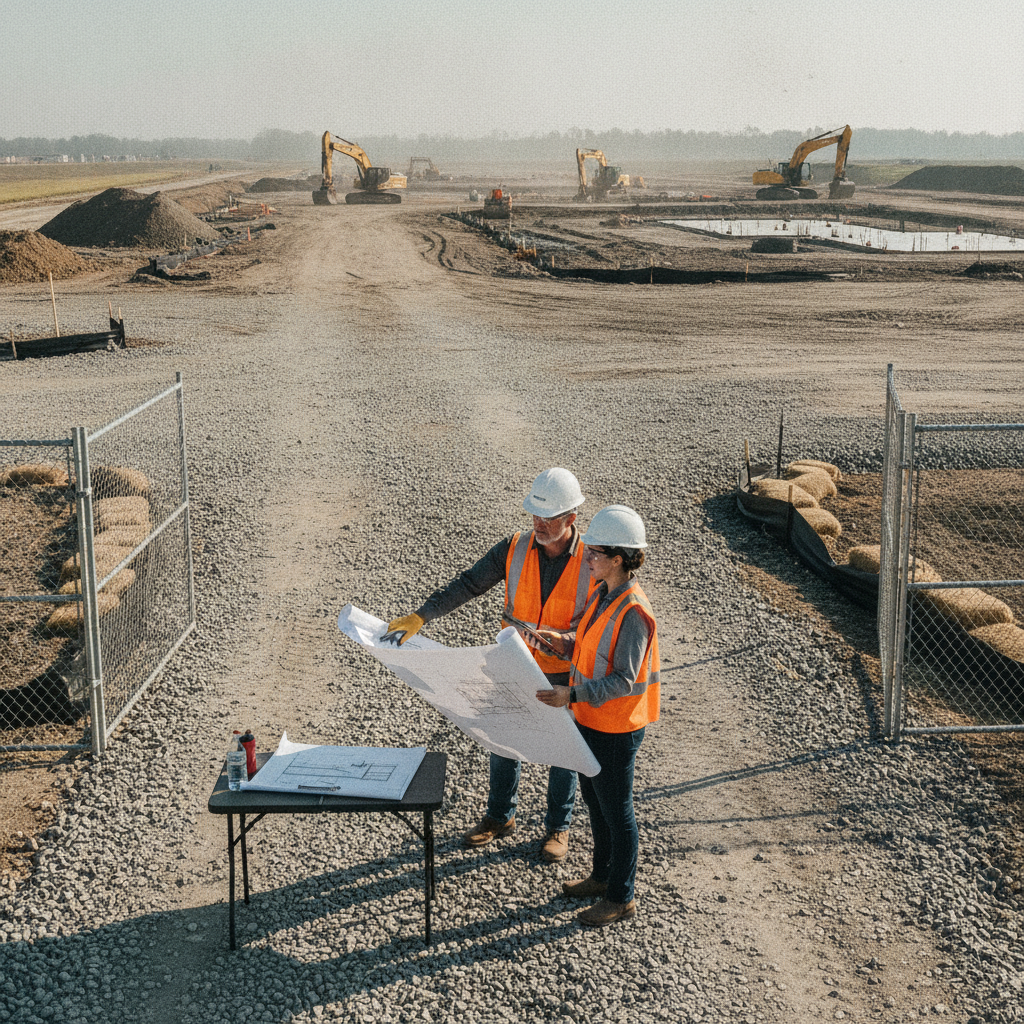
Understanding the NPDES Construction General Permit (CGP) Framework
Any construction project that disturbs one or more acres of land is required to obtain coverage under the National Pollutant Discharge Elimination System (NPDES) Construction General Permit (CGP). Data center projects, which often span dozens of acres, easily exceed this threshold. In Florida, this program is administered by the Florida Department of Environmental Protection (FDEP). The CGP is the regulatory mechanism designed to prevent construction-related pollutants, primarily sediment from disturbed soils, from contaminating nearby water bodies. The entire SWPPP process is built around compliance with the CGP. The permit outlines the minimum requirements for erosion and sediment controls, inspection schedules, record-keeping, and eventual permit termination. For data center developers, understanding that the SWPPP is a legal commitment to the FDEP is the first step. Failure to develop, implement, or maintain the SWPPP can result in significant financial penalties and project delays, making proactive stormwater management a non-negotiable aspect of the project’s civil engineering design.
Initiating Permit Coverage: The Notice of Intent (NOI)
Key SWPPP Components for Data Center Development
| Component | Regulatory Purpose | Data Center-Specific Consideration |
|---|---|---|
| Notice of Intent (NOI) | To formally request coverage under the NPDES CGP from the FDEP. | Must accurately reflect the massive scale of land disturbance typical for data center campuses. |
| Erosion & Sediment Control Plan (Site Maps) | To provide a visual guide for the installation and maintenance of all BMPs. | Must account for large, flat building pads, extensive utility trenching, and perimeter security fencing lines. |
| Sediment Control BMPs | To capture eroded soil and prevent it from leaving the site. | Requires robust controls like sediment basins or traps to manage runoff from vast graded areas. Silt fence alone is insufficient. |
| Inspection & Maintenance Logs | To document ongoing compliance, BMP condition, and corrective actions. | Inspection frequency is high due to Florida's rainfall patterns; logs must be meticulously maintained and available on-site. |
| SWPPP Amendments | To update the plan as construction phases, site conditions, or BMPs change. | Critical for multi-year build-outs, ensuring the SWPPP reflects the current stage of development, not the initial plan. |
| Notice of Termination (NOT) | To formally end permit coverage once the site achieves final stabilization. | Requires demonstrating at least 70% uniform vegetative cover or installation of permanent surfaces across all disturbed areas. |
Formal permit coverage begins with the submission of a Notice of Intent (NOI) to the FDEP. This document serves as the official application to be covered under the state’s CGP. The NOI is a fact-based form that provides the agency with essential information about the project, including the legal name of the operator (typically the property owner or developer), the precise location and boundaries of the site, the total acreage, and the estimated area of land disturbance. A critical component of the NOI is identifying the ultimate receiving waters—the streams, lakes, or rivers that stormwater runoff from the site will eventually reach. This information dictates the level of scrutiny and the types of Best Management Practices (BMPs) that may be required. Submitting an accurate and complete NOI is a crucial first step. An experienced civil engineering firm can ensure all information is correct, preventing delays in the agency review process and securing timely permit coverage before any earth-moving activities commence.
The Core of the SWPPP: Site Maps and BMP Narratives
The SWPPP document itself is a comprehensive plan detailing how stormwater pollution will be controlled throughout the construction lifecycle. It is a site-specific, living document that combines detailed drawings with narrative descriptions of pollution prevention strategies. It must be prepared before the NOI is filed and kept on-site at all times. Detailed Site Maps The visual core of the SWPPP is the set of erosion and sediment control plans. These drawings must clearly delineate key features, including the limits of disturbance, property lines, locations of all structural and non-structural BMPs, drainage patterns during construction, locations of soil stockpiles and waste receptacles, construction entrances, and stormwater discharge points. For a complex data center site, these maps are essential for contractors to correctly install and maintain controls. Best Management Practice (BMP) Selection The narrative portion of the SWPPP describes the chosen Best Management Practices (BMPs) and the rationale for their use. BMPs are divided into two main categories: erosion controls, which prevent soil from detaching in the first place (e.g., temporary seeding, mulching), and sediment controls, which capture soil that has already been eroded (e.g., silt fences, inlet protection, sediment basins). The plan must also include BMPs for non-stormwater pollution, such as concrete washout areas and spill prevention plans. Selecting the right BMPs for Florida’s intense rainfall events is critical for effective stormwater management.
Defining Roles: Operator and Contractor Responsibilities
The CGP clearly defines the roles and responsibilities of the parties involved. The “operator”—usually the data center owner or developer—holds the permit and is ultimately legally responsible for all aspects of SWPPP compliance. This includes ensuring the plan is properly prepared, implemented, and maintained. While the operator holds the liability, the general contractor and their subcontractors are responsible for the day-to-day implementation of the SWPPP on the ground. This division of responsibility makes communication and documentation paramount. A pre-construction meeting is essential to review the SWPPP with the entire construction team, clarifying all operator responsibilities and contractor duties. The SWPPP should explicitly name the individuals responsible for inspections, maintenance, and record-keeping. This clear chain of command, established through diligent construction administration, is vital for maintaining compliance and avoiding misunderstandings that can lead to violations.
Ongoing Compliance: Inspections, Logs, and Corrective Actions
A SWPPP is not a file-and-forget document. Ongoing compliance requires a rigorous inspection and maintenance program. The CGP mandates a minimum inspection frequency: either once every seven calendar days or within 24 hours of a storm event of 0.5 inches or greater. In Florida, where heavy rainfall is common, this often means multiple inspections per week. Each inspection must be documented in a report that notes the condition of all BMPs and identifies any required maintenance. Meticulous record-keeping is a developer’s best defense during a regulatory audit. This includes maintaining detailed rainfall logs, inspection reports, and documentation of all corrective actions taken. When an inspection reveals a deficient BMP, the SWPPP must describe the procedures for making repairs promptly. Documenting this entire process—from identification of an issue to its resolution—demonstrates a good-faith effort to maintain regulatory compliance and protect water quality.
Adapting to Change: SWPPP Amendments for Phased Construction
Data center construction is rarely a linear process. It often occurs in distinct phases, with different areas of the site being developed over months or even years. The SWPPP must evolve with the project. A significant change in the scope or sequencing of construction activities requires a formal update to the plan. This is known as a SWPPP amendment. For example, as one phase of the site reaches final stabilization and another begins mass grading, the location and type of BMPs will need to change. The erosion control plans must be updated to reflect the current state of the site. This flexibility is crucial for maintaining compliance throughout a long-term phased construction project. The SWPPP must be a living document, accurately reflecting the site logistics and drainage design at every stage of development.
RSP Engineers’ Approach to SWPPP Management
At RSP Engineers, we view SWPPP management as an integral part of the site development process, not an afterthought. Our approach is proactive and comprehensive. We begin with a thorough site assessment to understand the unique drainage characteristics and environmental sensitivities of the property. From there, we develop a customized, practical SWPPP that meets all FDEP requirements while being efficient for the contractor to implement. We handle the preparation and submission of all permit submittals, including the NOI, ensuring a smooth start to the project. During construction, we can provide certified third-party inspection services, acting as the owner’s representative to verify compliance and identify potential issues before they become violations. Our expertise in stormwater management allows us to recommend effective corrective actions and manage SWPPP amendments as the project evolves. Our goal is to provide end-to-end support, from initial planning through final stabilization and permit closure, giving data center developers peace of mind.
Common SWPPP Pitfalls on Data Center Sites
Even with a well-written plan, implementation challenges can arise. On large data center projects, some of the most common pitfalls include improper BMP installation, particularly with silt fences that are not correctly trenched or staked. Another frequent issue is inadequate maintenance of the stabilized construction entrance, leading to sediment track-out onto public roads, which is a highly visible violation. Failure to amend the SWPPP during major phasing changes is also a common oversight that can be flagged during an agency review. Perhaps the most critical failure is incomplete or missing documentation. If an FDEP inspector arrives and the inspection logs are not up-to-date, it is an immediate violation, regardless of how well the BMPs are performing. These issues can lead to Notices of Violation, fines, and in severe cases, a stop-work order that can derail a project schedule. Proactive management is the only way to avoid these preventable setbacks. Frequently Asked Questions (FAQs) Who is legally considered the ‘operator’ responsible for the SWPPP? The ‘operator’ is the party with primary operational control over the construction plans and specifications, which is typically the data center owner or developer. While the general contractor implements the plan, the owner holds the ultimate legal responsibility for NPDES permit compliance. What happens if we start earthwork before filing a Notice of Intent (NOI)? Starting land-disturbing activities without active CGP coverage is a significant violation of the Clean Water Act. This can result in substantial fines from the FDEP and may require the project to halt all construction until the proper permit submittals are completed and approved. How often does the SWPPP need to be updated or amended? The SWPPP must be amended whenever there is a significant change in the project’s design, scope, or construction sequencing that could affect stormwater discharges. This includes changes in the limits of disturbance, modifications to the drainage design, or the addition of new Best Management Practices (BMPs). What is ‘final stabilization’ and why is it important for closing the permit? Final stabilization is the point at which all soil-disturbing activities are complete and the site is protected from erosion. This is typically achieved when a perennial vegetative cover with a density of 70% has been established over all unpaved areas, or when permanent structures like buildings and pavement are in place. Achieving final stabilization is a prerequisite for submitting the Notice of Termination (NOT) and closing out the permit. Can we use a generic SWPPP template for our data center project in Florida? No. A SWPPP must be site-specific. A generic template will not account for the unique topography, soil types, receiving waters, or local rainfall patterns of your project. A Florida SWPPP must be tailored to meet FDEP requirements and address the specific challenges of the site, making a custom plan prepared by a qualified Professional Engineer essential.
Your Partner for Mission-Critical Site Development
Navigating the complexities of SWPPP compliance for a data center project requires specialized expertise. The team at RSP Engineers provides the robust Florida civil engineering services needed to manage environmental permitting seamlessly. From initial due diligence and site development planning to comprehensive stormwater management design and construction-phase support, we ensure your project stays on schedule and in compliance. Contact us today to discuss how we can support your next mission-critical facility.
Conclusion
For data center developers in Florida, a Stormwater Pollution Prevention Plan is a foundational element of project success. It is a dynamic and legally binding tool for managing environmental risk throughout the construction process. Proactive planning, proper implementation of Best Management Practices (BMPs), and meticulous documentation are essential for maintaining stormwater compliance. By partnering with an experienced civil engineering firm, developers can navigate the regulatory landscape with confidence, ensuring their large-scale site development projects are protected from costly delays and environmental liabilities.
FAQs
-
Data Center SWPPP Preparation Guide requires careful planning, qualified engineering, and compliance with the applicable codes and permits.
-
Getting Data Center SWPPP Preparation Guide right protects safety, supports regulatory compliance, and avoids costly redesigns or delays.
-
RSP Engineers provides licensed expertise and end-to-end support for Data Center SWPPP Preparation Guide, from early planning through permitting.