
Data Center Agency Coordination
Successful data center development requires expert agency coordination. Learn how civil engineering navigates local, state, and federal reviews for zoning, utilities, and environmental permits.
Identifying the Key Players: A Multi-Jurisdictional Overview
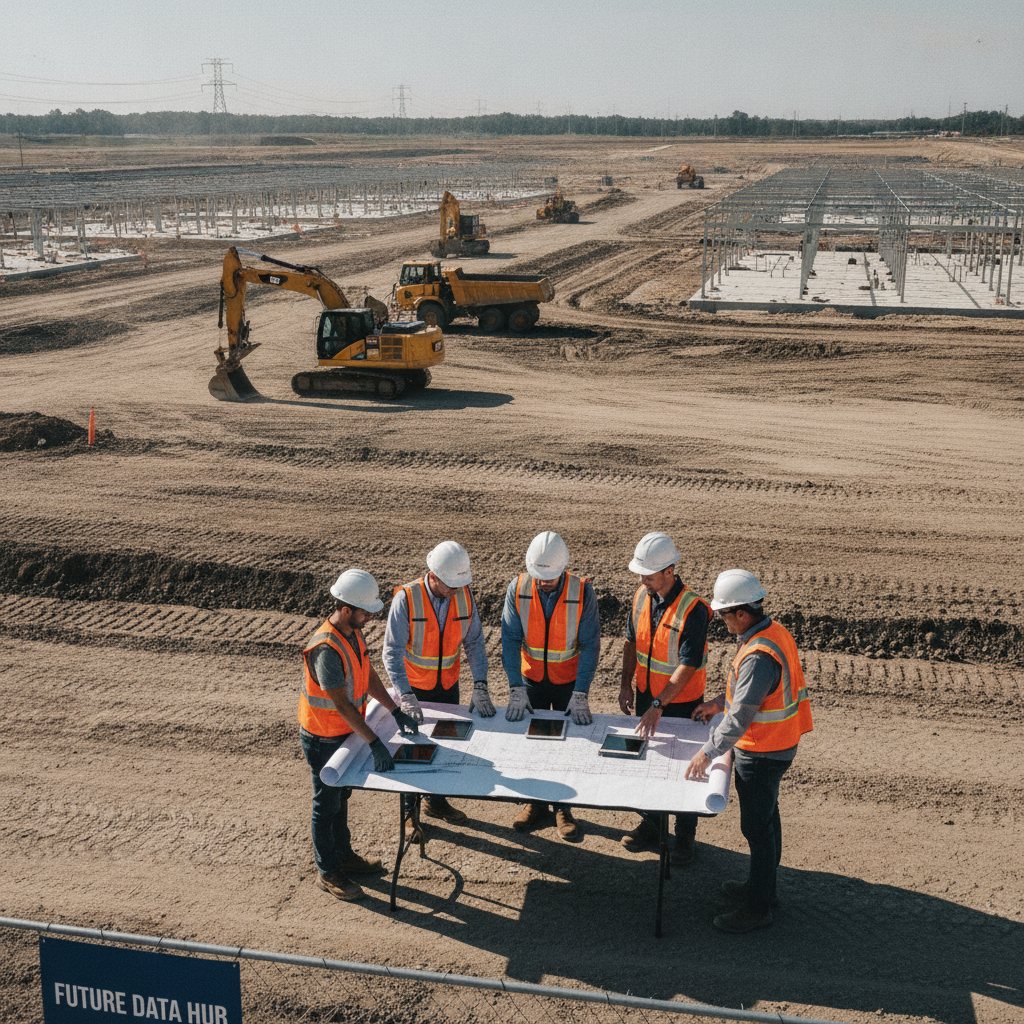
A data center project is never reviewed in a vacuum. It requires approvals from a diverse group of entities spanning local, regional, state, and even federal levels. The first step in any successful land development strategy is to identify every single authority having jurisdiction (AHJ) over the project site. This network of reviewers forms the critical path for entitlements and permits, and understanding their individual roles is paramount. Typical stakeholders include local planning and zoning departments, which govern land use and site layout; public works or engineering departments, which oversee infrastructure like roads and stormwater management; and building departments, which enforce structural and life safety codes. Beyond the local level, projects often require approvals from regional or state environmental agencies for issues like air quality and water resources, and transportation departments for traffic impacts. Furthermore, federal agencies may be involved if the project impacts wetlands, endangered species, or navigable waters. Finally, private and public utility providers for power, water, sewer, and fiber are critical partners whose requirements must be integrated from day one. Permitting requirements vary by jurisdiction, and every project team should confirm the applicable standards with the local, state, regional, and federal authorities that hold review authority over the site. A skilled civil engineering partner is essential for identifying this complete list of stakeholders during the initial due diligence phase to prevent surprises later in the site development process. This initial outreach forms the basis of the entire permitting strategy.
The Strategic Importance of Pre-Application Meetings
Key Agency Review Focus Areas for Data Centers
| Agency/Department | Primary Focus Area | Common Data Center Considerations |
|---|---|---|
| Local Planning & Zoning | Land Use & Entitlements | Setbacks, height limits, noise ordinances (for generators), architectural standards, public hearing process. |
| Public Works / Engineering Dept. | Site Infrastructure | Stormwater management, roadway access, utility connections, grading and erosion control, ADA compliance. |
| State Environmental Agency | Environmental Compliance | NPDES permits, air quality permits (for generators), water use permits, wetland/habitat protection. |
| Utility Provider (Power) | Electrical Infrastructure | Substation location, transmission line easements, capacity availability, redundancy requirements, lead times for construction. |
| Fire Marshal / Fire Department | Life Safety & Access | Fire suppression systems, emergency vehicle access roads, hazardous materials storage (diesel fuel), fire flow requirements. |
One of the most effective tools for de-risking the entitlement process is the pre-application meeting. This formal or informal meeting with agency staff allows the development team to present the project concept before significant engineering resources are expended. It is an opportunity to get preliminary feedback, identify potential red flags, and understand the specific submittal requirements and review timelines for each agency. A well-prepared pre-application meeting sets a collaborative tone for the entire project. During these meetings, the goal is to uncover critical path items early. This could include identifying the need for a traffic impact study, confirming the process for a zoning variance, or understanding the capacity limitations of the local electrical grid. By engaging reviewers as partners in the problem-solving process, development teams can often find creative solutions to complex zoning compliance or design challenges. This proactive communication helps build trust and can significantly streamline the formal agency review process once permit submittals are made.
Zoning, Land Use, and Entitlement Pathways
Before any dirt can be moved, a project must secure its fundamental land use rights, a process known as entitlement. This begins with a thorough analysis of the local zoning ordinance to confirm that a data center is a permitted use on the subject property. Given their unique operational characteristics—such as high power consumption, the need for backup generators, and 24/7 operation—data centers may require a conditional use permit or special exception, which often involves public hearings and discretionary approval from a local board or council. The entitlement process involves demonstrating compliance with all dimensional standards, including setbacks, building height, lot coverage, and parking requirements. The civil engineering team prepares a detailed site plan design that illustrates how the project meets these codes. If deviations are necessary, a variance application must be filed, requiring the project to prove that a unique hardship prevents strict compliance. Successfully navigating this phase requires a deep understanding of local political landscapes and clear, persuasive communication with both agency staff and public officials.
Utility Coordination: Power, Water, and Fiber Demands
Data centers are defined by their immense appetite for utilities, particularly power. Securing a commitment from the local electric utility is arguably the most critical and longest lead-time item in the entire development process. Effective utility coordination begins months, or even years, before construction. It involves detailed load letter submissions, system impact studies to assess the grid’s capacity, and extensive negotiations for the design and construction of new substations and transmission lines. Beyond power, data centers require significant water for cooling systems and reliable sanitary sewer service. The project team must work closely with the local water and sewer authority to confirm capacity and identify any necessary off-site improvements. Equally important is fiber optic connectivity. Coordinating with multiple telecommunication providers to ensure redundant, low-latency fiber paths to the site is essential for mission-critical operations. A comprehensive utility coordination plan is a foundational element of the overall civil engineering design.
Environmental and Stormwater Permitting Complexities
Data center campuses often involve large areas of impervious surfaces, such as rooftops and parking lots, which makes stormwater management a primary design and permitting challenge. A robust drainage design is required to manage the quantity and quality of stormwater runoff in compliance with local, state, and federal regulations, such as the National Pollutant Discharge Elimination System (NPDES) program. This typically involves designing features like detention or retention ponds, underground storage systems, and water quality treatment units. Beyond stormwater, projects may trigger other environmental reviews. If a site contains wetlands or streams, a permit from the U.S. Army Corps of Engineers under Section 404 of the Clean Water Act may be required. The presence of threatened or endangered species could necessitate consultation with the U.S. Fish and Wildlife Service. Additionally, backup generators may require air quality permits from the state environmental agency. A thorough environmental assessment during due diligence is critical to identify these potential constraints and build the necessary permitting timelines into the project schedule.
Transportation and Access Management
Safe and efficient access to the data center site is a key concern for local and state transportation agencies. The development team must demonstrate that the project will not unduly impact the surrounding road network. This often requires a formal Traffic Impact Analysis (TIA) to quantify the project’s trip generation and identify any required roadway improvements, such as new turn lanes, traffic signals, or deceleration lanes. The site plan design must also incorporate safe internal circulation for both employee vehicles and large delivery trucks. All site access points, pedestrian pathways, and parking areas must be designed in strict accordance with the Americans with Disabilities Act (ADA). Ensuring full ADA compliance is a non-negotiable requirement enforced by local building and engineering departments. This includes proper slope, cross-slope, and surface treatments for all sidewalks, curb ramps, and accessible parking spaces. Careful attention to these details during the civil engineering design phase prevents costly rework during construction.
The RSP Engineers Approach to Agency Coordination
At RSP Engineers, we treat agency coordination as a core project management discipline. Our approach is built on a proactive, systematic process designed to minimize risk and accelerate schedules. We begin with comprehensive due diligence to identify all jurisdictional authorities and their specific requirements. We then develop a master permitting strategy and timeline that maps out every submittal and approval needed. We lead pre-application meetings to build consensus and resolve issues early. By managing concurrent submittals to multiple agencies and maintaining a single point of contact, we ensure consistency and prevent conflicting information. Our team provides persistent, professional follow-up to keep reviews on track, and we take the lead in negotiating resolutions to agency comments. This structured process continues through permit issuance and into the construction phase, ensuring a smooth transition from paper to project.
Common Pitfalls in Data Center Permitting and How to Avoid Them
Even with a solid plan, data center permitting can present unique challenges. One common pitfall is underestimating the lead time for utility providers, especially for power. Early and continuous engagement is the only way to mitigate this risk. Another issue is receiving conflicting comments from different review agencies—for example, the fire marshal may require an access road that conflicts with an environmental setback. Resolving these requires bringing the agencies together to negotiate a mutually acceptable design solution. Phased construction, common for large data center campuses, adds another layer of complexity, requiring careful sequencing of permits for grading, infrastructure, and individual buildings. Finally, regulations can change mid-project, so it is vital to have an engineering partner who stays current on evolving codes and can adapt the design accordingly. Frequently Asked Questions About Data Center Agency Coordination How early should we start agency coordination? Agency coordination should begin during the earliest stages of site selection and due diligence. Early engagement allows you to identify fatal flaws, understand major infrastructure requirements, and build realistic timelines and budgets before committing significant capital to a property. What is the biggest challenge in securing utility commitments? The single greatest challenge is typically the long lead time required for high-capacity electrical infrastructure. Power providers often need 18-36 months or more to design and build new substations and transmission lines. This requires persistent utility coordination and making it the first priority in the development schedule. How do you handle conflicting requirements from different agencies? This is best handled through proactive communication and, when necessary, facilitating joint meetings between the conflicting agencies. The goal is to present the issue clearly and propose design solutions that can satisfy all regulatory objectives. A central point of contact, like the civil engineering firm, is crucial for managing these negotiations. Can a data center project be fast-tracked through permitting? While some jurisdictions offer expedited review programs for economic development projects, there are no guarantees. The fastest path to a permit is always a complete, accurate, and fully compliant permit submittal package. A thorough and professional submission minimizes review comments and reduces the number of resubmittal cycles. What role does the civil engineering firm play after permits are issued? After permits are issued, the civil engineering firm’s role transitions to construction administration. This includes responding to contractor questions (RFIs), reviewing material submittals (shop drawings), performing periodic site observations, and ultimately certifying that the site improvements were built in accordance with the approved site plan design and permits. How are federal regulations like NEPA or the Endangered Species Act triggered? Federal regulations are typically triggered when a project requires a federal permit or involves federal funding. For example, impacting a federally protected wetland requires a Clean Water Act Section 404 permit from the U.S. Army Corps of Engineers, which in turn can trigger a review under the National Environmental Policy Act (NEPA) and the Endangered Species Act. This initiates a formal agency review process that runs parallel to local and state approvals.
Partner with RSP Engineers for Your Mission-Critical Project
The success of your data center project hinges on a meticulously executed permitting and entitlement strategy. The complexities of multi-agency review demand an experienced partner who can anticipate challenges and proactively manage the process. RSP Engineers provides comprehensive civil engineering and site development services tailored to the unique needs of mission-critical facilities. Our team excels at navigating complex regulatory environments nationwide, from initial due diligence and zoning compliance to detailed utility coordination and final permit acquisition. Let us be your single point of contact to streamline agency approvals and keep your project on its aggressive schedule. Contact us today to discuss how we can support your next data center development.
Conclusion: Coordinated Strategy is Key to Success
Successfully developing a data center requires more than just steel and concrete; it requires a sophisticated understanding of the regulatory landscape. Proactive engagement, a clear permitting strategy, and a deep technical expertise in civil engineering are the pillars of an effective agency coordination effort. By treating agency review not as an obstacle but as a managed process, developers can mitigate risk, avoid costly delays, and ensure a predictable path to operation. An experienced civil engineering partner who can manage the intricate details of agency review is an invaluable asset in achieving successful land development outcomes for these critical infrastructure projects.
FAQs
-
Data Center Agency Coordination requires careful planning, qualified engineering, and compliance with the applicable codes and permits.
-
Getting Data Center Agency Coordination right protects safety, supports regulatory compliance, and avoids costly redesigns or delays.
-
RSP Engineers provides licensed expertise and end-to-end support for Data Center Agency Coordination, from early planning through permitting.