
Data Center Stormwater Permitting Guide
A comprehensive guide by RSP Engineers on navigating the complex stormwater permitting process for data center development, covering ERP, NPDES, and local agency review.
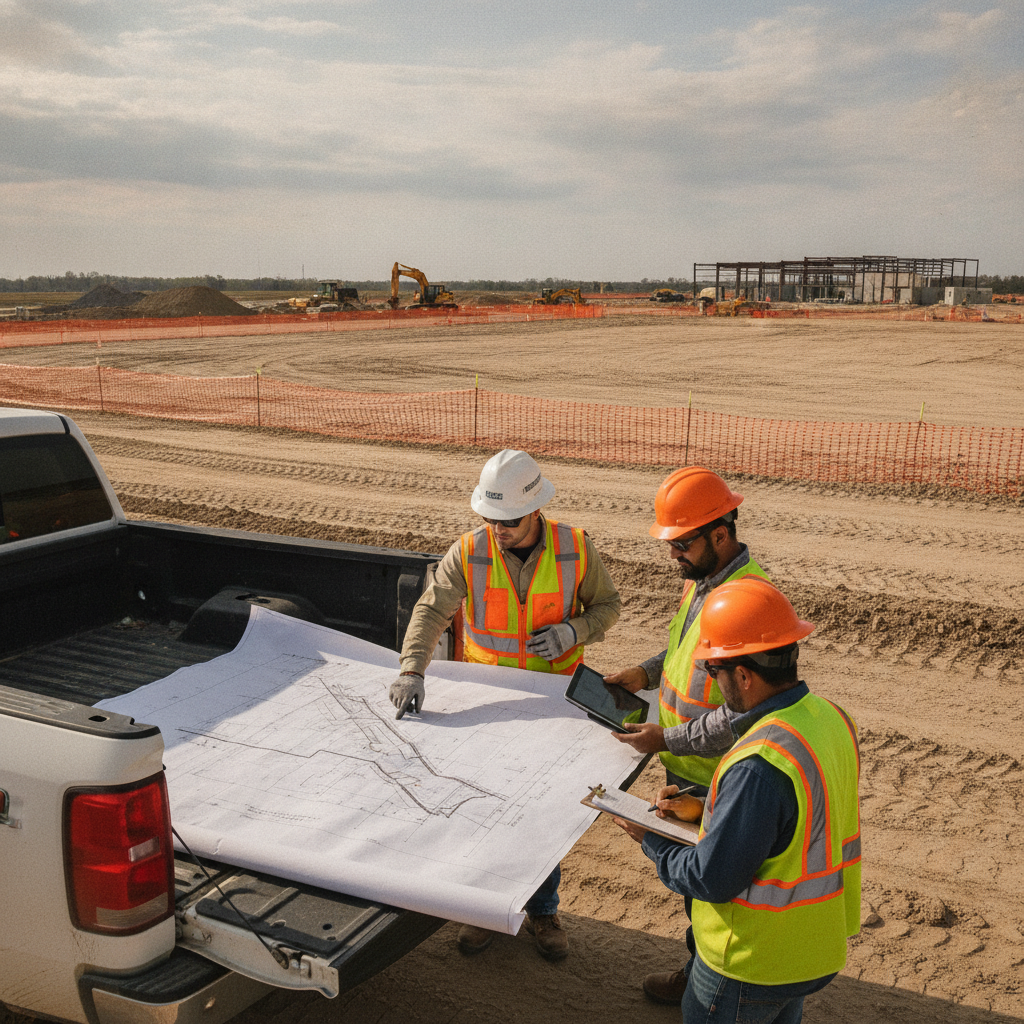
The Unique Stormwater Profile of Data Center Sites
Data centers are unlike typical commercial developments from a stormwater perspective. Their design prioritizes security, redundancy, and massive cooling and power infrastructure, resulting in expansive rooftops and large areas of pavement for service yards and parking. This high percentage of impervious coverage dramatically increases the volume and rate of stormwater runoff compared to a pre-development condition. Consequently, the drainage design must be robust enough to manage significant storm events without threatening the facility’s operational integrity. The primary engineering challenge is to control peak discharge rates to pre-development levels while also providing stringent water quality treatment as required by regulations. Furthermore, the high value of the equipment and the critical nature of the data housed within mean that flood protection is paramount. The site must be designed to be resilient against extreme weather, often requiring finished floor elevations to be set well above the 100-year base flood elevation and necessitating meticulous floodplain management strategies.
Navigating Multi-Agency Permitting Landscape
Data Center Stormwater Permit Submittal Comparison
| Permit Type | Key Submittal Documents | Primary Review Focus |
|---|---|---|
| WMD Environmental Resource Permit (ERP) | ERP Application, Drainage Report with H&H Modeling, Construction Plans, Geotechnical Report, Environmental Assessment | Water quality treatment, peak discharge attenuation, flood protection, wetland/habitat impacts, floodplain encroachment. |
| FDEP NPDES Construction Generic Permit (CGP) | Notice of Intent (NOI), Stormwater Pollution Prevention Plan (SWPPP) | Erosion and sediment control during construction, pollution prevention measures, inspection and maintenance protocols. |
| Local Municipal Site Development Permit | Site Plan Set, Utility Plans, Grading and Drainage Plans, Landscaping/Lighting Plans, Local Permit Application | Compliance with local land development code, utility connection standards, fire access, ADA compliance, local drainage criteria. |
| USACE Section 404/401 Permit (if applicable) | Joint Application, Jurisdictional Determination Request, Alternatives Analysis, Mitigation Plan | Impacts to Waters of the U.S. (wetlands, streams), dredge and fill activities, compensatory mitigation requirements. |
| Local Utility Authority Permits | Utility-specific connection applications, capacity analysis reports, detailed plans for water/sewer/reclaimed connections | System capacity, connection point specifics, compliance with utility material and construction standards, backflow prevention. |
Successfully permitting a data center in requires coordinating with a hierarchy of government agencies, each with its own jurisdiction and set of rules. The process is not linear and often involves concurrent reviews. A seasoned Civil Engineer near me will typically manage applications with local municipalities (city or county), one of the Water Management Districts (WMDs), the Department of Environmental Protection (FDEP), and, if wetlands or other federal waters are impacted, the U.S. Army Corps of Engineers (USACE). The cornerstone permit for major projects is the Environmental Resource Permit (ERP), issued by the WMDs or FDEP. This comprehensive permit governs everything from stormwater management and flood control to wetland impacts. Concurrently, any construction project disturbing one or more acres of land must obtain a National Pollutant Discharge Elimination System (NPDES) Construction Generic Permit (CGP) from the FDEP. Finally, local governments conduct their own review to ensure compliance with their specific land development code, zoning ordinances, and infrastructure standards.
The Environmental Resource Permit (ERP): The Cornerstone of Stormwater Design
The Environmental Resource Permit (ERP) is the most intensive and critical component of the stormwater permitting process. It consolidates what were once separate dredging, filling, and stormwater management permits into a single, comprehensive review. The ERP application must demonstrate that the project will not cause adverse impacts to water resources. This involves two primary components: water quantity and water quality. For quantity, the design must show no negative impact on off-site properties, typically by attenuating post-development runoff to pre-development rates through detention systems. For water quality, the design must incorporate a treatment train of Best Management Practices (BMPs) to remove pollutants from stormwater runoff before it leaves the site. For data centers, this often involves wet detention ponds, dry retention systems that promote infiltration, or proprietary treatment devices. The engineering package supporting the ERP application is substantial, requiring detailed hydrologic and hydraulic modeling, construction plans, and environmental assessments. The accuracy of the pre- and post-development hydrographs is scrutinized heavily by agency reviewers.
Securing the NPDES Construction Generic Permit (CGP)
While the ERP focuses on the permanent stormwater system, the NPDES Construction Generic Permit (CGP) addresses temporary impacts during the construction phase. Its purpose is to prevent soil erosion and sedimentation from polluting nearby water bodies. The core requirement for obtaining this permit is the development of a comprehensive Stormwater Pollution Prevention Plan (SWPPP). This plan is a living document that must be maintained on-site throughout construction. The SWPPP details the specific erosion and sediment control measures to be used, such as silt fencing, floating turbidity barriers in adjacent waterways, and stabilized construction entrances. It also outlines procedures for site inspections, maintenance of control measures, and record-keeping. The process begins by filing a Notice of Intent (NOI) with the FDEP before construction commences. Proper implementation and documentation of the SWPPP are critical for maintaining zoning compliance and avoiding costly fines or work stoppages.
Local Municipal and County Drainage Review
While the WMD and FDEP handle regional and state-level concerns, the local municipality or county has the final say on many aspects of the site development plan. Local governments enforce their own land development codes, which often include drainage criteria that are more stringent than the WMD’s minimum requirements. This review focuses on how the project interfaces with public infrastructure and the surrounding community. Key areas of scrutiny include connections to the public storm sewer system, impacts on local roadways, and adherence to specific design and material standards. During this phase, extensive utility coordination is required to ensure the proposed stormwater infrastructure does not conflict with existing or proposed public utilities. The local review also verifies compliance with fire access requirements, parking regulations, and ADA compliance for pedestrian routes. Securing a local site development permit is a prerequisite for obtaining a building permit, making this a critical path item in the project schedule.
Critical Utility and Infrastructure Coordination
Data centers are defined by their immense utility requirements, including redundant power feeds, high-capacity fiber optic lines, and substantial water service for cooling systems. The sheer density of these underground utilities creates significant challenges for the drainage design. Large-diameter storm pipes must be carefully routed to avoid conflicts with critical infrastructure, which often requires deep and complex trenching. A proactive utility coordination plan is not just recommended; it is essential. This process involves identifying all existing utilities through extensive research and Subsurface Utility Engineering (SUE), then meticulously planning the layout of new systems. The site plan design must accommodate wide utility easements and provide adequate separation between wet and dry utilities. Failing to resolve these conflicts early in the design phase can lead to major constructability issues, change orders, and delays. Effective coordination between the civil engineer, the utility providers, and the project’s MEP engineers is fundamental to a successful outcome.
The RSP Engineers Permitting Strategy
At RSP Engineers, our approach to data center permitting is built on a foundation of proactive strategy and meticulous execution. We begin every project with a comprehensive due diligence and feasibility study to identify potential permitting hurdles, environmental constraints, and utility conflicts before significant capital is invested. This includes preliminary site layouts, environmental screenings, and initial consultations with key agency review staff. This early engagement helps set realistic expectations for project timelines and budgets. Following due diligence, we facilitate pre-application meetings with the WMD and local government to introduce the project and gain early feedback on our proposed drainage design and overall site strategy. This collaborative approach helps streamline the formal review process. Our team then prepares a complete and defensible permit submittal package, anticipating reviewer questions to minimize Requests for Additional Information (RAIs). During the review, we serve as the primary point of contact, efficiently managing communications and negotiating solutions. Our involvement extends through construction administration to ensure the built project complies with all permit conditions.
Common Pitfalls in Data Center Stormwater Permitting
Even with careful planning, data center projects can encounter permitting obstacles. One of the most common issues is an incomplete or inaccurate assessment of existing site conditions. This can include overlooking small, isolated wetlands that can trigger significant mitigation requirements or relying on outdated floodplain maps. A thorough Geotechnical soil report is critical; failing to perform adequate soil boring test investigations can lead to incorrect assumptions about soil permeability, forcing costly redesigns of stormwater ponds from infiltration to detention systems. Another frequent pitfall is underestimating agency review timelines. Major ERP applications can take 6-12 months or longer, especially if the project is complex or faces public opposition. The project schedule must realistically account for this, including potential rounds of RAIs and resubmittals. Finally, late-stage changes to the site layout or building footprint can have a cascading effect, often requiring a full resubmittal of the stormwater management plan and restarting the review clock. Early design freezes for critical site elements are crucial.
Your Partner for Mission-Critical Site Development
Navigating the complexities of stormwater regulations for a mission-critical facility requires specialized expertise. The stakes are too high for a trial-and-error approach. At RSP Engineers, we provide the strategic guidance and technical excellence needed to secure your permits efficiently. Our team is ready to assist with every stage of your project, from initial site selection and due diligence to final permit submittals and construction administration. Let us help you de-risk your development and keep your project on schedule.
Conclusion
Successful data center development is inextricably linked to a well-executed stormwater permitting strategy. The process is a multi-faceted challenge involving complex regulations, multiple government agencies, and unique site engineering constraints. By understanding the critical role of the ERP, managing the SWPPP process diligently, and anticipating local requirements, developers can mitigate risks. Ultimately, partnering with an experienced civil engineering firm that specializes in land development is the most effective way to navigate this landscape, ensuring your facility is built on a foundation of compliance and resilience.
FAQs
-
For a large-scale data center, a realistic timeline for securing all major stormwater and site development permits is 9 to 15 months. This can vary based on project complexity, site-specific environmental issues, and the workload of the reviewing agencies. The timeline must account for preparing the initial permit submittals, the agency’s initial 30-day review for completeness, and at least one or two rounds of Requests for Additional Information (RAIs), each of which can add several weeks or months to the process.
-
The most significant mistake is failing to engage experienced Civil Engineers early in the site selection and due diligence phase. A thorough upfront analysis can identify fatal flaws—such as major floodplain or wetland constraints—before a property is acquired. Early engagement allows for the development of a cohesive site development strategy that integrates permitting requirements from day one, saving time and money.
-
Yes, phasing is common for large data center campuses. However, it requires a carefully structured master plan and a corresponding phasing strategy for the permits. Each phase may require its own ERP and local permit applications, or a master ERP can be established with subsequent minor modifications. This approach requires meticulous management of the overall Stormwater Pollution Prevention Plan (SWPPP) to ensure each active construction area is in compliance.