
Data Center Stormwater Maintenance Guide
A comprehensive guide for data center developers on long-term stormwater maintenance in Florida. Learn about maintenance plans, inspections, sediment removal, and regulatory compliance.
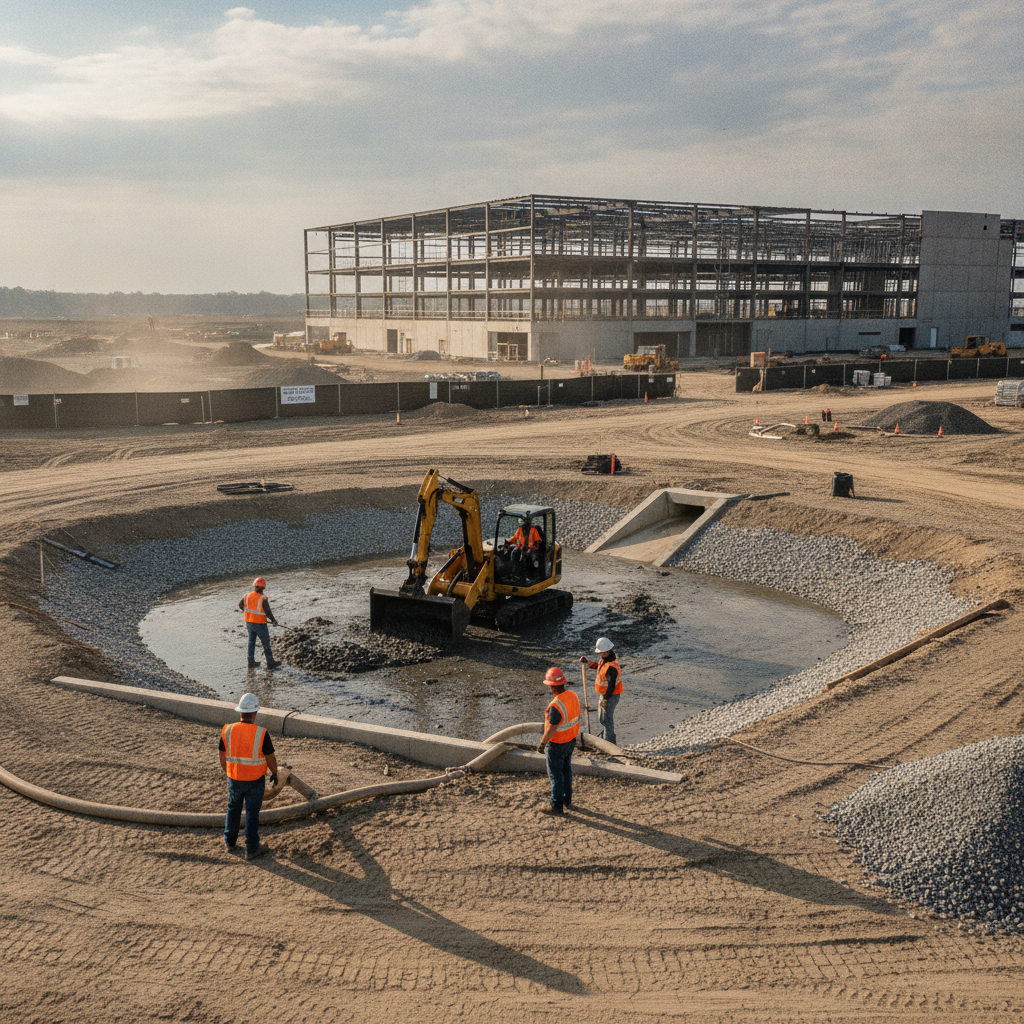
The Unique Stormwater Demands of Mission-Critical Facilities
Data centers are defined by their vast impervious surfaces. Rooftops, parking lots, and access roads prevent rainwater from naturally infiltrating the ground, leading to a massive volume of concentrated runoff. This runoff must be managed by a precisely designed stormwater management system to prevent localized flooding, erosion, and the pollution of downstream water bodies. In Florida, these systems are heavily regulated by Water Management Districts (WMDs) and local municipalities to protect the state’s sensitive ecosystems. The failure of a stormwater system at a data center has consequences far beyond a typical commercial site. Flooding can compromise critical infrastructure, including backup generators, fuel tanks, and utility vaults, threatening the facility’s 100% uptime guarantee. Therefore, the drainage design must be robust, and the maintenance plan must be executed flawlessly. This involves a deep understanding of the system’s components, from retention ponds and exfiltration trenches to complex control structures and outfalls, all of which require regular inspection and upkeep to function as designed during major storm events.
Establishing a Legally Binding Stormwater Maintenance Agreement
Data Center Stormwater Maintenance Task Schedule
| Maintenance Task | Typical Frequency | Key Performance Indicators (KPIs) | Primary Regulatory Driver |
|---|---|---|---|
| Inlet, Grate, and Swale Cleaning | Quarterly & After Major Storms | No visible debris or standing water 24 hours after a storm. | Local Municipal Code / ERP |
| Pond Bank Vegetation Management | Semi-Annually | Banks stable, no erosion, vegetation at specified height, no invasive species. | WMD / ERP O&M Plan |
| Sediment Forebay Cleanout | Every 3-5 Years (or as needed) | Sediment depth below trigger level specified in O&M plan. | WMD / ERP Permit Conditions |
| Structural Inspection (Weirs/Outfalls) | Annually | No visible cracks, spalling, or joint separation. All mechanisms functional. | O&M Plan / Engineer Certification |
| Pipe & Culvert Inspection | Every 3-5 Years | No blockages, cracks, or joint failures observed via camera inspection. | Asset Management / Flood Prevention |
| Annual Certified Inspection & Report | Annually | Submittal of a signed/sealed engineering report to the governing agency. | WMD / ERP Maintenance Agreement |
Before a project can be closed out, the governing agency requires the owner to assume responsibility for the system’s perpetual upkeep. This is formalized through a legally binding document, often called a Stormwater System Maintenance Agreement or a Restrictive Covenant. This document is recorded in public records and runs with the land, meaning the obligation automatically transfers to any future owners. It outlines the owner’s responsibilities and grants the regulatory agency—such as the local WMD or county—the right to inspect the system and enforce compliance. This agreement is a critical step in the permit closeout process. It certifies that the developer or operator has a clear plan and the financial capability to maintain the system. The agreement typically references the permitted site development plans and an operations and maintenance (O&M) manual, which details specific tasks and schedules. Failure to adhere to this agreement can result in fines, mandated corrective actions, and even liens placed on the property, making it a cornerstone of long-term zoning compliance and environmental stewardship.
Developing a Comprehensive Operations & Maintenance (O&M) Plan
An O&M Plan is the operational playbook for your stormwater system. It translates the engineered design into a practical maintenance schedule. A robust plan, often prepared by the design civil engineering firm, goes beyond a simple checklist. It should include a map of all stormwater components, detailed inspection procedures, maintenance task descriptions, and a log for recording all activities. This plan is a living document that should be updated if any modifications are made to the site. Key components of a data center’s O&M plan include protocols for managing common pollutants found on commercial sites, such as hydrocarbons from service vehicles or sediment from landscape maintenance. It specifies the required frequency for tasks like cleaning out sediment forebays, managing vegetation on pond banks, and ensuring control structures are free of debris. This plan is essential for demonstrating due diligence during an agency review and serves as the primary guide for facility maintenance staff or third-party contractors.
Routine Inspections and Proactive Maintenance Schedules
Proactive maintenance begins with a rigorous inspection schedule. Inspections should be conducted by qualified personnel who can identify subtle signs of system degradation before they become catastrophic failures. A typical schedule includes routine self-inspections (e.g., quarterly and after major storm events) and a more comprehensive annual inspection, often certified by a Professional Engineer. These inspections are crucial for verifying that the system meets its permitted performance standards. During an inspection, the focus is on key performance indicators. Is there evidence of erosion on pond banks? Is the water level in the pond consistent with the designed control structure elevation? Are inlets, pipes, and outfalls clear of debris and sediment? Proactive vegetation management is also critical; while native vegetation is encouraged for bank stabilization, invasive species or excessive growth can compromise the structural integrity of berms and clog flow paths. Documenting these inspections provides a defensible record of compliance and informs the annual maintenance budget.
Sediment and Debris Management: Removal and Disposal Protocols
All stormwater ponds are designed to capture sediment and pollutants. Over time, this material accumulates, reducing the pond’s storage volume and treatment efficiency. Sediment removal is one of the most significant recurring costs in stormwater maintenance. The O&M plan should specify the sediment level that triggers a cleanout, typically when a certain percentage of the permanent pool volume has been displaced. This is often first observed in the sediment forebay, which is designed for easier access and cleanout. Before removal, accumulated sediment may need to be tested for contaminants, especially if the site has high traffic or industrial activities. The disposal method depends on these test results. Clean sediment can often be disposed of on-site or at a standard landfill, while contaminated material requires special handling and disposal at a licensed facility, significantly increasing costs. Proper dewatering of the removed sediment is also a key step, managed using techniques like geotextile bags to prevent turbid water from re-entering the system. This entire process must be documented to comply with Florida Department of Environmental Protection (FDEP) regulations.
Structural Integrity and Repair of Stormwater Infrastructure
The physical components of a stormwater system are subject to wear and tear. Concrete outfall structures, weirs, and pipes can crack and spall over time. Metal and plastic components can corrode or become damaged. Geotextile liners in ponds and exfiltration systems can be punctured. An effective maintenance program includes regular assessments of the structural integrity of these components to identify and budget for necessary repairs. Minor issues, like sealing a cracked joint in a concrete flume, can prevent major problems like soil subsidence and berm failure. Regular pipe jetting can clear blockages before they cause upstream flooding. Ignoring these small structural issues can lead to expensive, emergency repairs that disrupt site operations. A long-term capital improvement plan should be developed based on the expected lifecycle of these materials, ensuring funds are available for major repairs or replacements as part of the facility’s overall asset management strategy.
Our Process: Integrating Maintenance into the Design Lifecycle
At RSP Engineers, we believe that a successful stormwater maintenance program begins during the initial site plan design. We design systems that are not only effective and compliant but also efficient and safe to maintain. This includes specifying appropriate access points for heavy equipment, designing stable and manageable bank slopes, and selecting durable materials for structures. We work with clients to develop a detailed O&M manual that serves as a clear, actionable guide for their facilities team. Our role extends beyond the design phase. We provide third-party inspection services, helping data center operators stay ahead of maintenance needs and fulfill their regulatory reporting obligations. By performing lifecycle cost analysis, we help clients budget accurately for long-term expenses like sediment removal and structural repairs. Our goal is to provide the comprehensive civil engineering support needed to ensure your mission-critical facility remains compliant and operationally resilient for decades.
Common Issues in Data Center Stormwater Maintenance
Even with a solid plan, operators can face challenges. One of the most common issues is deferred maintenance. Pushing off a scheduled sediment cleanout to save on the annual budget can lead to a significant loss of pond capacity, resulting in flooding and a much more expensive emergency cleanout later. Another frequent problem is improper vegetation management, where mowing crews inadvertently cause bank erosion or allow invasive species to take over, compromising the system’s ecological function and structural stability. Failure to maintain accurate records is another critical pitfall. During an agency audit, if an operator cannot produce logs of inspections and maintenance activities, they may be presumed to be non-compliant, regardless of the system’s actual condition. Finally, site modifications—such as adding a new generator pad or expanding a parking area—without updating the stormwater management model and permit can render the entire system non-compliant and undersized for new conditions.
Your Partner in Long-Term Compliance and Asset Protection
Maintaining a data center’s stormwater system is a complex, ongoing responsibility that is critical to operational continuity and regulatory compliance. Proactive management protects your multi-million dollar investment from flood risk and ensures you remain in good standing with Florida’s environmental agencies. The team at RSP Engineers provides the expert guidance needed to navigate these long-term obligations. From developing robust O&M plans during the initial design to providing certified annual inspections and lifecycle cost consulting, we are your partners in sustainable site development. Contact us today to discuss how we can support your facility’s stormwater management program and ensure your permit compliance for the long haul.
Conclusion
For data center developers and operators in Florida, stormwater management is a perpetual duty that is integral to risk management and asset preservation. A well-designed system is only as good as its maintenance program. By embracing a proactive approach grounded in a detailed O&M plan, regular inspections, and diligent recordkeeping, you can ensure regulatory compliance, prevent costly failures, and protect your mission-critical infrastructure. This commitment to long-term stewardship, supported by expert civil engineering guidance, is fundamental to the success and resilience of any large-scale site development project.
FAQs
-
Non-compliance can lead to a formal notice of violation from the regulating authority, such as a Florida Water Management District. This can result in daily fines, mandated corrective actions at the owner’s expense, and in severe cases, a lien on the property. It can also complicate future permitting for any site expansions.
-
While routine visual inspections can be done by trained facility staff, the annual inspections and certifications required by most permits must be conducted by a qualified professional, typically a Professional Engineer (P. E. ) licensed in the State of Florida with experience in water resources and stormwater management systems.
-
Florida’s intense rainfall necessitates more frequent inspections. Your O&M plan should mandate inspections after any major storm event (e. g. , one that drops over 2 inches of rain in 24 hours). These post-storm checks are crucial for identifying immediate issues like blockages, erosion, or structural damage caused by high-velocity flows.