
Data Center Civil Construction Challenges
Explore the unique civil engineering and construction challenges of data center projects, from massive earthwork and utility coordination to compressed schedules. Learn how expert site development mitigates the civil construction challenges for a data center.
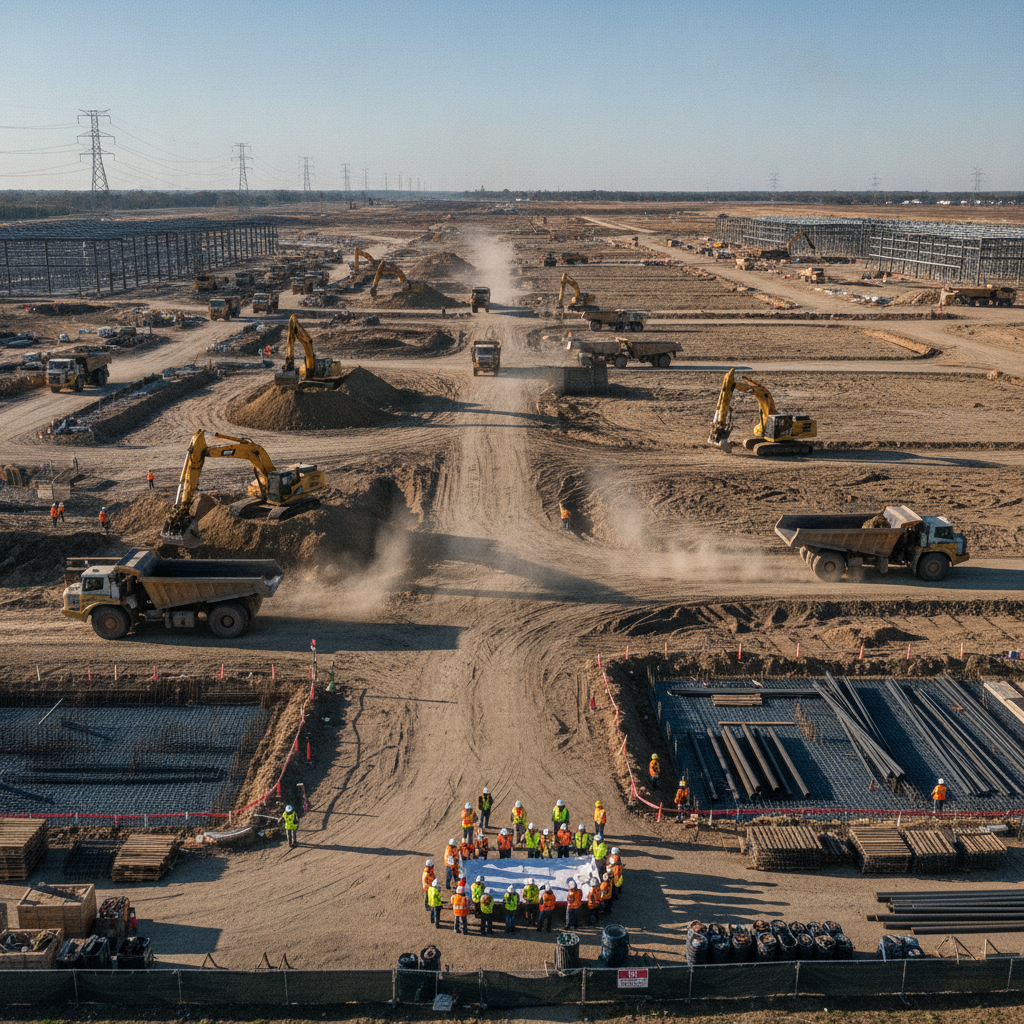
Aggressive Schedules and Speed-to-Market Pressures
The primary driver in the data center market is speed. Getting a facility online even a few weeks ahead of schedule can translate into millions of dollars in revenue. This pressure flows directly down to the site development process, compressing timelines for design, permitting, and construction. Unlike traditional development, where phases can be sequential, data center projects often require a fast-track approach where design and permitting run concurrently with early site work. This necessitates a highly collaborative and proactive civil engineering team. This accelerated schedule puts immense strain on procurement and logistics. Long-lead items like large-diameter storm pipe, high-capacity electrical conduit, and specialized drainage structures must be identified and ordered months in advance. The construction administration team must be adept at managing multiple contractors working simultaneously, ensuring that earthwork, utility installation, and foundation work are perfectly sequenced to avoid conflict and maintain momentum. Any delay in the civil phase has a cascading effect on the entire project, making meticulous planning and risk management essential.
Managing Massive Earthwork and Grading Operations
Key Civil Engineering Considerations for Data Center Site Elements
| Site Element | Key Civil Challenge | Design & Construction Strategy |
|---|---|---|
| Building & Equipment Pads | Extremely tight grading tolerances (+/- 0.1 ft) and high soil compaction requirements. | Utilize GPS-enabled grading equipment. Implement a rigorous material testing and field density testing program. |
| Underground Utility Corridors | High density of power, water, and fiber in shared trenches, creating potential for conflicts. | Develop a 3D utility model to identify and resolve clashes during design. Mandate strict adherence to horizontal/vertical separation standards. |
| Stormwater Management System | Managing massive runoff from huge impervious roofs and pavement while meeting water quality regulations. | Design large-scale detention or retention basins. Incorporate Low Impact Development (LID) features where feasible. Model systems for extreme storm events. |
| Site Access & Haul Roads | Accommodating heavy, oversized equipment deliveries and constant construction traffic. | Design roads with appropriate pavement sections and turning radii for the largest anticipated vehicles. Plan for temporary construction access to separate from public traffic. |
| Perimeter Security & Fencing | Integrating security infrastructure (fencing, gates, bollards) with site grading and drainage. | Ensure fence post footings do not conflict with underground utilities. Grade along fence lines to prevent erosion and maintain security integrity. |
| Substation & Generator Yards | Complex grounding grid requirements and containment for potential fluid spills. | Coordinate grading with electrical engineer's grounding plan. Design secondary containment features that comply with environmental regulations. |
Data centers require vast, perfectly level building pads to support their sprawling structures and heavy equipment. A typical campus can span hundreds of acres, often requiring millions of cubic yards of earth to be moved. This scale of earthwork presents significant logistical and geotechnical challenges. The initial site assessment, including a thorough Geotechnical soil report, is critical for understanding soil properties, identifying unsuitable materials, and planning for potential soil stabilization or amendment needs. The grading plan must be precise to ensure proper drainage and achieve the tight tolerances required for building foundations and equipment pads. The process involves more than just balancing cut and fill; it requires a strategic plan for stockpiling materials, managing haul routes to minimize site disruption, and implementing robust erosion and sediment control measures to maintain environmental compliance. A well-executed mass grading operation is fundamental to keeping the project on schedule and within budget, preventing costly rework down the line.
Navigating Complex Permitting and Entitlement Pathways
The sheer scale and resource intensity of data centers trigger a complex web of regulatory reviews. A successful project requires navigating zoning approvals, land use entitlements, and a host of environmental and construction permits from multiple agencies. The permitting process often involves detailed traffic impact analyses, extensive stormwater management plans to handle runoff from massive roofs and parking areas, and environmental assessments for impacts on wetlands or protected species. Because these facilities have significant water and power demands, securing utility agreements and permits is a major undertaking in itself. Permitting requirements vary by jurisdiction, and every project team should confirm the applicable standards with the local, state, regional, and federal authorities that hold review authority over the site. Proactive engagement with review agencies is crucial. A civil engineering firm with experience in large-scale land development can anticipate agency review comments and prepare comprehensive permit submittals that demonstrate full compliance, minimizing review cycles and keeping the project on its aggressive timeline.
Designing and Coordinating Congested Utility Corridors
A data center’s appetite for power, water, and fiber is immense, resulting in extraordinarily congested underground utility corridors. A single trench may contain multiple redundant power duct banks, large-diameter cooling water lines, domestic water and sewer mains, and dense bundles of fiber optic conduits. The utility coordination effort is a three-dimensional puzzle requiring meticulous planning to avoid conflicts and ensure proper separation between utilities. Effective design involves creating detailed composite utility plans that map out every conduit, pipe, and vault. This process must account for vertical and horizontal separation requirements, bending radii of conduits, and access points for future maintenance. During construction, precise execution is paramount. Any deviation from the plan can lead to a utility clash, causing significant delays and costly field changes. This is where experienced Civil Engineers and robust construction administration provide immense value, ensuring the design is buildable and correctly implemented.
Achieving Strict Tolerances for Foundations and Equipment Pads
The equipment inside a data center is incredibly heavy and sensitive to movement. Generators, chillers, and uninterruptible power supply (UPS) units require foundations and equipment pads built to extremely tight tolerances for elevation and levelness. The massive concrete slabs that form the data hall floors must be perfectly flat to support server racks. Any deviation can compromise equipment function and void warranties. This level of precision starts with the subgrade preparation. The civil engineering team works closely with the structural engineer and geotechnical consultant to specify the requirements for subgrade compaction and material quality. During construction, constant quality control is essential. This includes verifying subgrade density, checking formwork elevations before every concrete pour, and performing post-pour surveys to confirm that tolerances have been met. This rigorous approach to quality control ensures that the site infrastructure provides a stable and reliable base for the mission-critical facility it supports.
Heavy Equipment Logistics and Site Access Planning
Constructing a data center involves the delivery of massive and heavy equipment, including prefabricated electrical houses, generators, and cooling units. The civil engineering design must account for the logistics of getting this equipment from the public roadway to its final placement on site. This requires careful roadway engineering, including designing site access roads with adequate turning radii and structural capacity to handle oversized and overweight loads. The plan must also include designated staging areas and crane pads. Crane pads need to be designed on properly compacted ground to safely support the immense weight of the cranes used to lift equipment into place. The overall site access and logistics plan must be coordinated with the general contractor to ensure a safe and efficient flow of materials and equipment, preventing bottlenecks that could stall the construction schedule. This foresight in the initial site plan design phase is critical for a smooth construction process.
How RSP Engineers Manages Data Center Site Development
At RSP Engineers, our approach to mission-critical projects is built on proactive collaboration and technical precision. We embed our team with the client, architects, and contractors from the earliest stages of site selection to ensure civil engineering considerations inform every decision. Our process begins with a comprehensive due diligence and feasibility study, identifying potential site constraints, permitting hurdles, and utility capacity issues before they can impact the schedule. We leverage advanced design tools, including 3D modeling for earthwork optimization and utility clash detection, to create efficient and buildable site plans. During the entitlement phase, we act as a dedicated advocate for the project, preparing thorough submittals and engaging with regulatory agencies to secure approvals efficiently. Throughout construction, our construction administration team provides responsive support, reviewing submittals, answering RFIs, and performing regular site observations to ensure the work conforms to the design intent and quality standards demanded by mission-critical facilities.
Common Civil Construction Issues and Mitigation Strategies
Even with meticulous planning, data center construction sites can present unexpected challenges. One of the most common issues is encountering unforeseen subsurface conditions, such as rock or unsuitable soils, that were not identified in the initial geotechnical investigation. Mitigation involves having contingency plans for rock excavation or soil amendment, which can be priced into the bid, reducing the risk of costly change orders and delays. Weather is another significant variable. Extended periods of rain can halt earthwork operations and delay the entire project. An effective mitigation strategy is to develop a phased grading plan and utilize soil stabilization techniques (like cement or lime treatment) that can allow work to proceed in less-than-ideal conditions. Finally, supply chain disruptions for critical components, like precast drainage structures or specialized electrical conduit, can be a major bottleneck. We mitigate this by working with the design and construction teams early on to identify long-lead items and ensure they are ordered well in advance of when they are needed on site.
Partner with RSP Engineers for Your Mission-Critical Project
The success of your data center project depends on a solid foundation. Navigating the complexities of large-scale site development, from initial due diligence and permitting to final construction, requires a civil engineering partner with proven experience in mission-critical facilities. The team at RSP Engineers has the expertise to manage aggressive schedules, complex utility coordination, and rigorous quality control standards. We provide comprehensive site engineering services to guide your project from concept to completion. Let us help you de-risk your investment and accelerate your speed-to-market. Contact us today to discuss your project needs and learn how our proactive approach to civil engineering can ensure your data center is built on a foundation of excellence.
Conclusion: Building the Foundation for the Digital Future
The civil construction challenges of data centers are as massive as the facilities themselves. The convergence of compressed schedules, large-scale earthwork, complex utility infrastructure, and stringent regulatory hurdles demands a higher level of engineering expertise. Success requires a proactive, integrated approach that anticipates challenges and implements robust solutions from day one. An experienced civil engineering partner is not just a consultant; they are a critical member of the development team. By mastering the intricacies of site development, stormwater management, and infrastructure design, we lay the physical groundwork that enables the digital world. As the demand for data continues to grow, the role of precise, efficient, and resilient land development will only become more critical in building the future of technology.
FAQs
-
A civil engineer should be engaged during the site selection process. Early involvement allows for thorough due diligence on potential sites, including assessing zoning, utility availability, topography, and potential environmental or permitting constraints. This upfront analysis helps developers select sites with the highest probability of success and the lowest development risk.
-
The primary risk is encountering unforeseen geotechnical conditions, such as unstable soils or shallow groundwater, which can halt progress and require expensive remediation. A comprehensive Geotechnical soil report is the best mitigation tool, but it’s also crucial to have contingency plans and a responsive design team ready to address any issues that arise during mass grading.
-
The main difference is the sheer scale. Data centers create vast areas of impervious surfaces (roofs, roads, parking lots), generating enormous volumes of stormwater runoff. The drainage design must incorporate large, robust systems, such as regional-scale detention or retention ponds, to manage peak flows and meet water quality treatment requirements mandated by local and federal regulations like the NPDES program.