
Data Center Stormwater Construction QA/QC
A detailed guide for data center developers on stormwater construction QA/QC . Learn about pipe inspection, compaction, testing, and certification from RSP Engineers.
Pre-Construction Planning: Setting the Foundation for Success
The most effective QA/QC programs begin long before the first trench is dug. The pre-construction phase is dedicated to alignment and verification, ensuring that the contractor, developer, and engineering team are all working from the same set of standards. A critical first step is the pre-construction meeting, where the project team reviews the permitted plans, discusses the construction sequence, and clarifies any ambiguities in the drainage design. This meeting establishes clear lines of communication and sets expectations for inspection and reporting. Following this, a thorough review of all material submittals and shop drawings is essential. The contractor submits documentation from manufacturers for all proposed materials, including pipes (RCP, HDPE), drainage structures, geotextiles, and control structure components. The Engineer of Record meticulously compares these submittals against the project specifications and approved permitting documents. This step verifies that all materials meet the required standards for durability, capacity, and compliance, preventing non-conforming or substandard products from ever reaching the job site.
Pipe Installation Integrity: From Trench to Backfill
Key QA/QC Checkpoints for Data Center Stormwater Systems
| System Component | Key Inspection Point | Acceptance Criteria | Common Failure Mode |
|---|---|---|---|
| RCP/HDPE Pipe | Material Inspection & Joint Assembly | No cracks/damage; gaskets clean and properly seated per manufacturer specs. | Damaged pipe installed; improperly sealed joints leading to leaks. |
| Pipe Bedding & Backfill | Material Type & Compaction | Approved bedding material (e.g., #57 stone); backfill compacted to 95-98% Standard Proctor Density. | Poor compaction causing pipe deformation and surface settlement. |
| Drainage Structures | Invert & Top Elevations | Invert elevations match plans within tolerance (e.g., +/- 0.05'); top elevation matches proposed grade. | Structure set too high/low; incorrect pipe slope into/out of structure. |
| Stormwater Pond | Grading & Control Structure | Bottom/top of bank elevations and side slopes match design; weir/orifice elevations are exact. | Insufficient as-built storage volume; incorrect discharge rate. |
| Post-Installation Testing | Mandrel & Video Inspection | Mandrel passes freely (deflection <5-7.5%); video shows no defects, sags, or obstructions. | Pipe crushed during backfill; construction debris left in pipe. |
The integrity of a stormwater system is built from the ground up, starting with the pipe itself. Upon delivery, every section of pipe must be inspected for cracks, fractures, or other damage sustained during transport. Once cleared, the focus shifts to the trench. Proper excavation to the specified line and grade is verified, followed by the placement and grading of the pipe bedding—typically clean, crushed stone like #57—which provides a uniform foundation for the pipe. As pipe segments are laid, inspectors must verify that joints are clean, gaskets are properly seated, and connections are secure to ensure watertight joints. This prevents both soil infiltration and water exfiltration, which could compromise the surrounding soil structure. After the pipe is set, the process of backfilling begins. Backfill must be placed in controlled lifts, with each lift undergoing compaction testing to achieve the density specified in the geotechnical report. This rigorous process prevents future surface settlement, which could lead to pavement failure or loss of pipe slope, rendering the system ineffective.
Precision in Placement: Verifying Inverts, Slopes, and Structures
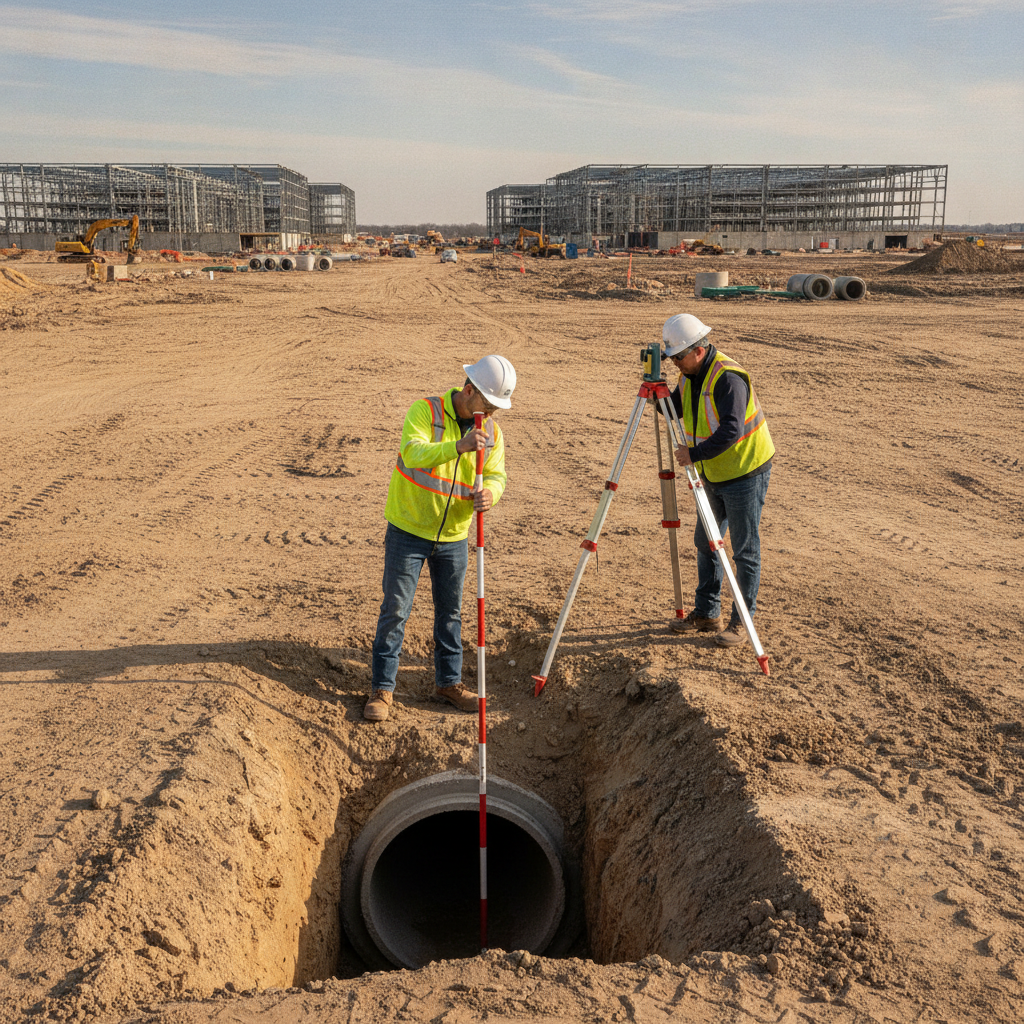
A stormwater system functions entirely on gravity, making precise elevations and slopes non-negotiable. Even minor deviations from the approved drainage design can lead to blockages, reduced capacity, or standing water. Throughout the installation process, a survey crew must be on-site to perform constant verification. They confirm that pipe invert elevations—the bottom interior surface of the pipe—are correct at every structure and change in direction. The slope of each pipe run is checked to ensure it provides adequate velocity for self-cleansing flow without causing scour. Drainage structures like inlets and manholes must be set to the correct top elevation to match the final proposed grade, and their connections to pipes must be properly grouted and sealed. This meticulous survey verification is documented in an as-built survey, which provides a permanent record that the system was constructed in accordance with the permitted plans, a key requirement for final agency acceptance.
Stormwater Management Facility (SMF) Construction and Grading
For most data center sites, a wet or dry detention/retention pond is the centerpiece of the stormwater management system. The construction of this facility requires the same level of QA/QC as the pipe network. Inspectors verify that the pond is excavated to the correct bottom elevation and that the side slopes are graded to the stable, maintainable angles shown on the plans. The elevation and configuration of the control structure—the weir, orifice, or skimmer that regulates the pond’s discharge rate—is one of the most critical inspection points, as it dictates the system’s performance during a storm event. If the design includes an underdrain system or a littoral zone for nutrient removal, the installation of filter fabric, clean sand, and appropriate plantings must also be verified. Upon completion of all grading, a final as-built survey of the pond is performed. This survey is used to calculate the pond’s stage-storage volume at various elevations, confirming it provides the water quality treatment and flood attenuation volume required by the Water Management District permit.
Post-Installation Testing and Verification
Once the underground infrastructure is in place, a series of post-installation tests are performed to validate its structural integrity and functionality before it’s buried permanently. For flexible pipe materials like HDPE, mandrel testing is a common requirement. A precisely sized mandrel is pulled through the pipe; if it gets stuck, it indicates that the pipe has been deflected or deformed by more than the allowable percentage (typically 5-7.5%) during backfilling, necessitating excavation and replacement. Additionally, a video pipe inspection (CCTV) is often required for all or a portion of the storm sewer network. A robotic camera is run through the pipes to provide a visual record of their condition, checking for cracks, open joints, obstructions, or sags (low spots). The reports and videos from these tests are submitted to the engineering team and the governing municipality as part of the final acceptance package, providing definitive proof that the system is clean, clear, and structurally sound before the agency review for closeout.
Documentation and Certification: The Final Steps to Closeout
Throughout the construction process, diligent documentation is paramount. A successful QA/QC program generates a comprehensive paper trail that serves as evidence of compliance. This package typically includes daily inspection reports, photos, material certifications from suppliers, geotechnical lab reports on compaction testing, as-built survey data, and the results of all post-installation tests. This information is compiled and reviewed by the Engineer of Record. Once the Engineer of Record is satisfied that the system has been built in substantial conformance with the permitted plans and specifications, they will prepare and sign a final certification letter. This formal document is submitted to the local municipality and the Water Management District, triggering the permit closeout process. This certification officially transfers responsibility for the system’s operation and maintenance to the property owner and is often a prerequisite for receiving the project’s Certificate of Occupancy.
The RSP Engineers Approach to Stormwater QA/QC
At RSP Engineers, our approach to QA/QC is proactive and integrated. We view our role not just as inspectors, but as partners in risk mitigation. Our process begins during the design phase, where we create clear, constructible plans that minimize ambiguity. During construction, our team of experienced field engineers and inspectors provides dedicated Construction Management Services. We manage the submittal review process, conduct regular site visits, and provide clear, actionable daily reports. We leverage technology to streamline documentation and facilitate real-time communication between the developer, contractor, and reviewing agencies. By identifying potential issues early and collaborating on solutions, we help keep the project on schedule and on budget. Our goal is to provide the thorough oversight and meticulous documentation needed to achieve a smooth and efficient permit closeout, delivering a certified, resilient stormwater system you can trust.
Common Pitfalls in Stormwater Construction and How to Avoid Them
Even with a solid plan, issues can arise during construction. One common pitfall is incorrect pipe slope, often due to survey error or improper bedding, which can lead to blockages. Rigorous, repeated survey checks are the solution. Another is poor backfill compaction, which can cause catastrophic pipe failure or pavement settlement years later; this is avoided only through disciplined lift placement and certified compaction testing. We also frequently see contractors attempting to install damaged pipe sections to save time or money, a practice that must be caught by diligent material inspections upon delivery. Finally, a frequent issue is a discrepancy between the designed and as-built pond volume, which can only be caught by a final, detailed topographic survey before certification.
Partner with RSP Engineers for Mission-Critical Site Development
Your data center’s resilience is only as strong as its foundation and the infrastructure that protects it. Don’t leave the quality of your stormwater system to chance. The team at RSP Engineers provides expert civil engineering, meticulous stormwater management design, and rigorous construction administration services to ensure your project is built to withstand the elements. We are a team of Licensed Engineers dedicated to protecting your critical assets from the ground up. Contact us today to discuss how we can bring certainty and quality assurance to your next mission-critical development.
Conclusion: Building Resilient Infrastructure Through Diligent QA/QC
In the high-stakes world of data center development, stormwater construction QA/QC is not an expense to be minimized, but an investment in long-term asset protection. A well-documented, professionally managed QA/QC program ensures that the engineered design is faithfully executed in the field, providing the resilience necessary to protect against flooding and operational disruption. From reviewing material submittals to overseeing final testing, every step is crucial. By partnering with an experienced civil engineering firm for thorough construction administration, developers can achieve a successful permit closeout and secure the operational integrity of their facility for decades to come.
FAQs
-
The financial and operational consequences of flooding are exponentially higher for data centers. Uptime is paramount, and any water intrusion can damage irreplaceable equipment and disrupt service for thousands of users. Therefore, the stormwater management system must be flawless, requiring a higher level of scrutiny during construction.
-
While the contractor has their own quality control measures, the Quality Assurance is typically managed by the owner’s representative, which is often the Engineer of Record or a designated third-party inspection firm. This ensures an independent verification that the work meets the permitted design and industry standards.
-
A failed test indicates a non-compliant installation. The contractor is required to excavate, remove, and replace the failed section of pipe at their own expense. The new section must then be re-tested until it passes, a process that underscores the importance of getting the installation right the first time.