
Data Center Site Selection for Colocation Campuses
A comprehensive guide for developers on data center site selection. Learn key civil engineering criteria for power, fiber, zoning, and scalability for colocation campuses.
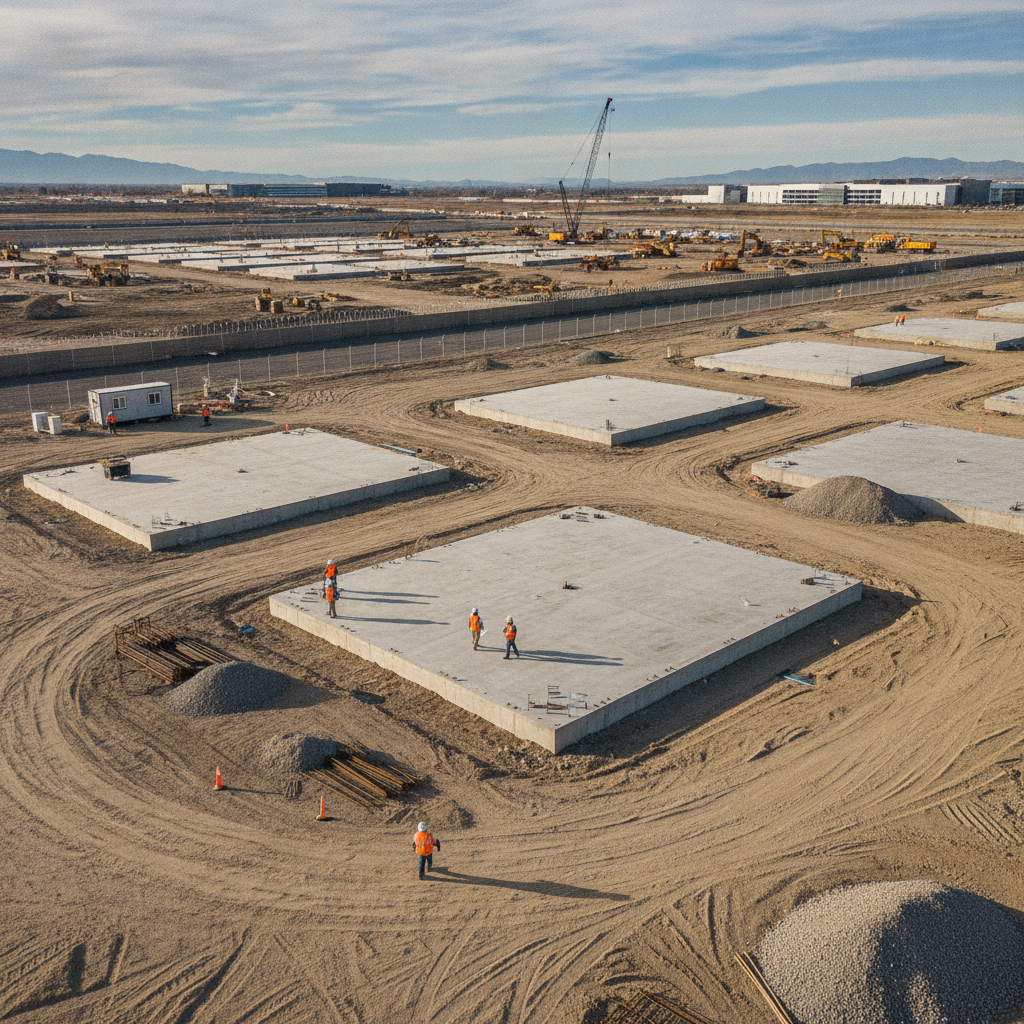
Proximity to Demand: Balancing Metro Access and Land Cost
The ideal data center location exists in a delicate balance between proximity to major metropolitan areas and the availability of affordable, developable land. Colocation facilities thrive on being close to their customers to minimize latency, which is critical for financial services, content delivery, and enterprise clients. Proximity also ensures access to a skilled technical workforce. However, land in or immediately adjacent to these urban cores is often prohibitively expensive and constrained by existing development, making large-scale campus projects unfeasible. This tension forces developers to evaluate suburban and exurban locations that offer a viable compromise. The key is to find sites with direct access to major fiber routes that connect back to the urban core. A thorough site selection analysis involves modeling latency, assessing land acquisition costs, and projecting the expense of extending infrastructure. A successful project often hinges on identifying a parcel that is far enough from the metro center to be affordable but close enough to the network backbone to be competitive. This analysis is a core component of the initial land development feasibility study and is crucial for securing financing and tenant interest.
Power and Fiber: The Non-Negotiable Utility Requirements
Key Site Selection Criteria Comparison
| Criterion | Ideal Characteristics | Civil Engineering Implications |
|---|---|---|
| Power Availability | Proximity to dual, high-capacity substations; clear path for new transmission lines. | Extensive utility coordination, easement acquisition, and design of on-site duct banks and transformer pads. |
| Fiber Connectivity | Located on or near multiple, diverse long-haul and metro fiber routes. | Requires verification of Points of Presence (PoPs), planning for diverse entry points, and designing secure pathways. |
| Land Size & Topography | 20-100+ acres, relatively flat, with room for phased expansion. | Drives master planning, grading and earthwork strategy, and the overall site plan design. |
| Zoning & Permitting | Zoned for industrial or data center use by-right; minimal environmental constraints. | Requires thorough due diligence, entitlement strategy, and preparation of all permit submittals. |
| Water & Sewer | Access to municipal water for cooling (if applicable) and sanitary sewer for staff. | Involves capacity analysis, hydraulic modeling, and design of on-site water and sewer lines. |
| Site Access | Direct access to major arterial roads capable of handling heavy truck traffic. | May require a traffic impact study, roadway design, and coordination for off-site improvements. |
Power and fiber are the lifeblood of any data center. A site without robust, redundant, and scalable access to both is a non-starter. Colocation campuses require massive amounts of electricity, often measured in tens or even hundreds of megawatts. A primary criterion is the site’s proximity to high-voltage transmission lines and an electrical substation with sufficient available power capacity. Ideally, the site should be serviceable by two separate substations to provide true A/B power redundancy, a critical requirement for tenants with high-availability needs. Equally important is fiber connectivity. A site must have access to multiple, diverse fiber optic routes from different telecommunications carriers. This carrier density provides tenants with choice and competition, while diverse routing protects against a single point of failure, such as a fiber cut from nearby construction. The utility coordination process for both power and fiber is extensive and can have lead times of 18-36 months or more. Early engagement with utility providers is essential to confirm capacity, understand the costs of service extension, and secure the necessary commitments to support the project’s master plan.
Site Layout and Phasing for Scalable Growth
Colocation campuses are rarely built out in a single phase. The business model relies on constructing buildings sequentially as tenant demand materializes. Therefore, the site plan design must be a flexible master plan that accommodates this phased growth. The initial civil engineering work must account for the ultimate build-out of the entire campus, even when constructing only the first building. This includes planning for future building pads, internal roadways, cooling infrastructure, and dedicated space for future electrical substations or switchgear. This forward-looking approach is especially critical for shared infrastructure like stormwater management systems. Drainage ponds, underground storage, and conveyance pipes must be sized to handle runoff from the fully developed campus to avoid costly retrofitting later. Similarly, primary utility conduits for power and fiber should be installed with enough capacity and spare pathways to serve future phases. A well-designed master plan provides a clear roadmap for expansion, allowing the campus to grow efficiently without disrupting existing operations.
Permitting and Environmental Due Diligence
Navigating the regulatory landscape is one of the most complex aspects of data center development. A thorough due diligence process is essential to identify potential roadblocks early. This begins with a comprehensive review of local zoning ordinances to confirm that a data center is a permitted use. It also involves evaluating potential overlays, height restrictions, and setback requirements that could impact the site development plan. The agency review process can be lengthy, involving multiple municipal and regional bodies. Permitting requirements vary by jurisdiction, and every project team should confirm the applicable standards with the local, state, regional, and federal authorities that hold review authority over the site. Environmental due diligence is another critical path item. This includes identifying and delineating any wetlands, assessing potential impacts on endangered species or cultural resources, and determining if the site is within a regulated floodplain. For sites over one acre, a federal NPDES permit is required for stormwater discharges during construction, which necessitates the design of a compliant Stormwater Pollution Prevention Plan (SWPPP). Uncovering a significant environmental constraint late in the process can cause severe delays or render a site unusable.
Geotechnical and Topographical Considerations
The physical characteristics of the land itself play a major role in determining site viability and development costs. Data centers are heavy structures with significant equipment loads, requiring stable soil conditions. A comprehensive Geotechnical Engineering investigation is mandatory to assess the site’s subsurface conditions. The resulting Geotechnical soil report provides critical data on soil bearing capacity, the presence of rock, groundwater levels, and potential seismic risks. This report directly informs the foundation design and site grading strategy. Topography also has a significant impact. A relatively flat site is ideal, as it minimizes the need for extensive earthwork and retaining walls, reducing construction costs and timelines. Steep slopes can complicate building placement, roadway access, and utility routing. A detailed topographic survey is the first step in creating an efficient grading and drainage design that balances cut and fill, promotes positive drainage away from structures, and integrates seamlessly with the overall stormwater management plan.
Access, Security, and Logistics
Data centers are secure facilities that require carefully planned access and circulation. The site plan must incorporate robust physical security measures, including significant setbacks from public rights-of-way, anti-climb perimeter fencing, and a single, monitored point of entry with guardhouses and vehicle traps. The layout must segregate traffic, keeping secure operational areas for equipment delivery and maintenance separate from employee and visitor parking. All pedestrian routes and parking areas must be designed for full ADA compliance. Logistics for both construction and operation are a key consideration. The site must have adequate site access from public roads capable of handling heavy truck traffic for delivering building materials, generators, and cooling equipment. A traffic impact analysis may be required by the local jurisdiction to assess the project’s effect on the surrounding road network and identify any necessary off-site improvements. The internal road network must be designed with appropriate turning radii and load-bearing capacity to accommodate semi-trailers and heavy construction vehicles.
The RSP Engineers Approach to Data Center Site Development
At RSP Engineers, we provide comprehensive site engineering services tailored to the unique demands of mission-critical facilities. Our process begins with a rigorous feasibility and due diligence phase, where our team of experts assesses every critical aspect of a potential site—from utility availability and zoning hurdles to geotechnical risks and environmental constraints. As one of the leading Civil Engineering firms, we believe in a proactive approach, engaging early with utility providers and regulatory agencies to identify and resolve potential issues before they impact the project schedule or budget. Our team excels at developing sophisticated master plans that provide a clear and flexible roadmap for phased development. We create integrated designs for grading, drainage, utilities, and roadways that support the ultimate build-out of the campus while meeting the immediate needs of the first phase. By collaborating closely with the entire project team, including architects, contractors, and the owner’s representatives, we deliver efficient, resilient, and permit-ready site plans that pave the way for successful construction and long-term operation.
Common Challenges in Colocation Campus Development
Even with careful planning, data center projects face significant challenges. The most common pitfall is underestimating the lead time for high-voltage power delivery; what seems like a perfect site can be delayed for years waiting for utility upgrades. Another frequent issue is discovering unforeseen site conditions, such as unsuitable soils or protected environmental features, after the land has been acquired. This highlights the importance of thorough upfront due diligence. Zoning and entitlement can also be a major hurdle. Data centers can face community opposition due to concerns about noise, water usage, or aesthetic impact, leading to a contentious and prolonged public hearing process. Finally, designing for flexibility is a constant challenge. The site infrastructure must be robust enough to support future technologies and tenant power densities that may not be fully known at the time of initial design, requiring a forward-thinking and adaptable engineering approach.
Partner with RSP Engineers for Your Mission-Critical Project
The success of your next colocation campus depends on the expertise and foresight applied during site selection and design. The team at RSP Engineers brings decades of experience in land development and mission-critical facility engineering. We guide our clients through every stage of the process, from initial feasibility and due diligence to final permitting and construction administration. Let our team of experts help you navigate the complexities of utility coordination, zoning compliance, and site engineering. Contact us today to discuss how we can help make your data center project a success.
Conclusion
Selecting the right site for a colocation data center campus is a complex, high-stakes endeavor that requires a multi-disciplinary approach. Success hinges on a rigorous evaluation of power, fiber, land characteristics, and the regulatory environment. An oversight in any one of these areas can jeopardize the entire investment. Therefore, early and comprehensive due diligence, led by an experienced civil engineering team, is the most effective tool for mitigating risk. By focusing on a scalable and resilient site development strategy from day one, developers can lay the foundation for a successful, profitable, and future-proof mission-critical facility.
FAQs
-
The required land area depends on the desired scale, but a typical campus can range from 20 to over 100 acres. This must accommodate not just the buildings themselves, but also electrical substations, cooling infrastructure, stormwater management ponds, security setbacks, internal roads, and parking. The site must also have sufficient contiguous area for future phased expansion.
-
The single biggest risk is typically power availability. Securing a commitment from the utility provider for the required megawatts, along with a feasible timeline and cost for delivery, is paramount. A site without a clear and committed path to power is not a viable data center site, regardless of its other positive attributes. This requires early and persistent utility coordination.
-
A civil engineer should be engaged at the very beginning of the site selection process, even before a letter of intent is signed for a property. An experienced engineer can perform a fatal-flaw analysis and initial due diligence to identify major risks related to utilities, zoning, permitting, and site conditions, saving developers significant time and money by avoiding problematic sites.