
Data Center Site Selection for AI Computing Campuses
Explore the critical civil engineering factors for AI data center site selection. Learn about power density, cooling, utility permitting, and geotechnical needs for high-density computing campuses.
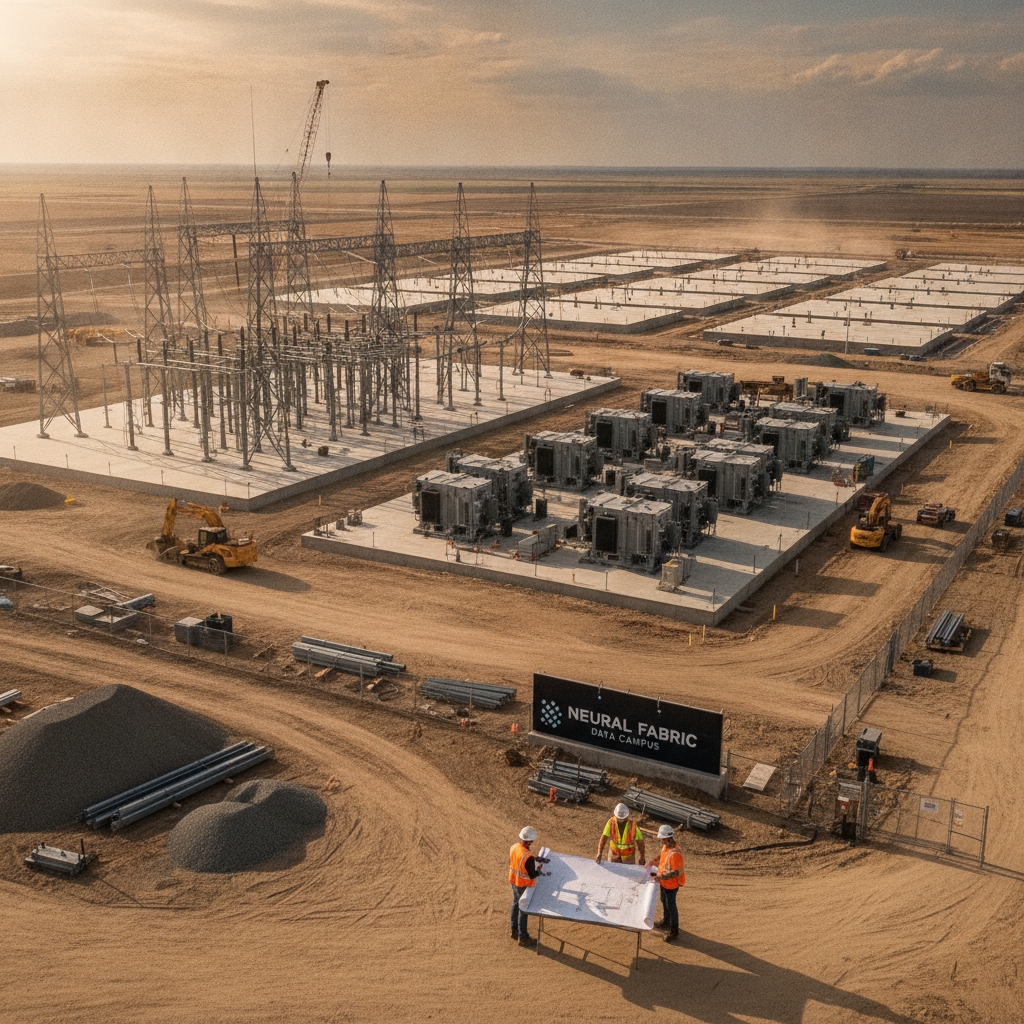
The Unprecedented Power Demands of AI Infrastructure
The single most critical factor in AI data center site selection is power availability. AI workloads require graphics processing units (GPUs) that consume exponentially more energy than traditional CPUs, pushing power densities from 5-15 kW per rack to over 100 kW per rack. This translates into campus-level power demands that can reach hundreds of megawatts, and in some cases, exceed a gigawatt—enough to power a small city. A viable site must have access to extremely robust electrical infrastructure, which is a significant land development constraint. This requires more than just a nearby transmission line. A successful site needs a clear pathway to securing a dedicated, on-site substation with redundant feeds from the utility provider. The land required for these substations, along with extensive backup generator farms and fuel storage, is substantial. The civil engineering team must perform rigorous due diligence to confirm the utility’s capacity to serve such a massive load and evaluate the physical space needed for this critical power infrastructure, including switchgear and transformer pads.
Utility Coordination and Permitting for High-Capacity Services
Comparison: Traditional vs. AI Data Center Site Requirements
| Feature | Traditional Data Center | AI/High-Density Computing Campus |
|---|---|---|
| Power Density | 5-15 kW per rack | 50-100+ kW per rack |
| Total Campus Power | 20-100 MW | 200 MW to 1 GW+ |
| Cooling Infrastructure | Primarily computer room air handlers (CRAH); air-cooled chillers | Liquid cooling (direct-to-chip), chilled water loops, massive cooling towers |
| Water Demand | Moderate; primarily for domestic use and some supplemental cooling | Very high; millions of gallons per day for cooling tower makeup |
| Foundation/Structural | Standard slab-on-grade or raised floor; moderate point loads | Heavily reinforced foundations, vibration isolation, robust pads for heavy equipment |
| Site Footprint | 10-40 acres | 100-1000+ acres to accommodate power, cooling, and expansion |
| Utility Lead Time | 12-24 months | 24-60+ months for new substations and transmission lines |
Securing the necessary utilities is a complex process involving intense coordination and long-lead-time permitting. Early and transparent engagement with the electric utility provider is non-negotiable to verify capacity, negotiate service agreements, and understand the timeline for infrastructure upgrades, which can often take years. Beyond power, AI campuses have significant water and sewer demands, primarily for advanced cooling systems. The site must have access to municipal water mains capable of providing millions of gallons per day and a wastewater system that can handle the corresponding discharge. The regulatory pathway for these utilities is intricate. Permitting requirements for high-voltage transmission lines, substations, water withdrawals, and discharge points vary by jurisdiction, and every project team should confirm the applicable standards with the local, state, regional, and federal authorities that hold review authority over the site. A thorough feasibility study must account for the full scope of utility coordination, easement acquisition, and the multi-agency review process to avoid costly delays. This includes navigating everything from local zoning approvals to federal-level environmental reviews.
Advanced Cooling Systems and Water Resource Management
The immense heat generated by high-density GPU racks cannot be managed by traditional air cooling alone. AI data centers increasingly rely on advanced solutions like liquid cooling, including direct-to-chip systems and rear-door heat exchangers, which are often part of a larger chilled water loop. This requires extensive on-site cooling plants, large-diameter piping, and often, massive cooling towers. The site development plan must accommodate these large equipment yards and the associated infrastructure. These cooling systems create a substantial demand for water. Sites relying on evaporative cooling towers require a sustainable and reliable water source, making water rights and availability a critical due diligence item. The subsequent wastewater discharge, known as blowdown, must be managed in compliance with environmental regulations, often requiring an NPDES (National Pollutant Discharge Elimination System) permit under the Clean Water Act. The drainage design must also account for significant volumes of condensate and potential system discharges.
Geotechnical and Structural Considerations for Dense Equipment
AI data centers house incredibly heavy equipment. The combination of dense server racks, power distribution units (PDUs), uninterruptible power supply (UPS) systems, and massive cooling chillers imposes significant structural loads. A thorough Geotechnical Engineering investigation is essential to ensure the underlying soils can support these demands. The Geotechnical soil report will inform the foundation design, which is often far more robust than for a typical industrial building, requiring deep foundations or extensive soil improvement. Beyond the building foundation, the civil engineering design must account for heavy equipment pads for transformers, generators, and chillers, which have stringent settlement and vibration tolerances. The site plan must also incorporate logistical considerations, such as designing haul routes and laydown areas capable of handling oversized and overweight deliveries. Crane pads and access paths must be strategically planned to facilitate the installation and future replacement of this heavy machinery, ensuring long-term operational efficiency.
Site Layout and Flexibility for Phased Expansion
The AI industry evolves at a breakneck pace, and data center campuses must be designed for rapid and often unplanned expansion. A key aspect of site plan design is master planning for a phased build-out. This means acquiring enough land upfront to accommodate future data halls, additional power substations, and expanded cooling yards. A successful site selection strategy prioritizes flexibility and modularity. The site layout should be optimized to allow for contiguous construction phases without disrupting ongoing operations in existing facilities. This involves careful planning of internal roadways, utility corridors, and stormwater management systems that can be scaled up over time. Achieving zoning compliance for a multi-phase master plan is critical, as it provides predictability for future development and streamlines subsequent permit submittals.
Navigating Environmental and Land Use Regulations
Large-scale site development for data centers invariably triggers a host of environmental and land use regulations. Due diligence must include a thorough environmental assessment to identify potential constraints such as wetlands regulated under the Clean Water Act, habitats for species protected by the Endangered Species Act, or location within a FEMA-designated floodplain. Identifying these issues early is crucial to determine if the site is viable or if mitigation will be required. Local zoning compliance is another major hurdle. Data centers have unique operational characteristics, such as the noise produced by generators and cooling fans, which may conflict with local ordinances. The project may require special use permits or variances. The agency review process will scrutinize everything from building setbacks and height restrictions to landscaping buffers and visual screening, all of which must be incorporated into the final site plan design.
RSP Engineers’ Approach to AI Data Center Site Selection
At RSP Engineers, we employ a systematic, data-driven approach to AI data center site selection and due diligence. Our process begins with a comprehensive feasibility study, where we analyze utility availability at scale, identify potential environmental and zoning red flags, and model various site development scenarios. We work directly with utility providers to confirm capacity and delivery timelines, providing our clients with a clear understanding of a site’s true potential. Our team of Civil Engineers then develops a preliminary site plan design that optimizes the layout for power infrastructure, cooling systems, operational logistics, and future expansion. We manage the complexities of the agency review and permitting process, from initial zoning applications to final construction approvals. By integrating our expertise in stormwater management, drainage design, and Geotechnical Engineering early in the process, we help clients mitigate risk and accelerate their project schedules.
Common Challenges in AI Data Center Development
Even with careful planning, AI data center projects face significant hurdles. One of the most common issues is underestimating the lead time for high-voltage power infrastructure, which can delay a project by years. Another frequent challenge is discovering unforeseen Geotechnical issues, such as poor soil conditions that require costly foundation redesigns. Failure to secure adequate water rights in water-scarce regions can completely derail a project reliant on evaporative cooling. Finally, navigating local opposition and complex, multi-agency permitting requires a proactive and experienced engineering partner to keep the project on track.
Partner with RSP Engineers for Your Mission-Critical Project
Navigating the complexities of AI data center site selection requires a partner with deep expertise in large-scale land development. RSP Engineers provides the comprehensive site engineering services needed to bring your mission-critical project from concept to reality. Our team excels at utility capacity analysis, fast-track permitting, and designing resilient, scalable sites. We manage the critical path of site development so you can focus on deploying your technology with confidence.
Conclusion: Future-Proofing Your AI Infrastructure Investment
The site you choose today will define the capabilities and growth potential of your AI infrastructure for decades to come. The decision hinges on a sophisticated analysis of power, water, land, and regulatory pathways. A successful outcome requires a forward-looking strategy and a deep understanding of the civil engineering principles that underpin these massive developments. By prioritizing robust utility planning, scalable site plan design, and thorough due diligence, you can secure a site that serves as a powerful foundation for innovation.
FAQs
-
You should engage a civil engineering firm at the very beginning of the site selection process, even before a letter of intent is signed. Early due diligence is critical for identifying fatal flaws related to power, water, zoning, or environmental constraints before you invest significant capital in a property.
-
The most significant mistake is relying on preliminary information from utility providers without securing a formal commitment or a detailed service study. A verbal confirmation of capacity is not enough. A thorough analysis of the utility’s transmission system, substation capacity, and construction timeline is essential for a viable site development project.
-
AI data center campuses create vast areas of impervious surface (roofs, roads, equipment pads), which significantly increases stormwater runoff. The stormwater management systems must be designed to handle large volumes of water while meeting strict local and federal water quality regulations, often requiring large detention or retention ponds, underground storage, and advanced water quality treatment units.